Journal: Nat Commun / Year: 2026 Title: Structure and mechanism of the HECT ligase HECTD3. Authors: Jessica Huber / Diego Esposito / Sarah Maslen / Dominic O Chambers / J Mark Skehel / Katrin Rittinger / Abstract: HECT E3 ligases regulate many cellular processes, yet how they recognise their substrates and synthesise specific types of poly-ubiquitin chains is still incompletely understood. HECTD3, a member of ...HECT E3 ligases regulate many cellular processes, yet how they recognise their substrates and synthesise specific types of poly-ubiquitin chains is still incompletely understood. HECTD3, a member of the "other HECT" family, is implicated in the regulation of inflammation, apoptosis, and infection and highly expressed in several cancers. These functions are largely attributed to its ligase activity and modification of diverse substrates with different types of ubiquitin chains. We present a detailed analysis of the ligase activity of HECTD3, including its ubiquitin linkage preferences, oligomeric state and substrate ubiquitination. Using cryo-EM, we provide the full-length structures of HECTD3 in both apo and ubiquitin-loaded forms, revealing key insights into its domain organisation, including discovery of a distinct fold of the N-terminal region, and mechanistic features. Some of these are shared with other HECT ligases, while others are unique to HECTD3 and contribute to differences in its catalytic mechanisms and functional diversity.
Mass: 18.015 Da / Num. of mol.: 175 / Source method: isolated from a natural source / Formula: H2O
Has ligand of interest
Y
Has protein modification
N
-
Experimental details
-
Experiment
Experiment
Method: X-RAY DIFFRACTION / Number of used crystals: 1
-
Sample preparation
Crystal
Density Matthews: 2.26 Å3/Da / Density % sol: 45.48 %
Crystal grow
Temperature: 293 K / Method: vapor diffusion, sitting drop / pH: 7.5 Details: HECTD3 DOC domain is in 50 mM HEPES pH 7.5, 150 mM NaCl, 0.5 mM TCEP at a concentration of 13.5 mg/ml. Crystals grew from a 100 nL protein solution plus 100 nL reservoir made of 0.1 M HEPES ...Details: HECTD3 DOC domain is in 50 mM HEPES pH 7.5, 150 mM NaCl, 0.5 mM TCEP at a concentration of 13.5 mg/ml. Crystals grew from a 100 nL protein solution plus 100 nL reservoir made of 0.1 M HEPES pH 7.5, 30% (w/v) PEG 400, 5% PEG 3000 and 10% glycerol.
-
Data collection
Diffraction
Mean temperature: 100 K / Serial crystal experiment: N
In the structure databanks used in Yorodumi, some data are registered as the other names, "COVID-19 virus" and "2019-nCoV". Here are the details of the virus and the list of structure data.
Jan 31, 2019. EMDB accession codes are about to change! (news from PDBe EMDB page)
EMDB accession codes are about to change! (news from PDBe EMDB page)
The allocation of 4 digits for EMDB accession codes will soon come to an end. Whilst these codes will remain in use, new EMDB accession codes will include an additional digit and will expand incrementally as the available range of codes is exhausted. The current 4-digit format prefixed with “EMD-” (i.e. EMD-XXXX) will advance to a 5-digit format (i.e. EMD-XXXXX), and so on. It is currently estimated that the 4-digit codes will be depleted around Spring 2019, at which point the 5-digit format will come into force.
The EM Navigator/Yorodumi systems omit the EMD- prefix.
Related info.:Q: What is EMD? / ID/Accession-code notation in Yorodumi/EM Navigator
Yorodumi is a browser for structure data from EMDB, PDB, SASBDB, etc.
This page is also the successor to EM Navigator detail page, and also detail information page/front-end page for Omokage search.
The word "yorodu" (or yorozu) is an old Japanese word meaning "ten thousand". "mi" (miru) is to see.
Related info.:EMDB / PDB / SASBDB / Comparison of 3 databanks / Yorodumi Search / Aug 31, 2016. New EM Navigator & Yorodumi / Yorodumi Papers / Jmol/JSmol / Function and homology information / Changes in new EM Navigator and Yorodumi
 Movie
Movie Controller


 Open data
 Basic information
 Components
 Keywords
 Function and homology information
 Homo sapiens (human)
 X-RAY DIFFRACTION /
  Authors
 United Kingdom, 4items
  Citation
 Structure visualization
 Downloads & links
 Other downloads


 PDBj
PDBj
 Assembly


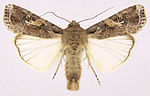 Spodoptera frugiperda (fall armyworm)
 Mass: 24.305 Da / Num. of mol.: 2 / Source method: obtained synthetically / Formula: Mg / Feature type: SUBJECT OF INVESTIGATION
 Mass: 18.015 Da / Num. of mol.: 175 / Source method: isolated from a natural source / Formula: H2O
 Sample preparation
 / Beamline: MASSIF-3 / Wavelength: 0.9677 Å
 Processing