Journal: Nat Commun / Year: 2026 Title: Activation mechanism of the full-length histidine kinase LvrB from pathogenic Leptospira. Authors: Elia Agustoni / Ariel Mechaly / Joaquín Dalla Rizza / David Beriashvili / Kristyna Pluhackova / Polina Isaikina / Felipe Trajtenberg / Thomas Müntener / Elsio A Wunder / Albert I Ko / ...Authors: Elia Agustoni / Ariel Mechaly / Joaquín Dalla Rizza / David Beriashvili / Kristyna Pluhackova / Polina Isaikina / Felipe Trajtenberg / Thomas Müntener / Elsio A Wunder / Albert I Ko / Tilman Schirmer / Alejandro Buschiazzo / Sebastian Hiller / Abstract: Pathogenic Leptospira modulate their virulence via the Lvr signaling system, with the histidine kinase LvrB being a central element. LvrB is a prototype of Rec-controlled histidine kinases, which are ...Pathogenic Leptospira modulate their virulence via the Lvr signaling system, with the histidine kinase LvrB being a central element. LvrB is a prototype of Rec-controlled histidine kinases, which are frequently found in bacterial two-component systems, and yet whose regulatory mechanisms remain largely unknown. Here, we report full-length structures of LvrB in different states uncovering its mechanism of activation. Kinase-inactive LvrB is a symmetric homodimer, with its catalytic domains rigidly clasped onto the central helical domain. Phosphorylation of the N-terminal Rec domains induces coiled-coil formation of the central αS helices thereby breaking symmetry through liberation of the catalytic domains into a dynamic, auto-phosphorylation competent state. We further identified LvrB's downstream effector partner LvrC, an anti-σ factor that reprograms the transcription of hundreds of virulence genes. Our findings set a mechanistic paradigm for Rec-controlled histidine kinases enabling the design of virulence inhibitors.
In the structure databanks used in Yorodumi, some data are registered as the other names, "COVID-19 virus" and "2019-nCoV". Here are the details of the virus and the list of structure data.
Jan 31, 2019. EMDB accession codes are about to change! (news from PDBe EMDB page)
EMDB accession codes are about to change! (news from PDBe EMDB page)
The allocation of 4 digits for EMDB accession codes will soon come to an end. Whilst these codes will remain in use, new EMDB accession codes will include an additional digit and will expand incrementally as the available range of codes is exhausted. The current 4-digit format prefixed with “EMD-” (i.e. EMD-XXXX) will advance to a 5-digit format (i.e. EMD-XXXXX), and so on. It is currently estimated that the 4-digit codes will be depleted around Spring 2019, at which point the 5-digit format will come into force.
The EM Navigator/Yorodumi systems omit the EMD- prefix.
Related info.:Q: What is EMD? / ID/Accession-code notation in Yorodumi/EM Navigator
Yorodumi is a browser for structure data from EMDB, PDB, SASBDB, etc.
This page is also the successor to EM Navigator detail page, and also detail information page/front-end page for Omokage search.
The word "yorodu" (or yorozu) is an old Japanese word meaning "ten thousand". "mi" (miru) is to see.
Related info.:EMDB / PDB / SASBDB / Comparison of 3 databanks / Yorodumi Search / Aug 31, 2016. New EM Navigator & Yorodumi / Yorodumi Papers / Jmol/JSmol / Function and homology information / Changes in new EM Navigator and Yorodumi
 Movie
Movie Controller


 Open data
 Basic information
 Components
 Keywords
 Function and homology information
 Leptospira interrogans (bacteria)
 X-RAY DIFFRACTION /
  Authors
 Switzerland, 1items
  Citation


 Structure visualization
 Downloads & links
 Other downloads


 PDBj
PDBj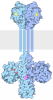
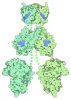
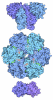
 Assembly
 Escherichia coli (E. coli) / References: UniProt: Q8F424, histidine kinase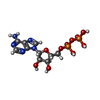
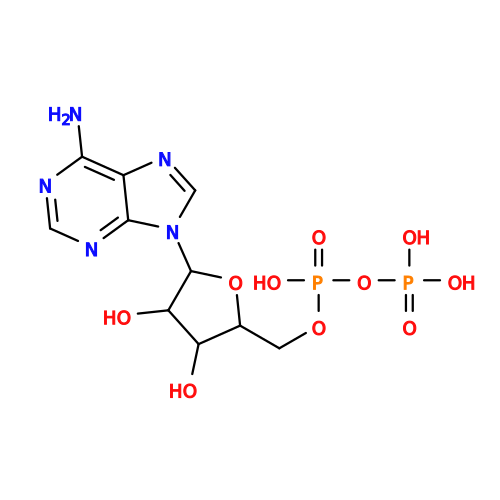 Mass: 427.201 Da / Num. of mol.: 2 / Source method: obtained synthetically / Formula: C10H15N5O10P2 / Feature type: SUBJECT OF INVESTIGATION / Comment: ADP, energy-carrying molecule*YM
 Mass: 18.015 Da / Num. of mol.: 286 / Source method: isolated from a natural source / Formula: H2O
 Sample preparation
 Processing