[English] 日本語
Yorodumi
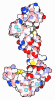
- PDB-9pqh: NMR Structure of Ca2+/Calmodulin bound to the GluN1 C0 domain of ... -

+
Open data


ID or keywords:

Loading...

-
Basic information

Entry
Database: PDB / ID: 9pqh
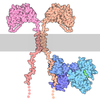
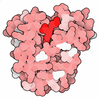
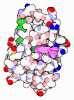
TitleNMR Structure of Ca2+/Calmodulin bound to the GluN1 C0 domain of the NMDA receptor
Components
  • Calmodulin-1
  • Glutamate receptor ionotropic, NMDA 1
KeywordsMETAL BINDING PROTEIN
Function / homology
Function and homology information


glycine-gated cation channel activity / excitatory chemical synaptic transmission / Synaptic adhesion-like molecules / response to glycine / propylene metabolic process / Assembly and cell surface presentation of NMDA receptors / regulation of monoatomic cation transmembrane transport / NMDA glutamate receptor activity / Neurexins and neuroligins / CaM pathway ...glycine-gated cation channel activity / excitatory chemical synaptic transmission / Synaptic adhesion-like molecules / response to glycine / propylene metabolic process / Assembly and cell surface presentation of NMDA receptors / regulation of monoatomic cation transmembrane transport / NMDA glutamate receptor activity / Neurexins and neuroligins / CaM pathway / NMDA selective glutamate receptor complex / Cam-PDE 1 activation / glutamate binding / Sodium/Calcium exchangers / Calmodulin induced events / neurotransmitter receptor complex / ligand-gated sodium channel activity / Reduction of cytosolic Ca++ levels / Activation of Ca-permeable Kainate Receptor / CREB1 phosphorylation through the activation of CaMKII/CaMKK/CaMKIV cascasde / Loss of phosphorylation of MECP2 at T308 / CREB1 phosphorylation through the activation of Adenylate Cyclase / negative regulation of high voltage-gated calcium channel activity / PKA activation / calcium ion transmembrane import into cytosol / CaMK IV-mediated phosphorylation of CREB / Glycogen breakdown (glycogenolysis) / protein heterotetramerization / CLEC7A (Dectin-1) induces NFAT activation / Activation of RAC1 downstream of NMDARs / negative regulation of ryanodine-sensitive calcium-release channel activity / organelle localization by membrane tethering / mitochondrion-endoplasmic reticulum membrane tethering / glycine binding / autophagosome membrane docking / negative regulation of calcium ion export across plasma membrane / regulation of cardiac muscle cell action potential / presynaptic endocytosis / Synthesis of IP3 and IP4 in the cytosol / positive regulation of reactive oxygen species biosynthetic process / regulation of cell communication by electrical coupling involved in cardiac conduction / Phase 0 - rapid depolarisation / calcineurin-mediated signaling / Negative regulation of NMDA receptor-mediated neuronal transmission / monoatomic cation transmembrane transport / Unblocking of NMDA receptors, glutamate binding and activation / RHO GTPases activate PAKs / positive regulation of calcium ion transport into cytosol / Ion transport by P-type ATPases / Uptake and function of anthrax toxins / regulation of ryanodine-sensitive calcium-release channel activity / Long-term potentiation / protein phosphatase activator activity / Calcineurin activates NFAT / Regulation of MECP2 expression and activity / monoatomic ion channel complex / regulation of neuronal synaptic plasticity / monoatomic cation transport / DARPP-32 events / Smooth Muscle Contraction / detection of calcium ion / regulation of cardiac muscle contraction / synaptic cleft / catalytic complex / positive regulation of synaptic transmission, glutamatergic / RHO GTPases activate IQGAPs / regulation of cardiac muscle contraction by regulation of the release of sequestered calcium ion / calcium ion homeostasis / calcium channel inhibitor activity / Activation of AMPK downstream of NMDARs / presynaptic cytosol / cellular response to interferon-beta / Protein methylation / regulation of release of sequestered calcium ion into cytosol by sarcoplasmic reticulum / titin binding / eNOS activation / Ion homeostasis / Tetrahydrobiopterin (BH4) synthesis, recycling, salvage and regulation / glutamate-gated calcium ion channel activity / regulation of calcium-mediated signaling / voltage-gated potassium channel complex / EPHB-mediated forward signaling / excitatory synapse / FCERI mediated Ca+2 mobilization / calcium channel complex / ionotropic glutamate receptor signaling pathway / substantia nigra development / positive regulation of excitatory postsynaptic potential / regulation of heart rate / Ras activation upon Ca2+ influx through NMDA receptor / FCGR3A-mediated IL10 synthesis / sodium ion transmembrane transport / Antigen activates B Cell Receptor (BCR) leading to generation of second messengers / synaptic membrane / calyx of Held / adenylate cyclase activator activity / protein serine/threonine kinase activator activity / sarcomere / VEGFR2 mediated cell proliferation / VEGFR2 mediated vascular permeability
Similarity search - Function
: / : / : / Ionotropic glutamate receptor, metazoa / Ligated ion channel L-glutamate- and glycine-binding site / Ionotropic glutamate receptor, L-glutamate and glycine-binding domain / Ligated ion channel L-glutamate- and glycine-binding site / Ligand-gated ion channel / : / Ionotropic glutamate receptor ...: / : / : / Ionotropic glutamate receptor, metazoa / Ligated ion channel L-glutamate- and glycine-binding site / Ionotropic glutamate receptor, L-glutamate and glycine-binding domain / Ligated ion channel L-glutamate- and glycine-binding site / Ligand-gated ion channel / : / Ionotropic glutamate receptor / Eukaryotic homologues of bacterial periplasmic substrate binding proteins. / Receptor, ligand binding region / Receptor family ligand binding region / EF-hand domain pair / EF-hand, calcium binding motif / Periplasmic binding protein-like I / EF-Hand 1, calcium-binding site / EF-hand calcium-binding domain. / EF-hand calcium-binding domain profile. / EF-hand domain / EF-hand domain pair
Similarity search - Domain/homology
Calmodulin-1 / Glutamate receptor ionotropic, NMDA 1
Similarity search - Component
Biological speciesHomo sapiens (human)
MethodSOLUTION NMR / simulated annealing
AuthorsBej, A. / Ames, J.B.
Funding support United States, 1items
OrganizationGrant numberCountry
National Institutes of Health/National Eye Institute (NIH/NEI)NIH R01 EY012347 United States
CitationJournal: J.Biol.Chem. / Year: 2026
Title: Structural Basis and Functional Analysis of NMDA Receptor Regulation by Calmodulin.
Authors: Bej, A. / Erickson-Oberg, M.Q. / Nigam, A. / Yu, I. / Hell, J.W. / Johnson, J.W. / Ames, J.B.
History
DepositionJul 22, 2025Deposition site: RCSB / Processing site: RCSB
Revision 1.0Jan 21, 2026Provider: repository / Type: Initial release

-
Structure visualization

Structure viewerMolecule:
MolmilJmol/JSmol

Downloads & links

-
Assembly

Deposited unit
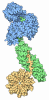
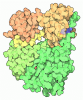
A: Calmodulin-1
B: Glutamate receptor ionotropic, NMDA 1
hetero molecules


Theoretical massNumber of molelcules
Total (without water)122,5236
Polymers122,3622
Non-polymers1604
Water00
1


  • Idetical with deposited unit
  • defined by author&software
  • Evidence: NMR Distance Restraints, not applicable
TypeNameSymmetry operationNumber
identity operation1_555x,y,z1
NMR ensembles
DataCriteria
Number of conformers (submitted / calculated)10 / 200structures with the lowest energy
RepresentativeModel #1lowest energy

-
Components

#1: Protein Calmodulin-1


Mass: 16852.545 Da / Num. of mol.: 1
Source method: isolated from a genetically manipulated source
Source: (gene. exp.) Homo sapiens (human) / Gene: CALM1, CALM, CAM, CAM1 / Production host: Escherichia coli (E. coli) / References: UniProt: P0DP23

#2: Protein Glutamate receptor ionotropic, NMDA 1 / GluN1 / Glutamate [NMDA] receptor subunit zeta-1 / N-methyl-D-aspartate receptor subunit NR1 / NMD-R1 / hNR1


Mass: 105509.789 Da / Num. of mol.: 1 / Source method: obtained synthetically / Source: (synth.) Homo sapiens (human) / References: UniProt: Q05586
#3: Chemical
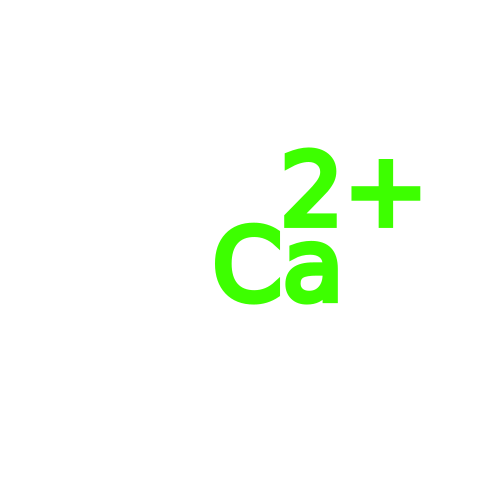
ChemComp-CA / CALCIUM ION


Mass: 40.078 Da / Num. of mol.: 4 / Source method: obtained synthetically / Formula: Ca / Feature type: SUBJECT OF INVESTIGATION
Has ligand of interestY
Has protein modificationN

-
Experimental details

-
Experiment

ExperimentMethod: SOLUTION NMR
NMR experiment
Conditions-IDExperiment-IDSolution-IDSample stateSpectrometer-IDType
111isotropic12D 1H-15N HSQC
121isotropic13D HN(CA)CB
131isotropic13D HN(COCA)CB
141isotropic13D HNCO
151isotropic13D HBHANH
161isotropic13D HBHA(CO)NH
171isotropic13D C(CO)NH
181isotropic13D H(CCO)NH
192isotropic12D 1H-13C HSQC
1102isotropic12D 1H-13C HSQC aromatic
1112isotropic13D 13C-edited NOESY
1122isotropic13D 13-filtered NOESY
1132isotropic12D 13-filtered NOESY

-
Sample preparation

Details
TypeSolution-IDContentsLabelSolvent system
solution10.4 mM [U-99% 13C; U-99% 15N] Calmodulin, 1.0 mM GluN1 C0, 1 mM Calcium chloride, 20 mM [U-99% 2H] TRIS, 93 % H2O, 7 % [U-2H] D2O, 93% H2O/7% D2OH2O93% H2O/7% D2O
solution20.4 mM [U-99% 13C; U-99% 15N] Calmodulin, 1.0 mM GluN1 C0, 1 mM Calcium chloride, 20 mM [U-99% 2H] TRIS, 100 % [U-2H] D2O, 100% D2OD2O100% D2O
Sample
Conc. (mg/ml)ComponentIsotopic labelingSolution-ID
0.4 mMCalmodulin[U-99% 13C; U-99% 15N]1
1.0 mMGluN1 C0natural abundance1
1 mMCalcium chloridenatural abundance1
20 mMTRIS[U-99% 2H]1
93 %H2Onatural abundance1
7 %D2O[U-2H]1
0.4 mMCalmodulin[U-99% 13C; U-99% 15N]2
1.0 mMGluN1 C0natural abundance2
1 mMCalcium chloridenatural abundance2
20 mMTRIS[U-99% 2H]2
100 %D2O[U-2H]2
Sample conditionsIonic strength: 1 mM / Label: pH7_308K / pH: 7 / Pressure: 1 atm / Temperature: 308 K

-
NMR measurement

NMR spectrometerType: Bruker AVANCE III / Manufacturer: Bruker / Model: AVANCE III / Field strength: 800 MHz

-
Processing

NMR software
NameDeveloperClassification
NMRPipeDelaglio, Grzesiek, Vuister, Zhu, Pfeifer and Baxprocessing
SparkyGoddardpeak picking
SparkyGoddardchemical shift assignment
HADDOCKBonvinstructure calculation
HADDOCKBonvinrefinement
RefinementMethod: simulated annealing / Software ordinal: 5
NMR representativeSelection criteria: lowest energy
NMR ensembleConformer selection criteria: structures with the lowest energy
Conformers calculated total number: 200 / Conformers submitted total number: 10

+
About Yorodumi

-
News

-
Feb 9, 2022. New format data for meta-information of EMDB entries

New format data for meta-information of EMDB entries

  • Version 3 of the EMDB header file is now the official format.
  • The previous official version 1.9 will be removed from the archive.

Related info.:EMDB header

External links:wwPDB to switch to version 3 of the EMDB data model

-
Aug 12, 2020. Covid-19 info

Covid-19 info

URL: https://pdbj.org/emnavi/covid19.php

New page: Covid-19 featured information page in EM Navigator.

Related info.:Covid-19 info / Mar 5, 2020. Novel coronavirus structure data

+
Mar 5, 2020. Novel coronavirus structure data

Novel coronavirus structure data

Related info.:Yorodumi Speices / Aug 12, 2020. Covid-19 info

External links:COVID-19 featured content - PDBj / Molecule of the Month (242):Coronavirus Proteases

+
Jan 31, 2019. EMDB accession codes are about to change! (news from PDBe EMDB page)

EMDB accession codes are about to change! (news from PDBe EMDB page)

  • The allocation of 4 digits for EMDB accession codes will soon come to an end. Whilst these codes will remain in use, new EMDB accession codes will include an additional digit and will expand incrementally as the available range of codes is exhausted. The current 4-digit format prefixed with “EMD-” (i.e. EMD-XXXX) will advance to a 5-digit format (i.e. EMD-XXXXX), and so on. It is currently estimated that the 4-digit codes will be depleted around Spring 2019, at which point the 5-digit format will come into force.
  • The EM Navigator/Yorodumi systems omit the EMD- prefix.

Related info.:Q: What is EMD? / ID/Accession-code notation in Yorodumi/EM Navigator

External links:EMDB Accession Codes are Changing Soon! / Contact to PDBj

+
Jul 12, 2017. Major update of PDB

Major update of PDB

  • wwPDB released updated PDB data conforming to the new PDBx/mmCIF dictionary.
  • This is a major update changing the version number from 4 to 5, and with Remediation, in which all the entries are updated.
  • In this update, many items about electron microscopy experimental information are reorganized (e.g. em_software).
  • Now, EM Navigator and Yorodumi are based on the updated data.

External links:wwPDB Remediation / Enriched Model Files Conforming to OneDep Data Standards Now Available in the PDB FTP Archive

-
Yorodumi

Thousand views of thousand structures

  • Yorodumi is a browser for structure data from EMDB, PDB, SASBDB, etc.
  • This page is also the successor to EM Navigator detail page, and also detail information page/front-end page for Omokage search.
  • The word "yorodu" (or yorozu) is an old Japanese word meaning "ten thousand". "mi" (miru) is to see.

Related info.:EMDB / PDB / SASBDB / Comparison of 3 databanks / Yorodumi Search / Aug 31, 2016. New EM Navigator & Yorodumi / Yorodumi Papers / Jmol/JSmol / Function and homology information / Changes in new EM Navigator and Yorodumi

Read more