telomere tethering at nuclear periphery / nuclear pore complex assembly / nuclear pore outer ring / negative regulation of protein deubiquitination / nuclear pore organization / nuclear pore cytoplasmic filaments / Nuclear Pore Complex (NPC) Disassembly / regulation of type I interferon production / Regulation of Glucokinase by Glucokinase Regulatory Protein / Defective TPR may confer susceptibility towards thyroid papillary carcinoma (TPC) ...telomere tethering at nuclear periphery / nuclear pore complex assembly / nuclear pore outer ring / negative regulation of protein deubiquitination / nuclear pore organization / nuclear pore cytoplasmic filaments / Nuclear Pore Complex (NPC) Disassembly / regulation of type I interferon production / Regulation of Glucokinase by Glucokinase Regulatory Protein / Defective TPR may confer susceptibility towards thyroid papillary carcinoma (TPC) / post-transcriptional tethering of RNA polymerase II gene DNA at nuclear periphery / nuclear inclusion body / suppression of viral release by host / Transport of Ribonucleoproteins into the Host Nucleus / nuclear pore nuclear basket / Transport of the SLBP independent Mature mRNA / Transport of the SLBP Dependant Mature mRNA / SUMOylation of SUMOylation proteins / STING mediated induction of host immune responses / positive regulation of mRNA splicing, via spliceosome / structural constituent of nuclear pore / Transport of Mature mRNA Derived from an Intronless Transcript / NS1 Mediated Effects on Host Pathways / negative regulation of viral transcription / Rev-mediated nuclear export of HIV RNA / Nuclear import of Rev protein / cellular response to chemical stress / SUMOylation of RNA binding proteins / NEP/NS2 Interacts with the Cellular Export Machinery / protein K6-linked ubiquitination / RNA export from nucleus / tRNA processing in the nucleus / Postmitotic nuclear pore complex (NPC) reformation / Transport of Mature mRNA derived from an Intron-Containing Transcript / nucleocytoplasmic transport / positive regulation of protein binding / nuclear localization sequence binding / Viral Messenger RNA Synthesis / protein K27-linked ubiquitination / stress granule disassembly / SUMOylation of ubiquitinylation proteins / Vpr-mediated nuclear import of PICs / SUMOylation of DNA replication proteins / Hydrolases; Acting on peptide bonds (peptidases); Serine endopeptidases / nuclear pore / Regulation of HSF1-mediated heat shock response / pyroptotic inflammatory response / protein monoubiquitination / mRNA transport / protein K63-linked ubiquitination / SUMOylation of DNA damage response and repair proteins / protein autoubiquitination / protein K48-linked ubiquitination / Amplification of signal from unattached kinetochores via a MAD2 inhibitory signal / positive regulation of cell cycle / response to type II interferon / nuclear periphery / Mitotic Prometaphase / negative regulation of innate immune response / EML4 and NUDC in mitotic spindle formation / positive regulation of autophagy / autophagosome / serine-type peptidase activity / protein import into nucleus / Resolution of Sister Chromatid Cohesion / Regulation of innate immune responses to cytosolic DNA / SUMOylation of chromatin organization proteins / antiviral innate immune response / HCMV Late Events / proteasomal protein catabolic process / molecular condensate scaffold activity / promoter-specific chromatin binding / P-body / protein destabilization / RHO GTPases Activate Formins / positive regulation of non-canonical NF-kappaB signal transduction / RING-type E3 ubiquitin transferase / ISG15 antiviral mechanism / Interferon gamma signaling / protein polyubiquitination / cytoplasmic stress granule / HCMV Early Events / ubiquitin-protein transferase activity / regulation of gene expression / Separation of Sister Chromatids / ubiquitin protein ligase activity / nuclear envelope / KEAP1-NFE2L2 pathway / Antigen processing: Ubiquitination & Proteasome degradation / nuclear membrane / cytoplasmic vesicle / snRNP Assembly / positive regulation of viral entry into host cell / nuclear body / transcription coactivator activity / protein ubiquitination / ribonucleoprotein complex / innate immune response / mRNA binding / SARS-CoV-2 activates/modulates innate and adaptive immune responses Similarity search - Function
In the structure databanks used in Yorodumi, some data are registered as the other names, "COVID-19 virus" and "2019-nCoV". Here are the details of the virus and the list of structure data.
Jan 31, 2019. EMDB accession codes are about to change! (news from PDBe EMDB page)
EMDB accession codes are about to change! (news from PDBe EMDB page)
The allocation of 4 digits for EMDB accession codes will soon come to an end. Whilst these codes will remain in use, new EMDB accession codes will include an additional digit and will expand incrementally as the available range of codes is exhausted. The current 4-digit format prefixed with “EMD-” (i.e. EMD-XXXX) will advance to a 5-digit format (i.e. EMD-XXXXX), and so on. It is currently estimated that the 4-digit codes will be depleted around Spring 2019, at which point the 5-digit format will come into force.
The EM Navigator/Yorodumi systems omit the EMD- prefix.
Related info.:Q: What is EMD? / ID/Accession-code notation in Yorodumi/EM Navigator
Yorodumi is a browser for structure data from EMDB, PDB, SASBDB, etc.
This page is also the successor to EM Navigator detail page, and also detail information page/front-end page for Omokage search.
The word "yorodu" (or yorozu) is an old Japanese word meaning "ten thousand". "mi" (miru) is to see.
Related info.:EMDB / PDB / SASBDB / Comparison of 3 databanks / Yorodumi Search / Aug 31, 2016. New EM Navigator & Yorodumi / Yorodumi Papers / Jmol/JSmol / Function and homology information / Changes in new EM Navigator and Yorodumi
 Movie
Movie Controller


 Open data
 Basic information
 Components
 Keywords
 Function and homology information
 Homo sapiens (human)
 X-RAY DIFFRACTION /
  Authors
 United States, 1items
  Citation
 Structure visualization
 Downloads & links
 Other downloads
 PDBj
PDBj
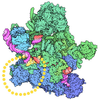

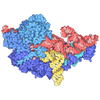
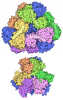
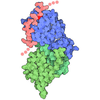

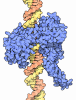


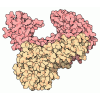
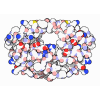
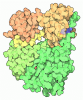
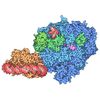
 Assembly

 Escherichia coli (E. coli)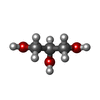
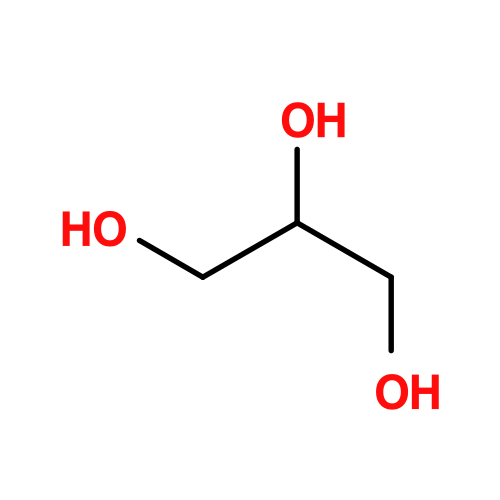 Mass: 92.094 Da / Num. of mol.: 1 / Source method: obtained synthetically / Formula: C3H8O3
 Mass: 18.015 Da / Num. of mol.: 320 / Source method: isolated from a natural source / Formula: H2O
 Sample preparation
 Processing