VIRAL PROTEIN/IMMUNE SYSTEM / HBV / pMHC / VIRAL PROTEIN / VIRAL PROTEIN-IMMUNE SYSTEM complex
機能・相同性
機能・相同性情報
microtubule-dependent intracellular transport of viral material towards nucleus / T=4 icosahedral viral capsid / antigen processing and presentation of peptide antigen via MHC class I / early endosome lumen / Nef mediated downregulation of MHC class I complex cell surface expression / DAP12 interactions / Endosomal/Vacuolar pathway / T cell mediated cytotoxicity / Antigen Presentation: Folding, assembly and peptide loading of class I MHC / lumenal side of endoplasmic reticulum membrane ...microtubule-dependent intracellular transport of viral material towards nucleus / T=4 icosahedral viral capsid / antigen processing and presentation of peptide antigen via MHC class I / early endosome lumen / Nef mediated downregulation of MHC class I complex cell surface expression / DAP12 interactions / Endosomal/Vacuolar pathway / T cell mediated cytotoxicity / Antigen Presentation: Folding, assembly and peptide loading of class I MHC / lumenal side of endoplasmic reticulum membrane / regulation of iron ion transport / cellular response to iron(III) ion / negative regulation of iron ion transport / negative regulation of forebrain neuron differentiation / antigen processing and presentation of exogenous protein antigen via MHC class Ib, TAP-dependent / ER to Golgi transport vesicle membrane / peptide antigen assembly with MHC class I protein complex / regulation of erythrocyte differentiation / response to molecule of bacterial origin / HFE-transferrin receptor complex / transferrin transport / MHC class I peptide loading complex / cellular response to iron ion / negative regulation of receptor-mediated endocytosis / positive regulation of T cell cytokine production / antigen processing and presentation of endogenous peptide antigen via MHC class I / MHC class I protein complex / peptide antigen assembly with MHC class II protein complex / negative regulation of neurogenesis / cellular response to nicotine / MHC class II protein complex / positive regulation of receptor-mediated endocytosis / multicellular organismal-level iron ion homeostasis / positive regulation of T cell mediated cytotoxicity / viral penetration into host nucleus / specific granule lumen / positive regulation of immune response / antigen processing and presentation of exogenous peptide antigen via MHC class II / peptide antigen binding / phagocytic vesicle membrane / recycling endosome membrane / positive regulation of T cell activation / negative regulation of epithelial cell proliferation / Interferon gamma signaling / Immunoregulatory interactions between a Lymphoid and a non-Lymphoid cell / Modulation by Mtb of host immune system / positive regulation of cellular senescence / sensory perception of smell / tertiary granule lumen / MHC class II protein complex binding / DAP12 signaling / T cell differentiation in thymus / late endosome membrane / host cell / negative regulation of neuron projection development / protein refolding / ER-Phagosome pathway / early endosome membrane / amyloid fibril formation / protein homotetramerization / host cell cytoplasm / intracellular iron ion homeostasis / learning or memory / endoplasmic reticulum lumen / Amyloid fiber formation / Golgi membrane / external side of plasma membrane / lysosomal membrane / focal adhesion / Neutrophil degranulation / symbiont entry into host cell / SARS-CoV-2 activates/modulates innate and adaptive immune responses / structural molecule activity / endoplasmic reticulum / Golgi apparatus / protein homodimerization activity / : / DNA binding / RNA binding / extracellular exosome / extracellular region / membrane / identical protein binding / plasma membrane / cytosol 類似検索 - 分子機能
Hepatitis core antigen / Viral capsid core domain supefamily, Hepatitis B virus / Hepatitis core antigen / MHC class I alpha chain, alpha1 alpha2 domains / Class I Histocompatibility antigen, domains alpha 1 and 2 / Beta-2-Microglobulin / : / MHC class I-like antigen recognition-like / MHC class I-like antigen recognition-like superfamily / MHC classes I/II-like antigen recognition protein ...Hepatitis core antigen / Viral capsid core domain supefamily, Hepatitis B virus / Hepatitis core antigen / MHC class I alpha chain, alpha1 alpha2 domains / Class I Histocompatibility antigen, domains alpha 1 and 2 / Beta-2-Microglobulin / : / MHC class I-like antigen recognition-like / MHC class I-like antigen recognition-like superfamily / MHC classes I/II-like antigen recognition protein / : / Immunoglobulin/major histocompatibility complex, conserved site / Immunoglobulins and major histocompatibility complex proteins signature. / Immunoglobulin C-Type / Immunoglobulin C1-set / Immunoglobulin C1-set domain / Ig-like domain profile. / Immunoglobulin-like domain / Immunoglobulin-like domain superfamily / Immunoglobulin-like fold 類似検索 - ドメイン・相同性
Capsid protein / Beta-2-microglobulin / MHC class I antigen 類似検索 - 構成要素
生物種
Homo sapiens (ヒト) Mus musculus (ハツカネズミ) Hepatitis B virus (B 型肝炎ウイルス)
ジャーナル: MAbs / 年: 2025 タイトル: A highly selective TCR-mimic antibody reveals unexpected mechanisms of HBV peptide-MHC recognition and previously unknown target biology. 著者: Shahzada Khan / Jeremy Lum / Heather Stephenson / Pawan Bir Kohli / David Mortenson / Dhivya Ramakrishnan / Magdeleine Hung / Sheng Ding / Elbert Seto / Sabrina Lu / Randy Yen / Debi Jin / ...著者: Shahzada Khan / Jeremy Lum / Heather Stephenson / Pawan Bir Kohli / David Mortenson / Dhivya Ramakrishnan / Magdeleine Hung / Sheng Ding / Elbert Seto / Sabrina Lu / Randy Yen / Debi Jin / Brian Lee / Sheila Clancy / Nicole Schirle Oakdale / Nikolai Novikov / Don Kang / Ruidong Li / David Pan / Rutwij Dave / Eric Lansdon / Simon P Fletcher / Abhishek V Garg / Nathan Thomsen / Scott Balsitis / 要旨: Curative therapies for chronic hepatitis B virus infection (CHB) are needed, and T-cell redirection is a promising approach, with peptide-MHC complexes (pMHC) being attractive targets. HBV core ...Curative therapies for chronic hepatitis B virus infection (CHB) are needed, and T-cell redirection is a promising approach, with peptide-MHC complexes (pMHC) being attractive targets. HBV core peptide (C18, 10-mer) presented by HLA-A*02:01 (C18-MHC) has two major variants (C18-V or C18-I, differing in the C-terminal residue), both of which are known to be targeted by CD8 T cells in HBV-infected individuals. Through an extensive screening campaign, we identified a highly selective anti-C18-MHC antibody clone MUR35. A MUR35-based T-cell engager (TCE) potently killed HBV-infected hepatocytes but had no activity on uninfected hepatocytes, on other HBV-negative cell types or on host peptides with sequence similarity to C18. Crystal structures of MUR35 bound to both C18-I- and C18-V-MHC revealed a unique binding mode with contacts mediated exclusively by the light chain complementarity-determining regions (CDRs), suggesting that high specificity is achievable without a typical T-cell receptor-like binding mode involving both heavy and light chain CDRs. Although MUR35 exhibits similar binding affinity and structural contacts with C18-V and C18-I, TCE killing was only detected on hepatocytes producing C18-V. To better understand the cause of this discrepancy, we conducted a quantitative proteomics study in an HBV-infected humanized mouse model and found that C18-V was expressed at approximately 300 copies/cell, while C18-I expression was below the limit of detection. Unexpectedly, the proteomics studies revealed that previously unreported 9-mers missing the N-terminal phenylalanine of C18-I and -V were expressed at an average of 508 and 142 copies/cell, respectively, and therefore could be alternative targets for HBV pan genotypic coverage. Our data suggest unexpectedly large differences in antigen presentation efficiency between highly conservative amino acid substitutions in C18 peptide and reveal potentially novel HBV targets for future studies.
 ムービー
ムービー コントローラー


 データを開く
 基本情報
基本情報 要素
要素 キーワード
キーワード 機能・相同性情報
 Homo sapiens (ヒト)
 Mus musculus (ハツカネズミ)
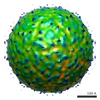 Hepatitis B virus (B 型肝炎ウイルス)
 X線回折 /
  データ登録者
 引用
引用
 構造の表示
構造の表示 ダウンロードとリンク
 その他のダウンロード

 PDBj
PDBj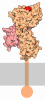
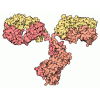
 集合体
集合体

 Escherichia coli (大腸菌) / 参照: UniProt: Q8WLS4
 試料調製
試料調製 解析
解析