 Movie
Movie Controller

[English] 日本語
 Yorodumi
- PDB-9pd9: The Structure of Porcine Trypsin in Complex with Crystallization ... -
+ Open data

- Basic information
| Entry | Database: PDB / ID: 9pd9 | ||||||
|---|---|---|---|---|---|---|---|
| Title | The Structure of Porcine Trypsin in Complex with Crystallization Additives I | ||||||
 Components Components | Trypsin | ||||||
 Keywords Keywords | HYDROLASE / crystallization / additives / Silver Bullets / ligands / PEG / trypsin | ||||||
| Function / homology |  Function and homology information Function and homology informationtrypsin / serine-type endopeptidase activity / proteolysis / extracellular region Similarity search - Function | ||||||
| Biological species |   Sus scrofa (pig) Sus scrofa (pig) | ||||||
| Method |  X-RAY DIFFRACTION / MOLECULAR REPLACEMENT / Resolution: 1.28 Å X-RAY DIFFRACTION / MOLECULAR REPLACEMENT / Resolution: 1.28 Å | ||||||
 Authors Authors | McPherson, A. | ||||||
| Funding support | 1items
| ||||||
 Citation Citation | Journal: Cryst.Growth Des. / Year: 2026 Title: X-ray Diffraction Analyses of Trypsin Crystals Grown in the Presence of Additives Authors: McPherson, A. #1: Journal: Acta Crystallogr D Struct Biol / Year: 2019 Title: Macromolecular structure determination using X-rays, neutrons and electrons: recent developments in Phenix. Authors: Dorothee Liebschner / Pavel V Afonine / Matthew L Baker / Gábor Bunkóczi / Vincent B Chen / Tristan I Croll / Bradley Hintze / Li Wei Hung / Swati Jain / Airlie J McCoy / Nigel W Moriarty ...Authors: Dorothee Liebschner / Pavel V Afonine / Matthew L Baker / Gábor Bunkóczi / Vincent B Chen / Tristan I Croll / Bradley Hintze / Li Wei Hung / Swati Jain / Airlie J McCoy / Nigel W Moriarty / Robert D Oeffner / Billy K Poon / Michael G Prisant / Randy J Read / Jane S Richardson / David C Richardson / Massimo D Sammito / Oleg V Sobolev / Duncan H Stockwell / Thomas C Terwilliger / Alexandre G Urzhumtsev / Lizbeth L Videau / Christopher J Williams / Paul D Adams /    Abstract: Diffraction (X-ray, neutron and electron) and electron cryo-microscopy are powerful methods to determine three-dimensional macromolecular structures, which are required to understand biological ...Diffraction (X-ray, neutron and electron) and electron cryo-microscopy are powerful methods to determine three-dimensional macromolecular structures, which are required to understand biological processes and to develop new therapeutics against diseases. The overall structure-solution workflow is similar for these techniques, but nuances exist because the properties of the reduced experimental data are different. Software tools for structure determination should therefore be tailored for each method. Phenix is a comprehensive software package for macromolecular structure determination that handles data from any of these techniques. Tasks performed with Phenix include data-quality assessment, map improvement, model building, the validation/rebuilding/refinement cycle and deposition. Each tool caters to the type of experimental data. The design of Phenix emphasizes the automation of procedures, where possible, to minimize repetitive and time-consuming manual tasks, while default parameters are chosen to encourage best practice. A graphical user interface provides access to many command-line features of Phenix and streamlines the transition between programs, project tracking and re-running of previous tasks. | ||||||
| History |
|
- Structure visualization
| Structure viewer | Molecule: MolmilJmol/JSmol |
|---|
- Downloads & links
-Download
| PDBx/mmCIF format | 9pd9.cif.gz | 213.9 KB | Display | PDBx/mmCIF format |
|---|---|---|---|---|
| PDB format | pdb9pd9.ent.gz | Display | PDB format | |
| PDBx/mmJSON format | 9pd9.json.gz | Tree view | PDBx/mmJSON format | |
| Others |  Other downloads Other downloads |
-Validation report
| Arichive directory | https://data.pdbj.org/pub/pdb/validation_reports/pd/9pd9ftp://data.pdbj.org/pub/pdb/validation_reports/pd/9pd9 | HTTPS FTP |
|---|
-Related structure data


-Links
 PDBj
PDBj
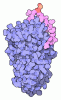
- Assembly
| Deposited unit | 
| ||||||||||||
|---|---|---|---|---|---|---|---|---|---|---|---|---|---|
| 1 |
| ||||||||||||
| Unit cell |
| ||||||||||||
| Components on special symmetry positions |
|
-Components
-Protein , 1 types, 1 molecules A
| #1: Protein | Mass: 24428.424 Da / Num. of mol.: 1 Source method: isolated from a genetically manipulated source Source: (gene. exp.) Sus scrofa (pig) / Production host: Sus scrofa (pig) / References: UniProt: P00761, trypsin |
|---|
-Non-polymers , 10 types, 279 molecules 
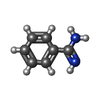
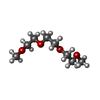
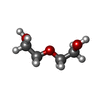


| #2: Chemical | ChemComp-CA /  Mass: 40.078 Da / Num. of mol.: 1 / Source method: obtained synthetically / Formula: Ca Mass: 40.078 Da / Num. of mol.: 1 / Source method: obtained synthetically / Formula: Ca | ||||||||||||||||
|---|---|---|---|---|---|---|---|---|---|---|---|---|---|---|---|---|---|
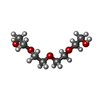
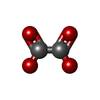
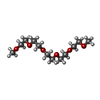
| #3: Chemical | ChemComp-BEN / 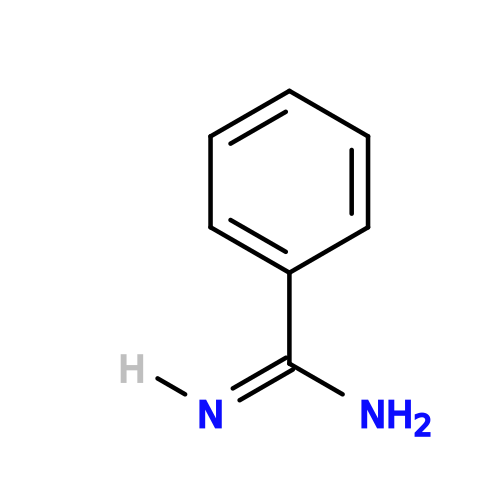 Mass: 120.152 Da / Num. of mol.: 4 / Source method: obtained synthetically / Formula: C7H8N2 Mass: 120.152 Da / Num. of mol.: 4 / Source method: obtained synthetically / Formula: C7H8N2#4: Chemical | ChemComp-PG5 / 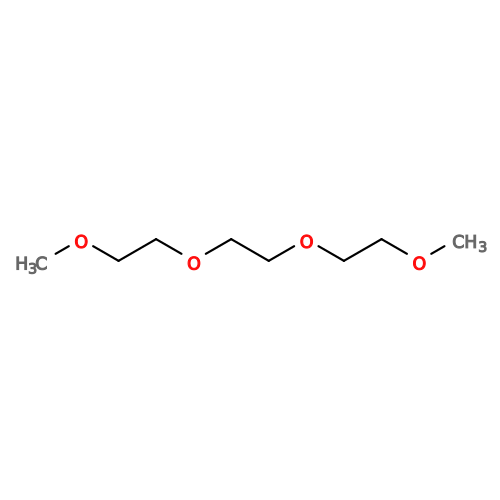 Mass: 178.226 Da / Num. of mol.: 4 / Source method: obtained synthetically / Formula: C8H18O4 Mass: 178.226 Da / Num. of mol.: 4 / Source method: obtained synthetically / Formula: C8H18O4#5: Chemical | ChemComp-PEG / 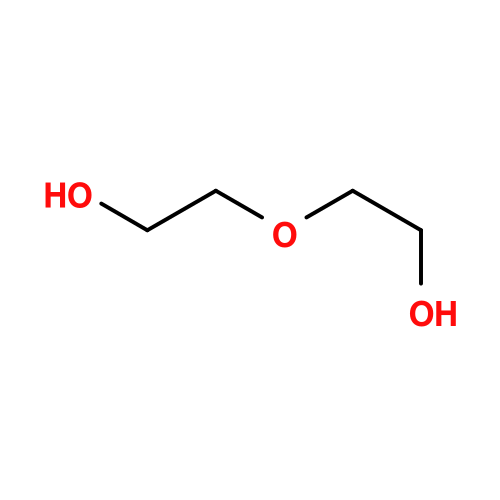 Mass: 106.120 Da / Num. of mol.: 15 / Source method: obtained synthetically / Formula: C4H10O3 Mass: 106.120 Da / Num. of mol.: 15 / Source method: obtained synthetically / Formula: C4H10O3#6: Chemical | ChemComp-PG4 / 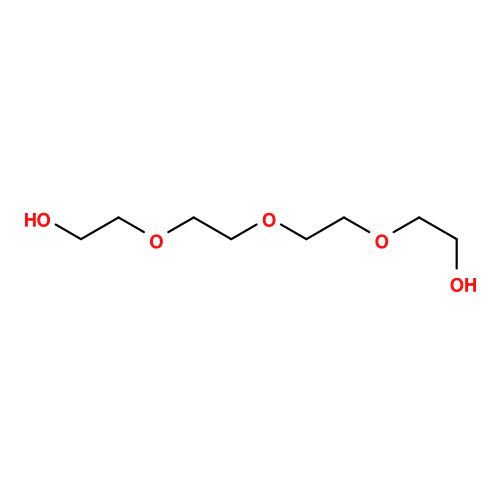 Mass: 194.226 Da / Num. of mol.: 8 / Source method: obtained synthetically / Formula: C8H18O5 / Comment: precipitant*YM Mass: 194.226 Da / Num. of mol.: 8 / Source method: obtained synthetically / Formula: C8H18O5 / Comment: precipitant*YM#7: Chemical | ChemComp-OXL / | 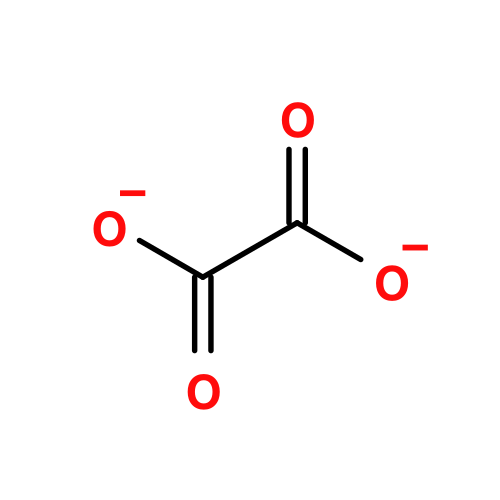 Mass: 88.019 Da / Num. of mol.: 1 / Source method: obtained synthetically / Formula: C2O4 Mass: 88.019 Da / Num. of mol.: 1 / Source method: obtained synthetically / Formula: C2O4#8: Chemical | ChemComp-A1CHW / | Mass: 173.190 Da / Num. of mol.: 1 / Source method: obtained synthetically / Formula: C6H7NO3S #9: Chemical | ChemComp-OXM /  Mass: 89.050 Da / Num. of mol.: 6 / Source method: obtained synthetically / Formula: C2H3NO3 Mass: 89.050 Da / Num. of mol.: 6 / Source method: obtained synthetically / Formula: C2H3NO3#10: Chemical | 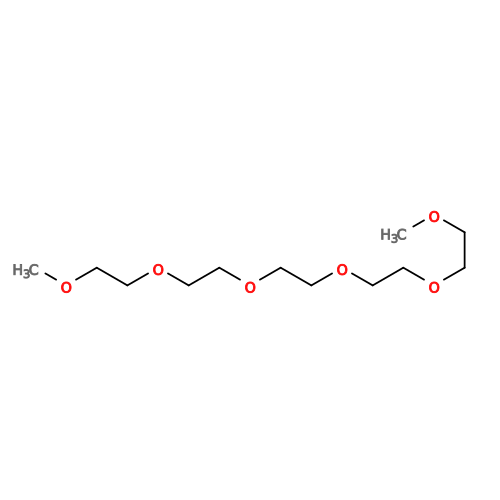 Mass: 266.331 Da / Num. of mol.: 3 / Source method: obtained synthetically / Formula: C12H26O6 Mass: 266.331 Da / Num. of mol.: 3 / Source method: obtained synthetically / Formula: C12H26O6#11: Water | ChemComp-HOH / | Mass: 18.015 Da / Num. of mol.: 236 / Source method: isolated from a natural source / Formula: H2O |
-Details
| Has protein modification | Y |
|---|
-Experimental details
-Experiment
| Experiment | Method: X-RAY DIFFRACTION / Number of used crystals: 1 |
|---|
- Sample preparation
| Crystal | Density Matthews: 2.2 Å3/Da / Density % sol: 50.56 % / Description: orthorhombic prisms |
|---|---|
| Crystal grow | Temperature: 295 K / Method: vapor diffusion, sitting drop / pH: 6.5 Details: Sitting drop vapor diffusion in Cryschem plates. Reservoirs 30% PEG 3350. Drops 3.0 ul of reservoir, plus 2 ul additives oxalic acid, sulfanilic acid, 4-amino benzoic acid mix, plus 3.0 ul ...Details: Sitting drop vapor diffusion in Cryschem plates. Reservoirs 30% PEG 3350. Drops 3.0 ul of reservoir, plus 2 ul additives oxalic acid, sulfanilic acid, 4-amino benzoic acid mix, plus 3.0 ul of 40 mg/ml stock protein solution of 0.1 M HEPES at pH 6.5. PH range: 6.0 - 7.0 |
-Data collection
| Diffraction | Mean temperature: 295 K / Serial crystal experiment: N |
|---|---|
| Diffraction source | Source: ROTATING ANODE / Type: RIGAKU FR-E / Wavelength: 1.54 Å |
| Detector | Type: RIGAKU / Detector: IMAGE PLATE / Date: Jun 6, 2012 |
| Radiation | Monochromator: Osmic mirrors / Protocol: SINGLE WAVELENGTH / Monochromatic (M) / Laue (L): M / Scattering type: x-ray |
| Radiation wavelength | Wavelength: 1.54 Å / Relative weight: 1 |
| Reflection | Resolution: 1.28→25.9 Å / Num. obs: 58890 / % possible obs: 91.5 % / Redundancy: 5.78 % / Biso Wilson estimate: 17.39 Å2 / Rmerge(I) obs: 0.054 / Net I/σ(I): 16.5 |
| Reflection shell | Resolution: 1.28→1.33 Å / Rmerge(I) obs: 0.375 / Mean I/σ(I) obs: 1.8 / Num. unique obs: 800 |
- Processing
| Software |
| |||||||||||||||||||||||||||||||||||||||||||||||||||||||||||||||||||||||||||||||||||||||||||||||||||||||||||||||||||||||||||||||||||||||||||||||||||||||||||||||||||||||||||||||||||||||||||||||||||||||||||||||||||||||||
|---|---|---|---|---|---|---|---|---|---|---|---|---|---|---|---|---|---|---|---|---|---|---|---|---|---|---|---|---|---|---|---|---|---|---|---|---|---|---|---|---|---|---|---|---|---|---|---|---|---|---|---|---|---|---|---|---|---|---|---|---|---|---|---|---|---|---|---|---|---|---|---|---|---|---|---|---|---|---|---|---|---|---|---|---|---|---|---|---|---|---|---|---|---|---|---|---|---|---|---|---|---|---|---|---|---|---|---|---|---|---|---|---|---|---|---|---|---|---|---|---|---|---|---|---|---|---|---|---|---|---|---|---|---|---|---|---|---|---|---|---|---|---|---|---|---|---|---|---|---|---|---|---|---|---|---|---|---|---|---|---|---|---|---|---|---|---|---|---|---|---|---|---|---|---|---|---|---|---|---|---|---|---|---|---|---|---|---|---|---|---|---|---|---|---|---|---|---|---|---|---|---|---|---|---|---|---|---|---|---|---|---|---|---|---|---|---|---|---|
| Refinement | Method to determine structure: MOLECULAR REPLACEMENT / Resolution: 1.28→25.25 Å / SU ML: 0.141 / Cross valid method: FREE R-VALUE / σ(F): 1 / Phase error: 14.9008 Stereochemistry target values: GeoStd + Monomer Library + CDL v1.2 Details: This structure is reported from an X ray analysis of crystals grown with 30 percent PEG as the precipitating agent and was refined using REFINE from the PHENIX system. It was assumed in this ...Details: This structure is reported from an X ray analysis of crystals grown with 30 percent PEG as the precipitating agent and was refined using REFINE from the PHENIX system. It was assumed in this refinement and thought appropriate to treat the solvent regions as mixtures or amalgams of disordered water molecules, ordered molecules of water, and PEG molecules of short, different lengths. The inclusion of a large number of PEG molecules is consistent with data indicating that PEG constitutes a large volume of the non protein occupied crystal, with previous reports in the literature of PEG constituents of the solvent regions, and with the strand like appearance of the low level electron density in the solvent regions. Because all of the PEG molecules included here are of low to moderate occupancy, and the clash analysis neglects this property, the clash score reported by REFINE and by the PDB in the validation report is erroneous and should be disregarded. It is not a valid representation of reality. In addition, automated approaches to placing water molecules in crystals grown from PEG, are not to be trusted. If the PEG molecules are completely omitted and only the protein and ligands are included in the model then the clash score is in the low single digits.
| |||||||||||||||||||||||||||||||||||||||||||||||||||||||||||||||||||||||||||||||||||||||||||||||||||||||||||||||||||||||||||||||||||||||||||||||||||||||||||||||||||||||||||||||||||||||||||||||||||||||||||||||||||||||||
| Solvent computation | Shrinkage radii: 0.9 Å / VDW probe radii: 1.1 Å / Solvent model: FLAT BULK SOLVENT MODEL | |||||||||||||||||||||||||||||||||||||||||||||||||||||||||||||||||||||||||||||||||||||||||||||||||||||||||||||||||||||||||||||||||||||||||||||||||||||||||||||||||||||||||||||||||||||||||||||||||||||||||||||||||||||||||
| Displacement parameters | Biso mean: 33.48 Å2 | |||||||||||||||||||||||||||||||||||||||||||||||||||||||||||||||||||||||||||||||||||||||||||||||||||||||||||||||||||||||||||||||||||||||||||||||||||||||||||||||||||||||||||||||||||||||||||||||||||||||||||||||||||||||||
| Refinement step | Cycle: LAST / Resolution: 1.28→25.25 Å
| |||||||||||||||||||||||||||||||||||||||||||||||||||||||||||||||||||||||||||||||||||||||||||||||||||||||||||||||||||||||||||||||||||||||||||||||||||||||||||||||||||||||||||||||||||||||||||||||||||||||||||||||||||||||||
| Refine LS restraints |
| |||||||||||||||||||||||||||||||||||||||||||||||||||||||||||||||||||||||||||||||||||||||||||||||||||||||||||||||||||||||||||||||||||||||||||||||||||||||||||||||||||||||||||||||||||||||||||||||||||||||||||||||||||||||||
| LS refinement shell |
|
