National Institutes of Health/National Center for Complementary and Integrative Health (NIH/NCCIH)
R01AT011990
United States
National Science Foundation (NSF, United States)
DMR-1933487
United States
National Science Foundation (NSF, United States)
CHE-2003418
United States
Citation
Journal: J Am Chem Soc / Year: 2025 Title: Spatially Aware Diffraction Mapping Enables Fully Autonomous MicroED. Authors: Dmitry B Eremin / Kunal K Jha / David A Delgadillo / Hongyu Zhang / Samuel H Foxman / Samuel N Johnson / Niko W Vlahakis / Duilio Cascio / Vincent Lavallo / Jose A Rodríguez / Hosea M Nelson / Abstract: In the hands of experts, microcrystal electron diffraction (microED, a 3D ED method) is a powerful tool for structural chemistry and chemical discovery. To expand the accessibility and utility of ...In the hands of experts, microcrystal electron diffraction (microED, a 3D ED method) is a powerful tool for structural chemistry and chemical discovery. To expand the accessibility and utility of microED, we introduce Reciprocal Eyes (REyes), an autonomous and intelligent platform (available for academic use) that combines diffraction-based particle selection with real-time data processing to deliver crystal structures without human intervention. REyes spatially maps diffraction signal and autonomously selects crystallites of interest, relying on lattice-quality metrics to acquire and index high-resolution data sets from diverse compounds. Tested on four different transmission electron microscopes (TEMs), it consistently yields preliminary structural solutions from single crystallites of materials, peptides, metal complexes, natural products (NPs), and proteins.
Details: Crystals formed by vapor diffusion in sitting drops, from 80 mg/mL lysozyme mixed 1:1 with reservoir solution (800 mM NaCl, 80 mM sodium acetate pH 4.8) Temperature: 293 K
Buffer solution
pH: 4.8
Specimen
Embedding applied: NO / Shadowing applied: NO / Staining applied: NO / Vitrification applied: YES Details: Crystals formed by vapor diffusion in sitting drops, from 80 mg/mL lysozyme mixed 1:1 with reservoir solution (800 mM NaCl, 80 mM sodium acetate pH 4.8)
Vitrification
Cryogen name: ETHANE
-
Data collection
Experimental equipment
Model: Talos Arctica / Image courtesy: FEI Company
Microscopy
Model: FEI TALOS ARCTICA
Electron gun
Electron source: FIELD EMISSION GUN / Accelerating voltage: 200 kV / Illumination mode: FLOOD BEAM
In the structure databanks used in Yorodumi, some data are registered as the other names, "COVID-19 virus" and "2019-nCoV". Here are the details of the virus and the list of structure data.
Jan 31, 2019. EMDB accession codes are about to change! (news from PDBe EMDB page)
EMDB accession codes are about to change! (news from PDBe EMDB page)
The allocation of 4 digits for EMDB accession codes will soon come to an end. Whilst these codes will remain in use, new EMDB accession codes will include an additional digit and will expand incrementally as the available range of codes is exhausted. The current 4-digit format prefixed with “EMD-” (i.e. EMD-XXXX) will advance to a 5-digit format (i.e. EMD-XXXXX), and so on. It is currently estimated that the 4-digit codes will be depleted around Spring 2019, at which point the 5-digit format will come into force.
The EM Navigator/Yorodumi systems omit the EMD- prefix.
Related info.:Q: What is EMD? / ID/Accession-code notation in Yorodumi/EM Navigator
Yorodumi is a browser for structure data from EMDB, PDB, SASBDB, etc.
This page is also the successor to EM Navigator detail page, and also detail information page/front-end page for Omokage search.
The word "yorodu" (or yorozu) is an old Japanese word meaning "ten thousand". "mi" (miru) is to see.
Related info.:EMDB / PDB / SASBDB / Comparison of 3 databanks / Yorodumi Search / Aug 31, 2016. New EM Navigator & Yorodumi / Yorodumi Papers / Jmol/JSmol / Function and homology information / Changes in new EM Navigator and Yorodumi
 Movie
Movie Controller

 Yorodumi
 Open data
 Basic information
 Components
 Keywords
 Function and homology information
 Gallus gallus (chicken)
 MOLECULAR REPLACEMENT / cryo EM / Resolution: 2.2 Å
  Authors
 United States, 5items
  Citation
 Structure visualization
 Downloads & links
 Other downloads
 PDBj
PDBj
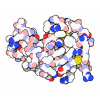
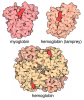
 Assembly

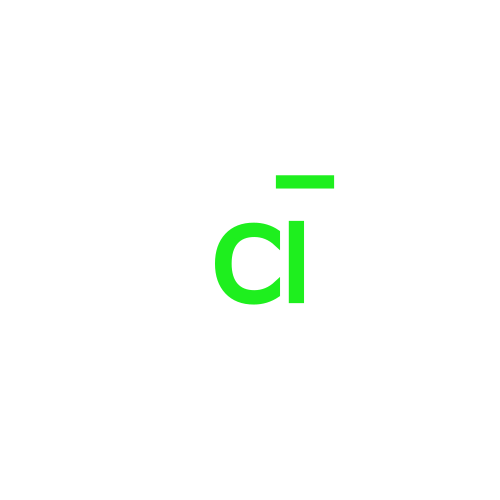 Mass: 35.453 Da / Num. of mol.: 1 / Source method: obtained synthetically / Formula: Cl
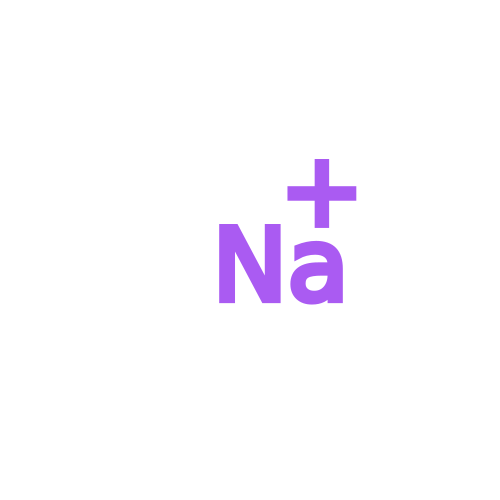 Mass: 22.990 Da / Num. of mol.: 1 / Source method: obtained synthetically / Formula: Na
 Mass: 18.015 Da / Num. of mol.: 17 / Source method: isolated from a natural source / Formula: H2O
 Sample preparation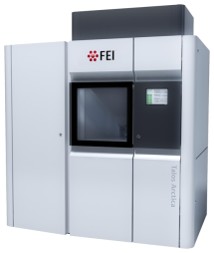
 Processing