 Movie
Movie Controller

[English] 日本語
 Yorodumi
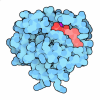
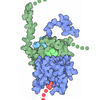
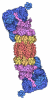
- PDB-9ot6: Cryo-EM structure of the PI4KA complex bound to an EFR3 interferi... -
+ Open data

- Basic information
| Entry | Database: PDB / ID: 9ot6 | |||||||||||||||
|---|---|---|---|---|---|---|---|---|---|---|---|---|---|---|---|---|
| Title | Cryo-EM structure of the PI4KA complex bound to an EFR3 interfering nanobody (F3IN) | |||||||||||||||
 Components Components |
| |||||||||||||||
 Keywords Keywords | SIGNALING PROTEIN / PI4KA / TTC7B / FAM126A / Nanobody / Complex | |||||||||||||||
| Function / homology |  Function and homology information Function and homology informationreorganization of cellular membranes to establish viral sites of replication / Synthesis of PIPs at the ER membrane / 1-phosphatidylinositol 4-kinase / 1-phosphatidylinositol 4-kinase activity / host-mediated perturbation of viral process / Synthesis of PIPs at the Golgi membrane / Golgi-associated vesicle membrane / phosphatidylinositol biosynthetic process / phosphatidylinositol phosphate biosynthetic process / phosphatidylinositol-mediated signaling ...reorganization of cellular membranes to establish viral sites of replication / Synthesis of PIPs at the ER membrane / 1-phosphatidylinositol 4-kinase / 1-phosphatidylinositol 4-kinase activity / host-mediated perturbation of viral process / Synthesis of PIPs at the Golgi membrane / Golgi-associated vesicle membrane / phosphatidylinositol biosynthetic process / phosphatidylinositol phosphate biosynthetic process / phosphatidylinositol-mediated signaling / myelination / protein localization to plasma membrane / neuron projection / cadherin binding / focal adhesion / signal transduction / extracellular exosome / ATP binding / membrane / plasma membrane / cytosol / cytoplasm Similarity search - Function | |||||||||||||||
| Biological species |  Homo sapiens (human) Homo sapiens (human)  Lama glama (llama) Lama glama (llama) | |||||||||||||||
| Method | ELECTRON MICROSCOPY / single particle reconstruction / cryo EM / Resolution: 3.54 Å | |||||||||||||||
 Authors Authors | Shaw, A.L. / Suresh, S. / Yip, C.K. / Burke, J.E. | |||||||||||||||
| Funding support |  Canada, 4items Canada, 4items
| |||||||||||||||
 Citation Citation | Journal: J Biol Chem / Year: 2025 Title: Development of an inhibitory TTC7B selective nanobody that blocks EFR3 recruitment of PI4KA. Authors: Sushant Suresh / Alexandria L Shaw / Damilola K Akintola / Martine Lunke / Sophia Doerr / Pooja Rohilla / Tamas Balla / Calvin K Yip / Scott D Hansen / Jennifer A Cobb / John E Burke /  Abstract: Phosphatidylinositol 4 kinase IIIα (PI4KIIIα/PI4KA) is an essential lipid kinase that plays a critical role in regulating plasma membrane (PM) identity. PI4KA is primarily recruited to the PM ...Phosphatidylinositol 4 kinase IIIα (PI4KIIIα/PI4KA) is an essential lipid kinase that plays a critical role in regulating plasma membrane (PM) identity. PI4KA is primarily recruited to the PM through the targeted recruitment by the proteins, EFR3A and EFR3B, which bind to the PI4KA accessory proteins, TTC7 (TTC7A/B) and FAM126 (FAM126A/B). Here, we characterized how both EFR3 isoforms interact with all possible TTC7-FAM126 combinations and developed a nanobody that specifically blocked EFR3-mediated PI4KA recruitment in TTC7B-containing complexes. Most EFR3-TTC7-FAM126 combinations show similar binding affinities, with the exception of EFR3A-TTC7B-FAM126A, which binds with a ∼10-fold higher affinity. Moreover, we showed that EFR3B phosphorylation markedly decreased binding to TTC7-FAM126. Using a yeast display approach, we isolated a TTC7B selective nanobody that blocked EFR3 binding. Cryo-EM and hydrogen deuterium exchange mass spectrometry showed an extended interface with both PI4KA and TTC7B that sterically blocks EFR3 binding. The nanobody caused decreased membrane recruitment both on lipid bilayers and in cells, with decreased PM production of phosphatidylinositol 4-phosphate. Collectively, these findings provide new insights into PI4KA regulation and provide a tool for manipulating PI4KA complexes, which may be valuable for therapeutic targeting. | |||||||||||||||
| History |
|
- Structure visualization
| Structure viewer | Molecule: MolmilJmol/JSmol |
|---|
- Downloads & links
-Download
| PDBx/mmCIF format | 9ot6.cif.gz | 953.2 KB | Display | PDBx/mmCIF format |
|---|---|---|---|---|
| PDB format | pdb9ot6.ent.gz | 767 KB | Display | PDB format |
| PDBx/mmJSON format | 9ot6.json.gz | Tree view | PDBx/mmJSON format | |
| Others |  Other downloads Other downloads |
-Validation report
| Arichive directory | https://data.pdbj.org/pub/pdb/validation_reports/ot/9ot6ftp://data.pdbj.org/pub/pdb/validation_reports/ot/9ot6 | HTTPS FTP |
|---|
-Related structure data
| Related structure data |  70826MC C: citing same article ( M: map data used to model this data |
|---|---|
| Similar structure data |


-Links
 PDBj
PDBj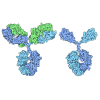
- Assembly
| Deposited unit | 
|
|---|---|
| 1 |
|
-Components
| #1: Protein | Mass: 237246.438 Da / Num. of mol.: 2 Source method: isolated from a genetically manipulated source Source: (gene. exp.) Homo sapiens (human) / Gene: PI4KA, PIK4, PIK4CA / Production host:   Spodoptera frugiperda (fall armyworm) Spodoptera frugiperda (fall armyworm)References: UniProt: P42356, 1-phosphatidylinositol 4-kinase #2: Antibody | Mass: 18025.229 Da / Num. of mol.: 2 Source method: isolated from a genetically manipulated source Details: Nanobody library in yeast surface display library / Source: (gene. exp.) Lama glama (llama) / Production host:   Escherichia coli BL21(DE3) (bacteria) Escherichia coli BL21(DE3) (bacteria)#3: Protein | Mass: 94294.109 Da / Num. of mol.: 2 Source method: isolated from a genetically manipulated source Source: (gene. exp.) Homo sapiens (human) / Gene: TTC7B, TTC7L1 / Production host: Spodoptera frugiperda (fall armyworm) / References: UniProt: Q86TV6#4: Protein | Mass: 34638.867 Da / Num. of mol.: 2 / Fragment: residues 1-308 Source method: isolated from a genetically manipulated source Source: (gene. exp.) Homo sapiens (human) / Gene: HYCC1, DRCTNNB1A, FAM126A / Production host: Spodoptera frugiperda (fall armyworm) / References: UniProt: Q9BYI3Has protein modification | Y | |
|---|
-Experimental details
-Experiment
| Experiment | Method: ELECTRON MICROSCOPY |
|---|---|
| EM experiment | Aggregation state: PARTICLE / 3D reconstruction method: single particle reconstruction |
- Sample preparation
| Component |
| |||||||||||||||||||||||||
|---|---|---|---|---|---|---|---|---|---|---|---|---|---|---|---|---|---|---|---|---|---|---|---|---|---|---|
| Molecular weight | Value: 0.767 MDa / Experimental value: YES | |||||||||||||||||||||||||
| Source (natural) |
| |||||||||||||||||||||||||
| Source (recombinant) |
| |||||||||||||||||||||||||
| Buffer solution | pH: 7 | |||||||||||||||||||||||||
| Buffer component |
| |||||||||||||||||||||||||
| Specimen | Conc.: 0.75 mg/ml / Embedding applied: NO / Shadowing applied: NO / Staining applied: NO / Vitrification applied: YES Details: Gel filtration buffer, filtered through 0.22um filter and degassed. 0.75mg/ml of PI4KA with 3 fold molar excess F3IN Nanobody, with 0.25 mM BS3 crosslinker. | |||||||||||||||||||||||||
| Specimen support | Details: Glow discharged using the Pelco EasiGlow. 15mA Current. Grid material: COPPER / Grid mesh size: 300 divisions/in. / Grid type: C-flat-2/1 | |||||||||||||||||||||||||
| Vitrification | Instrument: FEI VITROBOT MARK IV / Cryogen name: ETHANE / Humidity: 100 % / Chamber temperature: 277.15 K / Details: Blot force -5, blot time 1.5 s. |
- Electron microscopy imaging
| Experimental equipment |  Model: Titan Krios / Image courtesy: FEI Company |
|---|---|
| Microscopy | Model: TFS KRIOS |
| Electron gun | Electron source:  FIELD EMISSION GUN / Accelerating voltage: 300 kV / Illumination mode: FLOOD BEAM FIELD EMISSION GUN / Accelerating voltage: 300 kV / Illumination mode: FLOOD BEAM |
| Electron lens | Mode: BRIGHT FIELD / Nominal magnification: 165000 X / Nominal defocus max: 2000 nm / Nominal defocus min: 500 nm |
| Image recording | Electron dose: 50 e/Å2 / Film or detector model: FEI FALCON III (4k x 4k) / Num. of grids imaged: 2 / Num. of real images: 14026 |
| EM imaging optics | Energyfilter name: TFS Selectris |
- Processing
| EM software |
| ||||||||||||||||||||||||||||||||
|---|---|---|---|---|---|---|---|---|---|---|---|---|---|---|---|---|---|---|---|---|---|---|---|---|---|---|---|---|---|---|---|---|---|
| CTF correction | Type: PHASE FLIPPING AND AMPLITUDE CORRECTION | ||||||||||||||||||||||||||||||||
| Symmetry | Point symmetry: C2 (2 fold cyclic) | ||||||||||||||||||||||||||||||||
| 3D reconstruction | Resolution: 3.54 Å / Resolution method: FSC 0.143 CUT-OFF / Num. of particles: 282982 / Algorithm: FOURIER SPACE / Symmetry type: POINT | ||||||||||||||||||||||||||||||||
| Atomic model building | 3D fitting-ID: 1
| ||||||||||||||||||||||||||||||||
| Refinement | Highest resolution: 3.54 Å Stereochemistry target values: REAL-SPACE (WEIGHTED MAP SUM AT ATOM CENTERS) | ||||||||||||||||||||||||||||||||
| Refine LS restraints |
|

