Movie
Movie Controller

[English] 日本語
 Yorodumi
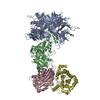
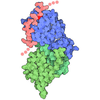
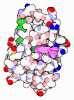
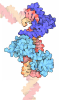
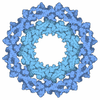
- PDB-9nyr: Cryo-EM structure of CDK2/CyclinE1 in complex with CRBN/DDB1 and ... -
+ Open data

- Basic information
| Entry | Database: PDB / ID: 9nyr | ||||||||||||||||||||||||||||||
|---|---|---|---|---|---|---|---|---|---|---|---|---|---|---|---|---|---|---|---|---|---|---|---|---|---|---|---|---|---|---|---|
| Title | Cryo-EM structure of CDK2/CyclinE1 in complex with CRBN/DDB1 and Cpd 24 | ||||||||||||||||||||||||||||||
 Components Components |
| ||||||||||||||||||||||||||||||
 Keywords Keywords | CELL CYCLE / kinase / degrader / CDK2 / Cyclin E / CRBN | ||||||||||||||||||||||||||||||
| Function / homology |  Function and homology information Function and homology informationpositive regulation of mesenchymal stem cell proliferation / negative regulation of monoatomic ion transmembrane transport / RHOBTB3 ATPase cycle / positive regulation by virus of viral protein levels in host cell / spindle assembly involved in female meiosis / epigenetic programming in the zygotic pronuclei / cyclin-dependent protein serine/threonine kinase regulator activity / UV-damage excision repair / cyclin A1-CDK2 complex / cyclin E2-CDK2 complex ...positive regulation of mesenchymal stem cell proliferation / negative regulation of monoatomic ion transmembrane transport / RHOBTB3 ATPase cycle / positive regulation by virus of viral protein levels in host cell / spindle assembly involved in female meiosis / epigenetic programming in the zygotic pronuclei / cyclin-dependent protein serine/threonine kinase regulator activity / UV-damage excision repair / cyclin A1-CDK2 complex / cyclin E2-CDK2 complex / cyclin E1-CDK2 complex / cyclin A2-CDK2 complex / G2 Phase / Y chromosome / cyclin-dependent protein kinase activity / regulation of heterochromatin organization / Phosphorylation of proteins involved in G1/S transition by active Cyclin E:Cdk2 complexes / biological process involved in interaction with symbiont / positive regulation of heterochromatin formation / p53-Dependent G1 DNA Damage Response / regulation of mitotic cytokinesis / X chromosome / PTK6 Regulates Cell Cycle / G1/S-Specific Transcription / regulation of mitotic cell cycle phase transition / regulation of miRNA-mediated gene silencing / regulation of natural killer cell activation / regulation of anaphase-promoting complex-dependent catabolic process / WD40-repeat domain binding / Defective binding of RB1 mutants to E2F1,(E2F2, E2F3) / regulation of cell cycle phase transition / locomotory exploration behavior / Cul4-RING E3 ubiquitin ligase complex / regulation of stem cell population maintenance / centriole replication / telomere maintenance in response to DNA damage / Association of TriC/CCT with target proteins during biosynthesis / Regulation of APC/C activators between G1/S and early anaphase / microtubule organizing center / Cul4A-RING E3 ubiquitin ligase complex / Cul4B-RING E3 ubiquitin ligase complex / ubiquitin ligase complex scaffold activity / negative regulation of adipose tissue development / G0 and Early G1 / regulation of cellular response to stress / limb development / viral release from host cell / Activation of the pre-replicative complex / Telomere Extension By Telomerase / cyclin-dependent kinase / cyclin-dependent protein serine/threonine kinase activity / cullin family protein binding / TP53 Regulates Transcription of Genes Involved in G1 Cell Cycle Arrest / Regulation of MITF-M-dependent genes involved in cell cycle and proliferation / Cajal body / positive regulation of Wnt signaling pathway / Activation of ATR in response to replication stress / Cyclin E associated events during G1/S transition / negative regulation of protein-containing complex assembly / centrosome duplication / regulation of DNA-templated DNA replication initiation / Cyclin A:Cdk2-associated events at S phase entry / positive regulation of G1/S transition of mitotic cell cycle / positive regulation of viral genome replication / Cyclin A/B1/B2 associated events during G2/M transition / cyclin-dependent protein kinase holoenzyme complex / positive regulation of gluconeogenesis / condensed chromosome / mitotic G1 DNA damage checkpoint signaling / cellular response to nitric oxide / rhythmic process / post-translational protein modification / regulation of embryonic development / positive regulation of DNA replication / cyclin binding / replication fork processing / negative regulation of protein localization to chromatin / regulation of mitotic cell cycle / meiotic cell cycle / G1/S transition of mitotic cell cycle / G2/M transition of mitotic cell cycle / proteasomal protein catabolic process / epigenetic regulation of gene expression / positive regulation of protein-containing complex assembly / nucleotide-excision repair / regulation of autophagy / peptidyl-serine phosphorylation / Recognition of DNA damage by PCNA-containing replication complex / cellular senescence / DNA Damage/Telomere Stress Induced Senescence / kinase activity / Meiotic recombination / regulation of circadian rhythm / DNA Damage Recognition in GG-NER / CDK-mediated phosphorylation and removal of Cdc6 / cell population proliferation / Transcriptional regulation of granulopoiesis / Dual Incision in GG-NER / SCF(Skp2)-mediated degradation of p27/p21 / Transcription-Coupled Nucleotide Excision Repair (TC-NER) Similarity search - Function | ||||||||||||||||||||||||||||||
| Biological species |  Homo sapiens (human) Homo sapiens (human) | ||||||||||||||||||||||||||||||
| Method | ELECTRON MICROSCOPY / single particle reconstruction / cryo EM / Resolution: 3.9 Å | ||||||||||||||||||||||||||||||
 Authors Authors | Collier, P. / Zheng, X. / Ford, M. / Weiss, M. / Aversa, R. / Chen, D. / Li, K. / Growney, J.D. / Yang, A. / Sathappa, M. ...Collier, P. / Zheng, X. / Ford, M. / Weiss, M. / Aversa, R. / Chen, D. / Li, K. / Growney, J.D. / Yang, A. / Sathappa, M. / Breitkopf, S.B. / Enerson, B. / Sawant, R. / Su, L. / Howarth, L. / Liang, T. / Paul, A. / Sharma, K. / Williams, J. / Kwiatkowski, N.P. | ||||||||||||||||||||||||||||||
| Funding support |  United States, 1items United States, 1items
| ||||||||||||||||||||||||||||||
 Citation Citation | Journal: J Med Chem / Year: 2025 Title: Discovery of Selective and Orally Bioavailable Heterobifunctional Degraders of Cyclin-Dependent Kinase 2. Authors: Philip N Collier / Xiaozhang Zheng / Melissa Ford / Matthew Weiss / Dapeng Chen / Kunhua Li / Joseph D Growney / Annan Yang / Murugappan Sathappa / Susanne B Breitkopf / Brad Enerson / Tong ...Authors: Philip N Collier / Xiaozhang Zheng / Melissa Ford / Matthew Weiss / Dapeng Chen / Kunhua Li / Joseph D Growney / Annan Yang / Murugappan Sathappa / Susanne B Breitkopf / Brad Enerson / Tong Liang / Atanu Paul / Rupa Sawant / Lijing Su / Robert J Aversa / Charles Howarth / Kirti Sharma / Juliet Williams / Nicholas P Kwiatkowski / Abstract: Cyclin-dependent kinase 2 (CDK2) plays an important role in cell cycle regulation and has emerged as a compelling target for the treatment of cancer, largely because of its potential to overcome the ...Cyclin-dependent kinase 2 (CDK2) plays an important role in cell cycle regulation and has emerged as a compelling target for the treatment of cancer, largely because of its potential to overcome the resistance associated with CDK4/6 inhibition. Efforts to develop CDK2 inhibitors have historically proven challenging due to undesirable safety profiles associated with inhibiting off-target CDK isoforms. Herein, we describe the structure-guided discovery of a series of orally bioavailable and selective degraders of CDK2. Degrader demonstrated improved phenotypic selectivity compared to a clinical CDK2 inhibitor, with greater specificity for disease-relevant cyclin E1 (CCNE1)-amplified cancer cells vs nonamplified cohort. The antitumor activity of in mice bearing CCNE1-amplified HCC1569 tumors correlated with sustained >90% degradation of CDK2 and sustained 90% inhibition of Rb phosphorylation. | ||||||||||||||||||||||||||||||
| History |
|
- Structure visualization
| Structure viewer | Molecule: MolmilJmol/JSmol |
|---|
- Downloads & links
-Download
| PDBx/mmCIF format | 9nyr.cif.gz | 378.8 KB | Display | PDBx/mmCIF format |
|---|---|---|---|---|
| PDB format | pdb9nyr.ent.gz | Display | PDB format | |
| PDBx/mmJSON format | 9nyr.json.gz | Tree view | PDBx/mmJSON format | |
| Others |  Other downloads Other downloads |
-Validation report
| Arichive directory | https://data.pdbj.org/pub/pdb/validation_reports/ny/9nyrftp://data.pdbj.org/pub/pdb/validation_reports/ny/9nyr | HTTPS FTP |
|---|
-Related structure data
| Related structure data |  49942MC  9nyqC M: map data used to model this data C: citing same article ( |
|---|---|
| Similar structure data |
-Links
 PDBj
PDBj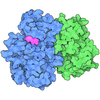
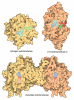
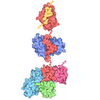

- Assembly
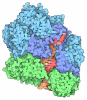
| Deposited unit | 
|
|---|---|
| 1 |
|
-Components
-Protein , 4 types, 4 molecules DEAB
| #1: Protein | Mass: 34056.469 Da / Num. of mol.: 1 Source method: isolated from a genetically manipulated source Source: (gene. exp.) Homo sapiens (human) / Gene: CDK2, CDKN2 / Production host:  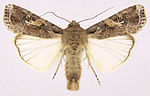 Spodoptera frugiperda (fall armyworm) / References: UniProt: P24941, cyclin-dependent kinase Spodoptera frugiperda (fall armyworm) / References: UniProt: P24941, cyclin-dependent kinase |
|---|---|
| #2: Protein | Mass: 33140.578 Da / Num. of mol.: 1 Source method: isolated from a genetically manipulated source Source: (gene. exp.) Homo sapiens (human) / Gene: CCNE1, CCNE / Production host: Spodoptera frugiperda (fall armyworm) / References: UniProt: P24864 |
| #3: Protein | Mass: 128139.578 Da / Num. of mol.: 1 Source method: isolated from a genetically manipulated source Source: (gene. exp.) Homo sapiens (human) / Gene: DDB1, XAP1 / Production host: Spodoptera frugiperda (fall armyworm) / References: UniProt: Q16531 |
| #4: Protein | Mass: 46465.375 Da / Num. of mol.: 1 Source method: isolated from a genetically manipulated source Source: (gene. exp.) Homo sapiens (human) / Gene: CRBN, AD-006 / Production host: Spodoptera frugiperda (fall armyworm) / References: UniProt: Q96SW2 |
-Non-polymers , 2 types, 2 molecules 
| #5: Chemical | ChemComp-A1B7G / Mass: 845.373 Da / Num. of mol.: 1 / Source method: obtained synthetically / Formula: C40H48ClF3N8O5S / Feature type: SUBJECT OF INVESTIGATION |
|---|---|
| #6: Chemical | ChemComp-ZN /  Mass: 65.409 Da / Num. of mol.: 1 / Source method: obtained synthetically / Formula: Zn Mass: 65.409 Da / Num. of mol.: 1 / Source method: obtained synthetically / Formula: Zn |
-Details
| Has ligand of interest | Y |
|---|---|
| Has protein modification | Y |
-Experimental details
-Experiment
| Experiment | Method: ELECTRON MICROSCOPY |
|---|---|
| EM experiment | Aggregation state: PARTICLE / 3D reconstruction method: single particle reconstruction |
- Sample preparation
| Component | Name: CDK2/CyclinE1 in complex with CRBN/DDB1 and Cpd 24 / Type: COMPLEX / Entity ID: #1-#4 / Source: RECOMBINANT |
|---|---|
| Source (natural) | Organism: Homo sapiens (human) |
| Source (recombinant) | Organism: Spodoptera frugiperda (fall armyworm) |
| Buffer solution | pH: 7.5 Details: 50mM HEPES, pH 7.5, 150mM NaCl, 2mM TCEP, 2 mM FFC8, protein = 13.4 mg/ml |
| Specimen | Embedding applied: NO / Shadowing applied: NO / Staining applied: NO / Vitrification applied: YES |
| Specimen support | Grid material: GOLD / Grid mesh size: 300 divisions/in. / Grid type: UltrAuFoil R1.2/1.3 |
| Vitrification | Cryogen name: ETHANE / Chamber temperature: 277 K |
- Electron microscopy imaging
| Microscopy | Model: TFS GLACIOS |
|---|---|
| Electron gun | Electron source:  FIELD EMISSION GUN / Accelerating voltage: 200 kV / Illumination mode: FLOOD BEAM FIELD EMISSION GUN / Accelerating voltage: 200 kV / Illumination mode: FLOOD BEAM |
| Electron lens | Mode: BRIGHT FIELD / Nominal defocus max: 2000 nm / Nominal defocus min: 500 nm |
| Image recording | Electron dose: 50 e/Å2 / Film or detector model: FEI FALCON IV (4k x 4k) |
- Processing
| EM software |
| ||||||||||||||||||||||||||||||||||||
|---|---|---|---|---|---|---|---|---|---|---|---|---|---|---|---|---|---|---|---|---|---|---|---|---|---|---|---|---|---|---|---|---|---|---|---|---|---|
| CTF correction | Type: PHASE FLIPPING AND AMPLITUDE CORRECTION | ||||||||||||||||||||||||||||||||||||
| Particle selection | Num. of particles selected: 576509 | ||||||||||||||||||||||||||||||||||||
| 3D reconstruction | Resolution: 3.9 Å / Resolution method: FSC 0.143 CUT-OFF / Num. of particles: 130033 / Symmetry type: POINT | ||||||||||||||||||||||||||||||||||||
| Atomic model building | Protocol: RIGID BODY FIT | ||||||||||||||||||||||||||||||||||||
| Atomic model building | PDB-ID: 9D0W Accession code: 9D0W / Source name: PDB / Type: experimental model |