 Movie
Movie Controller

[English] 日本語
 Yorodumi
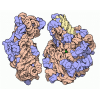
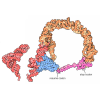
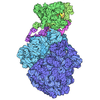
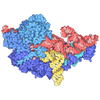
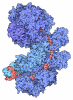
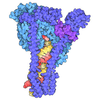
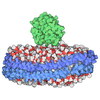
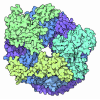
- PDB-9n9j: Structure of a GRP94 folding intermediate engaged with a CCDC134-... -
+ Open data

- Basic information
| Entry | Database: PDB / ID: 9n9j | |||||||||||||||||||||||||||||||||||||||||||||
|---|---|---|---|---|---|---|---|---|---|---|---|---|---|---|---|---|---|---|---|---|---|---|---|---|---|---|---|---|---|---|---|---|---|---|---|---|---|---|---|---|---|---|---|---|---|---|
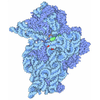
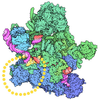
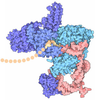
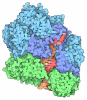
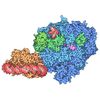
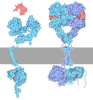
| Title | Structure of a GRP94 folding intermediate engaged with a CCDC134- and FKBP11-bound secretory translocon | |||||||||||||||||||||||||||||||||||||||||||||
 Components Components |
| |||||||||||||||||||||||||||||||||||||||||||||
 Keywords Keywords | RIBOSOME / Membrane protein / Translocon / Transport / N-Glycosylation | |||||||||||||||||||||||||||||||||||||||||||||
| Function / homology |  Function and homology information Function and homology informationpositive regulation of MyD88-dependent toll-like receptor signaling pathway / positive regulation of toll-like receptor signaling pathway / regulation of glycoprotein biosynthetic process / oligosaccharyltransferase complex binding / protein co-translational transfer of dolichol-linked oligosaccharide / actin rod assembly / oligosaccharyltransferase complex A / oligosaccharyltransferase complex B / ventricular system development / muscle organ morphogenesis ...positive regulation of MyD88-dependent toll-like receptor signaling pathway / positive regulation of toll-like receptor signaling pathway / regulation of glycoprotein biosynthetic process / oligosaccharyltransferase complex binding / protein co-translational transfer of dolichol-linked oligosaccharide / actin rod assembly / oligosaccharyltransferase complex A / oligosaccharyltransferase complex B / ventricular system development / muscle organ morphogenesis / Asparagine N-linked glycosylation / embryonic liver development / : / ATF6 (ATF6-alpha) activates chaperone genes / endoplasmic reticulum Sec complex / pronephric nephron development / : / endoplasmic reticulum chaperone complex / dolichyl-diphosphooligosaccharide-protein glycotransferase / dolichyl-diphosphooligosaccharide-protein glycotransferase activity / plasma membrane organization / cotranslational protein targeting to membrane / endoplasmic reticulum quality control compartment / Ssh1 translocon complex / Sec61 translocon complex / positive regulation of growth hormone secretion / protein folding in endoplasmic reticulum / sarcoplasmic reticulum lumen / positive regulation of organ growth / protein insertion into ER membrane / oligosaccharyltransferase complex / post-translational protein targeting to endoplasmic reticulum membrane / protein targeting to ER / post-translational protein targeting to membrane, translocation / SRP-dependent cotranslational protein targeting to membrane, translocation / XBP1(S) activates chaperone genes / endoplasmic reticulum organization / SRP-dependent cotranslational protein targeting to membrane / signal sequence receptor activity / protein N-linked glycosylation / embryonic hemopoiesis / glycoprotein biosynthetic process / translation at presynapse / response to insecticide / Trafficking and processing of endosomal TLR / insulin secretion / regulation of translation involved in cellular response to UV / eukaryotic 80S initiation complex / ribosomal protein import into nucleus / regulation of G1 to G0 transition / positive regulation of intrinsic apoptotic signaling pathway in response to DNA damage by p53 class mediator / protein-DNA complex disassembly / negative regulation of formation of translation preinitiation complex / epidermal growth factor binding / positive regulation of DNA damage response, signal transduction by p53 class mediator / Scavenging by Class A Receptors / GAIT complex / azurophil granule membrane / low-density lipoprotein particle receptor binding / TORC2 complex binding / G1 to G0 transition / Enterobacterial factors antagonize host defense / PD-L1(CD274) glycosylation and translocation to plasma membrane / Insertion of tail-anchored proteins into the endoplasmic reticulum membrane / retrograde protein transport, ER to cytosol / protein phosphatase inhibitor activity / Regulation of CDH1 posttranslational processing and trafficking to plasma membrane / cytoplasmic side of rough endoplasmic reticulum membrane / negative regulation of myoblast fusion / smooth endoplasmic reticulum / PELO:HBS1L and ABCE1 dissociate a ribosome on a non-stop mRNA / male meiosis I / protein secretion / cellular response to ATP / Dengue Virus Genome Translation and Replication / Maturation of DENV proteins / regulation of ossification / ZNF598 and the Ribosome-associated Quality Trigger (RQT) complex dissociate a ribosome stalled on a no-go mRNA / Protein hydroxylation / intracellular membrane-bounded organelle / Advanced glycosylation endproduct receptor signaling / post-embryonic development / transmembrane protein transporter activity / Peptide chain elongation / Selenocysteine synthesis / Formation of a pool of free 40S subunits / protein targeting / Eukaryotic Translation Termination / protein localization to nucleus / SRP-dependent cotranslational protein targeting to membrane / Response of EIF2AK4 (GCN2) to amino acid deficiency / AMPK-induced ERAD and lysosome mediated degradation of PD-L1(CD274) / negative regulation of ubiquitin-dependent protein catabolic process / ubiquitin ligase inhibitor activity / Viral mRNA Translation / positive regulation of Wnt signaling pathway / Nonsense Mediated Decay (NMD) independent of the Exon Junction Complex (EJC) / positive regulation of signal transduction by p53 class mediator / GTP hydrolysis and joining of the 60S ribosomal subunit / embryo implantation Similarity search - Function | |||||||||||||||||||||||||||||||||||||||||||||
| Biological species |  Homo sapiens (human) Homo sapiens (human) | |||||||||||||||||||||||||||||||||||||||||||||
| Method | ELECTRON MICROSCOPY / single particle reconstruction / cryo EM / Resolution: 3.2 Å | |||||||||||||||||||||||||||||||||||||||||||||
 Authors Authors | Yamsek, M. / Jha, R. / Keenan, R.J. | |||||||||||||||||||||||||||||||||||||||||||||
| Funding support |  United States, 1items United States, 1items
| |||||||||||||||||||||||||||||||||||||||||||||
 Citation Citation | Journal: Nature / Year: 2026 Title: Structural basis of regulated N-glycosylation at the secretory translocon. Authors: Melvin Yamsek / Mengxiao Ma / Roshan Jha / Yu Wan / Qianru Li / Frank Zhong / Katherine DeLong / Zhe Ji / Rajat Rohatgi / Robert J Keenan / Abstract: Most human secretory pathway proteins are N-glycosylated by oligosaccharyltransferase (OST) complexes as they enter the endoplasmic reticulum (ER). Recent work revealed a substrate-assisted mechanism ...Most human secretory pathway proteins are N-glycosylated by oligosaccharyltransferase (OST) complexes as they enter the endoplasmic reticulum (ER). Recent work revealed a substrate-assisted mechanism by which N-glycosylation of the chaperone glucose-regulated protein 94 (GRP94) is regulated to control cell surface receptor signalling. Here we report the structure of a natively isolated GRP94 folding intermediate tethered to a specialized CCDC134-bound translocon. Together with functional analysis, the data reveal how a conserved N-terminal extension in GRP94 inhibits OST-A and how structural rearrangements within the translocon shield the tethered nascent chain from inappropriate OST-B glycosylation. These interactions depend on a hydrophobic CCDC134 groove, which recognizes a non-native conformation of nascent GRP94. Our results define a mechanism of regulated N-glycosylation and illustrate how the nascent chain remodels the translocon to facilitate its own biogenesis. #1: Journal: Science / Year: 2024 Title: Regulated N-glycosylation controls chaperone function and receptor trafficking. Authors: Mengxiao Ma / Ramin Dubey / Annie Jen / Ganesh V Pusapati / Bharti Singal / Evgenia Shishkova / Katherine A Overmyer / Valérie Cormier-Daire / Juliette Fedry / L Aravind / Joshua J Coon / Rajat Rohatgi /   Abstract: One-fifth of human proteins are N-glycosylated in the endoplasmic reticulum (ER) by two oligosaccharyltransferases, OST-A and OST-B. Contrary to the prevailing view of N-glycosylation as a ...One-fifth of human proteins are N-glycosylated in the endoplasmic reticulum (ER) by two oligosaccharyltransferases, OST-A and OST-B. Contrary to the prevailing view of N-glycosylation as a housekeeping function, we identified an ER pathway that modulates the activity of OST-A. Genetic analyses linked OST-A to HSP90B1, an ER chaperone for membrane receptors, and CCDC134, an ER luminal protein. During its translocation into the ER, an N-terminal peptide in HSP90B1 templates the assembly of a translocon complex containing CCDC134 and OST-A that protects HSP90B1 during folding, preventing its hyperglycosylation and degradation. Disruption of this pathway impairs WNT and IGF1R signaling and causes the bone developmental disorder osteogenesis imperfecta. Thus, N-glycosylation can be regulated by specificity factors in the ER to control cell surface receptor signaling and tissue development. | |||||||||||||||||||||||||||||||||||||||||||||
| History |
|
- Structure visualization
| Structure viewer | Molecule: MolmilJmol/JSmol |
|---|
- Downloads & links
-Download
| PDBx/mmCIF format | 9n9j.cif.gz | 6.8 MB | Display | PDBx/mmCIF format |
|---|---|---|---|---|
| PDB format | pdb9n9j.ent.gz | Display | PDB format | |
| PDBx/mmJSON format | 9n9j.json.gz | Tree view | PDBx/mmJSON format | |
| Others |  Other downloads Other downloads |
-Validation report
| Arichive directory | https://data.pdbj.org/pub/pdb/validation_reports/n9/9n9jftp://data.pdbj.org/pub/pdb/validation_reports/n9/9n9j | HTTPS FTP |
|---|
-Related structure data
| Related structure data |  49171MC  9ygyC M: map data used to model this data C: citing same article ( |
|---|---|
| Similar structure data |

-Links
 PDBj
PDBj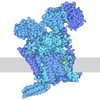

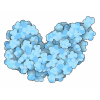
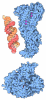
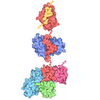
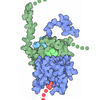

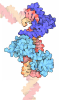
- Assembly
| Deposited unit | 
|
|---|---|
| 1 |
|
-Components
+Translocon-associated protein subunit ... , 4 types, 4 molecules 5678
+Protein , 9 types, 9 molecules ABGJLILmLsN2y3
+Protein transport protein Sec61 subunit ... , 3 types, 3 molecules DEF
+Dolichyl-diphosphooligosaccharide--protein glycosyltransferase subunit ... , 7 types, 7 molecules IK2L2M2NO2P2
+RNA chain , 5 types, 5 molecules L5L7L8u3v3
+60S ribosomal protein ... , 8 types, 8 molecules LALBLFLaLbLrLtLz
+Large ribosomal subunit protein ... , 33 types, 33 molecules LCLDLELGLHLLLMLNLOLPLQLRLSLTLULVLWLXLYLZLcLdLeLfLgLhLiLjLkLl...
+Protein/peptide , 1 types, 1 molecules Ln
+Sugars , 4 types, 4 molecules
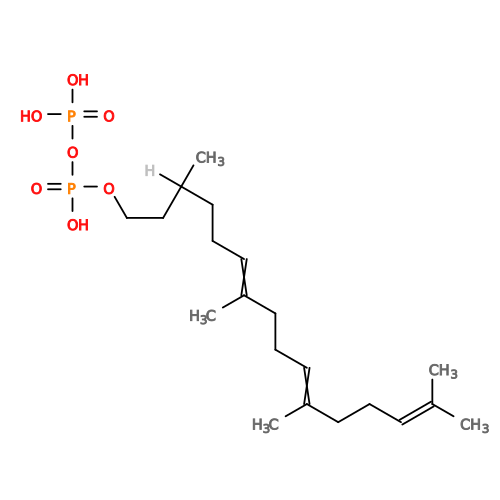
+Non-polymers , 4 types, 233 molecules 





+Details
-Experimental details
-Experiment
| Experiment | Method: ELECTRON MICROSCOPY |
|---|---|
| EM experiment | Aggregation state: PARTICLE / 3D reconstruction method: single particle reconstruction |
- Sample preparation
| Component | Name: Nascent GRP94 folding intermediate bound to a ribosome-translocon complex Type: RIBOSOME Details: Isolated by affinity purification via a Flag-tag on FKBP11 Entity ID: #1-#26, #70, #27-#69 / Source: NATURAL | |||||||||||||||||||||||||||||||||||
|---|---|---|---|---|---|---|---|---|---|---|---|---|---|---|---|---|---|---|---|---|---|---|---|---|---|---|---|---|---|---|---|---|---|---|---|---|
| Molecular weight | Experimental value: NO | |||||||||||||||||||||||||||||||||||
| Source (natural) | Organism: Homo sapiens (human) / Organelle: Endoplasmic reticulum | |||||||||||||||||||||||||||||||||||
| Buffer solution | pH: 7.4 Details: HEPES buffer was adjusted to pH 7.4 with potassium hydroxide. | |||||||||||||||||||||||||||||||||||
| Buffer component |
| |||||||||||||||||||||||||||||||||||
| Specimen | Conc.: 0.056 mg/ml / Embedding applied: NO / Shadowing applied: NO / Staining applied: NO / Vitrification applied: YES Details: Native ribosome-translocon complexes isolated from HEK293 microsomes by affinity purification via a Flag-tag on FKBP11 | |||||||||||||||||||||||||||||||||||
| Specimen support | Grid material: GOLD / Grid mesh size: 400 divisions/in. / Grid type: Quantifoil R1.2/1.3 | |||||||||||||||||||||||||||||||||||
| Vitrification | Instrument: FEI VITROBOT MARK IV / Cryogen name: ETHANE / Humidity: 100 % / Chamber temperature: 295 K Details: Three microliters of affinity-purified RTCs were applied to the grid, incubated for 60 seconds, blotted for 7 seconds, drained for 0.5 seconds, and frozen in liquid nitrogen-cooled ethane. |
- Electron microscopy imaging
| Experimental equipment |  Model: Titan Krios / Image courtesy: FEI Company |
|---|---|
| Microscopy | Model: TFS KRIOS |
| Electron gun | Electron source:  FIELD EMISSION GUN / Accelerating voltage: 300 kV / Illumination mode: FLOOD BEAM FIELD EMISSION GUN / Accelerating voltage: 300 kV / Illumination mode: FLOOD BEAM |
| Electron lens | Mode: BRIGHT FIELD / Nominal magnification: 53000 X / Nominal defocus max: 1900 nm / Nominal defocus min: 900 nm / Cs: 2.7 mm |
| Specimen holder | Cryogen: NITROGEN / Specimen holder model: FEI TITAN KRIOS AUTOGRID HOLDER |
| Image recording | Electron dose: 60 e/Å2 / Film or detector model: GATAN K3 BIOQUANTUM (6k x 4k) / Num. of grids imaged: 1 / Num. of real images: 6569 |
- Processing
| EM software |
| ||||||||||||||||
|---|---|---|---|---|---|---|---|---|---|---|---|---|---|---|---|---|---|
| CTF correction | Type: NONE | ||||||||||||||||
| Particle selection | Num. of particles selected: 741983 | ||||||||||||||||
| 3D reconstruction | Resolution: 3.2 Å / Resolution method: FSC 0.143 CUT-OFF / Num. of particles: 55750 / Num. of class averages: 1 / Symmetry type: POINT | ||||||||||||||||
| Atomic model building | Protocol: FLEXIBLE FIT / Space: REAL Details: Tightly restrained real-space refinement in Coot and Phenix | ||||||||||||||||
| Refinement | Cross valid method: NONE |
