 Movie
Movie Controller


+ Open data

- Basic information
| Entry | Database: PDB / ID: 9n4k | ||||||
|---|---|---|---|---|---|---|---|
| Title | CryoEM structure of ALK2-ActRIIB bound to BMP6 | ||||||
 Components Components |
| ||||||
 Keywords Keywords | SIGNALING PROTEIN / TGFB / Signaling / Receptor / Bone Morphogenetic Protein / ALK2 / Ligand / Growth Factor | ||||||
| Function / homology |  Function and homology information Function and homology informationpositive regulation of aldosterone biosynthetic process / positive regulation of aldosterone secretion / Regulation of signaling by NODAL / activin receptor activity / activin receptor activity, type II / lymphatic endothelial cell differentiation / positive regulation of activin receptor signaling pathway / lymphangiogenesis / negative regulation of adherens junction organization / retina vasculature development in camera-type eye ...positive regulation of aldosterone biosynthetic process / positive regulation of aldosterone secretion / Regulation of signaling by NODAL / activin receptor activity / activin receptor activity, type II / lymphatic endothelial cell differentiation / positive regulation of activin receptor signaling pathway / lymphangiogenesis / negative regulation of adherens junction organization / retina vasculature development in camera-type eye / endocardial cushion cell fate commitment / venous blood vessel development / positive regulation of endothelial cell differentiation / trophoblast cell migration / positive regulation of determination of dorsal identity / atrial septum primum morphogenesis / acute inflammatory response / mitral valve morphogenesis / type B pancreatic cell development / BMP receptor complex / BMP receptor activity / positive regulation of chondrocyte differentiation / endocardial cushion fusion / cardiac muscle cell fate commitment / artery development / positive regulation of cardiac epithelial to mesenchymal transition / transforming growth factor beta receptor activity, type I / eye development / pattern specification process / activin receptor activity, type I / cell surface receptor protein serine/threonine kinase signaling pathway / activin receptor complex / anterior/posterior pattern specification / BMP receptor binding / endocardial cushion formation / receptor protein serine/threonine kinase / cellular response to BMP stimulus / activin binding / embryonic heart tube morphogenesis / transmembrane receptor protein serine/threonine kinase activity / atrioventricular valve morphogenesis / Signaling by BMP / negative regulation of cell-cell adhesion mediated by cadherin / Signaling by Activin / activin receptor signaling pathway / negative regulation of ossification / dorsal/ventral pattern formation / positive regulation of vascular permeability / negative regulation of activin receptor signaling pathway / Signaling by NODAL / regulation of ossification / positive regulation of lipopolysaccharide-mediated signaling pathway / cartilage development / transforming growth factor beta binding / kinase activator activity / negative regulation of cold-induced thermogenesis / negative regulation of G1/S transition of mitotic cell cycle / ventricular septum morphogenesis / blood vessel remodeling / positive regulation of bone mineralization / growth factor binding / multicellular organismal-level iron ion homeostasis / SMAD binding / positive regulation of osteoblast differentiation / peptide hormone binding / positive regulation of intracellular signal transduction / negative regulation of adipose tissue development / positive regulation of SMAD protein signal transduction / BMP signaling pathway / skeletal system development / response to retinoic acid / response to magnesium ion / transforming growth factor beta receptor signaling pathway / negative regulation of signal transduction / kidney development / positive regulation of endothelial cell proliferation / protein serine/threonine/tyrosine kinase activity / positive regulation of epithelial cell proliferation / response to glucocorticoid / protein tyrosine kinase binding / negative regulation of extrinsic apoptotic signaling pathway / response to activity / cytokine activity / positive regulation of protein secretion / growth factor activity / cellular response to mechanical stimulus / bone development / cellular response to iron ion / cellular response to growth factor stimulus / osteoblast differentiation / heart development / apical part of cell / vesicle / intracellular iron ion homeostasis / cell differentiation / protein kinase activity / signaling receptor complex / immune response / positive regulation of cell migration / inflammatory response Similarity search - Function | ||||||
| Biological species |  Homo sapiens (human) Homo sapiens (human) | ||||||
| Method | ELECTRON MICROSCOPY / single particle reconstruction / cryo EM / Resolution: 3.2 Å | ||||||
 Authors Authors | Goebel, E.J. / Saotome, K. / Franklin, M.C. | ||||||
| Funding support |  United States, 1items United States, 1items
| ||||||
 Citation Citation | Journal: Proc Natl Acad Sci U S A / Year: 2025 Title: CryoEM structure of ALK2:BMP6 reveals distinct mechanism that allow ALK2 to interact with both BMP and activin ligands. Authors: Erich J Goebel / Senem Aykul / Warren W Hom / Kei Saotome / Aris N Economides / Matthew C Franklin / Vincent J Idone / Abstract: Ligands in the transforming growth factor β (TGF-β) family [activins, Bone Morphogenetic Proteins (BMPs), and TGF-βs] signal by bringing together two type I and two type II receptors. Activin ...Ligands in the transforming growth factor β (TGF-β) family [activins, Bone Morphogenetic Proteins (BMPs), and TGF-βs] signal by bringing together two type I and two type II receptors. Activin receptor-like kinase-2 (ALK2) is the only type I receptor among the seven TGF-β type I receptors that interacts with both activin and BMP ligands. With BMPs, ALK2 acts as a signaling receptor to activate small mothers against decapentaplegic 1 (SMAD1)/5/8 signaling. Alternatively, with activins, such as Activin A (ActA), ALK2 forms nonsignaling complexes that negatively regulate ALK2 and ActA signaling. To gain insight into how ALK2 interacts with two distinct classes of ligands, we resolved the cryoelectron microscopy structure of ALK2 in complex with the type II receptor, ActRIIB, and the ligand, BMP6, in parallel with the corresponding structure with ALK3 for direct comparison. These structures demonstrate that ALK2 and ALK3 utilize different mechanisms to interact with BMP6 at the wrist interface, with ALK2 relying on BMP6 glycosylation and ALK3 relying on a salt bridge. Modeling of ALK2:ActA reveals that binding relies on ActA's fingertip region, mirroring the interaction of ActA with its other receptor, ALK4. Our results demonstrate that ALK2 is a "hybrid" receptor that incorporates features of BMP type I receptors such as ALK3 at the wrist interface and an activin type I receptor such as ALK4 at the fingertip. | ||||||
| History |
|
- Structure visualization
| Structure viewer | Molecule: MolmilJmol/JSmol |
|---|
- Downloads & links
-Download
| PDBx/mmCIF format | 9n4k.cif.gz | 130.1 KB | Display | PDBx/mmCIF format |
|---|---|---|---|---|
| PDB format | pdb9n4k.ent.gz | 98.3 KB | Display | PDB format |
| PDBx/mmJSON format | 9n4k.json.gz | Tree view | PDBx/mmJSON format | |
| Others |  Other downloads Other downloads |
-Validation report
| Arichive directory | https://data.pdbj.org/pub/pdb/validation_reports/n4/9n4kftp://data.pdbj.org/pub/pdb/validation_reports/n4/9n4k | HTTPS FTP |
|---|
-Related structure data
| Related structure data |  48883MC  9mirC M: map data used to model this data C: citing same article ( |
|---|---|
| Similar structure data |

-Links
 PDBj
PDBj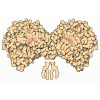
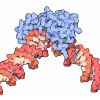
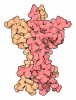
- Assembly
| Deposited unit | 
|
|---|---|
| 1 |
|
-Components
-Activin receptor type- ... , 2 types, 4 molecules AFCD
| #1: Protein | Mass: 14933.380 Da / Num. of mol.: 2 Source method: isolated from a genetically manipulated source Source: (gene. exp.) Homo sapiens (human) / Gene: ACVR2B / Production host:   Cricetulus griseus (Chinese hamster) Cricetulus griseus (Chinese hamster)References: UniProt: Q13705, receptor protein serine/threonine kinase #3: Protein | Mass: 13189.880 Da / Num. of mol.: 2 Source method: isolated from a genetically manipulated source Source: (gene. exp.) Homo sapiens (human) / Gene: ACVR1, ACVRLK2 / Production host: Cricetulus griseus (Chinese hamster)References: UniProt: Q04771, receptor protein serine/threonine kinase |
|---|
-Protein , 1 types, 2 molecules BE
| #2: Protein | Mass: 15695.711 Da / Num. of mol.: 2 Source method: isolated from a genetically manipulated source Source: (gene. exp.) Homo sapiens (human) / Gene: BMP6, VGR / Production host: Cricetulus griseus (Chinese hamster) / References: UniProt: P22004 |
|---|
-Sugars , 3 types, 10 molecules 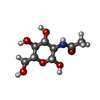
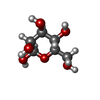
| #4: Polysaccharide | | #5: Sugar | ChemComp-NAG / 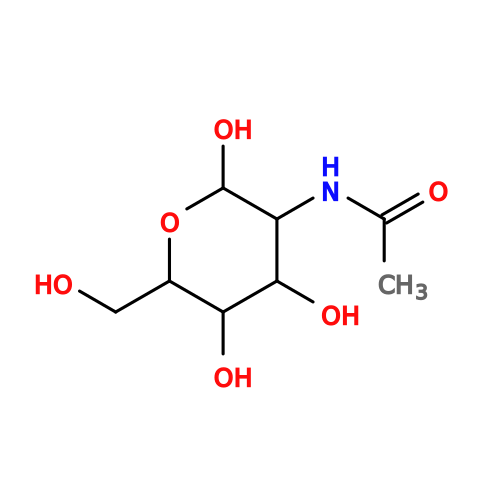 Type: D-saccharide, beta linking / Mass: 221.208 Da / Num. of mol.: 6 / Source method: obtained synthetically / Formula: C8H15NO6 Type: D-saccharide, beta linking / Mass: 221.208 Da / Num. of mol.: 6 / Source method: obtained synthetically / Formula: C8H15NO6#6: Sugar | 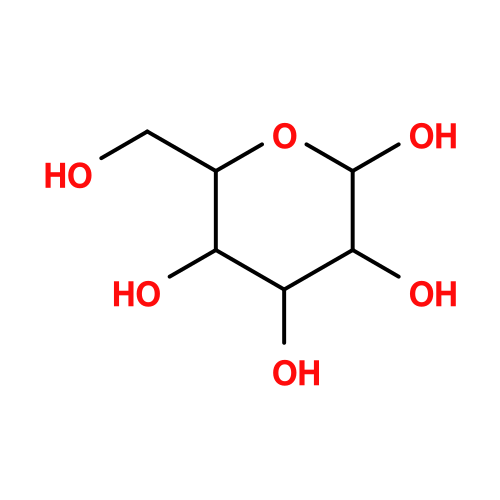 Type: D-saccharide, beta linking / Mass: 180.156 Da / Num. of mol.: 2 / Source method: obtained synthetically / Formula: C6H12O6 Type: D-saccharide, beta linking / Mass: 180.156 Da / Num. of mol.: 2 / Source method: obtained synthetically / Formula: C6H12O6 |
|---|
-Details
| Has ligand of interest | N |
|---|---|
| Has protein modification | Y |
-Experimental details
-Experiment
| Experiment | Method: ELECTRON MICROSCOPY |
|---|---|
| EM experiment | Aggregation state: PARTICLE / 3D reconstruction method: single particle reconstruction |
- Sample preparation
| Component | Name: Ternary complex of ALK2-ActRIIB with BMP6 / Type: COMPLEX / Details: ALK2-ActRIIB fused by Antibody Hinge region / Entity ID: #1-#3 / Source: RECOMBINANT | |||||||||||||||
|---|---|---|---|---|---|---|---|---|---|---|---|---|---|---|---|---|
| Molecular weight | Value: 0.08 MDa / Experimental value: NO | |||||||||||||||
| Source (natural) | Organism: Homo sapiens (human) | |||||||||||||||
| Source (recombinant) | Organism: Cricetulus griseus (Chinese hamster) | |||||||||||||||
| Buffer solution | pH: 7.5 / Details: 50mM Tris-HCL, 100mM NaCl | |||||||||||||||
| Buffer component |
| |||||||||||||||
| Specimen | Conc.: 3 mg/ml / Embedding applied: NO / Shadowing applied: NO / Staining applied: NO / Vitrification applied: YES Details: Sample was mono disperse following purification over size exclusion chromatography. | |||||||||||||||
| Specimen support | Grid material: GOLD | |||||||||||||||
| Vitrification | Cryogen name: ETHANE |
- Electron microscopy imaging
| Experimental equipment |  Model: Titan Krios / Image courtesy: FEI Company |
|---|---|
| Microscopy | Model: TFS KRIOS |
| Electron gun | Electron source:  FIELD EMISSION GUN / Accelerating voltage: 300 kV / Illumination mode: OTHER FIELD EMISSION GUN / Accelerating voltage: 300 kV / Illumination mode: OTHER |
| Electron lens | Mode: BRIGHT FIELD / Nominal magnification: 105000 X / Nominal defocus max: 2400 nm / Nominal defocus min: 800 nm / Alignment procedure: BASIC |
| Specimen holder | Cryogen: NITROGEN / Specimen holder model: FEI TITAN KRIOS AUTOGRID HOLDER |
| Image recording | Electron dose: 40 e/Å2 / Film or detector model: GATAN K3 BIOQUANTUM (6k x 4k) |
- Processing
| EM software | Name: PHENIX / Version: 1.21.2_5419 / Category: model refinement | ||||||||||||||||||||||||
|---|---|---|---|---|---|---|---|---|---|---|---|---|---|---|---|---|---|---|---|---|---|---|---|---|---|
| CTF correction | Type: PHASE FLIPPING AND AMPLITUDE CORRECTION | ||||||||||||||||||||||||
| Symmetry | Point symmetry: C2 (2 fold cyclic) | ||||||||||||||||||||||||
| 3D reconstruction | Resolution: 3.2 Å / Resolution method: FSC 0.143 CUT-OFF / Num. of particles: 42185 / Symmetry type: POINT | ||||||||||||||||||||||||
| Atomic model building | Protocol: RIGID BODY FIT / Space: REAL Details: Initial fitting was performed in ChimeraX and real-space refinement was carried out within Phenix. | ||||||||||||||||||||||||
| Atomic model building | 3D fitting-ID: 1 / Source name: PDB / Type: experimental model
|


