National Natural Science Foundation of China (NSFC)
32200144
China
Citation
Journal: mBio / Year: 2025 Title: Cryo-EM structure of the QseG-QseE complex reveals an accessory protein-driven two-component system activation mechanism. Authors: Piqian Gong / Guobang Li / Weixun Li / Mengyuan Xu / Xuyao Jiao / Xudong Chen / Beile Gao / Xiang Gao / Abstract: The two-component system (TCS) enables bacteria to sense and respond to environmental changes through histidine kinase-mediated signaling cascades. Although the core components of TCSs have been ...The two-component system (TCS) enables bacteria to sense and respond to environmental changes through histidine kinase-mediated signaling cascades. Although the core components of TCSs have been extensively studied, the molecular basis of accessory proteins in modulating histidine kinase activity remains poorly understood. Here, we report that the outer membrane lipoprotein QseG functions as an accessory protein that directly binds to and activates the histidine kinase QseE via its C-terminal domain. Cryo-electron microscopy (Cryo-EM) structural analysis of the QseG-QseE complex reveals a novel yet conserved interaction mode between an accessory lipoprotein and a histidine kinase, which bridges the outer membrane to cytoplasm. Furthermore, systematic truncation assays and photo-crosslinking experiments indicate that outer membrane-anchored QseG is sufficient and prone to engage with and activate the inner membrane histidine kinase QseE under cultured conditions. Our findings provide mechanistic details for accessory lipoprotein-mediated TCS activation, expanding our understanding of bacterial signaling. The evolutionary conservation of this interaction across bacterial pathogens underscores its broad biological significance and potential as a therapeutic target.IMPORTANCEThe classical TCS system in bacterial signal transduction is composed of two proteins-a histidine kinase and its cognate response regulator. More and more studies have revealed the presence of accessory proteins that can modulate the histidine kinase activity and affect signal transduction, but their mechanisms remain largely elusive. This study unveils a previously unrecognized mechanism by which bacterial accessory lipoproteins mediate TCS activation. We provide compelling evidence that QseG directly interacts with QseE through an evolutionarily conserved structural interface, readily and sufficiently activating QseE's autokinase activity and downstream signaling. Given the essential role of QseEF in bacterial virulence and stress adaptation, our findings pave the way for the development of antimicrobial strategies targeting this conserved lipoprotein-mediated activation mechanism.
In the structure databanks used in Yorodumi, some data are registered as the other names, "COVID-19 virus" and "2019-nCoV". Here are the details of the virus and the list of structure data.
Jan 31, 2019. EMDB accession codes are about to change! (news from PDBe EMDB page)
EMDB accession codes are about to change! (news from PDBe EMDB page)
The allocation of 4 digits for EMDB accession codes will soon come to an end. Whilst these codes will remain in use, new EMDB accession codes will include an additional digit and will expand incrementally as the available range of codes is exhausted. The current 4-digit format prefixed with “EMD-” (i.e. EMD-XXXX) will advance to a 5-digit format (i.e. EMD-XXXXX), and so on. It is currently estimated that the 4-digit codes will be depleted around Spring 2019, at which point the 5-digit format will come into force.
The EM Navigator/Yorodumi systems omit the EMD- prefix.
Related info.:Q: What is EMD? / ID/Accession-code notation in Yorodumi/EM Navigator
Yorodumi is a browser for structure data from EMDB, PDB, SASBDB, etc.
This page is also the successor to EM Navigator detail page, and also detail information page/front-end page for Omokage search.
The word "yorodu" (or yorozu) is an old Japanese word meaning "ten thousand". "mi" (miru) is to see.
Related info.:EMDB / PDB / SASBDB / Comparison of 3 databanks / Yorodumi Search / Aug 31, 2016. New EM Navigator & Yorodumi / Yorodumi Papers / Jmol/JSmol / Function and homology information / Changes in new EM Navigator and Yorodumi
 Movie
Movie Controller

 Yorodumi
 Open data
 Basic information
 Components
 Keywords
 Function and homology information
 Salmonella enterica subsp. enterica serovar Typhimurium str. SL1344 (bacteria)
 X-RAY DIFFRACTION /
  Authors
 China, 1items
  Citation
 Structure visualization
 Downloads & links
 Other downloads


 PDBj
PDBj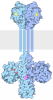
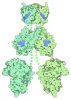
 Assembly
 Escherichia coli BL21(DE3) (bacteria) / References: UniProt: A0A719LJQ8, histidine kinase
 Mass: 18.015 Da / Num. of mol.: 31 / Source method: isolated from a natural source / Formula: H2O
 Sample preparation
 Processing