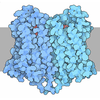
Journal: Nat Commun / Year: 2025 Title: Cryo-EM structure of TMEM164 reveals distinct phospholipid remodeling mechanisms with anti-ferroptotic potential. Authors: Minjing Ke / Yuanyue Shan / Ziwei Zhai / Guoqiang Yao / Xinyi Guo / Xiaoxi Li / Zichao Wu / Huifeng Chen / Mengmeng Zhang / Meiyu Chen / Ying Li / Chengchen Zhao / Bo Wang / Micky D ...Authors: Minjing Ke / Yuanyue Shan / Ziwei Zhai / Guoqiang Yao / Xinyi Guo / Xiaoxi Li / Zichao Wu / Huifeng Chen / Mengmeng Zhang / Meiyu Chen / Ying Li / Chengchen Zhao / Bo Wang / Micky D Tortorella / Xiaodong Shu / Mingfeng Zhang / Junqi Kuang / Duanqing Pei / Abstract: Phospholipids in cell membrane provide both regulatory and structural function of a cell. How lipid remodeling regulates cell fate remains less explored. Here we report the cryo-electron microscopy ...Phospholipids in cell membrane provide both regulatory and structural function of a cell. How lipid remodeling regulates cell fate remains less explored. Here we report the cryo-electron microscopy structure of TMEM164 identified by genome-wide CRISPR screen as an anti-ferroptotic factor. The overall architecture reveals a dimer of two 7 transmembrane domain monomers and a metal ion catalytic center with phospholipid substrate in a distinct polyunsaturated fatty acyl (PUFA)-C123 intermediate state. Both loss and gain of its function result in the decline of PUFA-ePE and elevation of C16/18:1-ePE, consequently confer resistance to GPX4 inhibitor RSL3 induced ferroptosis. Mutagenesis studies further validate critical residues for the catalytic center (C123) and the chelates center (E106, Y177 and H181). Through virtual screen and rational design, we identify and test candidate inhibitors for TMEM164, including activity for Montelukast S-enantiomer with 4 order of magnitude higher affinity. Our works not only demonstrates TMEM164 as a membrane lipid remodeler that controls the ferroptotic fate, but also highlights the power of integrating multi-scale platforms to unravel distinct mechanisms and functions.
History
Deposition
Feb 13, 2025
Deposition site: PDBJ / Processing site: PDBC
Revision 1.0
Jan 7, 2026
Provider: repository / Type: Initial release
Revision 1.0
Jan 7, 2026
Data content type: EM metadata / Data content type: EM metadata / Provider: repository / Type: Initial release
Revision 1.0
Jan 7, 2026
Data content type: Half map / Part number: 1 / Data content type: Half map / Provider: repository / Type: Initial release
Revision 1.0
Jan 7, 2026
Data content type: Half map / Part number: 2 / Data content type: Half map / Provider: repository / Type: Initial release
Revision 1.0
Jan 7, 2026
Data content type: Image / Data content type: Image / Provider: repository / Type: Initial release
Revision 1.0
Jan 7, 2026
Data content type: Primary map / Data content type: Primary map / Provider: repository / Type: Initial release
Data content type: EM metadata / Data content type: EM metadata / EM metadata / Group: Database references / Experimental summary / Data content type: EM metadata / EM metadata / EM metadata / Category: citation / citation_author / em_admin Data content type: EM metadata / EM metadata ...EM metadata / EM metadata / EM metadata / EM metadata / EM metadata Item: _citation.journal_volume / _citation.page_first ..._citation.journal_volume / _citation.page_first / _citation.page_last / _citation_author.identifier_ORCID / _em_admin.last_update
Mass: 33537.695 Da / Num. of mol.: 2 Source method: isolated from a genetically manipulated source Source: (gene. exp.) Homo sapiens (human) / Gene: TMEM164 / Production host: Homo sapiens (human) / References: UniProt: Q5U3C3
In the structure databanks used in Yorodumi, some data are registered as the other names, "COVID-19 virus" and "2019-nCoV". Here are the details of the virus and the list of structure data.
Jan 31, 2019. EMDB accession codes are about to change! (news from PDBe EMDB page)
EMDB accession codes are about to change! (news from PDBe EMDB page)
The allocation of 4 digits for EMDB accession codes will soon come to an end. Whilst these codes will remain in use, new EMDB accession codes will include an additional digit and will expand incrementally as the available range of codes is exhausted. The current 4-digit format prefixed with “EMD-” (i.e. EMD-XXXX) will advance to a 5-digit format (i.e. EMD-XXXXX), and so on. It is currently estimated that the 4-digit codes will be depleted around Spring 2019, at which point the 5-digit format will come into force.
The EM Navigator/Yorodumi systems omit the EMD- prefix.
Related info.:Q: What is EMD? / ID/Accession-code notation in Yorodumi/EM Navigator
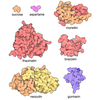
Yorodumi is a browser for structure data from EMDB, PDB, SASBDB, etc.
This page is also the successor to EM Navigator detail page, and also detail information page/front-end page for Omokage search.
The word "yorodu" (or yorozu) is an old Japanese word meaning "ten thousand". "mi" (miru) is to see.
Related info.:EMDB / PDB / SASBDB / Comparison of 3 databanks / Yorodumi Search / Aug 31, 2016. New EM Navigator & Yorodumi / Yorodumi Papers / Jmol/JSmol / Function and homology information / Changes in new EM Navigator and Yorodumi
 Movie
Movie Controller


 Open data
 Basic information
 Components
 Keywords
 Function and homology information
 Homo sapiens (human)
 Authors
 Citation
 Structure visualization
 Downloads & links
 Other downloads
 PDBj
PDBj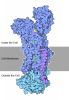
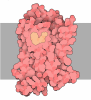
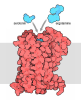
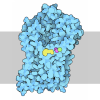
 Assembly
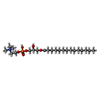


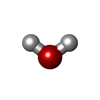
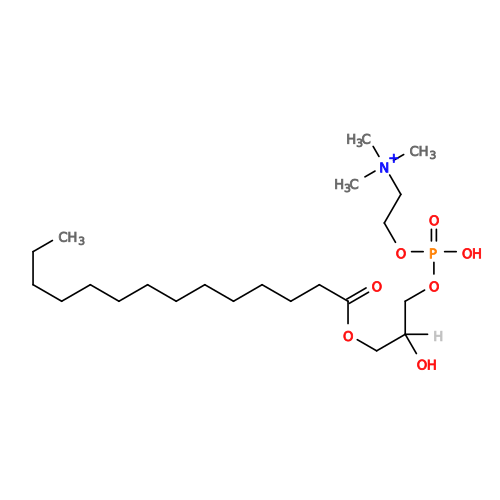 Mass: 468.585 Da / Num. of mol.: 2 / Source method: obtained synthetically / Formula: C22H47NO7P / Feature type: SUBJECT OF INVESTIGATION
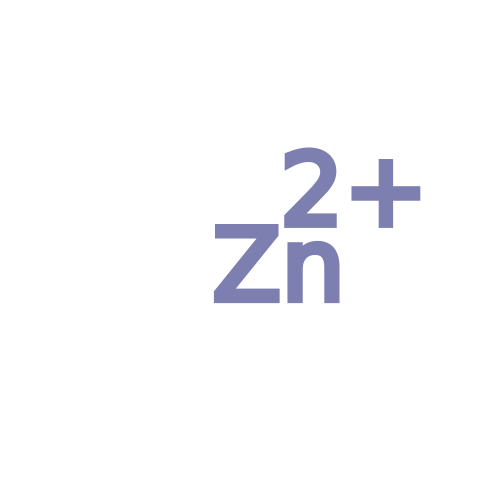 Mass: 65.409 Da / Num. of mol.: 2 / Source method: obtained synthetically / Formula: Zn / Feature type: SUBJECT OF INVESTIGATION
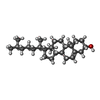
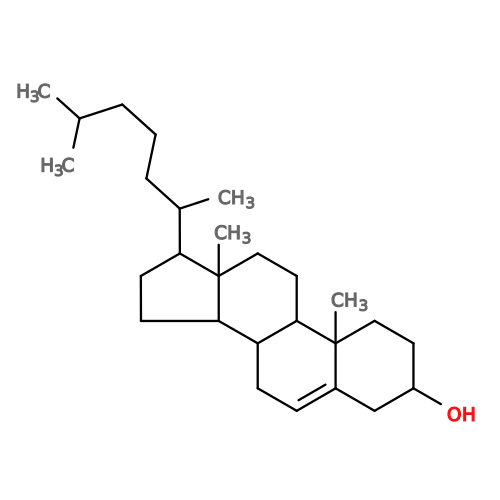 Mass: 386.654 Da / Num. of mol.: 2 / Source method: obtained synthetically / Formula: C27H46O / Feature type: SUBJECT OF INVESTIGATION
 Mass: 282.461 Da / Num. of mol.: 14 / Source method: isolated from a natural source / Formula: C18H34O2 / Feature type: SUBJECT OF INVESTIGATION
 Sample preparation
 Electron microscopy imaging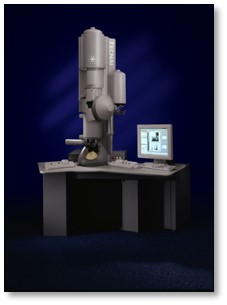
 FIELD EMISSION GUN / Accelerating voltage: 300 kV / Illumination mode: SPOT SCAN
 Processing