 Movie
Movie Controller


+ Open data

- Basic information
| Entry | Database: PDB / ID: 9kzh | |||||||||||||||||||||||||||
|---|---|---|---|---|---|---|---|---|---|---|---|---|---|---|---|---|---|---|---|---|---|---|---|---|---|---|---|---|
| Title | Cryo-EM structure of the RC complex from Rhodospirillum rubrum | |||||||||||||||||||||||||||
 Components Components |
| |||||||||||||||||||||||||||
 Keywords Keywords | STRUCTURAL PROTEIN / light harvesting / photosynthesis / gene heterologous expression / Rhodospirillum rubrum | |||||||||||||||||||||||||||
| Function / homology |  Function and homology information Function and homology informationplasma membrane-derived chromatophore membrane / plasma membrane light-harvesting complex / bacteriochlorophyll binding / photosynthetic electron transport in photosystem II / photosynthesis, light reaction / metal ion binding Similarity search - Function | |||||||||||||||||||||||||||
| Biological species |  Rhodospirillum rubrum (bacteria) Rhodospirillum rubrum (bacteria) | |||||||||||||||||||||||||||
| Method | ELECTRON MICROSCOPY / single particle reconstruction / cryo EM / Resolution: 2.74 Å | |||||||||||||||||||||||||||
 Authors Authors | Wang, L. / Yu, L.-J. | |||||||||||||||||||||||||||
| Funding support |  China, 1items China, 1items
| |||||||||||||||||||||||||||
 Citation Citation | Journal: Biochim Biophys Acta Bioenerg / Year: 2026 Title: Assembly, selectivity, and compatibility of bacterial photosynthetic complexes from divergent species detected in a chimeric strain. Authors: Lu Wang / Yi-Hao Yan / Guang-Lei Wang / Xing-Yu Yue / Chen-Hui Qi / Mei-Juan Zou / Zheng-Yu Wang-Otomo / Michael T Madigan / Yueyong Xin / Long-Jiang Yu /   Abstract: Photosynthetic complexes comprising light-harvesting (LH) and reaction center (RC) components are essential for biological energy conversion in photosynthesis. Assembly of these multi-protein ...Photosynthetic complexes comprising light-harvesting (LH) and reaction center (RC) components are essential for biological energy conversion in photosynthesis. Assembly of these multi-protein structures is a topic of great interest, and assembly mechanisms appear to reflect the evolutionary diversity of the particular phototrophic organism. Here we constructed a photosynthetic chimera expressing the Roseiflexus castenholzii LH and Rhodospirillum rubrum RC complexes in a photocomplex-deficient Rsp. rubrum mutant, and spectroscopy confirmed LH expression with absorption maxima at 878 and 801 nm. The chimeric strain grew slower phototrophically than wildtype but faster than a strain containing only the RC, indicating partial energy transfer from LH to RC. Cryo-EM structural analysis revealed that the Rfl. castenholzii LH independently assembled into a closed ring of 15 αβ heterodimers lacking carotenoids, resulting in a blue-shifted Q transition, while the Rsp. rubrum RC formed a separate complex with an RC:LH ratio of ∼17:1 instead of a typical 1:1. Structural differences, including the absence of two Rfl. castenholzii-specific small proteins, likely precluded formation of a conjoined LH-RC in the chimeric strain. These results reveal that distinct photocomplex assembly strategies exist in phylogenetically divergent species and underscore the modularity and adaptability of photosynthetic complexes, offering insights for artificial photosystem design. | |||||||||||||||||||||||||||
| History |
|
- Structure visualization
| Structure viewer | Molecule: MolmilJmol/JSmol |
|---|
- Downloads & links
-Download
| PDBx/mmCIF format | 9kzh.cif.gz | 210.2 KB | Display | PDBx/mmCIF format |
|---|---|---|---|---|
| PDB format | pdb9kzh.ent.gz | 161.4 KB | Display | PDB format |
| PDBx/mmJSON format | 9kzh.json.gz | Tree view | PDBx/mmJSON format | |
| Others |  Other downloads Other downloads |
-Validation report
| Arichive directory | https://data.pdbj.org/pub/pdb/validation_reports/kz/9kzhftp://data.pdbj.org/pub/pdb/validation_reports/kz/9kzh | HTTPS FTP |
|---|
-Related structure data
| Related structure data |  62663MC  9kzgC M: map data used to model this data C: citing same article ( |
|---|---|
| Similar structure data |

-Links
 PDBj
PDBj
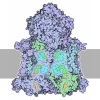
- Assembly
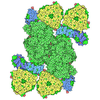
| Deposited unit | 
|
|---|---|
| 1 |
|
-Components
-Reaction center protein ... , 2 types, 2 molecules LM
| #1: Protein | Mass: 30660.688 Da / Num. of mol.: 1 / Source method: isolated from a natural source / Source: (natural) Rhodospirillum rubrum (bacteria) / References: UniProt: P10717 |
|---|---|
| #2: Protein | Mass: 34234.547 Da / Num. of mol.: 1 / Source method: isolated from a natural source / Source: (natural) Rhodospirillum rubrum (bacteria) / References: UniProt: P10718 |
-Protein / Sugars , 2 types, 2 molecules H
| #3: Protein | Mass: 27976.193 Da / Num. of mol.: 1 / Source method: isolated from a natural source / Source: (natural) Rhodospirillum rubrum (bacteria) / References: UniProt: Q7M149 |
|---|---|
| #8: Sugar | ChemComp-LMT / 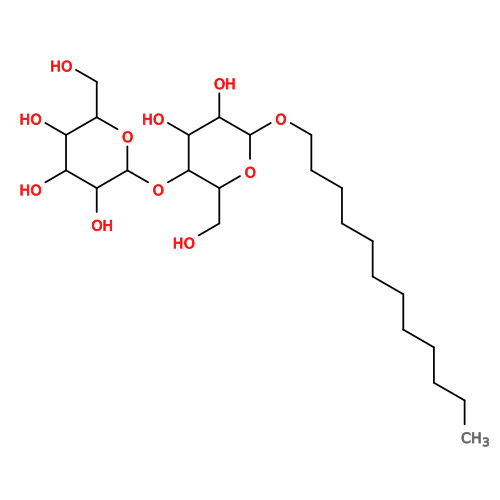 Type: D-saccharide / Mass: 510.615 Da / Num. of mol.: 1 / Source method: obtained synthetically / Formula: C24H46O11 / Comment: detergent*YM Type: D-saccharide / Mass: 510.615 Da / Num. of mol.: 1 / Source method: obtained synthetically / Formula: C24H46O11 / Comment: detergent*YM |
-Non-polymers , 10 types, 44 molecules 
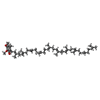
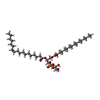
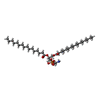

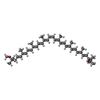
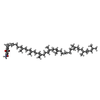
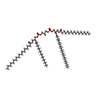
| #4: Chemical | ChemComp-07D / 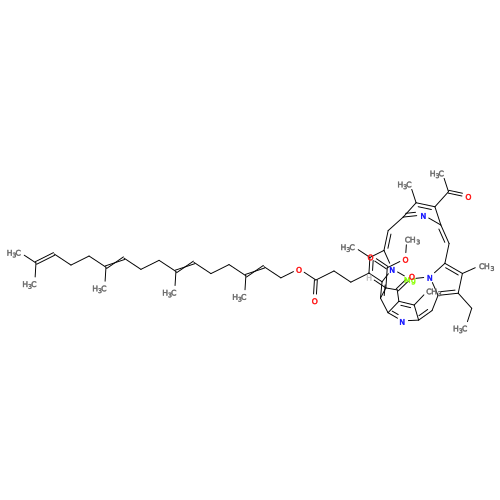 Mass: 905.457 Da / Num. of mol.: 4 / Source method: obtained synthetically / Formula: C55H68MgN4O6 / Feature type: SUBJECT OF INVESTIGATION Mass: 905.457 Da / Num. of mol.: 4 / Source method: obtained synthetically / Formula: C55H68MgN4O6 / Feature type: SUBJECT OF INVESTIGATION#5: Chemical | 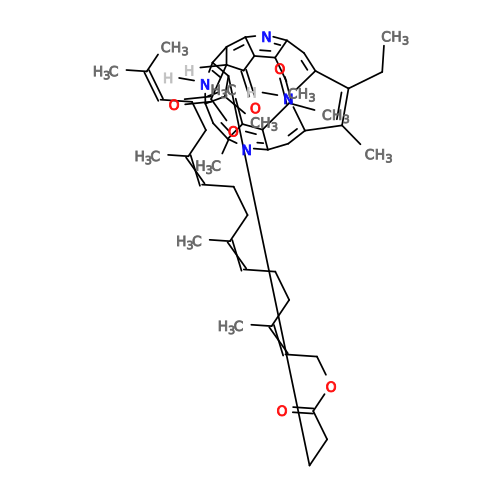 Mass: 879.136 Da / Num. of mol.: 2 / Source method: obtained synthetically / Formula: C55H66N4O6 / Feature type: SUBJECT OF INVESTIGATION Mass: 879.136 Da / Num. of mol.: 2 / Source method: obtained synthetically / Formula: C55H66N4O6 / Feature type: SUBJECT OF INVESTIGATION#6: Chemical | 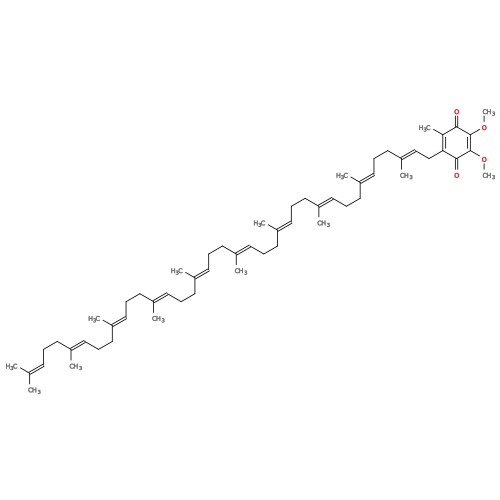 Mass: 863.343 Da / Num. of mol.: 2 / Source method: obtained synthetically / Formula: C59H90O4 / Feature type: SUBJECT OF INVESTIGATION Mass: 863.343 Da / Num. of mol.: 2 / Source method: obtained synthetically / Formula: C59H90O4 / Feature type: SUBJECT OF INVESTIGATION#7: Chemical | ChemComp-PGV / ( 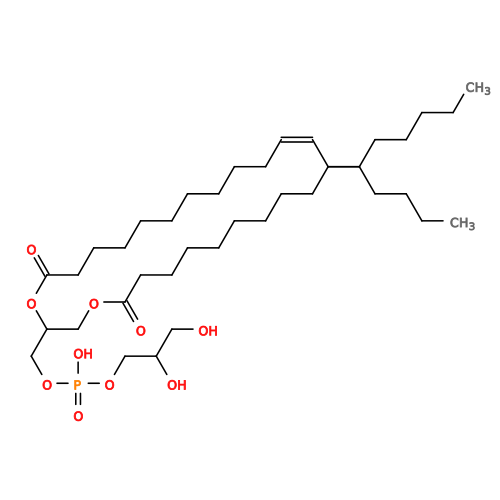 Mass: 749.007 Da / Num. of mol.: 20 / Source method: obtained synthetically / Formula: C40H77O10P / Comment: phospholipid*YM Mass: 749.007 Da / Num. of mol.: 20 / Source method: obtained synthetically / Formula: C40H77O10P / Comment: phospholipid*YM#9: Chemical | ChemComp-8K6 / 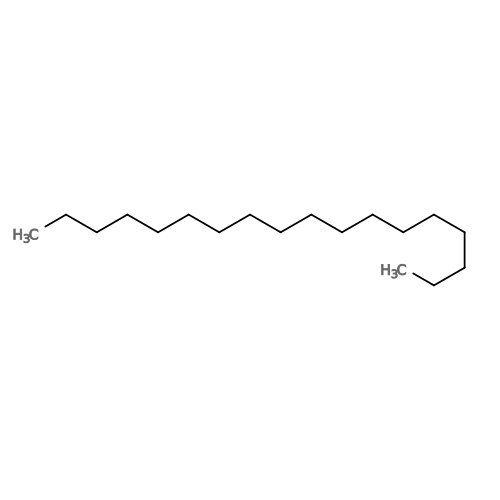 Mass: 254.494 Da / Num. of mol.: 7 / Source method: obtained synthetically / Formula: C18H38 Mass: 254.494 Da / Num. of mol.: 7 / Source method: obtained synthetically / Formula: C18H38#10: Chemical | ChemComp-PEF / 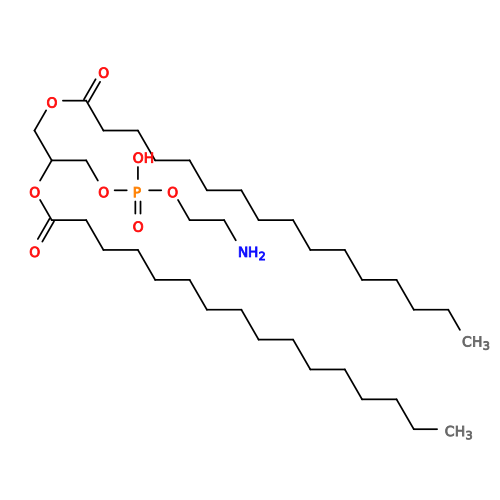 Mass: 691.959 Da / Num. of mol.: 5 / Source method: obtained synthetically / Formula: C37H74NO8P / Comment: phospholipid*YM Mass: 691.959 Da / Num. of mol.: 5 / Source method: obtained synthetically / Formula: C37H74NO8P / Comment: phospholipid*YM#11: Chemical | ChemComp-FE / |  Mass: 55.845 Da / Num. of mol.: 1 / Source method: obtained synthetically / Formula: Fe / Feature type: SUBJECT OF INVESTIGATION Mass: 55.845 Da / Num. of mol.: 1 / Source method: obtained synthetically / Formula: Fe / Feature type: SUBJECT OF INVESTIGATION#12: Chemical | ChemComp-CRT / |  Mass: 596.925 Da / Num. of mol.: 1 / Source method: obtained synthetically / Formula: C42H60O2 / Feature type: SUBJECT OF INVESTIGATION Mass: 596.925 Da / Num. of mol.: 1 / Source method: obtained synthetically / Formula: C42H60O2 / Feature type: SUBJECT OF INVESTIGATION#13: Chemical | ChemComp-RQ0 / | 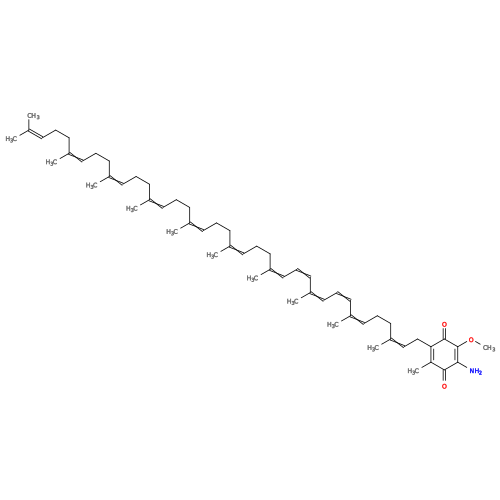 Mass: 844.300 Da / Num. of mol.: 1 / Source method: obtained synthetically / Formula: C58H85NO3 / Feature type: SUBJECT OF INVESTIGATION Mass: 844.300 Da / Num. of mol.: 1 / Source method: obtained synthetically / Formula: C58H85NO3 / Feature type: SUBJECT OF INVESTIGATION#14: Chemical | ChemComp-CDL / | 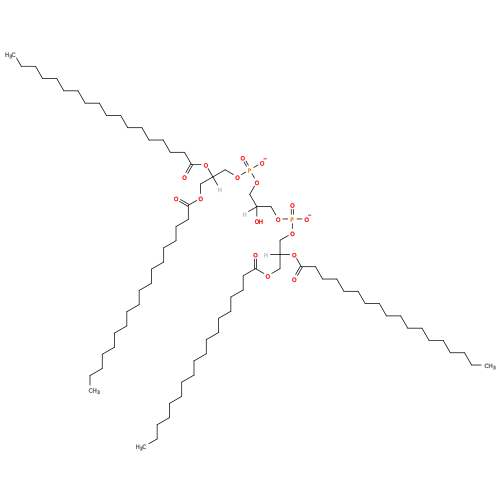 Mass: 1464.043 Da / Num. of mol.: 1 / Source method: obtained synthetically / Formula: C81H156O17P2 / Comment: phospholipid*YM Mass: 1464.043 Da / Num. of mol.: 1 / Source method: obtained synthetically / Formula: C81H156O17P2 / Comment: phospholipid*YM |
|---|
-Details
| Has ligand of interest | Y |
|---|---|
| Has protein modification | Y |
-Experimental details
-Experiment
| Experiment | Method: ELECTRON MICROSCOPY |
|---|---|
| EM experiment | Aggregation state: PARTICLE / 3D reconstruction method: single particle reconstruction |
- Sample preparation
| Component | Name: RC COMPLEX / Type: COMPLEX / Entity ID: #1-#3 / Source: NATURAL |
|---|---|
| Molecular weight | Experimental value: NO |
| Source (natural) | Organism: Rhodospirillum rubrum (bacteria) |
| Source (recombinant) | Organism: Rhodospirillum rubrum (bacteria) |
| Buffer solution | pH: 7.5 |
| Specimen | Embedding applied: NO / Shadowing applied: NO / Staining applied: NO / Vitrification applied: YES |
| Vitrification | Cryogen name: ETHANE |
- Electron microscopy imaging
| Experimental equipment |  Model: Titan Krios / Image courtesy: FEI Company |
|---|---|
| Microscopy | Model: TFS KRIOS |
| Electron gun | Electron source:  FIELD EMISSION GUN / Accelerating voltage: 300 kV / Illumination mode: FLOOD BEAM FIELD EMISSION GUN / Accelerating voltage: 300 kV / Illumination mode: FLOOD BEAM |
| Electron lens | Mode: BRIGHT FIELD / Nominal defocus max: 2700 nm / Nominal defocus min: 700 nm |
| Image recording | Electron dose: 60.24 e/Å2 / Film or detector model: FEI FALCON IV (4k x 4k) |
- Processing
| EM software | Name: PHENIX / Version: 1.19.2_4158 / Category: model refinement | ||||||||||||||||||||||||
|---|---|---|---|---|---|---|---|---|---|---|---|---|---|---|---|---|---|---|---|---|---|---|---|---|---|
| CTF correction | Type: PHASE FLIPPING ONLY | ||||||||||||||||||||||||
| 3D reconstruction | Resolution: 2.74 Å / Resolution method: FSC 0.143 CUT-OFF / Num. of particles: 118603 / Symmetry type: POINT | ||||||||||||||||||||||||
| Refinement | Highest resolution: 2.74 Å Stereochemistry target values: REAL-SPACE (WEIGHTED MAP SUM AT ATOM CENTERS) | ||||||||||||||||||||||||
| Refine LS restraints |
|
