National Natural Science Foundation of China (NSFC)
32171186
China
Citation
Journal: Nucleic Acids Res / Year: 2025 Title: Structural and molecular mechanisms of an Ro60 homolog from a Thermus bacteriophage. Authors: Zetao Hu / Zhaohui Jin / Lulu Guo / Ling Zeng / Xuanjia Dong / Lin Jiang / Wenting Dai / Jinbiao Ma / Ying Huang / Abstract: Ro60 is a conserved RNA-binding protein essential for RNA quality control and implicated in autoimmune responses. In this study, we present the structural and functional characterization of φRo60, ...Ro60 is a conserved RNA-binding protein essential for RNA quality control and implicated in autoimmune responses. In this study, we present the structural and functional characterization of φRo60, an Ro60 homolog from Thermus phage phiLo, with its crystal structure determined at 1.99 Å. Despite limited sequence identity with bacterial and amphibian homologs, φRo60 maintains the canonical doughnut-shaped architecture comprising HEAT repeats and a von Willebrand factor A domain. Surface electrostatic analysis reveals an extensive positively charged region across multiple α-helices, likely facilitating diverse RNA interactions. Moreover, φRo60 binds two Y RNA-like molecules (Yrl1 and Yrl2), identified from the phiLo genome, with distinct stoichiometries, leading to the formation of higher-order nucleocytoplasmic ribonucleoprotein (RNP) complexes. Cryo-electron microscopy of φRo60-Yrl2 RNP complexes revealed a minor population adopting a dimeric assembly, and key positively charged residues are important for φRo60-Yrl2 interactions. Additionally, φRo60 and Yrls interact with host Thermus thermophilus HB8 polynucleotide phosphorylase (PNPase), forming tripartite RYPER-like complexes and attenuating the ribonuclease activity of PNPase. These findings highlight φRo60 as a structurally adaptable Ro60 homolog capable of diverse RNA interactions and host factor recruitment, implying unique strategies for phages to counteract host defense systems in thermophilic environments.
In the structure databanks used in Yorodumi, some data are registered as the other names, "COVID-19 virus" and "2019-nCoV". Here are the details of the virus and the list of structure data.
Jan 31, 2019. EMDB accession codes are about to change! (news from PDBe EMDB page)
EMDB accession codes are about to change! (news from PDBe EMDB page)
The allocation of 4 digits for EMDB accession codes will soon come to an end. Whilst these codes will remain in use, new EMDB accession codes will include an additional digit and will expand incrementally as the available range of codes is exhausted. The current 4-digit format prefixed with “EMD-” (i.e. EMD-XXXX) will advance to a 5-digit format (i.e. EMD-XXXXX), and so on. It is currently estimated that the 4-digit codes will be depleted around Spring 2019, at which point the 5-digit format will come into force.
The EM Navigator/Yorodumi systems omit the EMD- prefix.
Related info.:Q: What is EMD? / ID/Accession-code notation in Yorodumi/EM Navigator
Yorodumi is a browser for structure data from EMDB, PDB, SASBDB, etc.
This page is also the successor to EM Navigator detail page, and also detail information page/front-end page for Omokage search.
The word "yorodu" (or yorozu) is an old Japanese word meaning "ten thousand". "mi" (miru) is to see.
Related info.:EMDB / PDB / SASBDB / Comparison of 3 databanks / Yorodumi Search / Aug 31, 2016. New EM Navigator & Yorodumi / Yorodumi Papers / Jmol/JSmol / Function and homology information / Changes in new EM Navigator and Yorodumi
 Movie
Movie Controller


 Open data
 Basic information
 Components
 Keywords
 Function and homology information
 Thermus phage phiLo (virus)
 X-RAY DIFFRACTION /
  Authors
 China, 1items
  Citation
 Structure visualization
 Downloads & links
 Other downloads

 PDBj
PDBj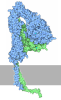
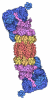
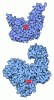
 Assembly

 Escherichia coli (E. coli) / References: UniProt: A0A3S7URH6
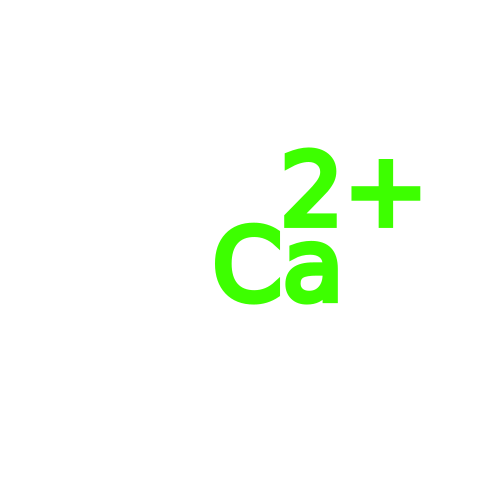 Mass: 40.078 Da / Num. of mol.: 1 / Source method: obtained synthetically / Formula: Ca / Feature type: SUBJECT OF INVESTIGATION
 Mass: 18.015 Da / Num. of mol.: 301 / Source method: isolated from a natural source / Formula: H2O
 Sample preparation
 Processing