 Movie
Movie Controller

[English] 日本語
 Yorodumi
- PDB-9jqy: Structural Insights into Selective Antagonism of TG6-129 and EP4 ... -
+ Open data

- Basic information
| Entry | Database: PDB / ID: 9jqy | ||||||||||||||||||||||||
|---|---|---|---|---|---|---|---|---|---|---|---|---|---|---|---|---|---|---|---|---|---|---|---|---|---|
| Title | Structural Insights into Selective Antagonism of TG6-129 and EP4 Prostaglandin Receptor | ||||||||||||||||||||||||
 Components Components |
| ||||||||||||||||||||||||
 Keywords Keywords | MEMBRANE PROTEIN/IMMUNE SYSTEM / GPCR / MEMBRANE PROTEIN-IMMUNE SYSTEM complex | ||||||||||||||||||||||||
| Function / homology |  Function and homology information Function and homology informationnegative regulation of eosinophil extravasation / prostaglandin E receptor activity / negative regulation of integrin activation / Prostanoid ligand receptors / T-helper cell differentiation / regulation of stress fiber assembly / negative regulation of cytokine production / ERK1 and ERK2 cascade / JNK cascade / response to mechanical stimulus ...negative regulation of eosinophil extravasation / prostaglandin E receptor activity / negative regulation of integrin activation / Prostanoid ligand receptors / T-helper cell differentiation / regulation of stress fiber assembly / negative regulation of cytokine production / ERK1 and ERK2 cascade / JNK cascade / response to mechanical stimulus / positive regulation of cytokine production / bone development / response to prostaglandin E / negative regulation of inflammatory response / cellular response to mechanical stimulus / adenylate cyclase-inhibiting G protein-coupled receptor signaling pathway / adenylate cyclase-modulating G protein-coupled receptor signaling pathway / positive regulation of inflammatory response / cellular response to prostaglandin E stimulus / positive regulation of cytosolic calcium ion concentration / adenylate cyclase-activating G protein-coupled receptor signaling pathway / G alpha (s) signalling events / inflammatory response / immune response / membrane / plasma membrane Similarity search - Function | ||||||||||||||||||||||||
| Biological species |   Mus musculus (house mouse) Mus musculus (house mouse)synthetic construct (others)  Homo sapiens (human) Homo sapiens (human) | ||||||||||||||||||||||||
| Method | ELECTRON MICROSCOPY / single particle reconstruction / cryo EM / Resolution: 2.92 Å | ||||||||||||||||||||||||
 Authors Authors | Wu, Y.L. / Zhang, H. / Xu, J.Y. / Wu, C.R. / Xu, E.H. | ||||||||||||||||||||||||
| Funding support |  China, 1items China, 1items
| ||||||||||||||||||||||||
 Citation Citation | Journal: EMBO J / Year: 2025 Title: Structural insights into selective and dual antagonism of EP2 and EP4 prostaglandin receptors. Authors: Yanli Wu / Heng Zhang / Jiuyin Xu / Kai Wu / Wen Hu / Xinheng He / Gaoming Wang / Canrong Wu / H Eric Xu / Abstract: Prostaglandin E2 (PGE2) signaling through EP2 and EP4 receptors is crucial in regulating inflammation, pain, and cancer progression. While selective and dual antagonists for these receptors hold ...Prostaglandin E2 (PGE2) signaling through EP2 and EP4 receptors is crucial in regulating inflammation, pain, and cancer progression. While selective and dual antagonists for these receptors hold therapeutic potential, their binding mechanisms and selectivity have remained unclear. In this study, we present cryo-electron microscopy (cryo-EM) structures of human EP2 and EP4 receptors in complex with selective antagonists PF-04418948 and grapiprant, as well as with the dual antagonist TG6-129. These structures reveal distinct binding pockets and interaction networks that dictate antagonist selectivity and efficacy. Notably, TG6-129 displays a novel binding mode, engaging deeply with EP2 while interacting more superficially with EP4 in a two-warhead manner. Furthermore, comparisons of active and inactive receptor structures elucidate the mechanisms underlying EP2 activation and antagonism. Overall, these findings provide a structural framework for understanding prostanoid receptor pharmacology and offer valuable insights for the rational design of improved selective and dual antagonists targeting EP2 and EP4 receptors. | ||||||||||||||||||||||||
| History |
|
- Structure visualization
| Structure viewer | Molecule: MolmilJmol/JSmol |
|---|
- Downloads & links
-Download
| PDBx/mmCIF format | 9jqy.cif.gz | 182.5 KB | Display | PDBx/mmCIF format |
|---|---|---|---|---|
| PDB format | pdb9jqy.ent.gz | Display | PDB format | |
| PDBx/mmJSON format | 9jqy.json.gz | Tree view | PDBx/mmJSON format | |
| Others |  Other downloads Other downloads |
-Validation report
| Arichive directory | https://data.pdbj.org/pub/pdb/validation_reports/jq/9jqyftp://data.pdbj.org/pub/pdb/validation_reports/jq/9jqy | HTTPS FTP |
|---|
-Related structure data
| Related structure data |  61743MC  9jqzC  9jroC  9jrtC M: map data used to model this data C: citing same article ( |
|---|---|
| Similar structure data |


-Links
 PDBj
PDBj
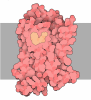
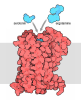
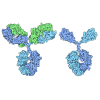
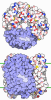
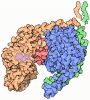
- Assembly
| Deposited unit | 
|
|---|---|
| 1 |
|
-Components
| #1: Antibody | Mass: 27574.092 Da / Num. of mol.: 1 Source method: isolated from a genetically manipulated source Source: (gene. exp.) Mus musculus (house mouse) / Production host:   Spodoptera frugiperda (fall armyworm) Spodoptera frugiperda (fall armyworm) |
|---|---|
| #2: Antibody | Mass: 28944.303 Da / Num. of mol.: 1 Source method: isolated from a genetically manipulated source Source: (gene. exp.) Mus musculus (house mouse) / Production host: Spodoptera frugiperda (fall armyworm) |
| #3: Protein | Mass: 61463.859 Da / Num. of mol.: 1 Source method: isolated from a genetically manipulated source Source: (gene. exp.) synthetic construct (others), (gene. exp.) Homo sapiens (human)Gene: PTGER4, PTGER2 / Production host: Spodoptera frugiperda (fall armyworm) / References: UniProt: P35408 |
| #4: Chemical | ChemComp-A1EC5 / ~{ Mass: 493.598 Da / Num. of mol.: 1 / Source method: obtained synthetically / Formula: C20H20FN5O3S3 / Feature type: SUBJECT OF INVESTIGATION |
| #5: Water | ChemComp-HOH /  Mass: 18.015 Da / Num. of mol.: 6 / Source method: isolated from a natural source / Formula: H2O Mass: 18.015 Da / Num. of mol.: 6 / Source method: isolated from a natural source / Formula: H2O |
| Has ligand of interest | Y |
| Has protein modification | Y |
-Experimental details
-Experiment
| Experiment | Method: ELECTRON MICROSCOPY |
|---|---|
| EM experiment | Aggregation state: PARTICLE / 3D reconstruction method: single particle reconstruction |
- Sample preparation
| Component | Name: human prostaglandin E receptor EP4 / Type: COMPLEX / Entity ID: #1-#3 / Source: RECOMBINANT | ||||||||||||
|---|---|---|---|---|---|---|---|---|---|---|---|---|---|
| Source (natural) |
| ||||||||||||
| Source (recombinant) | Organism: Spodoptera frugiperda (fall armyworm) | ||||||||||||
| Buffer solution | pH: 7.3 | ||||||||||||
| Specimen | Embedding applied: NO / Shadowing applied: NO / Staining applied: NO / Vitrification applied: YES | ||||||||||||
| Vitrification | Cryogen name: ETHANE |
- Electron microscopy imaging
| Experimental equipment |  Model: Titan Krios / Image courtesy: FEI Company |
|---|---|
| Microscopy | Model: TFS KRIOS |
| Electron gun | Electron source:  FIELD EMISSION GUN / Accelerating voltage: 300 kV / Illumination mode: SPOT SCAN FIELD EMISSION GUN / Accelerating voltage: 300 kV / Illumination mode: SPOT SCAN |
| Electron lens | Mode: DIFFRACTION / Nominal defocus max: 3000 nm / Nominal defocus min: 1000 nm |
| Image recording | Electron dose: 50 e/Å2 / Film or detector model: GATAN K3 BIOCONTINUUM (6k x 4k) |
- Processing
| EM software | Name: PHENIX / Category: model refinement | ||||||||||||||||||||||||
|---|---|---|---|---|---|---|---|---|---|---|---|---|---|---|---|---|---|---|---|---|---|---|---|---|---|
| CTF correction | Type: PHASE FLIPPING AND AMPLITUDE CORRECTION | ||||||||||||||||||||||||
| 3D reconstruction | Resolution: 2.92 Å / Resolution method: FSC 0.143 CUT-OFF / Num. of particles: 97395 / Symmetry type: POINT | ||||||||||||||||||||||||
| Refine LS restraints |
|
