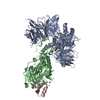
ムービー
ムービー コントローラー


+ データを開く

- 基本情報
基本情報
| 登録情報 | データベース: PDB / ID: 9hpi | ||||||
|---|---|---|---|---|---|---|---|
| タイトル | Cryo-EM structure of DDB1dB-CRBN-MRT-0031619, conformation 1 | ||||||
 要素 要素 |
| ||||||
 キーワード キーワード | LIGASE / Targeted protein degradation / molecular glue / ubiquitin proteasome system / CRBN / ubiquitin ligase | ||||||
| 機能・相同性 |  機能・相同性情報 機能・相同性情報negative regulation of monoatomic ion transmembrane transport / positive regulation by virus of viral protein levels in host cell / spindle assembly involved in female meiosis / epigenetic programming in the zygotic pronuclei / UV-damage excision repair / biological process involved in interaction with symbiont / regulation of mitotic cell cycle phase transition / WD40-repeat domain binding / Cul4A-RING E3 ubiquitin ligase complex / Cul4-RING E3 ubiquitin ligase complex ...negative regulation of monoatomic ion transmembrane transport / positive regulation by virus of viral protein levels in host cell / spindle assembly involved in female meiosis / epigenetic programming in the zygotic pronuclei / UV-damage excision repair / biological process involved in interaction with symbiont / regulation of mitotic cell cycle phase transition / WD40-repeat domain binding / Cul4A-RING E3 ubiquitin ligase complex / Cul4-RING E3 ubiquitin ligase complex / Cul4B-RING E3 ubiquitin ligase complex / ubiquitin ligase complex scaffold activity / negative regulation of reproductive process / negative regulation of developmental process / locomotory exploration behavior / viral release from host cell / cullin family protein binding / positive regulation of Wnt signaling pathway / ectopic germ cell programmed cell death / negative regulation of protein-containing complex assembly / positive regulation of viral genome replication / proteasomal protein catabolic process / positive regulation of gluconeogenesis / nucleotide-excision repair / positive regulation of protein-containing complex assembly / Recognition of DNA damage by PCNA-containing replication complex / regulation of circadian rhythm / DNA Damage Recognition in GG-NER / Dual Incision in GG-NER / Transcription-Coupled Nucleotide Excision Repair (TC-NER) / Formation of TC-NER Pre-Incision Complex / Wnt signaling pathway / Formation of Incision Complex in GG-NER / Dual incision in TC-NER / Gap-filling DNA repair synthesis and ligation in TC-NER / positive regulation of protein catabolic process / cellular response to UV / rhythmic process / site of double-strand break / Neddylation / ubiquitin-dependent protein catabolic process / protein-macromolecule adaptor activity / Potential therapeutics for SARS / proteasome-mediated ubiquitin-dependent protein catabolic process / damaged DNA binding / transmembrane transporter binding / chromosome, telomeric region / protein ubiquitination / DNA repair / apoptotic process / DNA damage response / negative regulation of apoptotic process / protein-containing complex binding / nucleolus / perinuclear region of cytoplasm / protein-containing complex / extracellular space / DNA binding / extracellular exosome / nucleoplasm / metal ion binding / nucleus / membrane / cytosol / cytoplasm 類似検索 - 分子機能 | ||||||
| 生物種 |  Homo sapiens (ヒト) Homo sapiens (ヒト) | ||||||
| 手法 | 電子顕微鏡法 / 単粒子再構成法 / クライオ電子顕微鏡法 / 解像度: 2.93 Å | ||||||
 データ登録者 データ登録者 | Langousis, G. / Hunkeler, M. / Chami, M. / Quan, C. / Townson, S. / Bonenfant, D. | ||||||
| 資金援助 | 1件
| ||||||
 引用 引用 | ジャーナル: Nat Commun / 年: 2025 タイトル: A degron-mimicking molecular glue drives CRBN homo-dimerization and degradation. 著者: Gerasimos Langousis / Pablo Gainza / Moritz Hunkeler / Despoina Kapsitidou / Etienne J Donckele / Stefano Annunziato / Lars Wiedmer / Katherine F M Jones / Bradley DeMarco / Chao Quan / ...著者: Gerasimos Langousis / Pablo Gainza / Moritz Hunkeler / Despoina Kapsitidou / Etienne J Donckele / Stefano Annunziato / Lars Wiedmer / Katherine F M Jones / Bradley DeMarco / Chao Quan / Richard D Bunker / Kevin J Lumb / Bernhard Fasching / John C Castle / Sharon A Townson / Débora Bonenfant /  要旨: Cereblon (CRBN) is an E3 ubiquitin ligase widely harnessed for targeted protein degradation (TPD). We report the discovery of a molecular glue degrader (MGD), MRT-31619, that drives homo-dimerization ...Cereblon (CRBN) is an E3 ubiquitin ligase widely harnessed for targeted protein degradation (TPD). We report the discovery of a molecular glue degrader (MGD), MRT-31619, that drives homo-dimerization of CRBN and promotes its fast, potent, and selective degradation by the ubiquitin proteasome system. Interestingly, the cryo-electron microscopy (cryo-EM) structure of the CRBN homodimer reveals a unique mechanism whereby two molecular glues assemble into a helix-like structure and drive ternary complex formation by mimicking a neosubstrate G-loop degron. This CRBN chemical knockout offers a valuable tool to elucidate the molecular mechanism of MGDs, to investigate its endogenous substrates and understand their physiological roles. | ||||||
| 履歴 |
|
- 構造の表示
構造の表示
| 構造ビューア | 分子: MolmilJmol/JSmol |
|---|
- ダウンロードとリンク
-ダウンロード
| PDBx/mmCIF形式 | 9hpi.cif.gz | 561.8 KB | 表示 | PDBx/mmCIF形式 |
|---|---|---|---|---|
| PDB形式 | pdb9hpi.ent.gz | 表示 | PDB形式 | |
| PDBx/mmJSON形式 | 9hpi.json.gz | ツリー表示 | PDBx/mmJSON形式 | |
| その他 |  その他のダウンロード その他のダウンロード |
-検証レポート
| 文書・要旨 | 9hpi_validation.pdf.gz | 1.2 MB | 表示 | wwPDB検証レポート |
|---|---|---|---|---|
| 文書・詳細版 | 9hpi_full_validation.pdf.gz | 1.2 MB | 表示 | |
| XML形式データ | 9hpi_validation.xml.gz | 51.5 KB | 表示 | |
| CIF形式データ | 9hpi_validation.cif.gz | 78.6 KB | 表示 | |
| アーカイブディレクトリ | https://data.pdbj.org/pub/pdb/validation_reports/hp/9hpiftp://data.pdbj.org/pub/pdb/validation_reports/hp/9hpi | HTTPS FTP |
-関連構造データ


-リンク
 PDBj
PDBj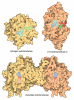

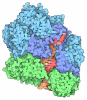
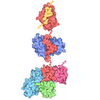
- 集合体
集合体
| 登録構造単位 | 
|
|---|---|
| 1 |
|
-要素
| #1: タンパク質 | 分子量: 93347.078 Da / 分子数: 1 / 変異: aa396-705 replaced with GNGNSG / 由来タイプ: 組換発現 / 由来: (組換発現) Homo sapiens (ヒト) / 遺伝子: DDB1, XAP1 / 発現宿主:  Trichoplusia ni (イラクサキンウワバ) / 参照: UniProt: Q16531 Trichoplusia ni (イラクサキンウワバ) / 参照: UniProt: Q16531 | ||||||||
|---|---|---|---|---|---|---|---|---|---|
| #2: タンパク質 | 分子量: 46249.180 Da / 分子数: 2 / 由来タイプ: 組換発現 / 由来: (組換発現) Homo sapiens (ヒト) / 遺伝子: CRBN, AD-006 / 発現宿主: Trichoplusia ni (イラクサキンウワバ) / 参照: UniProt: Q96SW2#3: 化合物 |   分子量: 65.409 Da / 分子数: 2 / 由来タイプ: 合成 / 式: Zn 分子量: 65.409 Da / 分子数: 2 / 由来タイプ: 合成 / 式: Zn#4: 化合物 | 分子量: 486.562 Da / 分子数: 2 / 由来タイプ: 合成 / 式: C28H30N4O4 / タイプ: SUBJECT OF INVESTIGATION 研究の焦点であるリガンドがあるか | Y | Has protein modification | N | |
-実験情報
-実験
| 実験 | 手法: 電子顕微鏡法 |
|---|---|
| EM実験 | 試料の集合状態: PARTICLE / 3次元再構成法: 単粒子再構成法 |
- 試料調製
試料調製
| 構成要素 | 名称: Drug-induced ternary complex between two DDB1-CRBN moieties タイプ: COMPLEX / Entity ID: #1-#2 / 由来: RECOMBINANT | |||||||||||||||||||||||||
|---|---|---|---|---|---|---|---|---|---|---|---|---|---|---|---|---|---|---|---|---|---|---|---|---|---|---|
| 分子量 | 値: 0.287 MDa / 実験値: YES | |||||||||||||||||||||||||
| 由来(天然) | 生物種: Homo sapiens (ヒト) | |||||||||||||||||||||||||
| 由来(組換発現) | 生物種: Trichoplusia ni (イラクサキンウワバ) | |||||||||||||||||||||||||
| 緩衝液 | pH: 7.4 詳細: Sample supplemented with DDM directly before vitrification | |||||||||||||||||||||||||
| 緩衝液成分 |
| |||||||||||||||||||||||||
| 試料 | 濃度: 9 mg/ml / 包埋: NO / シャドウイング: NO / 染色: NO / 凍結: YES | |||||||||||||||||||||||||
| 試料支持 | グリッドの材料: GOLD / グリッドのサイズ: 300 divisions/in. / グリッドのタイプ: Quantifoil R2/1 | |||||||||||||||||||||||||
| 急速凍結 | 装置: LEICA EM GP / 凍結剤: ETHANE / 湿度: 90 % / 凍結前の試料温度: 283 K / 詳細: LEICA EMGP2 |
- 電子顕微鏡撮影
| 実験機器 |  モデル: Titan Krios / 画像提供: FEI Company |
|---|---|
| 顕微鏡 | モデル: TFS KRIOS / 詳細: collected with AFIS |
| 電子銃 | 電子線源:  FIELD EMISSION GUN / 加速電圧: 300 kV / 照射モード: FLOOD BEAM FIELD EMISSION GUN / 加速電圧: 300 kV / 照射モード: FLOOD BEAM |
| 電子レンズ | モード: BRIGHT FIELD / 倍率(公称値): 165000 X / 最大 デフォーカス(公称値): 2000 nm / 最小 デフォーカス(公称値): 800 nm / Cs: 2.7 mm / C2レンズ絞り径: 20 µm / アライメント法: COMA FREE |
| 試料ホルダ | 凍結剤: NITROGEN 試料ホルダーモデル: FEI TITAN KRIOS AUTOGRID HOLDER |
| 撮影 | 電子線照射量: 40 e/Å2 フィルム・検出器のモデル: TFS FALCON 4i (4k x 4k) 撮影したグリッド数: 1 / 実像数: 20582 / 詳細: Movies with 52 frames |
| 電子光学装置 | エネルギーフィルター名称: TFS Selectris X / エネルギーフィルタースリット幅: 10 eV |
- 解析
解析
| EMソフトウェア |
| ||||||||||||||||||||||||||||||||||||||||||||||||
|---|---|---|---|---|---|---|---|---|---|---|---|---|---|---|---|---|---|---|---|---|---|---|---|---|---|---|---|---|---|---|---|---|---|---|---|---|---|---|---|---|---|---|---|---|---|---|---|---|---|
| CTF補正 | タイプ: PHASE FLIPPING AND AMPLITUDE CORRECTION | ||||||||||||||||||||||||||||||||||||||||||||||||
| 粒子像の選択 | 選択した粒子像数: 4802227 / 詳細: TOPAZ with general model | ||||||||||||||||||||||||||||||||||||||||||||||||
| 対称性 | 点対称性: C1 (非対称) | ||||||||||||||||||||||||||||||||||||||||||||||||
| 3次元再構成 | 解像度: 2.93 Å / 解像度の算出法: FSC 0.143 CUT-OFF / 粒子像の数: 203344 / アルゴリズム: FOURIER SPACE / クラス平均像の数: 1 / 対称性のタイプ: POINT | ||||||||||||||||||||||||||||||||||||||||||||||||
| 原子モデル構築 | B value: 73 / プロトコル: OTHER / 空間: REAL / Target criteria: real space cross correlation / 詳細: real space refinement in COOT and phenix | ||||||||||||||||||||||||||||||||||||||||||||||||
| 原子モデル構築 | PDB-ID: 8TNQ Accession code: 8TNQ / Source name: PDB / タイプ: experimental model | ||||||||||||||||||||||||||||||||||||||||||||||||
| 精密化 | 最高解像度: 2.93 Å 立体化学のターゲット値: REAL-SPACE (WEIGHTED MAP SUM AT ATOM CENTERS) | ||||||||||||||||||||||||||||||||||||||||||||||||
| 拘束条件 |
|