Isoform Fetal-tau of Microtubule-associated protein tau
キーワード
PROTEIN FIBRIL / Amyloid / alzheimer
機能・相同性
機能・相同性情報
plus-end-directed organelle transport along microtubule / histone-dependent DNA binding / negative regulation of protein localization to mitochondrion / neurofibrillary tangle / microtubule lateral binding / axonal transport / tubulin complex / positive regulation of protein localization to synapse / phosphatidylinositol bisphosphate binding / generation of neurons ...plus-end-directed organelle transport along microtubule / histone-dependent DNA binding / negative regulation of protein localization to mitochondrion / neurofibrillary tangle / microtubule lateral binding / axonal transport / tubulin complex / positive regulation of protein localization to synapse / phosphatidylinositol bisphosphate binding / generation of neurons / axon development / axonal transport of mitochondrion / rRNA metabolic process / central nervous system neuron development / regulation of microtubule-based movement / regulation of mitochondrial fission / regulation of chromosome organization / intracellular distribution of mitochondria / minor groove of adenine-thymine-rich DNA binding / lipoprotein particle binding / microtubule polymerization / negative regulation of mitochondrial membrane potential / regulation of microtubule polymerization / dynactin binding / apolipoprotein binding / regulation of calcium-mediated signaling / main axon / Caspase-mediated cleavage of cytoskeletal proteins / glial cell projection / regulation of microtubule polymerization or depolymerization / axolemma / positive regulation of axon extension / neurofibrillary tangle assembly / protein polymerization / negative regulation of mitochondrial fission / positive regulation of microtubule polymerization / regulation of cellular response to heat / Activation of AMPK downstream of NMDARs / positive regulation of protein localization / positive regulation of superoxide anion generation / cellular response to brain-derived neurotrophic factor stimulus / cytoplasmic microtubule organization / regulation of long-term synaptic depression / axon cytoplasm / supramolecular fiber organization / synapse assembly / somatodendritic compartment / astrocyte activation / nuclear periphery / phosphatidylinositol binding / protein phosphatase 2A binding / stress granule assembly / enzyme inhibitor activity / cellular response to reactive oxygen species / regulation of microtubule cytoskeleton organization / memory / microglial cell activation / cellular response to nerve growth factor stimulus / regulation of synaptic plasticity / Hsp90 protein binding / SH3 domain binding / synapse organization / regulation of autophagy / protein homooligomerization / microtubule cytoskeleton organization / PKR-mediated signaling / response to lead ion / neuron projection development / cytoplasmic ribonucleoprotein granule / microtubule cytoskeleton / cell-cell signaling / cellular response to heat / single-stranded DNA binding / growth cone / protein-folding chaperone binding / actin binding / cell body / double-stranded DNA binding / sequence-specific DNA binding / microtubule binding / amyloid fibril formation / dendritic spine / microtubule / learning or memory / protein-macromolecule adaptor activity / neuron projection / membrane raft / negative regulation of gene expression / axon / neuronal cell body / DNA damage response / dendrite / protein kinase binding / enzyme binding / mitochondrion / DNA binding / RNA binding / extracellular region / identical protein binding / nucleus 類似検索 - 分子機能
Microtubule-associated protein Tau / Microtubule associated protein, tubulin-binding repeat / Tau and MAP protein, tubulin-binding repeat / Tau and MAP proteins tubulin-binding repeat signature. / Tau and MAP proteins tubulin-binding repeat profile. / : 類似検索 - ドメイン・相同性
ジャーナル: Elife / 年: 2026 タイトル: Twelve phosphomimetic mutations induce the assembly of recombinant full-length human tau into paired helical filaments. 著者: Sofia Lövestam / Jane L Wagstaff / Taxiarchis Katsinelos / Jenny Shi / Stefan M V Freund / Michel Goedert / Sjors H W Scheres / 要旨: The assembly of tau into amyloid filaments is associated with more than 20 neurodegenerative diseases, collectively termed tauopathies. Electron cryo-microscopy (cryo-EM) structures of brain-derived ...The assembly of tau into amyloid filaments is associated with more than 20 neurodegenerative diseases, collectively termed tauopathies. Electron cryo-microscopy (cryo-EM) structures of brain-derived tau filaments revealed that specific structures define different diseases, triggering a quest for the development of experimental model systems that replicate the structures of disease. Here, we describe 12 phosphomimetic serine/threonine-to-aspartate mutations in tau, which we term PAD12, that collectively induce the in vitro assembly of full-length three-repeat tau into filaments with the same structure as paired helical filaments extracted from the brains of individuals with Alzheimer's disease. Solution-state nuclear magnetic resonance spectroscopy suggests that phosphomimetic mutations in the carboxy-terminal domain of tau may facilitate filament formation by disrupting an intramolecular interaction between two IVYK motifs. PAD12 tau can be used for both nucleation-dependent and multiple rounds of seeded assembly in vitro, as well as for the seeding of tau biosensor cells. PAD12 tau can be assembled into paired helical filaments under various shaking conditions, with the resulting filaments being stable for extended periods of time. They can be labelled with fluorophores and biotin. Tau filaments extracted from the brains of individuals with Alzheimer's disease have been known to be made of hyperphosphorylated and abnormally phosphorylated full-length tau, but it was not known if the presence of this post-translational modification is more than a mere correlation. Our findings suggest that hyperphosphorylation of tau may be sufficient for the formation of the Alzheimer tau fold. PAD12 tau will be a useful tool for the study of molecular mechanisms of neurodegeneration.
履歴
登録
2024年10月22日
登録サイト: PDBE / 処理サイト: PDBE
改定 1.0
2024年12月4日
Provider: repository / タイプ: Initial release
改定 1.0
2024年12月4日
Data content type: EM metadata / Data content type: EM metadata / Provider: repository / タイプ: Initial release
改定 1.0
2024年12月4日
Data content type: Additional map / Data content type: Additional map / Provider: repository / タイプ: Initial release
改定 1.0
2024年12月4日
Data content type: FSC / Data content type: FSC / Provider: repository / タイプ: Initial release
改定 1.0
2024年12月4日
Data content type: Half map / Part number: 1 / Data content type: Half map / Provider: repository / タイプ: Initial release
改定 1.0
2024年12月4日
Data content type: Half map / Part number: 2 / Data content type: Half map / Provider: repository / タイプ: Initial release
改定 1.0
2024年12月4日
Data content type: Image / Data content type: Image / Provider: repository / タイプ: Initial release
改定 1.0
2024年12月4日
Data content type: Primary map / Data content type: Primary map / Provider: repository / タイプ: Initial release
Data content type: EM metadata / Data content type: EM metadata / EM metadata / Group: Database references / Experimental summary / Data content type: EM metadata / EM metadata / EM metadata / カテゴリ: citation / citation_author / em_admin Data content type: EM metadata / EM metadata ...EM metadata / EM metadata / EM metadata / EM metadata / EM metadata / EM metadata / EM metadata / EM metadata / EM metadata / EM metadata Item: _citation.country / _citation.journal_abbrev ..._citation.country / _citation.journal_abbrev / _citation.journal_id_CSD / _citation.journal_id_ISSN / _citation.journal_volume / _citation.pdbx_database_id_DOI / _citation.pdbx_database_id_PubMed / _citation.title / _citation.year / _em_admin.last_update
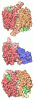
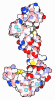
A: Isoform Fetal-tau of Microtubule-associated protein tau B: Isoform Fetal-tau of Microtubule-associated protein tau C: Isoform Fetal-tau of Microtubule-associated protein tau D: Isoform Fetal-tau of Microtubule-associated protein tau E: Isoform Fetal-tau of Microtubule-associated protein tau F: Isoform Fetal-tau of Microtubule-associated protein tau
 ムービー
ムービー コントローラー


 データを開く
 基本情報
基本情報 要素
要素 キーワード
キーワード 機能・相同性情報
 Homo sapiens (ヒト)
 データ登録者
 英国, 1件
  引用
引用 構造の表示
構造の表示 ダウンロードとリンク
 その他のダウンロード


 PDBj
PDBj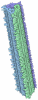
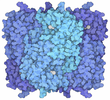
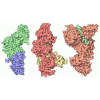
 集合体
集合体

 Escherichia coli (大腸菌) / 参照: UniProt: P10636
 試料調製
試料調製 電子顕微鏡撮影
 FIELD EMISSION GUN / 加速電圧: 300 kV / 照射モード: FLOOD BEAM
 解析
解析