 Movie
Movie Controller


+ Open data

- Basic information
| Entry | Database: PDB / ID: 9h1u | ||||||||||||||||||||||||
|---|---|---|---|---|---|---|---|---|---|---|---|---|---|---|---|---|---|---|---|---|---|---|---|---|---|
| Title | Cryo-EM structure of Heterooligomeric Bacterioferritin | ||||||||||||||||||||||||
 Components Components | (Bacterioferritin) x 3 | ||||||||||||||||||||||||
 Keywords Keywords | METAL BINDING PROTEIN / Heterooligomer / Iron-storage protein / Heme binding / Octahedral | ||||||||||||||||||||||||
| Function / homology |  Function and homology information Function and homology informationiron ion sequestering activity / ferroxidase activity / ferric iron binding / iron ion transport / intracellular iron ion homeostasis / heme binding / cytosol Similarity search - Function | ||||||||||||||||||||||||
| Biological species |  Magnetospirillum gryphiswaldense MSR-1 (magnetotactic) Magnetospirillum gryphiswaldense MSR-1 (magnetotactic) | ||||||||||||||||||||||||
| Method | ELECTRON MICROSCOPY / single particle reconstruction / cryo EM / Resolution: 2.86 Å | ||||||||||||||||||||||||
 Authors Authors | Stein, D. / Zalk, R. / Shahar, A. / Zarivach, R. / Frank, G.A. | ||||||||||||||||||||||||
| Funding support |  Israel, 1items Israel, 1items
| ||||||||||||||||||||||||
 Citation Citation | Journal: Proc Natl Acad Sci U S A / Year: 2026 Title: The assembly rules guiding hetero-oligomeric bacterioferritin organization and their evolutionary signature. Authors: Daniel Stein / Bruno Jartoux / Shiran Dror / René Uebe / Tracy Chih-Ting Koubková-Yu / Ran Zalk / Anat Shahar / Raz Zarivach / Gabriel A Frank /  Abstract: Homomeric and heteromeric protein complexes are ubiquitous across all domains of life. The evolutionary transition from homo- to hetero-oligomers by gene duplication and chain specialization is ...Homomeric and heteromeric protein complexes are ubiquitous across all domains of life. The evolutionary transition from homo- to hetero-oligomers by gene duplication and chain specialization is widespread, yet it entails challenging requirements for maintaining oligomerization and functionality. Chain specialization in ferritins, which occurs in bacteria, vertebrates, and plants, is a salient example of this phenomenon. In heteroferritins, the two essential functions, ferroxidase activity and electron transfer, are split between two specialized chain types. Many heteroferritins assemble into complexes with variable subunit ratios, implying the existence of assembly rules that balance compositional flexibility with structural constraints. Here, we identify the assembly rules governing the organization of the heterobacterioferritin from (MSR-1 Bfr) by analyzing its cryo-EM reconstructions. These rules consist of structural constraints that limit the number of possible arrangements and promote juxtaposition of the two, now separated functions. These constraints support compositional flexibility while preserving function, thereby providing resilience to stochastic variation in oligomer stoichiometry. Bioinformatic analysis revealed that the assembly rules identified in MSR-1 Bfr are widespread across the Bfr family and coevolved with chain specialization. Together, these findings support leading models of hetero-oligomer evolution and reveal the emergence of order-exerting mutations that shape the organization of multimeric protein complexes while conserving function. | ||||||||||||||||||||||||
| History |
|
- Structure visualization
| Structure viewer | Molecule: MolmilJmol/JSmol |
|---|
- Downloads & links
-Download
| PDBx/mmCIF format | 9h1u.cif.gz | 688.7 KB | Display | PDBx/mmCIF format |
|---|---|---|---|---|
| PDB format | pdb9h1u.ent.gz | 575.9 KB | Display | PDB format |
| PDBx/mmJSON format | 9h1u.json.gz | Tree view | PDBx/mmJSON format | |
| Others |  Other downloads Other downloads |
-Validation report
| Arichive directory | https://data.pdbj.org/pub/pdb/validation_reports/h1/9h1uftp://data.pdbj.org/pub/pdb/validation_reports/h1/9h1u | HTTPS FTP |
|---|
-Related structure data
| Related structure data |  51772MC M: map data used to model this data C: citing same article ( |
|---|---|
| Similar structure data |
-Links
 PDBj
PDBj
- Assembly
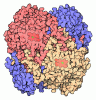
| Deposited unit | 
|
|---|---|
| 1 |
|
-Components
| #1: Protein | Mass: 18213.979 Da / Num. of mol.: 8 Source method: isolated from a genetically manipulated source Source: (gene. exp.) Magnetospirillum gryphiswaldense MSR-1 (magnetotactic)Gene: bfr, MGMSRv2__3703 Production host:  Escherichia coli 'BL21-Gold(DE3)pLysS AG' (bacteria) Escherichia coli 'BL21-Gold(DE3)pLysS AG' (bacteria)References: UniProt: V6F8F5 #2: Protein | Mass: 15412.395 Da / Num. of mol.: 4 Source method: isolated from a genetically manipulated source Details: The densities of chains I-L are an average of both Bfr1 and Bfr2, positions where they differ in their sequence (91 out of 159 positions) were changed to Alanine with the residue name "unknown". Source: (gene. exp.) Magnetospirillum gryphiswaldense MSR-1 (magnetotactic)Production host: Escherichia coli 'BL21-Gold(DE3)pLysS AG' (bacteria)#3: Protein | Mass: 17881.363 Da / Num. of mol.: 12 Source method: isolated from a genetically manipulated source Source: (gene. exp.) Magnetospirillum gryphiswaldense MSR-1 (magnetotactic)Gene: MGR_0532 Production host: Escherichia coli 'BL21-Gold(DE3)pLysS AG' (bacteria)References: UniProt: Q6NE81 #4: Chemical | ChemComp-HEM / 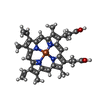 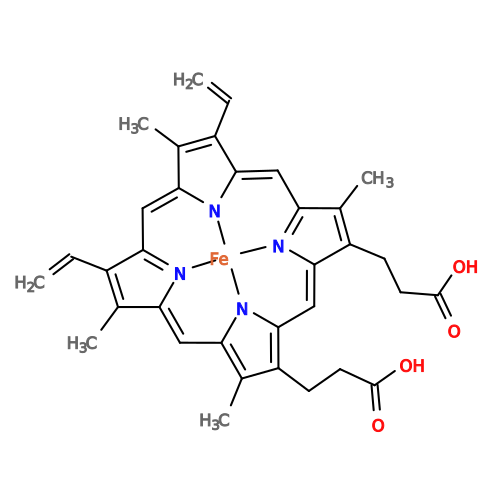 Mass: 616.487 Da / Num. of mol.: 4 / Source method: obtained synthetically / Formula: C34H32FeN4O4 / Feature type: SUBJECT OF INVESTIGATION Mass: 616.487 Da / Num. of mol.: 4 / Source method: obtained synthetically / Formula: C34H32FeN4O4 / Feature type: SUBJECT OF INVESTIGATION#5: Chemical | ChemComp-FE /   Mass: 55.845 Da / Num. of mol.: 16 / Source method: obtained synthetically / Formula: Fe / Feature type: SUBJECT OF INVESTIGATION Mass: 55.845 Da / Num. of mol.: 16 / Source method: obtained synthetically / Formula: Fe / Feature type: SUBJECT OF INVESTIGATIONHas ligand of interest | Y | Has protein modification | N | |
|---|
-Experimental details
-Experiment
| Experiment | Method: ELECTRON MICROSCOPY |
|---|---|
| EM experiment | Aggregation state: PARTICLE / 3D reconstruction method: single particle reconstruction |
- Sample preparation
| Component | Name: Bacterioferritin / Type: COMPLEX / Entity ID: #1-#3 / Source: RECOMBINANT | ||||||||||||||||||||
|---|---|---|---|---|---|---|---|---|---|---|---|---|---|---|---|---|---|---|---|---|---|
| Molecular weight | Value: 0.18 MDa / Experimental value: NO | ||||||||||||||||||||
| Source (natural) | Organism: Magnetospirillum gryphiswaldense MSR-1 (magnetotactic) | ||||||||||||||||||||
| Source (recombinant) | Organism: Escherichia coli 'BL21-Gold(DE3)pLysS AG' (bacteria) | ||||||||||||||||||||
| Buffer solution | pH: 8 | ||||||||||||||||||||
| Buffer component |
| ||||||||||||||||||||
| Specimen | Embedding applied: NO / Shadowing applied: NO / Staining applied: NO / Vitrification applied: YES | ||||||||||||||||||||
| Specimen support | Grid material: COPPER / Grid type: Quantifoil R1.2/1.3 | ||||||||||||||||||||
| Vitrification | Cryogen name: ETHANE |
- Electron microscopy imaging
| Experimental equipment | 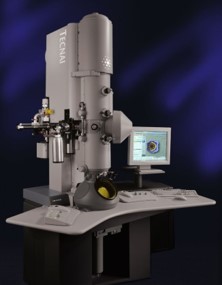 Model: Tecnai Polara / Image courtesy: FEI Company |
|---|---|
| Microscopy | Model: FEI POLARA 300 |
| Electron gun | Electron source:  FIELD EMISSION GUN / Accelerating voltage: 300 kV / Illumination mode: FLOOD BEAM FIELD EMISSION GUN / Accelerating voltage: 300 kV / Illumination mode: FLOOD BEAM |
| Electron lens | Mode: BRIGHT FIELD / Nominal defocus max: 2500 nm / Nominal defocus min: 1000 nm |
| Image recording | Electron dose: 80 e/Å2 / Film or detector model: GATAN K2 SUMMIT (4k x 4k) |
- Processing
| EM software | Name: PHENIX / Version: 1.20_4459: / Category: model refinement |
|---|---|
| CTF correction | Type: PHASE FLIPPING ONLY |
| 3D reconstruction | Resolution: 2.86 Å / Resolution method: FSC 0.143 CUT-OFF / Num. of particles: 239662 / Symmetry type: POINT |
