- PDB-9eiq: Crystal structure of HLA-B*07:02 with the 9-mer TP53 peptide RPILTIITL -
+
Open data
ID or keywords:
Loading...
-
Basic information
Entry
Database: PDB / ID: 9eiq
Title
Crystal structure of HLA-B*07:02 with the 9-mer TP53 peptide RPILTIITL
Components
Beta-2-microglobulin
HLA class I histocompatibility antigen, B alpha chain
Peptide from Cellular tumor antigen p53
Keywords
IMMUNE SYSTEM / HLA-B*07:02 / TP53
Function / homology
Function and homology information
regulation of interleukin-12 production / regulation of dendritic cell differentiation / regulation of T cell anergy / negative regulation of helicase activity / signal transduction by p53 class mediator / Loss of function of TP53 in cancer due to loss of tetramerization ability / regulation of interleukin-6 production / Regulation of TP53 Expression / regulation of cell cycle G2/M phase transition / negative regulation of G1 to G0 transition ...regulation of interleukin-12 production / regulation of dendritic cell differentiation / regulation of T cell anergy / negative regulation of helicase activity / signal transduction by p53 class mediator / Loss of function of TP53 in cancer due to loss of tetramerization ability / regulation of interleukin-6 production / Regulation of TP53 Expression / regulation of cell cycle G2/M phase transition / negative regulation of G1 to G0 transition / Transcriptional activation of cell cycle inhibitor p21 / negative regulation of pentose-phosphate shunt / Activation of NOXA and translocation to mitochondria / ATP-dependent DNA/DNA annealing activity / oligodendrocyte apoptotic process / positive regulation of thymocyte apoptotic process / oxidative stress-induced premature senescence / bone marrow development / cellular response to actinomycin D / circadian behavior / positive regulation of programmed necrotic cell death / RUNX3 regulates CDKN1A transcription / TP53 Regulates Transcription of Death Receptors and Ligands / Activation of PUMA and translocation to mitochondria / TP53 regulates transcription of additional cell cycle genes whose exact role in the p53 pathway remain uncertain / mRNA transcription / Regulation of TP53 Activity through Association with Co-factors / Urea cycle / ER overload response / hematopoietic stem cell differentiation / Formation of Senescence-Associated Heterochromatin Foci (SAHF) / TP53 Regulates Transcription of Caspase Activators and Caspases / intrinsic apoptotic signaling pathway by p53 class mediator / entrainment of circadian clock by photoperiod / Zygotic genome activation (ZGA) / TP53 Regulates Transcription of Genes Involved in Cytochrome C Release / PI5P Regulates TP53 Acetylation / positive regulation of release of cytochrome c from mitochondria / hematopoietic progenitor cell differentiation / Association of TriC/CCT with target proteins during biosynthesis / negative regulation of telomere maintenance via telomerase / SUMOylation of transcription factors / TP53 regulates transcription of several additional cell death genes whose specific roles in p53-dependent apoptosis remain uncertain / protection from natural killer cell mediated cytotoxicity / intrinsic apoptotic signaling pathway in response to DNA damage by p53 class mediator / Transcriptional Regulation by VENTX / TFIID-class transcription factor complex binding / replicative senescence / viral process / intrinsic apoptotic signaling pathway in response to endoplasmic reticulum stress / TAP binding / Pyroptosis / determination of adult lifespan / positive regulation of RNA polymerase II transcription preinitiation complex assembly / general transcription initiation factor binding / negative regulation of fibroblast proliferation / positive regulation of execution phase of apoptosis / detection of bacterium / type II interferon-mediated signaling pathway / antigen processing and presentation of endogenous peptide antigen via MHC class Ib / antigen processing and presentation of endogenous peptide antigen via MHC class I via ER pathway, TAP-independent / TP53 Regulates Transcription of Genes Involved in G1 Cell Cycle Arrest / beta-2-microglobulin binding / cellular response to glucose starvation / core promoter sequence-specific DNA binding / cis-regulatory region sequence-specific DNA binding / Regulation of TP53 Activity through Acetylation / intrinsic apoptotic signaling pathway / mitotic G1 DNA damage checkpoint signaling / positive regulation of intrinsic apoptotic signaling pathway / response to gamma radiation / 14-3-3 protein binding / MDM2/MDM4 family protein binding / TP53 Regulates Transcription of Genes Involved in G2 Cell Cycle Arrest / DNA damage response, signal transduction by p53 class mediator / regulation of natural killer cell mediated immunity / early endosome lumen / positive regulation of T cell mediated cytotoxicity / protein phosphatase 2A binding / secretory granule membrane / Nef mediated downregulation of MHC class I complex cell surface expression / DAP12 interactions / transcription initiation-coupled chromatin remodeling / molecular function activator activity / Regulation of PTEN gene transcription / tumor necrosis factor-mediated signaling pathway / cellular response to ionizing radiation / Endosomal/Vacuolar pathway / cellular response to xenobiotic stimulus / TP53 Regulates Metabolic Genes / Antigen Presentation: Folding, assembly and peptide loading of class I MHC / lumenal side of endoplasmic reticulum membrane / TP53 Regulates Transcription of DNA Repair Genes / regulation of iron ion transport / cellular response to gamma radiation / Regulation of NF-kappa B signaling / mRNA 3'-UTR binding / negative regulation of iron ion transport / negative regulation of forebrain neuron differentiation / protein tetramerization Similarity search - Function
NICKEL (II) ION / HLA class I histocompatibility antigen, B alpha chain / Cellular tumor antigen p53 / Beta-2-microglobulin Similarity search - Component
A: HLA class I histocompatibility antigen, B alpha chain B: Beta-2-microglobulin C: Peptide from Cellular tumor antigen p53 D: HLA class I histocompatibility antigen, B alpha chain E: Beta-2-microglobulin F: Peptide from Cellular tumor antigen p53 hetero molecules
 Movie
Movie Controller

 Yorodumi
 Open data
 Basic information
 Components
 Keywords
 Function and homology information
 Homo sapiens (human)
 X-RAY DIFFRACTION /
  Authors
 United States, 3items
  Citation
 Structure visualization
 Downloads & links
 Other downloads
 PDBj
PDBj
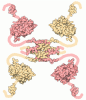
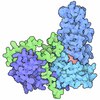
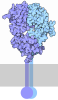
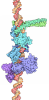
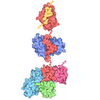
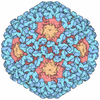
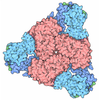
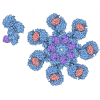
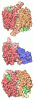
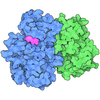
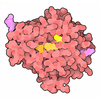
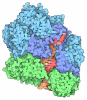
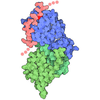
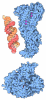
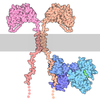
 Assembly


 Escherichia coli BL21(DE3) (bacteria) / References: UniProt: P01889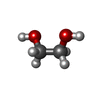


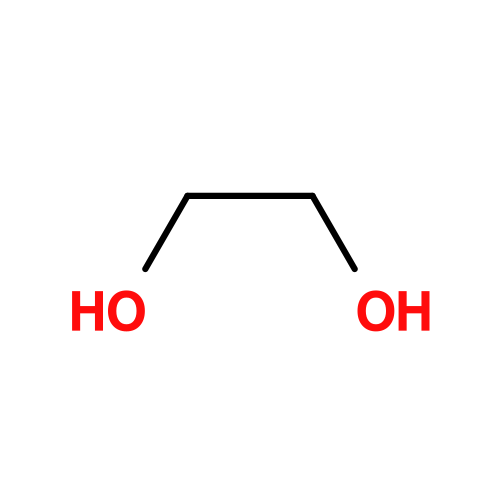 Mass: 62.068 Da / Num. of mol.: 8 / Source method: obtained synthetically / Formula: C2H6O2
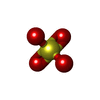
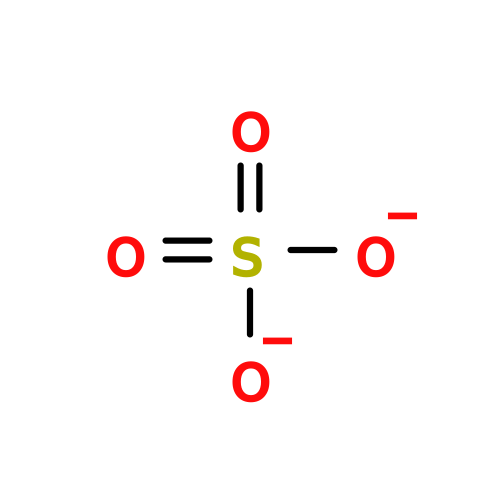 Mass: 96.063 Da / Num. of mol.: 13 / Source method: obtained synthetically / Formula: SO4
 Mass: 35.453 Da / Num. of mol.: 7 / Source method: obtained synthetically / Formula: Cl
 Mass: 58.693 Da / Num. of mol.: 2 / Source method: obtained synthetically / Formula: Ni
 Sample preparation
 Processing