 Movie
Movie Controller


+ Open data

- Basic information
| Entry | Database: PDB / ID: 9dsm | ||||||
|---|---|---|---|---|---|---|---|
| Title | Cryo-EM structure of SSNA-1(R18E/R20E/Q98E) filaments | ||||||
 Components Components | Sjogren's Syndrome Nuclear Autoantigen | ||||||
 Keywords Keywords | CELL CYCLE / SSNA1 / DIP13 / NA14 / microtubules / centriole / centrosome / mitotic spindle / cytoskeleton / coiled-coil | ||||||
| Function / homology | SSNA1 family / Microtubule nucleation factor SSNA1 / Sjogren's Syndrome Nuclear Autoantigen Function and homology information Function and homology information | ||||||
| Biological species |   Caenorhabditis elegans (invertebrata) Caenorhabditis elegans (invertebrata) | ||||||
| Method | ELECTRON MICROSCOPY / helical reconstruction / cryo EM / Resolution: 4.55 Å | ||||||
 Authors Authors | Agostini, L. / Biertumpfel, C. / Mizuno, N. | ||||||
| Funding support |  United States, 1items United States, 1items
| ||||||
 Citation Citation | Journal: Nat Commun / Year: 2025 Title: Structural insights into SSNA1 self-assembly and its microtubule binding for centriole maintenance. Authors: Lorenzo Agostini / Jason A Pfister / Nirakar Basnet / Jienyu Ding / Rui Zhang / Christian Biertümpfel / Kevin F O'Connell / Naoko Mizuno / Abstract: SSNA1 is a fibrillar protein involved in dynamic microtubule remodeling, including nucleation, co-polymerization, and microtubule branching. The underlying molecular mechanism has remained unclear ...SSNA1 is a fibrillar protein involved in dynamic microtubule remodeling, including nucleation, co-polymerization, and microtubule branching. The underlying molecular mechanism has remained unclear due to a lack of structural information. Here, we determine the cryo-EM structure of C.elegans SSNA-1 at 4.55-Å resolution and evaluate its role in embryonic development. We find that SSNA-1 forms an anti-parallel coiled-coil, with self-assembly facilitated by an overhang of 16 C-terminal residues that form a triple-stranded helical junction. The microtubule-binding region is within the triple-stranded junction, suggesting that self-assembly of SSNA-1 creates hubs for effective microtubule interaction. Genetical analysis elucidates that SSNA-1 deletion significantly reduces embryonic viability, and causes multipolar spindles during cell division. Interestingly, impairing SSNA-1 self-assembly has a comparable effect on embryonic viability as the knockout strain. Our study provides molecular insights into SSNA-1's self-assembly and its role in microtubule binding and cell division regulation through centriole stability. | ||||||
| History |
|
- Structure visualization
| Structure viewer | Molecule: MolmilJmol/JSmol |
|---|
- Downloads & links
-Download
| PDBx/mmCIF format | 9dsm.cif.gz | 569.5 KB | Display | PDBx/mmCIF format |
|---|---|---|---|---|
| PDB format | pdb9dsm.ent.gz | 478.4 KB | Display | PDB format |
| PDBx/mmJSON format | 9dsm.json.gz | Tree view | PDBx/mmJSON format | |
| Others |  Other downloads Other downloads |
-Validation report
| Arichive directory | https://data.pdbj.org/pub/pdb/validation_reports/ds/9dsmftp://data.pdbj.org/pub/pdb/validation_reports/ds/9dsm | HTTPS FTP |
|---|
-Related structure data
| Related structure data |  47147MC M: map data used to model this data C: citing same article ( |
|---|---|
| Similar structure data |
-Links
 PDBj
PDBj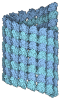
- Assembly
| Deposited unit | 
|
|---|---|
| 1 |
|
-Components
| #1: Protein | Mass: 14666.279 Da / Num. of mol.: 32 / Mutation: R18E,R20E,Q98E Source method: isolated from a genetically manipulated source Source: (gene. exp.) Caenorhabditis elegans (invertebrata) / Gene: ssna-1, tag-261, CELE_T07A9.13, T07A9.13 / Production host:   Escherichia coli BL21(DE3) (bacteria) / Variant (production host): gold / References: UniProt: Q5F4U5 Escherichia coli BL21(DE3) (bacteria) / Variant (production host): gold / References: UniProt: Q5F4U5Has protein modification | N | |
|---|
-Experimental details
-Experiment
| Experiment | Method: ELECTRON MICROSCOPY |
|---|---|
| EM experiment | Aggregation state: FILAMENT / 3D reconstruction method: helical reconstruction |
- Sample preparation
| Component | Name: self-assembled SSNA-1 filaments / Type: COMPLEX / Entity ID: all / Source: RECOMBINANT | |||||||||||||||||||||||||||||||||||
|---|---|---|---|---|---|---|---|---|---|---|---|---|---|---|---|---|---|---|---|---|---|---|---|---|---|---|---|---|---|---|---|---|---|---|---|---|
| Molecular weight | Value: 20 kDa/nm / Experimental value: YES | |||||||||||||||||||||||||||||||||||
| Source (natural) | Organism: Caenorhabditis elegans (invertebrata) | |||||||||||||||||||||||||||||||||||
| Source (recombinant) | Organism: Escherichia coli (E. coli) / Strain: BL21(DE3)gold | |||||||||||||||||||||||||||||||||||
| Buffer solution | pH: 7.5 Details: 50 mM sodium phosphate buffer-NaOH pH 7.5, 150 mM NaCl, 10% (v/v) glycerol, 1 mM DTT, 0.1% (v/v) n-octyl-beta-D-glucopyranoside | |||||||||||||||||||||||||||||||||||
| Buffer component |
| |||||||||||||||||||||||||||||||||||
| Specimen | Conc.: 0.1 mg/ml / Embedding applied: NO / Shadowing applied: NO / Staining applied: NO / Vitrification applied: YES Details: SSNA-1(R18E/R20E/Q98E) was dialyzed overnight at 4degC against buffer to grow filaments. 5 ul sample at a final concentration of 0.1 mg/mL was applied to glow discharged Quantifoil grids R2/1. | |||||||||||||||||||||||||||||||||||
| Specimen support | Grid material: COPPER / Grid mesh size: 200 divisions/in. / Grid type: Quantifoil R2/1 | |||||||||||||||||||||||||||||||||||
| Vitrification | Instrument: LEICA EM GP / Cryogen name: ETHANE / Humidity: 95 % / Chamber temperature: 288 K Details: After 1 min incubation at room temperature, the grid was manually blotted on the side of the grid with filter paper (Whatman Grade 1, Cytiva #1001-055) and blotted again with 4 uL of a ...Details: After 1 min incubation at room temperature, the grid was manually blotted on the side of the grid with filter paper (Whatman Grade 1, Cytiva #1001-055) and blotted again with 4 uL of a solution containing lysis buffer supplemented with 0.1 %(v/v) n-octyl-beta-D-glucopyranoside (beta-OG, Anatrace #O311). The grid was then transferred to an EM GP2 plunger (Leica) with a chamber temperature of 15degC, maximal humidity, incubated for 1 min, blotted with Grade 595 filter paper (Ted Pella #47000-200) for 6 s and vitrified in liquid ethane. |
- Electron microscopy imaging
| Experimental equipment |  Model: Titan Krios / Image courtesy: FEI Company |
|---|---|
| Microscopy | Model: FEI TITAN KRIOS |
| Electron gun | Electron source:  FIELD EMISSION GUN / Accelerating voltage: 300 kV / Illumination mode: FLOOD BEAM FIELD EMISSION GUN / Accelerating voltage: 300 kV / Illumination mode: FLOOD BEAM |
| Electron lens | Mode: BRIGHT FIELD / Nominal magnification: 105000 X / Nominal defocus max: 2300 nm / Nominal defocus min: 500 nm / Alignment procedure: COMA FREE |
| Specimen holder | Cryogen: NITROGEN / Specimen holder model: FEI TITAN KRIOS AUTOGRID HOLDER |
| Image recording | Average exposure time: 2 sec. / Electron dose: 40.84 e/Å2 / Film or detector model: GATAN K3 BIOCONTINUUM (6k x 4k) / Num. of grids imaged: 1 / Num. of real images: 8390 / Details: pixel size 0.412 |
| EM imaging optics | Details: pixel size 0.412 |
- Processing
| EM software |
| ||||||||||||||||||||||||||||||||||||||||
|---|---|---|---|---|---|---|---|---|---|---|---|---|---|---|---|---|---|---|---|---|---|---|---|---|---|---|---|---|---|---|---|---|---|---|---|---|---|---|---|---|---|
| CTF correction | Type: NONE | ||||||||||||||||||||||||||||||||||||||||
| Helical symmerty | Angular rotation/subunit: 45 ° / Axial rise/subunit: 112 Å / Axial symmetry: C8 | ||||||||||||||||||||||||||||||||||||||||
| Particle selection | Num. of particles selected: 888099 | ||||||||||||||||||||||||||||||||||||||||
| 3D reconstruction | Resolution: 4.55 Å / Resolution method: FSC 0.143 CUT-OFF / Num. of particles: 80664 / Algorithm: BACK PROJECTION / Details: no helical parameters used / Symmetry type: HELICAL | ||||||||||||||||||||||||||||||||||||||||
| Atomic model building | B value: 265.8 / Protocol: OTHER / Space: REAL | ||||||||||||||||||||||||||||||||||||||||
| Atomic model building | Source name: AlphaFold / Type: in silico model | ||||||||||||||||||||||||||||||||||||||||
| Refine LS restraints |
|
