 Movie
Movie Controller


+ Open data

- Basic information
| Entry | Database: PDB / ID: 9bj8 | |||||||||||||||||||||
|---|---|---|---|---|---|---|---|---|---|---|---|---|---|---|---|---|---|---|---|---|---|---|
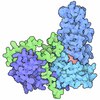
| Title | human CRL2-ZYG11B complex | |||||||||||||||||||||
 Components Components |
| |||||||||||||||||||||
 Keywords Keywords | PEPTIDE BINDING PROTEIN / E3 ligase complex / peptide binding | |||||||||||||||||||||
| Function / homology |  Function and homology information Function and homology informationnegative regulation of beige fat cell differentiation / cullin-RING-type E3 NEDD8 transferase / NEDD8 transferase activity / negative regulation of mitophagy / cullin-RING ubiquitin ligase complex / regulation of xenophagy / target-directed miRNA degradation / Loss of Function of FBXW7 in Cancer and NOTCH1 Signaling / cellular response to chemical stress / Cul7-RING ubiquitin ligase complex ...negative regulation of beige fat cell differentiation / cullin-RING-type E3 NEDD8 transferase / NEDD8 transferase activity / negative regulation of mitophagy / cullin-RING ubiquitin ligase complex / regulation of xenophagy / target-directed miRNA degradation / Loss of Function of FBXW7 in Cancer and NOTCH1 Signaling / cellular response to chemical stress / Cul7-RING ubiquitin ligase complex / elongin complex / regulation of cell cycle process / neural crest cell differentiation / RNA polymerase II transcription initiation surveillance / positive regulation of protein autoubiquitination / protein neddylation / regulation of BMP signaling pathway / NEDD8 ligase activity / regulation of mitophagy / negative regulation of response to oxidative stress / regulation of centrosome duplication / protein K27-linked ubiquitination / VCB complex / Cul5-RING ubiquitin ligase complex / regulation of TOR signaling / ubiquitin-ubiquitin ligase activity / ubiquitin-dependent protein catabolic process via the C-end degron rule pathway / Cul2-RING ubiquitin ligase complex / SCF ubiquitin ligase complex / negative regulation of DNA-templated DNA replication / regulation of mitotic cytokinesis / Cul3-RING ubiquitin ligase complex / regulation of DNA damage checkpoint / negative regulation of type I interferon production / regulation of miRNA-mediated gene silencing / regulation of natural killer cell activation / SCF-dependent proteasomal ubiquitin-dependent protein catabolic process / Prolactin receptor signaling / regulation of cell cycle phase transition / Cul4A-RING E3 ubiquitin ligase complex / Cul4-RING E3 ubiquitin ligase complex / regulation of stem cell population maintenance / Cul4B-RING E3 ubiquitin ligase complex / ubiquitin ligase complex scaffold activity / negative regulation of adipose tissue development / protein quality control for misfolded or incompletely synthesized proteins / Pausing and recovery of Tat-mediated HIV elongation / Tat-mediated HIV elongation arrest and recovery / regulation of cellular response to stress / limb development / HIV elongation arrest and recovery / Pausing and recovery of HIV elongation / protein monoubiquitination / cullin family protein binding / Tat-mediated elongation of the HIV-1 transcript / Formation of HIV-1 elongation complex containing HIV-1 Tat / centrosome duplication / regulation of DNA-templated DNA replication initiation / Formation of HIV elongation complex in the absence of HIV Tat / cilium assembly / RNA Polymerase II Transcription Elongation / Formation of RNA Pol II elongation complex / intrinsic apoptotic signaling pathway / ribosome-associated ubiquitin-dependent protein catabolic process / signal transduction in response to DNA damage / negative regulation of insulin receptor signaling pathway / Nuclear events stimulated by ALK signaling in cancer / protein K48-linked ubiquitination / RNA Polymerase II Pre-transcription Events / regulation of cellular response to insulin stimulus / positive regulation of TORC1 signaling / transcription-coupled nucleotide-excision repair / post-translational protein modification / cellular response to amino acid stimulus / regulation of embryonic development / replication fork processing / transcription corepressor binding / negative regulation of canonical NF-kappaB signal transduction / rescue of stalled cytosolic ribosome / regulation of mitotic cell cycle / Regulation of BACH1 activity / site of DNA damage / T cell activation / TP53 Regulates Transcription of DNA Repair Genes / G1/S transition of mitotic cell cycle / negative regulation of canonical Wnt signaling pathway / transcription initiation at RNA polymerase II promoter / epigenetic regulation of gene expression / Degradation of DVL / Degradation of CRY and PER proteins / nucleotide-excision repair / transcription elongation by RNA polymerase II / Degradation of GLI1 by the proteasome / regulation of autophagy / Recognition of DNA damage by PCNA-containing replication complex / GSK3B and BTRC:CUL1-mediated-degradation of NFE2L2 / Negative regulation of NOTCH4 signaling / RING-type E3 ubiquitin transferase / Hedgehog 'on' state / Inactivation of CSF3 (G-CSF) signaling Similarity search - Function | |||||||||||||||||||||
| Biological species |  Homo sapiens (human) Homo sapiens (human) | |||||||||||||||||||||
| Method | ELECTRON MICROSCOPY / single particle reconstruction / cryo EM / Resolution: 3.78 Å | |||||||||||||||||||||
 Authors Authors | Liu, X. / Gross, J.D. | |||||||||||||||||||||
| Funding support |  United States, 1items United States, 1items
| |||||||||||||||||||||
 Citation Citation | #1: Journal: Acta Crystallogr D Struct Biol / Year: 2019 Title: Macromolecular structure determination using X-rays, neutrons and electrons: recent developments in Phenix. Authors: Dorothee Liebschner / Pavel V Afonine / Matthew L Baker / Gábor Bunkóczi / Vincent B Chen / Tristan I Croll / Bradley Hintze / Li Wei Hung / Swati Jain / Airlie J McCoy / Nigel W Moriarty ...Authors: Dorothee Liebschner / Pavel V Afonine / Matthew L Baker / Gábor Bunkóczi / Vincent B Chen / Tristan I Croll / Bradley Hintze / Li Wei Hung / Swati Jain / Airlie J McCoy / Nigel W Moriarty / Robert D Oeffner / Billy K Poon / Michael G Prisant / Randy J Read / Jane S Richardson / David C Richardson / Massimo D Sammito / Oleg V Sobolev / Duncan H Stockwell / Thomas C Terwilliger / Alexandre G Urzhumtsev / Lizbeth L Videau / Christopher J Williams / Paul D Adams /   Abstract: Diffraction (X-ray, neutron and electron) and electron cryo-microscopy are powerful methods to determine three-dimensional macromolecular structures, which are required to understand biological ...Diffraction (X-ray, neutron and electron) and electron cryo-microscopy are powerful methods to determine three-dimensional macromolecular structures, which are required to understand biological processes and to develop new therapeutics against diseases. The overall structure-solution workflow is similar for these techniques, but nuances exist because the properties of the reduced experimental data are different. Software tools for structure determination should therefore be tailored for each method. Phenix is a comprehensive software package for macromolecular structure determination that handles data from any of these techniques. Tasks performed with Phenix include data-quality assessment, map improvement, model building, the validation/rebuilding/refinement cycle and deposition. Each tool caters to the type of experimental data. The design of Phenix emphasizes the automation of procedures, where possible, to minimize repetitive and time-consuming manual tasks, while default parameters are chosen to encourage best practice. A graphical user interface provides access to many command-line features of Phenix and streamlines the transition between programs, project tracking and re-running of previous tasks. | |||||||||||||||||||||
| History |
|
- Structure visualization
| Structure viewer | Molecule: MolmilJmol/JSmol |
|---|
- Downloads & links
-Download
| PDBx/mmCIF format | 9bj8.cif.gz | 382.5 KB | Display | PDBx/mmCIF format |
|---|---|---|---|---|
| PDB format | pdb9bj8.ent.gz | 255.8 KB | Display | PDB format |
| PDBx/mmJSON format | 9bj8.json.gz | Tree view | PDBx/mmJSON format | |
| Others |  Other downloads Other downloads |
-Validation report
| Arichive directory | https://data.pdbj.org/pub/pdb/validation_reports/bj/9bj8ftp://data.pdbj.org/pub/pdb/validation_reports/bj/9bj8 | HTTPS FTP |
|---|
-Related structure data
| Related structure data |  44630MC M: map data used to model this data C: citing same article ( |
|---|---|
| Similar structure data |
-Links
 PDBj
PDBj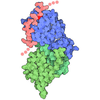

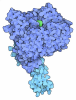
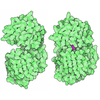
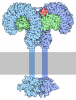
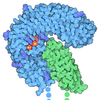
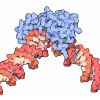
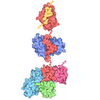
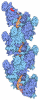
- Assembly
| Deposited unit | 
|
|---|---|
| 1 |
|
-Components
-Protein , 5 types, 5 molecules ABCDR
| #1: Protein | Mass: 84463.344 Da / Num. of mol.: 1 Source method: isolated from a genetically manipulated source Source: (gene. exp.) Homo sapiens (human) / Gene: ZYG11B, KIAA1730 / Production host:   Escherichia coli (E. coli) / References: UniProt: Q9C0D3 Escherichia coli (E. coli) / References: UniProt: Q9C0D3 |
|---|---|
| #2: Protein | Mass: 13147.781 Da / Num. of mol.: 1 Source method: isolated from a genetically manipulated source Source: (gene. exp.) Homo sapiens (human) / Gene: ELOB, TCEB2 / Production host: Escherichia coli (E. coli) / References: UniProt: Q15370 |
| #3: Protein | Mass: 10843.420 Da / Num. of mol.: 1 Source method: isolated from a genetically manipulated source Source: (gene. exp.) Homo sapiens (human) / Gene: ELOC, TCEB1 / Production host: Escherichia coli (E. coli) / References: UniProt: Q15369 |
| #4: Protein | Mass: 86967.734 Da / Num. of mol.: 1 Source method: isolated from a genetically manipulated source Source: (gene. exp.) Homo sapiens (human) / Gene: CUL2 / Production host:   Spodoptera frugiperda (fall armyworm) / References: UniProt: Q13617 Spodoptera frugiperda (fall armyworm) / References: UniProt: Q13617 |
| #5: Protein | Mass: 12289.977 Da / Num. of mol.: 1 Source method: isolated from a genetically manipulated source Source: (gene. exp.) Homo sapiens (human) / Gene: RBX1, RNF75, ROC1 / Production host: Spodoptera frugiperda (fall armyworm)References: UniProt: P62877, RING-type E3 ubiquitin transferase, cullin-RING-type E3 NEDD8 transferase |
-Non-polymers , 1 types, 3 molecules 
| #6: Chemical |  Mass: 65.409 Da / Num. of mol.: 3 / Source method: obtained synthetically / Formula: Zn / Feature type: SUBJECT OF INVESTIGATION Mass: 65.409 Da / Num. of mol.: 3 / Source method: obtained synthetically / Formula: Zn / Feature type: SUBJECT OF INVESTIGATION |
|---|
-Details
| Has ligand of interest | Y |
|---|---|
| Has protein modification | N |
-Experimental details
-Experiment
| Experiment | Method: ELECTRON MICROSCOPY |
|---|---|
| EM experiment | Aggregation state: PARTICLE / 3D reconstruction method: single particle reconstruction |
- Sample preparation
| Component |
| ||||||||||||||||||||||||||||||
|---|---|---|---|---|---|---|---|---|---|---|---|---|---|---|---|---|---|---|---|---|---|---|---|---|---|---|---|---|---|---|---|
| Molecular weight | Value: 230 kDa/nm / Experimental value: NO | ||||||||||||||||||||||||||||||
| Source (natural) |
| ||||||||||||||||||||||||||||||
| Source (recombinant) |
| ||||||||||||||||||||||||||||||
| Buffer solution | pH: 7.2 | ||||||||||||||||||||||||||||||
| Specimen | Embedding applied: NO / Shadowing applied: NO / Staining applied: NO / Vitrification applied: YES | ||||||||||||||||||||||||||||||
| Specimen support | Grid material: GOLD / Grid mesh size: 300 divisions/in. / Grid type: Quantifoil R1.2/1.3 | ||||||||||||||||||||||||||||||
| Vitrification | Cryogen name: ETHANE |
- Electron microscopy imaging
| Experimental equipment |  Model: Titan Krios / Image courtesy: FEI Company |
|---|---|
| Microscopy | Model: FEI TITAN KRIOS |
| Electron gun | Electron source:  FIELD EMISSION GUN / Accelerating voltage: 300 kV / Illumination mode: FLOOD BEAM FIELD EMISSION GUN / Accelerating voltage: 300 kV / Illumination mode: FLOOD BEAM |
| Electron lens | Mode: 4D-STEM / Nominal defocus max: 5000 nm / Nominal defocus min: 1000 nm |
| Specimen holder | Cryogen: NITROGEN / Specimen holder model: FEI TITAN KRIOS AUTOGRID HOLDER |
| Image recording | Electron dose: 60 e/Å2 / Film or detector model: GATAN K3 (6k x 4k) |
- Processing
| EM software |
| ||||||||||||||||||||||||
|---|---|---|---|---|---|---|---|---|---|---|---|---|---|---|---|---|---|---|---|---|---|---|---|---|---|
| CTF correction | Type: NONE | ||||||||||||||||||||||||
| 3D reconstruction | Resolution: 3.78 Å / Resolution method: FSC 0.143 CUT-OFF / Num. of particles: 177561 / Algorithm: ALGEBRAIC (ARTS) / Symmetry type: POINT | ||||||||||||||||||||||||
| Refinement | Cross valid method: NONE Stereochemistry target values: GeoStd + Monomer Library + CDL v1.2 | ||||||||||||||||||||||||
| Displacement parameters | Biso mean: 127.87 Å2 | ||||||||||||||||||||||||
| Refine LS restraints |
|
