PEPTIDE BINDING PROTEIN / 14-3-3 sigma / Pin1 / stabilizer / Fusicoccin A
Function / homology
Function and homology information
cis-trans isomerase activity / phosphothreonine residue binding / : / negative regulation of cell motility / regulation of protein localization to nucleus / negative regulation of brown fat cell differentiation / GTPase activating protein binding / ubiquitin ligase activator activity / mitogen-activated protein kinase kinase binding / regulation of mitotic nuclear division ...cis-trans isomerase activity / phosphothreonine residue binding / : / negative regulation of cell motility / regulation of protein localization to nucleus / negative regulation of brown fat cell differentiation / GTPase activating protein binding / ubiquitin ligase activator activity / mitogen-activated protein kinase kinase binding / regulation of mitotic nuclear division / protein peptidyl-prolyl isomerization / positive regulation of epidermal cell differentiation / regulation of epidermal cell division / protein kinase C inhibitor activity / negative regulation of SMAD protein signal transduction / PI5P Regulates TP53 Acetylation / negative regulation of amyloid-beta formation / regulation of cell-cell adhesion / establishment of skin barrier / cytoskeletal motor activity / Regulation of localization of FOXO transcription factors / Regulation of GBP-mediated host defense / Rho protein signal transduction / phosphoserine residue binding / Activation of BAD and translocation to mitochondria / RHO GTPases Activate NADPH Oxidases / postsynaptic cytosol / negative regulation of protein localization to plasma membrane / cAMP/PKA signal transduction / protein export from nucleus / SARS-CoV-2 targets host intracellular signalling and regulatory pathways / SARS-CoV-1 targets host intracellular signalling and regulatory pathways / release of cytochrome c from mitochondria / RHO GTPases activate PKNs / Chk1/Chk2(Cds1) mediated inactivation of Cyclin B:Cdk1 complex / negative regulation of protein kinase activity / positive regulation of protein export from nucleus / positive regulation of protein localization / positive regulation of cell adhesion / TP53 Regulates Transcription of Genes Involved in G2 Cell Cycle Arrest / negative regulation of innate immune response / negative regulation of transforming growth factor beta receptor signaling pathway / regulation of cytokinesis / TP53 Regulates Metabolic Genes / intrinsic apoptotic signaling pathway in response to DNA damage / peptidylprolyl isomerase / peptidyl-prolyl cis-trans isomerase activity / Translocation of SLC2A4 (GLUT4) to the plasma membrane / regulation of protein stability / negative regulation of protein catabolic process / Negative regulators of DDX58/IFIH1 signaling / phosphoprotein binding / negative regulation of ERK1 and ERK2 cascade / protein destabilization / protein sequestering activity / synapse organization / positive regulation of protein phosphorylation / beta-catenin binding / tau protein binding / ISG15 antiviral mechanism / intracellular protein localization / positive regulation of canonical Wnt signaling pathway / regulation of gene expression / neuron differentiation / regulation of protein localization / positive regulation of cell growth / ciliary basal body / midbody / cellular response to hypoxia / Regulation of TP53 Activity through Phosphorylation / response to hypoxia / nuclear speck / protein stabilization / cadherin binding / protein kinase binding / glutamatergic synapse / signal transduction / : / positive regulation of transcription by RNA polymerase II / extracellular exosome / nucleoplasm / identical protein binding / nucleus / cytosol / cytoplasm Similarity search - Function
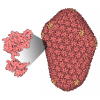
In the structure databanks used in Yorodumi, some data are registered as the other names, "COVID-19 virus" and "2019-nCoV". Here are the details of the virus and the list of structure data.
Jan 31, 2019. EMDB accession codes are about to change! (news from PDBe EMDB page)
EMDB accession codes are about to change! (news from PDBe EMDB page)
The allocation of 4 digits for EMDB accession codes will soon come to an end. Whilst these codes will remain in use, new EMDB accession codes will include an additional digit and will expand incrementally as the available range of codes is exhausted. The current 4-digit format prefixed with “EMD-” (i.e. EMD-XXXX) will advance to a 5-digit format (i.e. EMD-XXXXX), and so on. It is currently estimated that the 4-digit codes will be depleted around Spring 2019, at which point the 5-digit format will come into force.
The EM Navigator/Yorodumi systems omit the EMD- prefix.
Related info.:Q: What is EMD? / ID/Accession-code notation in Yorodumi/EM Navigator
Yorodumi is a browser for structure data from EMDB, PDB, SASBDB, etc.
This page is also the successor to EM Navigator detail page, and also detail information page/front-end page for Omokage search.
The word "yorodu" (or yorozu) is an old Japanese word meaning "ten thousand". "mi" (miru) is to see.
Related info.:EMDB / PDB / SASBDB / Comparison of 3 databanks / Yorodumi Search / Aug 31, 2016. New EM Navigator & Yorodumi / Yorodumi Papers / Jmol/JSmol / Function and homology information / Changes in new EM Navigator and Yorodumi
 Movie
Movie Controller


 Open data
 Basic information
 Components
 Keywords
 Function and homology information
 Homo sapiens (human)
 X-RAY DIFFRACTION /
  Authors
 Netherlands, 1items
  Citation
 Structure visualization
 Downloads & links
 Other downloads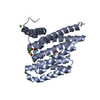
 PDBj
PDBj

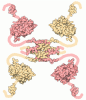

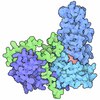
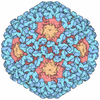
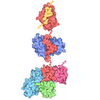
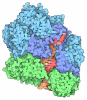
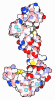
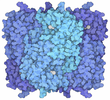
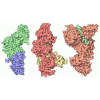
 Assembly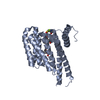
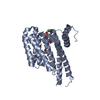

 Escherichia coli (E. coli) / References: UniProt: P31947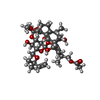
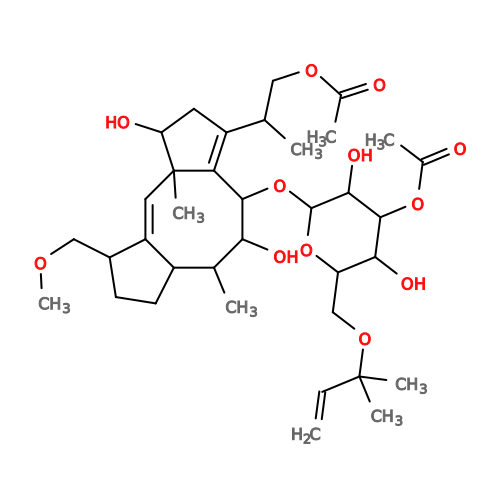 Mass: 680.823 Da / Num. of mol.: 1 / Source method: obtained synthetically / Formula: C36H56O12 / Feature type: SUBJECT OF INVESTIGATION
 Mass: 24.305 Da / Num. of mol.: 1 / Source method: obtained synthetically / Formula: Mg
 Mass: 18.015 Da / Num. of mol.: 214 / Source method: isolated from a natural source / Formula: H2O
 Sample preparation
 / Beamline: ID23-1 / Wavelength: 0.972425 Å
 Processing