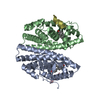
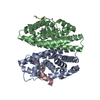
The Estrogen Receptor Alpha Ligand Binding Domain D538G Mutant in Complex with Estradiol and a glucocorticoid receptor-interacting protein 1 NR box II peptide
Components
Estrogen receptor
Nuclear receptor coactivator 2
Keywords
Hormone/Peptide / Metastatic Breast Cancer / Activating Mutation / ER alpha / Alpha Helical / Nuclear Hormone Receptor / Hormone-Peptide complex
Function / homology
Function and homology information
RNA polymerase II intronic transcription regulatory region sequence-specific DNA binding / steroid hormone receptor signaling pathway / RUNX1 regulates transcription of genes involved in WNT signaling / RUNX1 regulates estrogen receptor mediated transcription / nuclear estrogen receptor activity / locomotor rhythm / Developmental Lineage of Mammary Gland Alveolar Cells / aryl hydrocarbon receptor binding / TFIIB-class transcription factor binding / regulation of glucose metabolic process ...RNA polymerase II intronic transcription regulatory region sequence-specific DNA binding / steroid hormone receptor signaling pathway / RUNX1 regulates transcription of genes involved in WNT signaling / RUNX1 regulates estrogen receptor mediated transcription / nuclear estrogen receptor activity / locomotor rhythm / Developmental Lineage of Mammary Gland Alveolar Cells / aryl hydrocarbon receptor binding / TFIIB-class transcription factor binding / regulation of glucose metabolic process / negative regulation of smooth muscle cell apoptotic process / Synthesis of bile acids and bile salts / nuclear receptor-mediated steroid hormone signaling pathway / cellular response to estrogen stimulus / Developmental Lineage of Mammary Gland Luminal Epithelial Cells / estrogen response element binding / Synthesis of bile acids and bile salts via 27-hydroxycholesterol / regulation of lipid metabolic process / Endogenous sterols / Synthesis of bile acids and bile salts via 7alpha-hydroxycholesterol / Mitochondrial unfolded protein response (UPRmt) / Nuclear signaling by ERBB4 / Recycling of bile acids and salts / estrogen receptor signaling pathway / transcription regulator inhibitor activity / RNA polymerase II preinitiation complex assembly / cellular response to hormone stimulus / positive regulation of nitric-oxide synthase activity / steroid binding / peroxisome proliferator activated receptor signaling pathway / Regulation of lipid metabolism by PPARalpha / stem cell differentiation / positive regulation of adipose tissue development / protein localization to chromatin / bile acid and bile salt transport / TFAP2 (AP-2) family regulates transcription of growth factors and their receptors / BMAL1:CLOCK,NPAS2 activates circadian expression / regulation of cellular response to insulin stimulus / 14-3-3 protein binding / RORA,B,C and NR1D1 (REV-ERBA) regulate gene expression / SUMOylation of transcription cofactors / Expression of BMAL (ARNTL), CLOCK, and NPAS2 / Activation of gene expression by SREBF (SREBP) / ESR-mediated signaling / negative regulation of miRNA transcription / negative regulation of smoothened signaling pathway / TBP-class protein binding / nitric-oxide synthase regulator activity / nuclear receptor binding / nuclear estrogen receptor binding / transcription corepressor binding / transcription coregulator binding / negative regulation of canonical NF-kappaB signal transduction / cellular response to estradiol stimulus / SUMOylation of intracellular receptors / circadian regulation of gene expression / Heme signaling / PPARA activates gene expression / Cytoprotection by HMOX1 / Transcriptional activation of mitochondrial biogenesis / Transcriptional regulation of white adipocyte differentiation / euchromatin / Nuclear Receptor transcription pathway / Activated PKN1 stimulates transcription of AR (androgen receptor) regulated genes KLK2 and KLK3 / mRNA transcription by RNA polymerase II / response to estrogen / beta-catenin binding / nuclear receptor activity / positive regulation of nitric oxide biosynthetic process / transcription coregulator activity / Constitutive Signaling by Aberrant PI3K in Cancer / sequence-specific double-stranded DNA binding / transcription coactivator binding / phospholipase C-activating G protein-coupled receptor signaling pathway / Regulation of RUNX2 expression and activity / response to estradiol / Ovarian tumor domain proteases / PIP3 activates AKT signaling / HATs acetylate histones / ATPase binding / MLL4 and MLL3 complexes regulate expression of PPARG target genes in adipogenesis and hepatic steatosis / PI5P, PP2A and IER3 Regulate PI3K/AKT Signaling / positive regulation of cytosolic calcium ion concentration / DNA-binding transcription activator activity, RNA polymerase II-specific / Estrogen-dependent gene expression / calmodulin binding / nuclear body / DNA-binding transcription factor activity, RNA polymerase II-specific / transcription coactivator activity / Extra-nuclear estrogen signaling / protein dimerization activity / RNA polymerase II cis-regulatory region sequence-specific DNA binding / chromatin remodeling / DNA-binding transcription factor activity / negative regulation of gene expression / protein domain specific binding / chromatin binding / regulation of transcription by RNA polymerase II / regulation of DNA-templated transcription / positive regulation of DNA-templated transcription Similarity search - Function
Method to determine structure: MOLECULAR REPLACEMENT / Resolution: 1.9→55.25 Å / Cor.coef. Fo:Fc: 0.962 / Cor.coef. Fo:Fc free: 0.95 / SU B: 6.743 / SU ML: 0.092 / Cross valid method: THROUGHOUT / σ(F): 5 / ESU R: 0.145 / ESU R Free: 0.133 / Stereochemistry target values: MAXIMUM LIKELIHOOD / Details: HYDROGENS HAVE BEEN USED IF PRESENT IN THE INPUT
Rfactor
Num. reflection
% reflection
Selection details
Rfree
0.21417
2018
5 %
RANDOM
Rwork
0.17935
-
-
-
obs
0.18112
-
99.27 %
-
all
-
40344
-
-
Solvent computation
Ion probe radii: 0.8 Å / Shrinkage radii: 0.8 Å / VDW probe radii: 1.2 Å / Solvent model: MASK
 Movie
Movie Controller

 Yorodumi
 Open data
 Basic information
 Components
 Keywords
 Function and homology information
 Homo sapiens (human)
 X-RAY DIFFRACTION /
  Authors
 Citation
 Structure visualization
 Downloads & links
 Other downloads




 PDBj
PDBj
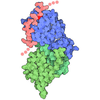
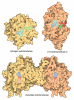
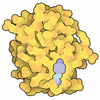
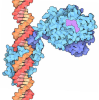
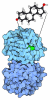
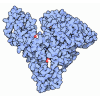
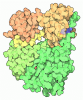

 Assembly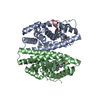

 Escherichia coli (E. coli) / References: UniProt: P03372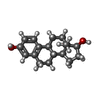
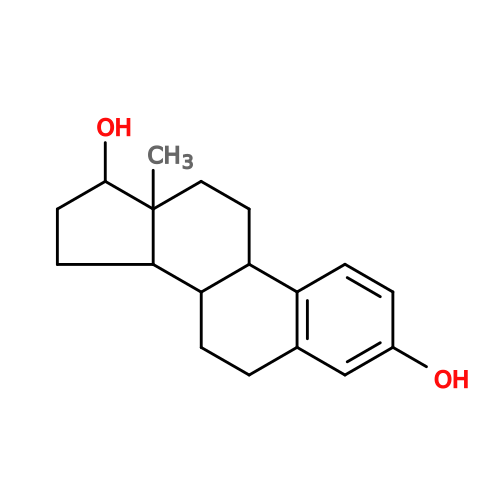 Mass: 272.382 Da / Num. of mol.: 2 / Source method: obtained synthetically / Formula: C18H24O2
 Mass: 18.015 Da / Num. of mol.: 87 / Source method: isolated from a natural source / Formula: H2O
 Sample preparation
 / Beamline: 21-ID-D / Wavelength: 0.97 Å
 Processing