- PDB-3kh4: Crystal structure of human Cu/Zn superoxide dismutase recombinant... -
+
Open data
ID or keywords:
Loading...
-
Basic information
Entry
Database: PDB / ID: 3kh4
Title
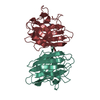
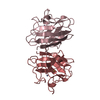
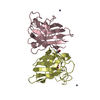
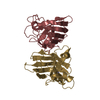
Crystal structure of human Cu/Zn superoxide dismutase recombinantly produced in Leishmania tarantolae; P6522 crystal form containing 6 chains in the asymmetric unit
regulation of T cell differentiation in thymus / positive regulation of oxidative stress-induced intrinsic apoptotic signaling pathway / regulation of organ growth / response to antipsychotic drug / neurofilament cytoskeleton organization / myeloid cell homeostasis / peripheral nervous system myelin maintenance / response to superoxide / response to carbon monoxide / regulation of GTPase activity ...regulation of T cell differentiation in thymus / positive regulation of oxidative stress-induced intrinsic apoptotic signaling pathway / regulation of organ growth / response to antipsychotic drug / neurofilament cytoskeleton organization / myeloid cell homeostasis / peripheral nervous system myelin maintenance / response to superoxide / response to carbon monoxide / regulation of GTPase activity / relaxation of vascular associated smooth muscle / auditory receptor cell stereocilium organization / anterograde axonal transport / protein phosphatase 2B binding / dense core granule / Oxidoreductases; Acting on a sulfur group of donors / retina homeostasis / hydrogen peroxide biosynthetic process / cellular response to potassium ion / muscle cell cellular homeostasis / retrograde axonal transport / superoxide metabolic process / heart contraction / response to copper ion / superoxide dismutase / Detoxification of Reactive Oxygen Species / thymus development / superoxide dismutase activity / cellular response to cadmium ion / regulation of multicellular organism growth / cellular response to ATP / response to axon injury / transmission of nerve impulse / reactive oxygen species metabolic process / placenta development / embryo implantation / sensory perception of sound / positive regulation of superoxide anion generation / response to amphetamine / removal of superoxide radicals / axon cytoplasm / ovarian follicle development / positive regulation of phagocytosis / Gene and protein expression by JAK-STAT signaling after Interleukin-12 stimulation / regulation of mitochondrial membrane potential / locomotory behavior / dendrite cytoplasm / glutathione metabolic process / response to hydrogen peroxide / positive regulation of cytokine production / negative regulation of inflammatory response / response to nutrient levels / mitochondrial intermembrane space / regulation of blood pressure / small GTPase binding / Platelet degranulation / peroxisome / negative regulation of neuron apoptotic process / response to heat / protein-folding chaperone binding / cytoplasmic vesicle / spermatogenesis / positive regulation of MAPK cascade / response to ethanol / intracellular iron ion homeostasis / lysosome / positive regulation of apoptotic process / mitochondrial matrix / copper ion binding / neuronal cell body / : / protein homodimerization activity / protein-containing complex / mitochondrion / extracellular exosome / zinc ion binding / nucleoplasm / extracellular region / identical protein binding / nucleus / cytosol / cytoplasm Similarity search - Function
Type: MARMOSAIC 225 mm CCD / Detector: CCD / Date: Oct 8, 2009 / Details: SI(111)
Radiation
Monochromator: SI(111) MONOCHROMATOR / Protocol: SINGLE WAVELENGTH / Monochromatic (M) / Laue (L): M / Scattering type: x-ray
Radiation wavelength
Wavelength: 1 Å / Relative weight: 1
Reflection
Resolution: 3.5→49.69 Å / Num. obs: 21168 / % possible obs: 99.9 % / Observed criterion σ(I): -3 / Biso Wilson estimate: 47.084 Å2 / Rmerge(I) obs: 0.172 / Net I/σ(I): 13.13
Reflection shell
Resolution (Å)
Highest resolution (Å)
Rmerge(I) obs
Mean I/σ(I) obs
Num. measured obs
Num. unique obs
% possible all
3.5-3.6
0.586
4.2
18102
1668
100
3.6-3.7
0.495
4.9
16033
1476
100
3.7-3.8
0.435
5.5
14452
1338
100
3.8-3.9
0.382
6.3
13005
1212
100
3.9-4
0.299
7.7
11863
1100
100
4-5
0.171
12.7
72706
6809
100
5-6
0.15
14.2
32145
3069
100
6-7
0.117
16.7
16475
1607
100
7-10
0.08
22.5
18274
1827
99.9
10-15
0.041
37.9
6730
721
100
15-20
0.029
43.7
1633
193
100
20
0.027
43.1
1102
148
91.4
-
Processing
Software
Name
Version
Classification
NB
XSCALE
datascaling
REFMAC
5.5.0102
refinement
PDB_EXTRACT
3.006
dataextraction
Refinement
Resolution: 3.5→49.69 Å / Cor.coef. Fo:Fc: 0.934 / Cor.coef. Fo:Fc free: 0.93 / Occupancy max: 1 / Occupancy min: 1 / SU B: 46.112 / SU ML: 0.31 / Cross valid method: THROUGHOUT / σ(F): 0 / ESU R Free: 0.428 / Stereochemistry target values: MAXIMUM LIKELIHOOD Details: HYDROGENS HAVE BEEN ADDED IN THE RIDING POSITIONS U VALUES: RESIDUAL ONLY
Rfactor
Num. reflection
% reflection
Selection details
Rfree
0.208
1088
5.1 %
RANDOM
Rwork
0.201
-
-
-
obs
0.201
21168
99.92 %
-
Solvent computation
Ion probe radii: 0.8 Å / Shrinkage radii: 0.8 Å / VDW probe radii: 1.4 Å / Solvent model: BABINET MODEL WITH MASK
In the structure databanks used in Yorodumi, some data are registered as the other names, "COVID-19 virus" and "2019-nCoV". Here are the details of the virus and the list of structure data.
Jan 31, 2019. EMDB accession codes are about to change! (news from PDBe EMDB page)
EMDB accession codes are about to change! (news from PDBe EMDB page)
The allocation of 4 digits for EMDB accession codes will soon come to an end. Whilst these codes will remain in use, new EMDB accession codes will include an additional digit and will expand incrementally as the available range of codes is exhausted. The current 4-digit format prefixed with “EMD-” (i.e. EMD-XXXX) will advance to a 5-digit format (i.e. EMD-XXXXX), and so on. It is currently estimated that the 4-digit codes will be depleted around Spring 2019, at which point the 5-digit format will come into force.
The EM Navigator/Yorodumi systems omit the EMD- prefix.
Related info.:Q: What is EMD? / ID/Accession-code notation in Yorodumi/EM Navigator
Yorodumi is a browser for structure data from EMDB, PDB, SASBDB, etc.
This page is also the successor to EM Navigator detail page, and also detail information page/front-end page for Omokage search.
The word "yorodu" (or yorozu) is an old Japanese word meaning "ten thousand". "mi" (miru) is to see.
Related info.:EMDB / PDB / SASBDB / Comparison of 3 databanks / Yorodumi Search / Aug 31, 2016. New EM Navigator & Yorodumi / Yorodumi Papers / Jmol/JSmol / Function and homology information / Changes in new EM Navigator and Yorodumi
 Movie
Movie Controller

 Yorodumi
 Open data
 Basic information
 Components
 Keywords
 Function and homology information
 Homo sapiens (human)
 X-RAY DIFFRACTION /
  Authors
 Citation
 Structure visualization
 Downloads & links
 Other downloads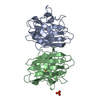
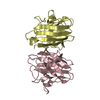
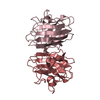
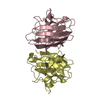
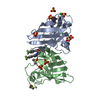
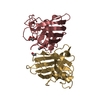

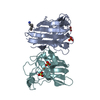
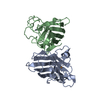

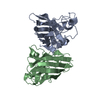
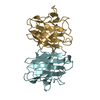

 PDBj
PDBj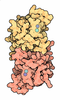
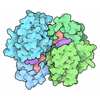
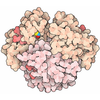
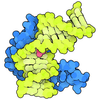
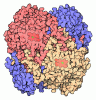
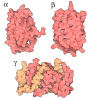
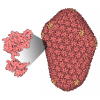
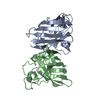
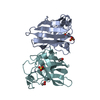
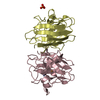
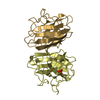
 Assembly

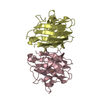
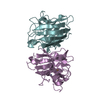
 Leishmania tarentolae (eukaryote) / Strain (production host): P10 / References: UniProt: P00441, superoxide dismutase
 Mass: 63.546 Da / Num. of mol.: 6 / Source method: obtained synthetically / Formula: Cu
 Mass: 65.409 Da / Num. of mol.: 6 / Source method: obtained synthetically / Formula: Zn
 Sample preparation
 / Beamline: X10SA / Wavelength: 1 Å
 Processing