 Movie
Movie Controller


+ Open data

- Basic information
| Entry | Database: PDB / ID: 36iv | |||||||||
|---|---|---|---|---|---|---|---|---|---|---|
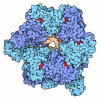
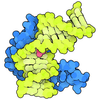
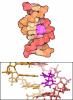
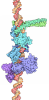
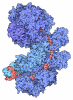
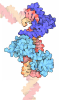
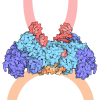
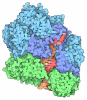
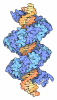
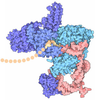
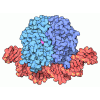
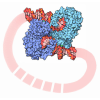
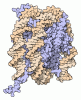
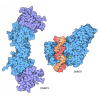
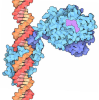
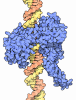
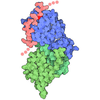
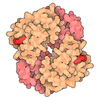
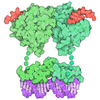
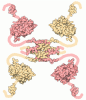
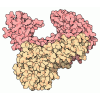
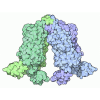
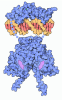
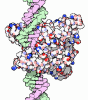
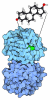
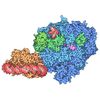
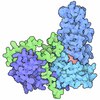
| Title | Cryo-EM structure of BRD4 BD1 bound to acetylated nucleosomes | |||||||||
 Components Components |
| |||||||||
 Keywords Keywords | NUCLEAR PROTEIN/DNA / Chromatin reader BRD4 Acetylated nucleosome / NUCLEAR PROTEIN / NUCLEAR PROTEIN-DNA complex | |||||||||
| Function / homology |  Function and homology information Function and homology informationhistone H4K8ac reader activity / RNA polymerase II C-terminal domain binding / histone H3K27ac reader activity / negative regulation of DNA damage checkpoint / P-TEFb complex binding / histone H3K9ac reader activity / histone H4 reader activity / histone H4K5ac reader activity / histone H4K12ac reader activity / host-mediated suppression of viral transcription ...histone H4K8ac reader activity / RNA polymerase II C-terminal domain binding / histone H3K27ac reader activity / negative regulation of DNA damage checkpoint / P-TEFb complex binding / histone H3K9ac reader activity / histone H4 reader activity / histone H4K5ac reader activity / histone H4K12ac reader activity / host-mediated suppression of viral transcription / histone H4K16ac reader activity / negative regulation of tumor necrosis factor-mediated signaling pathway / positive regulation of T-helper 17 cell lineage commitment / positive regulation of G2/M transition of mitotic cell cycle / protein localization to CENP-A containing chromatin / Replacement of protamines by nucleosomes in the male pronucleus / RNA polymerase II CTD heptapeptide repeat kinase activity / Packaging Of Telomere Ends / Recognition and association of DNA glycosylase with site containing an affected purine / Cleavage of the damaged purine / Deposition of new CENPA-containing nucleosomes at the centromere / Recognition and association of DNA glycosylase with site containing an affected pyrimidine / Cleavage of the damaged pyrimidine / RNA Polymerase I Promoter Opening / Inhibition of DNA recombination at telomere / Assembly of the ORC complex at the origin of replication / Regulation of endogenous retroelements by the Human Silencing Hub (HUSH) complex / Meiotic synapsis / condensed nuclear chromosome / DNA methylation / Condensation of Prophase Chromosomes / Chromatin modifications during the maternal to zygotic transition (MZT) / HCMV Late Events / SIRT1 negatively regulates rRNA expression / ERCC6 (CSB) and EHMT2 (G9a) positively regulate rRNA expression / PRC2 methylates histones and DNA / Regulation of endogenous retroelements by KRAB-ZFP proteins / Defective pyroptosis / HDACs deacetylate histones / positive regulation of transcription elongation by RNA polymerase II / Transcriptional regulation by small RNAs / lipopolysaccharide binding / Regulation of endogenous retroelements by Piwi-interacting RNAs (piRNAs) / RNA Polymerase I Promoter Escape / Nonhomologous End-Joining (NHEJ) / Activated PKN1 stimulates transcription of AR (androgen receptor) regulated genes KLK2 and KLK3 / RUNX1 regulates genes involved in megakaryocyte differentiation and platelet function / Negative Regulation of CDH1 Gene Transcription / NoRC negatively regulates rRNA expression / G2/M DNA damage checkpoint / Formation of the beta-catenin:TCF transactivating complex / B-WICH complex positively regulates rRNA expression / DNA Damage/Telomere Stress Induced Senescence / Meiotic recombination / Pre-NOTCH Transcription and Translation / Activation of anterior HOX genes in hindbrain development during early embryogenesis / transcription coregulator activity / Transcriptional regulation of granulopoiesis / nucleosomal DNA binding / RMTs methylate histone arginines / HCMV Early Events / Metalloprotease DUBs / innate immune response in mucosa / p53 binding / structural constituent of chromatin / nucleosome / Regulation of PD-L1(CD274) transcription / nucleosome assembly / UCH proteinases / HATs acetylate histones / E3 ubiquitin ligases ubiquitinate target proteins / Recruitment and ATM-mediated phosphorylation of repair and signaling proteins at DNA double strand breaks / regulation of inflammatory response / MLL4 and MLL3 complexes regulate expression of PPARG target genes in adipogenesis and hepatic steatosis / killing of cells of another organism / RUNX1 regulates transcription of genes involved in differentiation of HSCs / chromatin organization / Dengue Virus-Host Interactions / Processing of DNA double-strand break ends / antimicrobial humoral immune response mediated by antimicrobial peptide / Senescence-Associated Secretory Phenotype (SASP) / heterochromatin formation / histone binding / defense response to Gram-negative bacterium / Oxidative Stress Induced Senescence / antibacterial humoral response / Estrogen-dependent gene expression / Potential therapeutics for SARS / positive regulation of canonical NF-kappaB signal transduction / transcription coactivator activity / defense response to Gram-positive bacterium / transcription cis-regulatory region binding / Ub-specific processing proteases / chromatin remodeling / chromosome / negative regulation of cell population proliferation / protein heterodimerization activity / Amyloid fiber formation / protein serine/threonine kinase activity / chromatin binding Similarity search - Function | |||||||||
| Biological species |  Xenopus laevis (African clawed frog) Xenopus laevis (African clawed frog) Homo sapiens (human) Homo sapiens (human)synthetic construct (others) | |||||||||
| Method | ELECTRON MICROSCOPY / single particle reconstruction / cryo EM / Resolution: 2.89 Å | |||||||||
 Authors Authors | Zhu, J. / Leith, E.M. / O'Donnell, E.N. / Manzano, B.P. / Wu, S.-Y. / Chiang, C.-M. / Armache, J.-P. / Tan, S. | |||||||||
| Funding support |  United States, 1items United States, 1items
| |||||||||
 Citation Citation | Journal: Mol Cell / Year: 2026 Title: BRD4 binds the nucleosome via both histone and DNA interactions. Authors: Jiang Zhu / Erik M Leith / Erin N O'Donnell / Bryan P Manzano / Shwu-Yuan Wu / Cheng-Ming Chiang / Jean-Paul Armache / Song Tan / Abstract: BRD4, a bromodomain and extraterminal (BET) family transcriptional regulator, is believed to be recruited to chromatin via interactions between its tandem bromodomains (BD1 and BD2) and acetylated ...BRD4, a bromodomain and extraterminal (BET) family transcriptional regulator, is believed to be recruited to chromatin via interactions between its tandem bromodomains (BD1 and BD2) and acetylated histone tails. Although extensive studies have explained how individual BRD4 bromodomains bind to acetylated peptides and how BET inhibitors interfere with such interactions, equivalent studies of the full-length BRD4 protein with the nucleosome have been lacking. Our cryo-electron microscopy (cryo-EM) structure of the BRD4 short (BRD4-S) isoform bound to a nucleosome diacetylated on histone H4 shows how BRD4 BD1 engages both the H4 tail and nucleosomal DNA. Unlike other chromatin reader domain/nucleosome structures, BRD4 BD1 presents the acetylated histone tail for potential interactions with additional chromatin proteins. Unexpectedly, our biochemical studies indicate that BRD4 uses basic regions outside of the bromodomains to bind nucleosomes tightly even in the absence of histone acetylation. Our results further show that histone H4 acetylation influences the conformation of the BRD4/nucleosome complex. | |||||||||
| History |
|
- Structure visualization
| Structure viewer | Molecule: MolmilJmol/JSmol |
|---|
- Downloads & links
-Download
| PDBx/mmCIF format | 36iv.cif.gz | 315.6 KB | Display | PDBx/mmCIF format |
|---|---|---|---|---|
| PDB format | pdb36iv.ent.gz | 230.2 KB | Display | PDB format |
| PDBx/mmJSON format | 36iv.json.gz | Tree view | PDBx/mmJSON format | |
| Others |  Other downloads Other downloads |
-Validation report
| Arichive directory | https://data.pdbj.org/pub/pdb/validation_reports/6i/36ivftp://data.pdbj.org/pub/pdb/validation_reports/6i/36iv | HTTPS FTP |
|---|
-Related structure data
| Related structure data |  77606MC  36iuC M: map data used to model this data C: citing same article ( |
|---|---|
| Similar structure data |

-Links
 PDBj
PDBj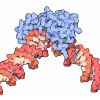

- Assembly
| Deposited unit | 
|
|---|---|
| 1 |
|
-Components
-Protein , 5 types, 9 molecules AEBFCGDHK
| #1: Protein | Mass: 15344.959 Da / Num. of mol.: 2 Source method: isolated from a genetically manipulated source Source: (gene. exp.) Xenopus laevis (African clawed frog) / Gene: LOC121398065, LOC108703785, LOC121398067 / Production host:   Escherichia coli (E. coli) / References: UniProt: A0A310TTQ1 Escherichia coli (E. coli) / References: UniProt: A0A310TTQ1#2: Protein | Mass: 11402.340 Da / Num. of mol.: 2 Source method: isolated from a genetically manipulated source Source: (gene. exp.) Xenopus laevis (African clawed frog) / Production host: Escherichia coli (E. coli) / References: UniProt: P62799#3: Protein | Mass: 14034.355 Da / Num. of mol.: 2 Source method: isolated from a genetically manipulated source Source: (gene. exp.) Homo sapiens (human) / Gene: H2AC4, H2AFM, HIST1H2AB, H2AC8, H2AFA, HIST1H2AE / Production host: Escherichia coli (E. coli) / References: UniProt: P04908#4: Protein | Mass: 13804.045 Da / Num. of mol.: 2 Source method: isolated from a genetically manipulated source Source: (gene. exp.) Homo sapiens (human) / Gene: H2BC11, H2BFR, HIST1H2BJ / Production host: Escherichia coli (E. coli) / References: UniProt: P06899#7: Protein | | Mass: 80506.195 Da / Num. of mol.: 1 Source method: isolated from a genetically manipulated source Source: (gene. exp.) Homo sapiens (human) / Gene: BRD4, HUNK1 / Production host: Escherichia coli (E. coli) / References: UniProt: O60885 |
|---|
-DNA chain , 2 types, 2 molecules IJ
| #5: DNA chain | Mass: 50683.266 Da / Num. of mol.: 1 Source method: isolated from a genetically manipulated source Source: (gene. exp.) synthetic construct (others) / Production host: Escherichia coli (E. coli) |
|---|---|
| #6: DNA chain | Mass: 51190.605 Da / Num. of mol.: 1 Source method: isolated from a genetically manipulated source Source: (gene. exp.) synthetic construct (others) / Production host: Escherichia coli (E. coli) |
-Details
| Has ligand of interest | Y |
|---|---|
| Has protein modification | Y |
-Experimental details
-Experiment
| Experiment | Method: ELECTRON MICROSCOPY |
|---|---|
| EM experiment | Aggregation state: PARTICLE / 3D reconstruction method: single particle reconstruction |
- Sample preparation
| Component | Name: BRD4 bound to acetylated nucleosome / Type: COMPLEX / Entity ID: all / Source: RECOMBINANT |
|---|---|
| Molecular weight | Value: 0.378 MDa / Experimental value: NO |
| Source (natural) | Organism: Homo sapiens (human) |
| Source (recombinant) | Organism: Escherichia coli (E. coli) |
| Buffer solution | pH: 7.5 |
| Buffer component | Conc.: 20 mM / Name: potassium chloride / Formula: KCl |
| Specimen | Conc.: 1.5 mg/ml / Embedding applied: NO / Shadowing applied: NO / Staining applied: NO / Vitrification applied: YES Details: Monodisperse particles were observed in the majority of the collected movies. |
| Specimen support | Grid material: COPPER / Grid mesh size: 300 divisions/in. / Grid type: Quantifoil R1.2/1.3 |
| Vitrification | Instrument: FEI VITROBOT MARK IV / Cryogen name: ETHANE / Humidity: 100 % / Chamber temperature: 277.15 K |
- Electron microscopy imaging
| Experimental equipment |  Model: Titan Krios / Image courtesy: FEI Company |
|---|---|
| Microscopy | Model: TFS KRIOS |
| Electron gun | Electron source:  FIELD EMISSION GUN / Accelerating voltage: 300 kV / Illumination mode: FLOOD BEAM FIELD EMISSION GUN / Accelerating voltage: 300 kV / Illumination mode: FLOOD BEAM |
| Electron lens | Mode: BRIGHT FIELD / Nominal defocus max: 2000 nm / Nominal defocus min: 500 nm |
| Image recording | Electron dose: 40 e/Å2 / Film or detector model: GATAN K3 (6k x 4k) |
- Processing
| EM software | Name: PHENIX / Version: 1.18.2_3874: / Category: model refinement | ||||||||||||||||||||||||
|---|---|---|---|---|---|---|---|---|---|---|---|---|---|---|---|---|---|---|---|---|---|---|---|---|---|
| CTF correction | Type: PHASE FLIPPING AND AMPLITUDE CORRECTION | ||||||||||||||||||||||||
| 3D reconstruction | Resolution: 2.89 Å / Resolution method: FSC 0.143 CUT-OFF / Num. of particles: 80704 / Symmetry type: POINT | ||||||||||||||||||||||||
| Refine LS restraints |
|
