Movie
 Controller


[English] 日本語
 Yorodumi
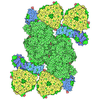
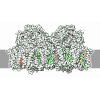
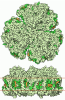
- PDB-31fd: Photosystem II from Arabidopsis thaliana following high light and... -
+ Open data

- Basic information
| Entry | Database: PDB / ID: 31fd | |||||||||||||||||||||
|---|---|---|---|---|---|---|---|---|---|---|---|---|---|---|---|---|---|---|---|---|---|---|
| Title | Photosystem II from Arabidopsis thaliana following high light and high temperature treatment | |||||||||||||||||||||
 Components |
| |||||||||||||||||||||
 Keywords | PHOTOSYNTHESIS / Membrane bound / Photosystem II / Arabidopsis / Manganese cluster / oxidoreductase | |||||||||||||||||||||
| Function / homology |  Function and homology information photoinhibition / chloroplast stromal thylakoid / chloroplast photosystem II / plastid thylakoid membrane / plastoglobule / thylakoid lumen / chloroplast thylakoid / chloroplast thylakoid lumen / apoplast / photosystem II oxygen evolving complex ...photoinhibition / chloroplast stromal thylakoid / chloroplast photosystem II / plastid thylakoid membrane / plastoglobule / thylakoid lumen / chloroplast thylakoid / chloroplast thylakoid lumen / apoplast / photosystem II oxygen evolving complex / photosystem II assembly / thylakoid / protein phosphatase regulator activity / oxygen evolving activity / photosystem II stabilization / photosystem II reaction center / photosystem II / photosystem II / photosynthetic electron transport chain / chlorophyll binding / chloroplast stroma / plastid / poly(U) RNA binding / photosynthetic electron transport in photosystem II / photosynthesis, light reaction / phosphate ion binding / chloroplast thylakoid membrane / photosynthesis / chloroplast / electron transfer activity / protein stabilization / iron ion binding / protein domain specific binding / mRNA binding / heme binding / metal ion binding / mitochondrion / cytosol Similarity search - Function | |||||||||||||||||||||
| Biological species |   Arabidopsis thaliana (thale cress) | |||||||||||||||||||||
| Method | ELECTRON MICROSCOPY / single particle reconstruction / cryo EM / Resolution: 2.74 Å | |||||||||||||||||||||
 Authors | Forsman, J.A. / Graca, A.T. / Hall, M. / Messinger, J. / Schroder, W.P. | |||||||||||||||||||||
| Funding support |  Sweden, 6items
| |||||||||||||||||||||
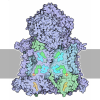
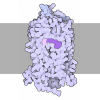
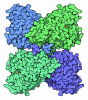
 Citation | Journal: Photosynth Res / Year: 2026 Title: Effects of high light and elevated temperature on the structure of photosystem II isolated from Arabidopsis thaliana. Authors: Jack Forsman / André T Graça / Michael Hall / Wolfgang P Schröder / Johannes Messinger /  Abstract: Photosystem II (PS II) is a large membrane-bound pigment-protein complex responsible for extracting electrons and protons from water during photosynthesis and releasing molecular oxygen into the ...Photosystem II (PS II) is a large membrane-bound pigment-protein complex responsible for extracting electrons and protons from water during photosynthesis and releasing molecular oxygen into the atmosphere. While light is required to drive the photochemical reactions, high light and high temperature can be damaging to PS II. To gain insight into potential structural consequences of such conditions, we performed an exploratory study where isolated PS II complexes (C2S2) from Arabidopsis thaliana were exposed to high light and elevated temperature and employed cryo-electron microscopy for structural determination. This resulted in a 'high light' structure (2.74 Å global resolution) which is compared to the published 2.44 Å structure of intact Arabidopsis-PSII vitrified under dim light conditions (control). The high light structure is missing several of the subunits present in the control, including the strongly bound light-harvesting antenna complexes as well as several small transmembrane and extrinsic subunits. Beyond the loss of subunits, the clearest evidence of specific photodamage was found on the acceptor side of the D1 and D2 subunits near the non-heme iron, including the loss of the bicarbonate ligand of the non-heme iron. Finally, we were able to observe that high light/elevated temperature conditions result in the movement of the D1:His252 residue, potentially forming a serine protease triad that may trigger auto-proteolysis of the D1 subunit. | |||||||||||||||||||||
| History |
|
- Structure visualization
| Structure viewer | Molecule: MolmilJmol/JSmol |
|---|
- Downloads & links
-Download
| PDBx/mmCIF format | 31fd.cif.gz | 989.3 KB | Display | PDBx/mmCIF format |
|---|---|---|---|---|
| PDB format | pdb31fd.ent.gz | 832.2 KB | Display | PDB format |
| PDBx/mmJSON format | 31fd.json.gz | Tree view | PDBx/mmJSON format | |
| Others |  Other downloads |
-Validation report
| Arichive directory | https://data.pdbj.org/pub/pdb/validation_reports/1f/31fdftp://data.pdbj.org/pub/pdb/validation_reports/1f/31fd | HTTPS FTP |
|---|
-Related structure data
| Related structure data |  58358MC M: map data used to model this data C: citing same article ( |
|---|---|
| Similar structure data |
-Links
 PDBj
- Assembly
| Deposited unit | 
|
|---|---|
| 1 |
|
-Components
-Photosystem II ... , 11 types, 22 molecules AaBbCcDdHhIiKkLlMmTtUu
| #1: Protein | Mass: 38961.277 Da / Num. of mol.: 2 / Source method: isolated from a natural source / Source: (natural) Arabidopsis thaliana (thale cress) / Strain: Columbia-0 / References: UniProt: P83755, photosystem II#2: Protein | Mass: 56091.824 Da / Num. of mol.: 2 / Source method: isolated from a natural source / Source: (natural) Arabidopsis thaliana (thale cress) / Strain: Columbia-0 / References: UniProt: P56777#3: Protein | Mass: 51915.500 Da / Num. of mol.: 2 / Source method: isolated from a natural source / Source: (natural) Arabidopsis thaliana (thale cress) / Strain: Columbia-0 / References: UniProt: P56778#4: Protein | Mass: 39575.281 Da / Num. of mol.: 2 / Source method: isolated from a natural source / Source: (natural) Arabidopsis thaliana (thale cress) / Strain: Columbia-0 / References: UniProt: P56761, photosystem II#7: Protein | Mass: 7706.887 Da / Num. of mol.: 2 / Source method: isolated from a natural source / Source: (natural) Arabidopsis thaliana (thale cress) / Strain: Columbia-0 / References: UniProt: P56780#8: Protein/peptide | Mass: 4170.891 Da / Num. of mol.: 2 / Source method: isolated from a natural source / Source: (natural) Arabidopsis thaliana (thale cress) / Strain: Columbia-0 / References: UniProt: P62100#9: Protein | Mass: 6977.381 Da / Num. of mol.: 2 / Source method: isolated from a natural source / Source: (natural) Arabidopsis thaliana (thale cress) / Strain: Columbia-0 / References: UniProt: P56782#10: Protein/peptide | Mass: 4471.075 Da / Num. of mol.: 2 / Source method: isolated from a natural source / Source: (natural) Arabidopsis thaliana (thale cress) / Strain: Columbia-0 / References: UniProt: P60129#11: Protein/peptide | Mass: 3783.538 Da / Num. of mol.: 2 / Source method: isolated from a natural source / Source: (natural) Arabidopsis thaliana (thale cress) / Strain: Columbia-0 / References: UniProt: P62109#13: Protein/peptide | Mass: 3825.642 Da / Num. of mol.: 2 / Source method: isolated from a natural source / Source: (natural) Arabidopsis thaliana (thale cress) / Strain: Columbia-0 / References: UniProt: P61839#14: Protein | Mass: 11042.852 Da / Num. of mol.: 2 / Source method: isolated from a natural source / Source: (natural) Arabidopsis thaliana (thale cress) / Strain: Columbia-0 / References: UniProt: Q39195 |
|---|
-Cytochrome b559 subunit ... , 2 types, 4 molecules EeFf
| #5: Protein | Mass: 9393.501 Da / Num. of mol.: 2 / Source method: isolated from a natural source / Source: (natural) Arabidopsis thaliana (thale cress) / Strain: Columbia-0 / References: UniProt: P56779#6: Protein/peptide | Mass: 4488.324 Da / Num. of mol.: 2 / Mutation: S26F / Source method: isolated from a natural source / Source: (natural) Arabidopsis thaliana (thale cress) / Strain: Columbia-0 / References: UniProt: P62095 |
|---|
-Protein , 2 types, 4 molecules OoXx
| #12: Protein | Mass: 35180.262 Da / Num. of mol.: 2 / Source method: isolated from a natural source / Source: (natural) Arabidopsis thaliana (thale cress) / Strain: Columbia-0 / References: UniProt: P23321#15: Protein | Mass: 11826.013 Da / Num. of mol.: 2 / Source method: isolated from a natural source / Source: (natural) Arabidopsis thaliana (thale cress) / Strain: Columbia-0 / References: UniProt: Q9SKI3 |
|---|
-Sugars , 1 types, 6 molecules 
| #24: Sugar | ChemComp-DGD /  Type: saccharide / Mass: 949.299 Da / Num. of mol.: 6 / Source method: obtained synthetically / Formula: C51H96O15 |
|---|
-Non-polymers , 12 types, 166 molecules 


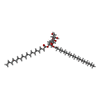

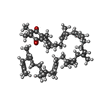
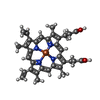
| #16: Chemical |  Mass: 339.827 Da / Num. of mol.: 2 / Source method: obtained synthetically / Formula: CaMn4O5 / Feature type: SUBJECT OF INVESTIGATION #17: Chemical | ChemComp-CL /  Mass: 35.453 Da / Num. of mol.: 4 / Source method: obtained synthetically / Formula: Cl #18: Chemical | ChemComp-CLA /  Mass: 893.489 Da / Num. of mol.: 70 / Source method: obtained synthetically / Formula: C55H72MgN4O5 #19: Chemical | ChemComp-PHO /  Mass: 871.200 Da / Num. of mol.: 4 / Source method: obtained synthetically / Formula: C55H74N4O5 #20: Chemical | ChemComp-BCR /  Mass: 536.873 Da / Num. of mol.: 12 / Source method: obtained synthetically / Formula: C40H56 #21: Chemical |  Mass: 795.116 Da / Num. of mol.: 2 / Source method: obtained synthetically / Formula: C41H78O12S #22: Chemical | ChemComp-LHG /  Mass: 722.970 Da / Num. of mol.: 8 / Source method: obtained synthetically / Formula: C38H75O10P / Comment: phospholipid*YM #23: Chemical | ChemComp-LMG /  Mass: 787.158 Da / Num. of mol.: 6 / Source method: obtained synthetically / Formula: C45H86O10 #25: Chemical |  Mass: 55.845 Da / Num. of mol.: 2 / Source method: obtained synthetically / Formula: Fe / Feature type: SUBJECT OF INVESTIGATION #26: Chemical |  Mass: 749.201 Da / Num. of mol.: 2 / Source method: obtained synthetically / Formula: C53H80O2 #27: Chemical |  Mass: 616.487 Da / Num. of mol.: 2 / Source method: obtained synthetically / Formula: C34H32FeN4O4 #28: Water | ChemComp-HOH / | Mass: 18.015 Da / Num. of mol.: 52 / Source method: isolated from a natural source / Formula: H2O |
|---|
-Details
| Has ligand of interest | Y |
|---|---|
| Has protein modification | Y |
-Experimental details
-Experiment
| Experiment | Method: ELECTRON MICROSCOPY |
|---|---|
| EM experiment | Aggregation state: PARTICLE / 3D reconstruction method: single particle reconstruction |
- Sample preparation
| Component | Name: High-light exposed Photosystem II from Arabidopsis thaliana Type: COMPLEX Details: Photosystem II from Arabidopsis thaliana was solubilised and isolated from the thylakoid membranes. The isolated particles were exposed to 30 min of high light (2000 uE) before plunge ...Details: Photosystem II from Arabidopsis thaliana was solubilised and isolated from the thylakoid membranes. The isolated particles were exposed to 30 min of high light (2000 uE) before plunge freezing and data collection Entity ID: #1-#15 / Source: NATURAL | ||||||||||||||||||||||||||||||
|---|---|---|---|---|---|---|---|---|---|---|---|---|---|---|---|---|---|---|---|---|---|---|---|---|---|---|---|---|---|---|---|
| Molecular weight | Value: 0.573 MDa / Experimental value: NO | ||||||||||||||||||||||||||||||
| Source (natural) | Organism: Arabidopsis thaliana (thale cress) / Strain: Columbia-0 / Organelle: Thylakoid membranes / Tissue: Leaves | ||||||||||||||||||||||||||||||
| Buffer solution | pH: 6.3 | ||||||||||||||||||||||||||||||
| Buffer component |
| ||||||||||||||||||||||||||||||
| Specimen | Conc.: 9.7 mg/ml / Embedding applied: NO / Shadowing applied: NO / Staining applied: NO / Vitrification applied: YES Details: Photosystem II particles were solubilised with n-dodecyl-B-matloside and seperated using sucrose gradients. Particles were washed and concentrated, beforebeing exposed to high light (2000 uE) ...Details: Photosystem II particles were solubilised with n-dodecyl-B-matloside and seperated using sucrose gradients. Particles were washed and concentrated, beforebeing exposed to high light (2000 uE) for 30 mins before plunge freezing | ||||||||||||||||||||||||||||||
| Vitrification | Instrument: FEI VITROBOT MARK IV / Cryogen name: ETHANE / Humidity: 100 % / Chamber temperature: 277 K |
- Electron microscopy imaging
| Experimental equipment | 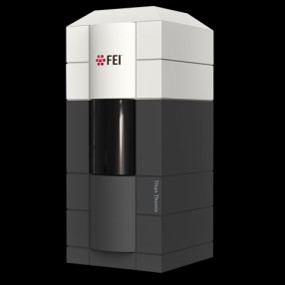 Model: Titan Krios / Image courtesy: FEI Company |
|---|---|
| Microscopy | Model: TFS KRIOS |
| Electron gun | Electron source:  FIELD EMISSION GUN / Accelerating voltage: 300 kV / Illumination mode: FLOOD BEAM |
| Electron lens | Mode: BRIGHT FIELD / Nominal magnification: 165000 X / Nominal defocus max: 2400 nm / Nominal defocus min: 1000 nm / Cs: 2.7 mm / C2 aperture diameter: 50 µm / Alignment procedure: COMA FREE |
| Specimen holder | Cryogen: NITROGEN / Specimen holder model: FEI TITAN KRIOS AUTOGRID HOLDER |
| Image recording | Average exposure time: 2.17 sec. / Electron dose: 40 e/Å2 / Film or detector model: FEI FALCON IV (4k x 4k) / Num. of grids imaged: 1 / Num. of real images: 15511 |
| EM imaging optics | Energyfilter name: TFS Selectris / Energyfilter slit width: 10 eV |
- Processing
| EM software |
| |||||||||||||||||||||||||||||||||||||||||||||
|---|---|---|---|---|---|---|---|---|---|---|---|---|---|---|---|---|---|---|---|---|---|---|---|---|---|---|---|---|---|---|---|---|---|---|---|---|---|---|---|---|---|---|---|---|---|---|
| CTF correction | Type: PHASE FLIPPING AND AMPLITUDE CORRECTION | |||||||||||||||||||||||||||||||||||||||||||||
| Particle selection | Num. of particles selected: 2002863 | |||||||||||||||||||||||||||||||||||||||||||||
| 3D reconstruction | Resolution: 2.74 Å / Resolution method: FSC 0.143 CUT-OFF / Num. of particles: 57560 / Symmetry type: POINT |