 Movie
Movie Controller

[English] 日本語
 Yorodumi
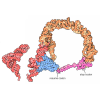
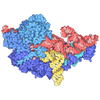
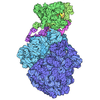
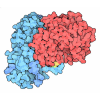
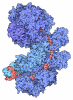
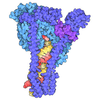
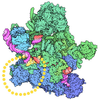
- PDB-29iz: Dormant 80S:eEF2:SERBP1:tRNA complex from human cells treated wit... -
+ Open data

- Basic information
| Entry | Database: PDB / ID: 29iz | |||||||||
|---|---|---|---|---|---|---|---|---|---|---|
| Title | Dormant 80S:eEF2:SERBP1:tRNA complex from human cells treated with toxin NT-2 | |||||||||
 Components Components |
| |||||||||
 Keywords Keywords | RIBOSOME / Toxin NT-2 / translation inhibitor / mycotoxin / trichothecene | |||||||||
| Function / homology |  Function and homology information Function and homology informationSynthesis of diphthamide-EEF2 / translation at postsynapse / PML body organization / glial cell proliferation / skeletal muscle cell differentiation / translation elongation factor binding / ribosome hibernation / response to folic acid / SUMO binding / positive regulation of cytoplasmic translation ...Synthesis of diphthamide-EEF2 / translation at postsynapse / PML body organization / glial cell proliferation / skeletal muscle cell differentiation / translation elongation factor binding / ribosome hibernation / response to folic acid / SUMO binding / positive regulation of cytoplasmic translation / male meiosis I / translation at presynapse / response to insecticide / negative regulation of endoplasmic reticulum unfolded protein response / eukaryotic 80S initiation complex / ribosomal protein import into nucleus / regulation of G1 to G0 transition / oxidized pyrimidine DNA binding / response to TNF agonist / positive regulation of base-excision repair / positive regulation of respiratory burst involved in inflammatory response / regulation of adenylate cyclase-activating G protein-coupled receptor signaling pathway / positive regulation of intrinsic apoptotic signaling pathway in response to DNA damage / positive regulation of gastrulation / protein tyrosine kinase inhibitor activity / IRE1-RACK1-PP2A complex / TNFR1-mediated ceramide production / positive regulation of Golgi to plasma membrane protein transport / G1 to G0 transition / negative regulation of formation of translation preinitiation complex / nucleolus organization / positive regulation of ubiquitin-protein transferase activity / negative regulation of RNA splicing / GAIT complex / positive regulation of DNA-templated transcription initiation / negative regulation of DNA repair / TORC2 complex binding / erythrocyte homeostasis / supercoiled DNA binding / regulation of establishment of cell polarity / rRNA modification in the nucleus and cytosol / oxidized purine DNA binding / NF-kappaB complex / negative regulation of intrinsic apoptotic signaling pathway in response to hydrogen peroxide / negative regulation of phagocytosis / Uptake and function of diphtheria toxin / ubiquitin-like protein conjugating enzyme binding / cytoplasmic translational initiation / cytoplasmic side of rough endoplasmic reticulum membrane / regulation of translation involved in cellular response to UV / A band / Formation of the ternary complex, and subsequently, the 43S complex / ion channel inhibitor activity / positive regulation of intrinsic apoptotic signaling pathway in response to DNA damage by p53 class mediator / laminin receptor activity / response to aldosterone / negative regulation of myoblast fusion / protein-DNA complex disassembly / lncRNA binding / Ribosomal scanning and start codon recognition / protein kinase A binding / Translation initiation complex formation / negative regulation of Wnt signaling pathway / positive regulation of DNA damage response, signal transduction by p53 class mediator / fibroblast growth factor binding / BH3 domain binding / Protein hydroxylation / TOR signaling / mTORC1-mediated signalling / negative regulation of translational frameshifting / monocyte chemotaxis / PELO:HBS1L and ABCE1 dissociate a ribosome on a non-stop mRNA / SARS-CoV-1 modulates host translation machinery / regulation of cell division / positive regulation of GTPase activity / protein localization to nucleus / translational elongation / Peptide chain elongation / Selenocysteine synthesis / translation elongation factor activity / negative regulation of protein binding / Formation of a pool of free 40S subunits / negative regulation of respiratory burst involved in inflammatory response / positive regulation of intrinsic apoptotic signaling pathway by p53 class mediator / protein serine/threonine kinase inhibitor activity / protein targeting / Eukaryotic Translation Termination / Dengue Virus Attachment and Entry / SRP-dependent cotranslational protein targeting to membrane / Response of EIF2AK4 (GCN2) to amino acid deficiency / response to ischemia / Viral mRNA Translation / endonucleolytic cleavage to generate mature 3'-end of SSU-rRNA from (SSU-rRNA, 5.8S rRNA, LSU-rRNA) / ubiquitin ligase inhibitor activity / Nonsense Mediated Decay (NMD) independent of the Exon Junction Complex (EJC) / positive regulation of signal transduction by p53 class mediator / GTP hydrolysis and joining of the 60S ribosomal subunit / embryo implantation / L13a-mediated translational silencing of Ceruloplasmin expression / cleavage in ITS2 between 5.8S rRNA and LSU-rRNA of tricistronic rRNA transcript (SSU-rRNA, 5.8S rRNA, LSU-rRNA) Similarity search - Function | |||||||||
| Biological species |  Homo sapiens (human) Homo sapiens (human) | |||||||||
| Method | ELECTRON MICROSCOPY / single particle reconstruction / cryo EM / Resolution: 2.08 Å | |||||||||
 Authors Authors | Rabl, J. / Karousis, E.D. | |||||||||
| Funding support |  Switzerland, 1items Switzerland, 1items
| |||||||||
 Citation Citation | Journal: Commun Biol / Year: 2026 Title: A human cell-free translation screen identifies the NT-2 mycotoxin as a ribosomal inhibitor that binds the peptidyl transferase center. Authors: Nino Schwaller / Dominic Andenmatten / Jonas Luginbühl / Julius Rabl / Helena Baur / Marc Chambon / Jonathan Vesin / Gerardo Turcatti / Evangelos D Karousis / Abstract: Translation inhibitors are invaluable for probing ribosome function and therapeutic applications, but systematic discovery in human systems is limited by the lack of scalable, screening-compatible ...Translation inhibitors are invaluable for probing ribosome function and therapeutic applications, but systematic discovery in human systems is limited by the lack of scalable, screening-compatible cell-free platforms. Here, we establish a robust high-throughput screening using human lysates that bypasses cellular cytotoxic effects. After screening ~28,000 small molecules, we identified known and a novel translation inhibitor, including NT-2, a trichothecene mycotoxin produced by the pathogenic Fusarium sporotrichioides. NT-2 suppressed protein synthesis in human cells and yeast lysates, while sparing translation in bacteria and intact yeast cells. Cryo-EM at 1.76 Å revealed NT-2 bound at the peptidyl transferase center of the human 60S ribosome. In addition, cryoEM classification of NT-2 treated cells shows ribosomes in an inactive eEF2/SERBP1-bound dormant state. Together, these results expose NT-2 as a previously unrecognized environmental inhibitor of mammalian protein synthesis and demonstrate the power of cell-free translation screening to reveal new inhibitors with unexpected ribosome fates. | |||||||||
| History |
|
- Structure visualization
| Structure viewer | Molecule: MolmilJmol/JSmol |
|---|
- Downloads & links
-Download
| PDBx/mmCIF format | 29iz.cif.gz | 8.9 MB | Display | PDBx/mmCIF format |
|---|---|---|---|---|
| PDB format | pdb29iz.ent.gz | Display | PDB format | |
| PDBx/mmJSON format | 29iz.json.gz | Tree view | PDBx/mmJSON format | |
| Others |  Other downloads Other downloads |
-Validation report
| Arichive directory | https://data.pdbj.org/pub/pdb/validation_reports/9i/29izftp://data.pdbj.org/pub/pdb/validation_reports/9i/29iz | HTTPS FTP |
|---|
-Related structure data
| Related structure data |  57204MC  29iwC  29ixC  29iyC M: map data used to model this data C: citing same article ( |
|---|---|
| Similar structure data |


-Links
 PDBj
PDBj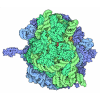

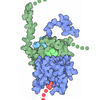
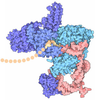
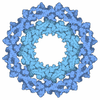
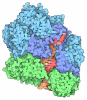
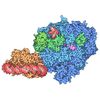

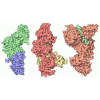
- Assembly
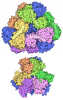
| Deposited unit | 
|
|---|---|
| 1 |
|
-Components
-Large ribosomal subunit protein ... , 8 types, 8 molecules AAAUAZAdAgBDCACD
| #1: Protein | Mass: 29290.973 Da / Num. of mol.: 1 / Source method: isolated from a natural source / Source: (natural) Homo sapiens (human) / References: UniProt: P18124 |
|---|---|
| #21: Protein | Mass: 16619.527 Da / Num. of mol.: 1 / Source method: isolated from a natural source / Source: (natural) Homo sapiens (human) / References: UniProt: P46776 |
| #26: Protein | Mass: 12564.743 Da / Num. of mol.: 1 / Source method: isolated from a natural source / Source: (natural) Homo sapiens (human) / References: UniProt: P18077 |
| #30: Protein | Mass: 11111.032 Da / Num. of mol.: 1 / Source method: isolated from a natural source / Source: (natural) Homo sapiens (human) / References: UniProt: P61927 |
| #33: Protein | Mass: 14771.411 Da / Num. of mol.: 1 / Source method: isolated from a natural source / Source: (natural) Homo sapiens (human) / References: UniProt: P62987 |
| #40: Protein | Mass: 28103.855 Da / Num. of mol.: 1 / Source method: isolated from a natural source / Source: (natural) Homo sapiens (human) / References: UniProt: P62917 |
| #41: Protein | Mass: 46224.133 Da / Num. of mol.: 1 / Source method: isolated from a natural source / Source: (natural) Homo sapiens (human) / References: UniProt: P39023 |
| #44: Protein | Mass: 32810.176 Da / Num. of mol.: 1 / Source method: isolated from a natural source / Source: (natural) Homo sapiens (human) / References: UniProt: Q02878 |
+60S ribosomal protein ... , 33 types, 33 molecules ABACAEAFAGAHAIAJAKALAMANAOAPAQARASATAVAWAXAYAaAbAcAeAfAhAiAj...
-Protein , 6 types, 6 molecules ADERGFHfHgHh
| #4: Protein | Mass: 24570.949 Da / Num. of mol.: 1 / Source method: isolated from a natural source / Source: (natural) Homo sapiens (human) / References: UniProt: Q96L21 |
|---|---|
| #46: Protein | Mass: 95463.211 Da / Num. of mol.: 1 / Source method: isolated from a natural source / Source: (natural) Homo sapiens (human) / References: UniProt: P13639 |
| #47: Protein | Mass: 45051.504 Da / Num. of mol.: 1 / Source method: isolated from a natural source / Source: (natural) Homo sapiens (human) / References: UniProt: Q8NC51 |
| #67: Protein | Mass: 14415.724 Da / Num. of mol.: 1 / Source method: isolated from a natural source / Source: (natural) Homo sapiens (human) / References: UniProt: P62861 |
| #81: Protein | Mass: 18004.041 Da / Num. of mol.: 1 / Source method: isolated from a natural source / Source: (natural) Homo sapiens (human) / References: UniProt: P62979 |
| #82: Protein | Mass: 35115.652 Da / Num. of mol.: 1 / Source method: isolated from a natural source / Source: (natural) Homo sapiens (human) / References: UniProt: P63244 |
-RNA chain , 5 types, 5 molecules BABBBCDAHA
| #37: RNA chain | Mass: 1640816.625 Da / Num. of mol.: 1 / Source method: isolated from a natural source / Source: (natural) Homo sapiens (human) |
|---|---|
| #38: RNA chain | Mass: 38691.914 Da / Num. of mol.: 1 / Source method: isolated from a natural source / Source: (natural) Homo sapiens (human) / References: GenBank: 23898 |
| #39: RNA chain | Mass: 50463.840 Da / Num. of mol.: 1 / Source method: isolated from a natural source / Source: (natural) Homo sapiens (human) / References: GenBank: 555853 |
| #45: RNA chain | Mass: 24815.684 Da / Num. of mol.: 1 / Source method: isolated from a natural source / Source: (natural) Homo sapiens (human) / References: GenBank: 3093249029 |
| #49: RNA chain | Mass: 603182.875 Da / Num. of mol.: 1 / Source method: isolated from a natural source / Source: (natural) Homo sapiens (human) |
+40S ribosomal protein ... , 24 types, 24 molecules HCHIHJHSHbHDHHHKHOHPHXHZHcHEHGHLHQHRHTHUHVHdHeHN
-Small ribosomal subunit protein ... , 6 types, 6 molecules HFHMAHYBHa
| #51: Protein | Mass: 29654.869 Da / Num. of mol.: 1 / Source method: isolated from a natural source / Source: (natural) Homo sapiens (human) / References: UniProt: P62701 |
|---|---|
| #54: Protein | Mass: 18468.826 Da / Num. of mol.: 1 / Source method: isolated from a natural source / Source: (natural) Homo sapiens (human) / References: UniProt: P62280 |
| #56: Protein | Mass: 9150.427 Da / Num. of mol.: 1 / Source method: isolated from a natural source / Source: (natural) Homo sapiens (human) / References: UniProt: P63220 |
| #57: Protein | Mass: 15860.666 Da / Num. of mol.: 1 / Source method: isolated from a natural source / Source: (natural) Homo sapiens (human) / References: UniProt: P62266 |
| #68: Protein | Mass: 23128.602 Da / Num. of mol.: 1 / Source method: isolated from a natural source / Source: (natural) Homo sapiens (human) / References: UniProt: P08865 |
| #80: Protein | Mass: 13776.224 Da / Num. of mol.: 1 / Source method: isolated from a natural source / Source: (natural) Homo sapiens (human) / References: UniProt: P62851 |
-Non-polymers , 8 types, 1451 molecules 



| #83: Chemical | ChemComp-MG /  Mass: 24.305 Da / Num. of mol.: 252 / Source method: obtained synthetically / Formula: Mg Mass: 24.305 Da / Num. of mol.: 252 / Source method: obtained synthetically / Formula: Mg#84: Chemical | ChemComp-PUT / 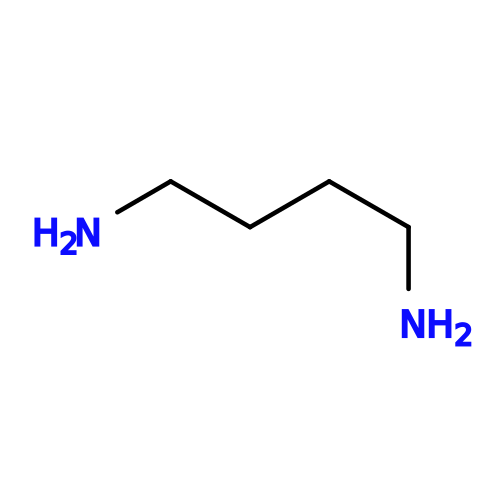 Mass: 88.151 Da / Num. of mol.: 4 / Source method: obtained synthetically / Formula: C4H12N2 Mass: 88.151 Da / Num. of mol.: 4 / Source method: obtained synthetically / Formula: C4H12N2#85: Chemical | ChemComp-K /  Mass: 39.098 Da / Num. of mol.: 117 / Source method: isolated from a natural source / Formula: K Mass: 39.098 Da / Num. of mol.: 117 / Source method: isolated from a natural source / Formula: K#86: Chemical | ChemComp-ZN /  Mass: 65.409 Da / Num. of mol.: 8 / Source method: obtained synthetically / Formula: Zn Mass: 65.409 Da / Num. of mol.: 8 / Source method: obtained synthetically / Formula: Zn#87: Chemical | ChemComp-SPD / 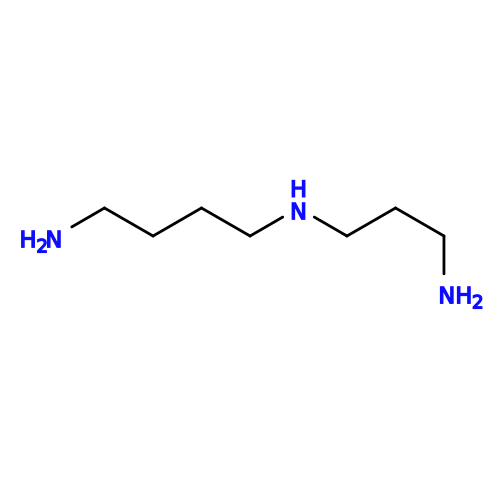 Mass: 145.246 Da / Num. of mol.: 6 / Source method: obtained synthetically / Formula: C7H19N3 Mass: 145.246 Da / Num. of mol.: 6 / Source method: obtained synthetically / Formula: C7H19N3#88: Chemical | ChemComp-SPM / 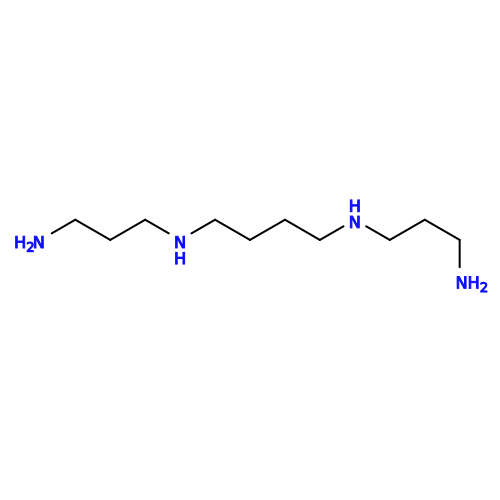 Mass: 202.340 Da / Num. of mol.: 5 / Source method: obtained synthetically / Formula: C10H26N4 Mass: 202.340 Da / Num. of mol.: 5 / Source method: obtained synthetically / Formula: C10H26N4#89: Chemical | ChemComp-A1JQ4 / | Mass: 340.368 Da / Num. of mol.: 1 / Source method: obtained synthetically / Formula: C17H24O7 / Feature type: SUBJECT OF INVESTIGATION #90: Water | ChemComp-HOH / | Mass: 18.015 Da / Num. of mol.: 1058 / Source method: isolated from a natural source / Formula: H2O |
|---|
-Details
| Has ligand of interest | Y |
|---|---|
| Has protein modification | Y |
-Experimental details
-Experiment
| Experiment | Method: ELECTRON MICROSCOPY |
|---|---|
| EM experiment | Aggregation state: PARTICLE / 3D reconstruction method: single particle reconstruction |
- Sample preparation
| Component | Name: PTC site of human cytoplasmic ribosome with bound NT-2 toxin Type: RIBOSOME / Entity ID: #1 / Source: NATURAL |
|---|---|
| Molecular weight | Value: 4.5 MDa / Experimental value: NO |
| Source (natural) | Organism: Homo sapiens (human) / Strain: HEK293 |
| Buffer solution | pH: 7.4 |
| Specimen | Embedding applied: NO / Shadowing applied: NO / Staining applied: NO / Vitrification applied: YES |
| Specimen support | Grid material: COPPER / Grid mesh size: 300 divisions/in. / Grid type: Quantifoil R2/2 |
| Vitrification | Instrument: FEI VITROBOT MARK IV / Cryogen name: ETHANE-PROPANE / Humidity: 95 % / Chamber temperature: 277 K |
- Electron microscopy imaging
| Experimental equipment |  Model: Titan Krios / Image courtesy: FEI Company |
|---|---|
| Microscopy | Model: TFS KRIOS |
| Electron gun | Electron source:  FIELD EMISSION GUN / Accelerating voltage: 300 kV / Illumination mode: FLOOD BEAM FIELD EMISSION GUN / Accelerating voltage: 300 kV / Illumination mode: FLOOD BEAM |
| Electron lens | Mode: BRIGHT FIELD / Nominal defocus max: 2800 nm / Nominal defocus min: 800 nm / Alignment procedure: COMA FREE |
| Specimen holder | Cryogen: NITROGEN / Specimen holder model: FEI TITAN KRIOS AUTOGRID HOLDER |
| Image recording | Electron dose: 50 e/Å2 / Film or detector model: GATAN K3 BIOQUANTUM (6k x 4k) |
- Processing
| EM software |
| ||||||||||||
|---|---|---|---|---|---|---|---|---|---|---|---|---|---|
| CTF correction | Type: PHASE FLIPPING AND AMPLITUDE CORRECTION | ||||||||||||
| 3D reconstruction | Resolution: 2.08 Å / Resolution method: FSC 0.143 CUT-OFF / Num. of particles: 202290 / Symmetry type: POINT |
