National Natural Science Foundation of China (NSFC)
32430001
China
National Natural Science Foundation of China (NSFC)
92451302
China
Citation
Journal: Acta Biochim Biophys Sin (Shanghai) / Year: 2026 Title: Structural and functional insights into the distinct DNA recognition mechanisms of the terminase small subunit TerS from cyanophages. Abstract: Efficient genome packaging is a critical step in the phage life cycle, directly influencing the viral maturation and infectivity. In tailed phages, this process is driven by a packaging motor ...Efficient genome packaging is a critical step in the phage life cycle, directly influencing the viral maturation and infectivity. In tailed phages, this process is driven by a packaging motor composed of a portal protein and a terminase complex. The terminase complex usually consists of a large subunit (TerL) and a small subunit (TerS), which cooperate to recognize, cleave, and translocate genomic DNA into the capsid. However, due to the remarkable diversity and complexity of phage packaging systems, the molecular mechanisms governing TerS-mediated DNA recognition remain poorly understood. Here, we report the 3.51 Å cryo-electron microscopy structure of the TerS from the short-tailed cyanophage Pam5, which infects the host Chao 1806. Pam5 TerS assembles into a nonameric ring with a radially symmetric spiral architecture. Biochemical assays show that Pam5 TerS recognizes the genomic DNA via a specific interaction between the N-terminal helix-turn-helix (HTH) domain of TerS and a 21-bp DNA sequence within the gene. In contrast, the TerS from another short-tailed cyanophage, Pam1, which infects the same host, binds to DNA in a sequence-independent manner. These findings reveal that cyanophages, even infecting the same host, could adopt two distinct DNA recognition strategies: HTH-mediated sequence-dependent or sequence-independent modes. This work provides structural and mechanistic insights into the diverse DNA-recognition strategies of TerS and advances our understanding of the evolutionary plasticity of viral genome packaging mechanisms.
History
Deposition
Dec 9, 2025
Deposition site: PDBJ / Processing site: PDBC
Revision 1.0
Apr 22, 2026
Provider: repository / Type: Initial release
Revision 1.0
Apr 22, 2026
Data content type: EM metadata / Data content type: EM metadata / Provider: repository / Type: Initial release
Revision 1.0
Apr 22, 2026
Data content type: Half map / Part number: 1 / Data content type: Half map / Provider: repository / Type: Initial release
Revision 1.0
Apr 22, 2026
Data content type: Half map / Part number: 2 / Data content type: Half map / Provider: repository / Type: Initial release
Revision 1.0
Apr 22, 2026
Data content type: Image / Data content type: Image / Provider: repository / Type: Initial release
Revision 1.0
Apr 22, 2026
Data content type: Primary map / Data content type: Primary map / Provider: repository / Type: Initial release
Data content type: EM metadata / Data content type: EM metadata / EM metadata / Group: Database references / Experimental summary / Data content type: EM metadata / EM metadata / Category: citation / em_admin Data content type: EM metadata / EM metadata ...EM metadata / EM metadata / EM metadata / EM metadata Item: _citation.journal_volume / _citation.page_first ..._citation.journal_volume / _citation.page_first / _citation.page_last / _em_admin.last_update
E: Pam5 small terminase A: Pam5 small terminase B: Pam5 small terminase C: Pam5 small terminase D: Pam5 small terminase F: Pam5 small terminase G: Pam5 small terminase H: Pam5 small terminase I: Pam5 small terminase
In the structure databanks used in Yorodumi, some data are registered as the other names, "COVID-19 virus" and "2019-nCoV". Here are the details of the virus and the list of structure data.
Jan 31, 2019. EMDB accession codes are about to change! (news from PDBe EMDB page)
EMDB accession codes are about to change! (news from PDBe EMDB page)
The allocation of 4 digits for EMDB accession codes will soon come to an end. Whilst these codes will remain in use, new EMDB accession codes will include an additional digit and will expand incrementally as the available range of codes is exhausted. The current 4-digit format prefixed with “EMD-” (i.e. EMD-XXXX) will advance to a 5-digit format (i.e. EMD-XXXXX), and so on. It is currently estimated that the 4-digit codes will be depleted around Spring 2019, at which point the 5-digit format will come into force.
The EM Navigator/Yorodumi systems omit the EMD- prefix.
Related info.:Q: What is EMD? / ID/Accession-code notation in Yorodumi/EM Navigator
Yorodumi is a browser for structure data from EMDB, PDB, SASBDB, etc.
This page is also the successor to EM Navigator detail page, and also detail information page/front-end page for Omokage search.
The word "yorodu" (or yorozu) is an old Japanese word meaning "ten thousand". "mi" (miru) is to see.
Related info.:EMDB / PDB / SASBDB / Comparison of 3 databanks / Yorodumi Search / Aug 31, 2016. New EM Navigator & Yorodumi / Yorodumi Papers / Jmol/JSmol / Function and homology information / Changes in new EM Navigator and Yorodumi
 Movie
Movie Controller


 Open data
 Basic information
 Components
 Keywords
 Pseudanabaena phage Pam5 (virus)
 Authors
 China, 2items
  Citation
 Structure visualization
 Molmil
 Downloads & links
 Other downloads
 PDBj
PDBj Assembly

 Escherichia coli BL21(DE3) (bacteria)
 Sample preparation
 Electron microscopy imaging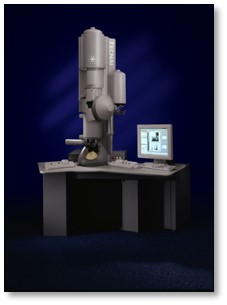
 FIELD EMISSION GUN / Accelerating voltage: 300 kV / Illumination mode: SPOT SCAN
 Processing