 Movie
Movie Controller

[English] 日本語
 Yorodumi
- PDB-12ze: CryoEM structure of Papaya Meleira Virus (PMeV) particles purifie... -
+ Open data

- Basic information
| Entry | Database: PDB / ID: 12ze | ||||||||||||||||||||||||
|---|---|---|---|---|---|---|---|---|---|---|---|---|---|---|---|---|---|---|---|---|---|---|---|---|---|
| Title | CryoEM structure of Papaya Meleira Virus (PMeV) particles purified directly from Carica papaya latex | ||||||||||||||||||||||||
 Components Components | Coat protein | ||||||||||||||||||||||||
 Keywords Keywords | VIRUS / Papaya sticky disease / Double-stranded RNA viruses / Quasiequivalent conformation / Icosahedral capsid | ||||||||||||||||||||||||
| Function / homology | viral capsid / Coat protein Function and homology information Function and homology information | ||||||||||||||||||||||||
| Biological species |  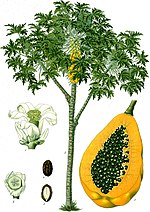 Carica papaya (papaya) Carica papaya (papaya) | ||||||||||||||||||||||||
| Method | ELECTRON MICROSCOPY / single particle reconstruction / cryo EM / Resolution: 2.6 Å | ||||||||||||||||||||||||
 Authors Authors | de Oliveira, G. / Rodrigues, S. | ||||||||||||||||||||||||
| Funding support |  Brazil, 6items Brazil, 6items
| ||||||||||||||||||||||||
 Citation Citation | Journal: To Be Published Title: Structural adaptation of a dsRNA virus enables persistence in plant latex and expands host range Authors: de Oliveira, G. / Montovaneli, G. / Arruda, H. / Rios, V. / Cunha, M. / Maurastoni, M. / Amorim, G. / Abreu, E. / Ribeiro, S. / Sanches, M. / Zingali, R. / Almeida, F. / Santos, A. / ...Authors: de Oliveira, G. / Montovaneli, G. / Arruda, H. / Rios, V. / Cunha, M. / Maurastoni, M. / Amorim, G. / Abreu, E. / Ribeiro, S. / Sanches, M. / Zingali, R. / Almeida, F. / Santos, A. / Fernandes, A. / Ventura, J. / Silva, J. / Fernandes, P. / Rodrigues, S. | ||||||||||||||||||||||||
| History |
|
- Structure visualization
| Structure viewer | Molecule: MolmilJmol/JSmol |
|---|
- Downloads & links
-Download
| PDBx/mmCIF format | 12ze.cif.gz | 324.1 KB | Display | PDBx/mmCIF format |
|---|---|---|---|---|
| PDB format | pdb12ze.ent.gz | 256.1 KB | Display | PDB format |
| PDBx/mmJSON format | 12ze.json.gz | Tree view | PDBx/mmJSON format | |
| Others |  Other downloads Other downloads |
-Validation report
| Arichive directory | https://data.pdbj.org/pub/pdb/validation_reports/2z/12zeftp://data.pdbj.org/pub/pdb/validation_reports/2z/12ze | HTTPS FTP |
|---|
-Related structure data
| Related structure data |  76875MC M: map data used to model this data C: citing same article ( |
|---|---|
| Similar structure data |
-Links
 PDBj
PDBj- Assembly
| Deposited unit | 
|
|---|---|
| 1 | x 60
|
| 2 |
|
| 3 | x 5
|
| 4 | x 6
|
| 5 | 
|
| Symmetry | Point symmetry: (Schoenflies symbol: I (icosahedral)) |
-Components
| #1: Protein | Mass: 99472.750 Da / Num. of mol.: 2 / Source method: isolated from a natural source / Source: (natural) Carica papaya (papaya) / References: UniProt: A0A172JTY4Has protein modification | N | |
|---|
-Experimental details
-Experiment
| Experiment | Method: ELECTRON MICROSCOPY |
|---|---|
| EM experiment | Aggregation state: PARTICLE / 3D reconstruction method: single particle reconstruction |
- Sample preparation
| Component | Name: Papaya meleira virus / Type: VIRUS Details: Structure of PMeV particles purified directly from Carica papaya latex. Entity ID: all / Source: NATURAL |
|---|---|
| Molecular weight | Experimental value: NO |
| Source (natural) | Organism:  Papaya meleira virus Papaya meleira virus |
| Details of virus | Empty: NO / Enveloped: NO / Isolate: STRAIN / Type: VIRION |
| Natural host | Organism: Carica papaya |
| Virus shell | Name: Coat protein / Diameter: 490 nm / Triangulation number (T number): 1 |
| Buffer solution | pH: 9 |
| Buffer component | Conc.: 0.01 M / Name: Borate |
| Specimen | Conc.: 3 mg/ml / Embedding applied: NO / Shadowing applied: NO / Staining applied: NO / Vitrification applied: YES Details: Monodisperse Papaya Meleira virus (PMeV) particles purified from Carica papaya latex |
| Specimen support | Details: Grid preparation conditions were optimized for papaya meleira virus (PMeV) samples using counter-sided blotting for 5 s on freshly glow-discharged lacey carbon grids (Ted Pella, #01895-F). ...Details: Grid preparation conditions were optimized for papaya meleira virus (PMeV) samples using counter-sided blotting for 5 s on freshly glow-discharged lacey carbon grids (Ted Pella, #01895-F). Glow discharge was performed for 45 s using an EMS GloQube. Grids were plunge-frozen using an EM GP2 (Leica Microsystems). The blotting arm height and position were adjusted, and a contact sensor was used to ensure reproducible blotting conditions. Grid material: COPPER / Grid mesh size: 300 divisions/in. / Grid type: EMS Lacey Carbon |
| Vitrification | Instrument: LEICA EM GP / Cryogen name: ETHANE / Humidity: 95 % / Chamber temperature: 298 K Details: Grids were plunge-frozen using an EM GP2 (Leica Microsystems). The blotting arm height and position were adjusted, and a contact sensor was used to ensure reproducible blotting conditions. |
- Electron microscopy imaging
| Experimental equipment |  Model: Titan Krios / Image courtesy: FEI Company |
|---|---|
| Microscopy | Model: TFS KRIOS |
| Electron gun | Electron source:  FIELD EMISSION GUN / Accelerating voltage: 300 kV / Illumination mode: OTHER FIELD EMISSION GUN / Accelerating voltage: 300 kV / Illumination mode: OTHER |
| Electron lens | Mode: OTHER / Nominal magnification: 215000 X / Calibrated magnification: 215000 X / Nominal defocus max: 2500 nm / Nominal defocus min: 300 nm / Calibrated defocus min: 300 nm / Calibrated defocus max: 2500 nm / Cs: 2.7 mm / C2 aperture diameter: 20 µm / Alignment procedure: BASIC |
| Specimen holder | Cryogen: NITROGEN / Specimen holder model: FEI TITAN KRIOS AUTOGRID HOLDER |
| Image recording | Average exposure time: 5 sec. / Electron dose: 40 e/Å2 / Film or detector model: FEI FALCON IV (4k x 4k) / Num. of real images: 25357 |
| EM imaging optics | Energyfilter name: TFS Selectris / Energyfilter slit width: 10 eV |
| Image scans | Width: 4096 / Height: 4096 |
- Processing
| EM software |
| ||||||||||||||||||||||||||||||||
|---|---|---|---|---|---|---|---|---|---|---|---|---|---|---|---|---|---|---|---|---|---|---|---|---|---|---|---|---|---|---|---|---|---|
| CTF correction | Type: PHASE FLIPPING AND AMPLITUDE CORRECTION | ||||||||||||||||||||||||||||||||
| Particle selection | Num. of particles selected: 53162 | ||||||||||||||||||||||||||||||||
| Symmetry | Point symmetry: I (icosahedral) | ||||||||||||||||||||||||||||||||
| 3D reconstruction | Resolution: 2.6 Å / Resolution method: FSC 0.143 CUT-OFF / Num. of particles: 53162 / Algorithm: FOURIER SPACE / Num. of class averages: 20 / Symmetry type: POINT | ||||||||||||||||||||||||||||||||
| Atomic model building | B value: 60 / Protocol: BACKBONE TRACE / Space: REAL / Target criteria: Cross-correlation | ||||||||||||||||||||||||||||||||
| Atomic model building | Details: The annotated coat protein sequence (GenBank accession no. AMU19319.1) and the segmented density maps were used as input for automated model building with ModelAngelo and DeepTracer, which ...Details: The annotated coat protein sequence (GenBank accession no. AMU19319.1) and the segmented density maps were used as input for automated model building with ModelAngelo and DeepTracer, which yielded highly similar models. Source name: Other / Type: in silico model | ||||||||||||||||||||||||||||||||
| Refinement | Highest resolution: 2.6 Å Stereochemistry target values: REAL-SPACE (WEIGHTED MAP SUM AT ATOM CENTERS) | ||||||||||||||||||||||||||||||||
| Refine LS restraints |
|
