 Movie
Movie Controller


+ Open data

- Basic information
| Entry |  | |||||||||
|---|---|---|---|---|---|---|---|---|---|---|
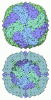
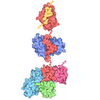
| Title | Cryo_EM structure of PACAP27_PAC1R_Beta_arrestin 1 complex | |||||||||
 Map data Map data | ||||||||||
 Sample Sample |
| |||||||||
 Keywords Keywords | GPCR / Beta arrestin1 / MEMBRANE PROTEIN/IMMUNE SYSTEM / MEMBRANE PROTEIN-IMMUNE SYSTEM complex | |||||||||
| Function / homology |  Function and homology information Function and homology informationpituitary adenylate cyclase activating polypeptide activity / development of primary female sexual characteristics / type 1 vasoactive intestinal polypeptide receptor binding / type 2 vasoactive intestinal polypeptide receptor binding / pituitary adenylate cyclase-activating polypeptide receptor activity / vasoactive intestinal polypeptide receptor activity / angiotensin receptor binding / positive regulation of chemokine (C-C motif) ligand 5 production / positive regulation of growth hormone secretion / TGFBR3 regulates TGF-beta signaling ...pituitary adenylate cyclase activating polypeptide activity / development of primary female sexual characteristics / type 1 vasoactive intestinal polypeptide receptor binding / type 2 vasoactive intestinal polypeptide receptor binding / pituitary adenylate cyclase-activating polypeptide receptor activity / vasoactive intestinal polypeptide receptor activity / angiotensin receptor binding / positive regulation of chemokine (C-C motif) ligand 5 production / positive regulation of growth hormone secretion / TGFBR3 regulates TGF-beta signaling / regulation of cellular response to oxidative stress / Activation of SMO / negative regulation of interleukin-8 production / positive regulation of small GTPase mediated signal transduction / neuropeptide hormone activity / desensitization of G protein-coupled receptor signaling pathway / NGF-independant TRKA activation / insulin secretion / arrestin family protein binding / cAMP biosynthetic process / G protein-coupled peptide receptor activity / G protein-coupled receptor internalization / stress fiber assembly / positive regulation of cAMP/PKA signal transduction / negative regulation of Notch signaling pathway / positive regulation of cardiac muscle hypertrophy / sensory perception / negative regulation of interleukin-6 production / Lysosome Vesicle Biogenesis / peptide hormone receptor binding / Golgi Associated Vesicle Biogenesis / positive regulation of Rho protein signal transduction / positive regulation of protein kinase activity / positive regulation of inositol phosphate biosynthetic process / pseudopodium / peptide hormone binding / positive regulation of calcium ion transport into cytosol / adenylate cyclase binding / positive regulation of receptor internalization / multicellular organismal response to stress / positive regulation of GTPase activity / bicellular tight junction / activation of adenylate cyclase activity / insulin-like growth factor receptor binding / negative regulation of protein ubiquitination / clathrin-coated pit / intracellular glucose homeostasis / GTPase activator activity / regulation of G protein-coupled receptor signaling pathway / cytoplasmic vesicle membrane / enzyme inhibitor activity / negative regulation of canonical NF-kappaB signal transduction / Activated NOTCH1 Transmits Signal to the Nucleus / female pregnancy / neuropeptide signaling pathway / Signaling by high-kinase activity BRAF mutants / MAP2K and MAPK activation / positive regulation of protein phosphorylation / caveola / G protein-coupled receptor binding / small GTPase binding / neuron projection development / adenylate cyclase-modulating G protein-coupled receptor signaling pathway / protein transport / Signaling by RAF1 mutants / Signaling by moderate kinase activity BRAF mutants / Paradoxical activation of RAF signaling by kinase inactive BRAF / Signaling downstream of RAS mutants / endocytic vesicle membrane / Signaling by BRAF and RAF1 fusions / response to estradiol / Glucagon-type ligand receptors / regulation of protein localization / cell-cell signaling / Cargo recognition for clathrin-mediated endocytosis / positive regulation of cold-induced thermogenesis / Clathrin-mediated endocytosis / signaling receptor activity / positive regulation of cytosolic calcium ion concentration / Thrombin signalling through proteinase activated receptors (PARs) / adenylate cyclase-activating G protein-coupled receptor signaling pathway / cytoplasmic vesicle / spermatogenesis / ubiquitin-dependent protein catabolic process / cell differentiation / G alpha (s) signalling events / molecular adaptor activity / response to ethanol / proteasome-mediated ubiquitin-dependent protein catabolic process / perikaryon / positive regulation of ERK1 and ERK2 cascade / transcription coactivator activity / cell surface receptor signaling pathway / signaling receptor complex / endosome / neuron projection / response to xenobiotic stimulus / protein ubiquitination / Ub-specific processing proteases / signaling receptor binding Similarity search - Function | |||||||||
| Biological species |  Homo sapiens (human) / synthetic construct (others) Homo sapiens (human) / synthetic construct (others) | |||||||||
| Method | single particle reconstruction / cryo EM / Resolution: 3.0 Å | |||||||||
 Authors Authors | Zhao L / Yuan Q / Zhang M | |||||||||
| Funding support |  China, 1 items China, 1 items
| |||||||||
 Citation Citation | Journal: Acta Pharmacol Sin / Year: 2026 Title: Structural basis of β-arrestin coupling and transducer selectivity in PAC1R. Authors: Min Zhang / Xin Li / Qing-Ning Yuan / Wen Hu / H Eric Xu / Li-Hua Zhao / Abstract: The pituitary adenylate cyclase-activating polypeptide receptor (PAC1R) is a class B G protein-coupled receptor (GPCR) that engages both G proteins and β-arrestins to mediate diverse signaling ...The pituitary adenylate cyclase-activating polypeptide receptor (PAC1R) is a class B G protein-coupled receptor (GPCR) that engages both G proteins and β-arrestins to mediate diverse signaling responses, yet how PAC1R adopts distinct intracellular conformations to achieve this transducer selectivity remains poorly understood. Here, we report the cryo-electron microscopy structure of PAC1R in complex with β-arrestin 1 (βarr1), revealing a core-engaged conformation. Comparison with the G-bound PAC1R structure shows that βarr1 engagement is associated with remodeling of the intracellular transmembrane bundle, including TM5 reorientation and inward movement of TM6, resulting in a receptor core geometry distinct from that of the G protein-bound state. Comparison with the βarr1-bound parathyroid hormone receptor 1 (PTH1R) structure further reveals both conserved and receptor-specific features of βarr1 engagement. Although outward displacement of the TM5 cytoplasmic end is observed in both PAC1R-βarr1 and PTH1R-βarr1 complexes, its specific direction and the resulting TM5-TM6 rearrangements differ between receptors, correlating with distinct βarr1 finger loop orientations within the receptor core. Together, these findings suggest that β-arrestin core engagement by class B GPCRs is accompanied by receptor-specific intracellular remodeling that may contribute to transducer selectivity in PAC1R. | |||||||||
| History |
|
- Structure visualization
| Supplemental images |
|---|

- Downloads & links
-EMDB archive
| Map data | emd_81097.map.gz | 299.6 MB | EMDB map data format | |
|---|---|---|---|---|
| Header (meta data) | emd-81097-v30.xmlemd-81097.xml | 17.1 KB 17.1 KB | Display Display | EMDB header |
| Images |  emd_81097.png emd_81097.png | 38.1 KB | ||
| Filedesc metadata | emd-81097.cif.gz | 6.6 KB | ||
| Archive directory |  https://data.pdbj.org/pub/emdb/structures/EMD-81097ftp://data.pdbj.org/pub/emdb/structures/EMD-81097 https://data.pdbj.org/pub/emdb/structures/EMD-81097ftp://data.pdbj.org/pub/emdb/structures/EMD-81097 | HTTPS FTP |
-Related structure data
| Related structure data |  27emMC C: citing same article ( M: atomic model generated by this map |
|---|---|
| Similar structure data |


-Links
| EMDB pages | EMDB (EBI/PDBe) / EMDataResource |
|---|---|
| Related items in Molecule of the Month |


-Map
| File | Download / File: emd_81097.map.gz / Format: CCP4 / Size: 325 MB / Type: IMAGE STORED AS FLOATING POINT NUMBER (4 BYTES) | ||||||||||||||||||||||||||||||||||||
|---|---|---|---|---|---|---|---|---|---|---|---|---|---|---|---|---|---|---|---|---|---|---|---|---|---|---|---|---|---|---|---|---|---|---|---|---|---|
| Projections & slices | Image control
Images are generated by Spider. | ||||||||||||||||||||||||||||||||||||
| Voxel size | X=Y=Z: 0.73 Å | ||||||||||||||||||||||||||||||||||||
| Density |
| ||||||||||||||||||||||||||||||||||||
| Symmetry | Space group: 1 | ||||||||||||||||||||||||||||||||||||
| Details | EMDB XML:
|
 Z (Sec.)
 Y (Row.)
 X (Col.)


-Supplemental data
- Sample components
-Entire : Cryo_EM structure of PACAP27_PAC1R_Beta_arrestin 1 complex
| Entire | Name: Cryo_EM structure of PACAP27_PAC1R_Beta_arrestin 1 complex |
|---|---|
| Components |
|
-Supramolecule #1: Cryo_EM structure of PACAP27_PAC1R_Beta_arrestin 1 complex
| Supramolecule | Name: Cryo_EM structure of PACAP27_PAC1R_Beta_arrestin 1 complex type: complex / ID: 1 / Parent: 0 / Macromolecule list: #1-#3, #5, #4 |
|---|---|
| Source (natural) | Organism: Homo sapiens (human) |
-Macromolecule #1: Beta-arrestin-1
| Macromolecule | Name: Beta-arrestin-1 / type: protein_or_peptide / ID: 1 / Number of copies: 1 / Enantiomer: LEVO |
|---|---|
| Source (natural) | Organism: Homo sapiens (human) |
| Molecular weight | Theoretical: 43.985207 KDa |
| Recombinant expression | Organism:   Spodoptera frugiperda (fall armyworm) Spodoptera frugiperda (fall armyworm) |
| Sequence | String: MKGTRVFKKA SPNGKLTVYL GKRDFVDHID LVDPVDGVVL VDPEYLKERR VYVTLTCAFR YGREDLDVLG LTFRKDLFVA NVQSFPPAP EDKKPLTRLQ ERLIKKLGEH AYPFTFEIPP NLPCSVTLQP GPEDTGKACG VDYEVKAFCA ENLEEKIHKR N SVRLVIRK ...String: MKGTRVFKKA SPNGKLTVYL GKRDFVDHID LVDPVDGVVL VDPEYLKERR VYVTLTCAFR YGREDLDVLG LTFRKDLFVA NVQSFPPAP EDKKPLTRLQ ERLIKKLGEH AYPFTFEIPP NLPCSVTLQP GPEDTGKACG VDYEVKAFCA ENLEEKIHKR N SVRLVIRK VQYAPERPGP QPTAETTRQF LMSDKPLHLE ASLDKEIYYH GEPISVNVHV TNNTNKTVKK IKISVRQYAD IC LFNTAQY KCPVAMEEAD DTVAPSSTFC KVYTLTPFLC NNREKRGLAL DGKLKHEDTN LASSTLLREG ANREILGIIV SYK VKVKLV VSRGGLLGDL ASSDVAVELP FTLMHPKPKE EPPHREVPEN ETPVDTNLIE LDTNDDDAAA EDFAR UniProtKB: Beta-arrestin-1 |
-Macromolecule #2: Fab30H
| Macromolecule | Name: Fab30H / type: protein_or_peptide / ID: 2 / Number of copies: 1 / Enantiomer: LEVO |
|---|---|
| Source (natural) | Organism: synthetic construct (others) |
| Molecular weight | Theoretical: 24.584467 KDa |
| Recombinant expression | Organism: Spodoptera frugiperda (fall armyworm) |
| Sequence | String: MEISEVQLVE SGGGLVQPGG SLRLSCAASG FNVYSSSIHW VRQAPGKGLE WVASISSYYC YTYYADSVKG RFTISADTSK NTAYLQMNS LRAEDTAVYY CARSRQFWYS GLDYWGQGTL VTVSSASTKG PSVFPLAPSS KSTSGGTAAL GCLVKDYFPE P VTVSWNSG ...String: MEISEVQLVE SGGGLVQPGG SLRLSCAASG FNVYSSSIHW VRQAPGKGLE WVASISSYYC YTYYADSVKG RFTISADTSK NTAYLQMNS LRAEDTAVYY CARSRQFWYS GLDYWGQGTL VTVSSASTKG PSVFPLAPSS KSTSGGTAAL GCLVKDYFPE P VTVSWNSG ALTSGVHTFP AVLQSSGLYS LSSVVTVPSS SLGTQTYICN VNHKPSNTKV DKKVEPKSCD KT |
-Macromolecule #3: Fab30L
| Macromolecule | Name: Fab30L / type: protein_or_peptide / ID: 3 / Number of copies: 1 / Enantiomer: LEVO |
|---|---|
| Source (natural) | Organism: synthetic construct (others) |
| Molecular weight | Theoretical: 23.435064 KDa |
| Recombinant expression | Organism: Spodoptera frugiperda (fall armyworm) |
| Sequence | String: SDIQMTQSPS SLSASVGDRV TITCRASQSV SSAVAWYQQK PGKAPKLLIY SASSLYSGVP SRFSGSRSGT DFTLTISSLQ PEDFATYYC QQYKYVPVTF GQGTKVEIKR TVAAPSVFIF PPSDSQLKSG TASVVCLLNN FYPREAKVQW KVDNALQSGN S QESVTEQD ...String: SDIQMTQSPS SLSASVGDRV TITCRASQSV SSAVAWYQQK PGKAPKLLIY SASSLYSGVP SRFSGSRSGT DFTLTISSLQ PEDFATYYC QQYKYVPVTF GQGTKVEIKR TVAAPSVFIF PPSDSQLKSG TASVVCLLNN FYPREAKVQW KVDNALQSGN S QESVTEQD SKDSTYSLSS TLTLSKADYE KHKVYACEVT HQGLSSPVTK SFNRGEC |
-Macromolecule #4: Pituitary adenylate cyclase-activating polypeptide 27
| Macromolecule | Name: Pituitary adenylate cyclase-activating polypeptide 27 / type: protein_or_peptide / ID: 4 / Number of copies: 1 / Enantiomer: LEVO |
|---|---|
| Source (natural) | Organism: Homo sapiens (human) |
| Molecular weight | Theoretical: 3.15265 KDa |
| Sequence | String: HSDGIFTDSY SRYRKQMAVK KYLAAVL(NH2) UniProtKB: Pituitary adenylate cyclase-activating polypeptide |
-Macromolecule #5: Pituitary adenylate cyclase-activating polypeptide type I receptor
| Macromolecule | Name: Pituitary adenylate cyclase-activating polypeptide type I receptor type: protein_or_peptide / ID: 5 / Number of copies: 1 / Enantiomer: LEVO |
|---|---|
| Source (natural) | Organism: Homo sapiens (human) |
| Molecular weight | Theoretical: 51.349129 KDa |
| Recombinant expression | Organism: Spodoptera frugiperda (fall armyworm) |
| Sequence | String: MHSDCIFKKE QAMCLEKIQR ANELMGFNDS SPGCPGMWDN ITCWKPAHVG EMVLVSCPEL FRIFNPDQVW ETETIGESDF GDSNSLDLS DMGVVSRNCT EDGWSEPFPH YFDACGFDEY ESETGDQDYY YLSVKALYTV GYSTSLVTLT TAMVILCRFR K LHCTRNFI ...String: MHSDCIFKKE QAMCLEKIQR ANELMGFNDS SPGCPGMWDN ITCWKPAHVG EMVLVSCPEL FRIFNPDQVW ETETIGESDF GDSNSLDLS DMGVVSRNCT EDGWSEPFPH YFDACGFDEY ESETGDQDYY YLSVKALYTV GYSTSLVTLT TAMVILCRFR K LHCTRNFI HMNLFVSFML RAISVFIKDW ILYAEQDSNH CFISTVECKA VMVFFHYCVV SNYFWLFIEG LYLFTLLVET FF PERRYFY WYTIIGWGTP TVCVTVWATL RLYFDDTGCW DMNDSTALWW VIKGPVVGSI MVNFVLFIGI IVILVQKLQS PDM GGNESS IYLRLARSTL LLIPLFGIHY TVFAFSPENV SKRERLVFEL GLGSFQGFVV AVLYCFLNGE VQAEIKRKWR SWKV NRYFA VDFKHRHPSA RGRTPPSLGP QDESC(TPO)(TPO)A(SEP)(SEP) (SEP)LAKDTSS UniProtKB: Pituitary adenylate cyclase-activating polypeptide type I receptor |
-Macromolecule #6: water
| Macromolecule | Name: water / type: ligand / ID: 6 / Number of copies: 1 / Formula: HOH |
|---|---|
| Molecular weight | Theoretical: 18.015 Da |
| Chemical component information |  ChemComp-HOH: |
-Experimental details
-Structure determination
| Method | cryo EM |
|---|---|
 Processing Processing | single particle reconstruction |
| Aggregation state | particle |
-Sample preparation
| Buffer | pH: 7.04 |
|---|---|
| Vitrification | Cryogen name: ETHANE |
- Electron microscopy
| Microscope | TFS KRIOS |
|---|---|
| Image recording | Film or detector model: FEI FALCON IV (4k x 4k) / Average electron dose: 50.0 e/Å2 |
| Electron beam | Acceleration voltage: 300 kV / Electron source:  FIELD EMISSION GUN FIELD EMISSION GUN |
| Electron optics | Illumination mode: FLOOD BEAM / Imaging mode: BRIGHT FIELD / Nominal defocus max: 18.0 µm / Nominal defocus min: 8.0 µm |
| Experimental equipment |  Model: Titan Krios / Image courtesy: FEI Company |
