National Institutes of Health/National Institute Of Allergy and Infectious Diseases (NIH/NIAID)
R01AI179188
United States
National Institutes of Health/National Institute Of Allergy and Infectious Diseases (NIH/NIAID)
P50-AI150464
United States
Howard Hughes Medical Institute (HHMI)
United States
Citation
Journal: Nat Commun / Year: 2026 Title: N-Glycans modulate tilting of HIV-1 envelope glycoprotein. Authors: Mohamed Shehata / Lorenzo Casalino / Madeleine Duquette / Siyu Chen / Alex Flaherty / Patrick M Waller / Elizabeth Villa / Rommie E Amaro / Abstract: Human immunodeficiency virus-1 (HIV-1) remains a global health crisis, with over 40 million people living with the virus and no effective vaccine available. Central to HIV infection and immune ...Human immunodeficiency virus-1 (HIV-1) remains a global health crisis, with over 40 million people living with the virus and no effective vaccine available. Central to HIV infection and immune evasion is the envelope glycoprotein (Env), a heavily glycosylated class I fusion protein that mediates viral entry and is the sole immunogenic target. Despite the recent advancements provided by imaging techniques, the characterization of Env's structure and dynamics within its native membrane environment remains incomplete. Here, we present microsecond-long, all-atom molecular dynamics simulations of the full-length, glycosylated Env glycoprotein embedded in a biologically relevant lipid bilayer. Our simulations, corroborated by cryo-electron tomography, reveal a pronounced tilting motion of Env relative to the membrane. Importantly, we identify a critical role for N-linked glycans at N88 and N611 in modulating the transition to tilted conformations. Alongside illuminating the sites of vulnerability within the glycan shield, the results presented here underscore Env tilting dynamics as a feature that can be leveraged in immunogen design.
In the structure databanks used in Yorodumi, some data are registered as the other names, "COVID-19 virus" and "2019-nCoV". Here are the details of the virus and the list of structure data.
Jan 31, 2019. EMDB accession codes are about to change! (news from PDBe EMDB page)
EMDB accession codes are about to change! (news from PDBe EMDB page)
The allocation of 4 digits for EMDB accession codes will soon come to an end. Whilst these codes will remain in use, new EMDB accession codes will include an additional digit and will expand incrementally as the available range of codes is exhausted. The current 4-digit format prefixed with “EMD-” (i.e. EMD-XXXX) will advance to a 5-digit format (i.e. EMD-XXXXX), and so on. It is currently estimated that the 4-digit codes will be depleted around Spring 2019, at which point the 5-digit format will come into force.
The EM Navigator/Yorodumi systems omit the EMD- prefix.
Related info.:Q: What is EMD? / ID/Accession-code notation in Yorodumi/EM Navigator
Yorodumi is a browser for structure data from EMDB, PDB, SASBDB, etc.
This page is also the successor to EM Navigator detail page, and also detail information page/front-end page for Omokage search.
The word "yorodu" (or yorozu) is an old Japanese word meaning "ten thousand". "mi" (miru) is to see.
Related info.:EMDB / PDB / SASBDB / Comparison of 3 databanks / Yorodumi Search / Aug 31, 2016. New EM Navigator & Yorodumi / Yorodumi Papers / Jmol/JSmol / Function and homology information / Changes in new EM Navigator and Yorodumi
 Movie
Movie Controller


 Open data
 Basic information
 Map data
 Sample
 Keywords
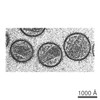 Human immunodeficiency virus 1
 Authors
 United States, 3 items
  Citation
 Structure visualization
 Downloads & links
 EMDB map data format
 emd_75641.png
 http://ftp.pdbj.org/pub/emdb/structures/EMD-75641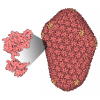
 Z (Sec.)
 Y (Row.)
 X (Col.)


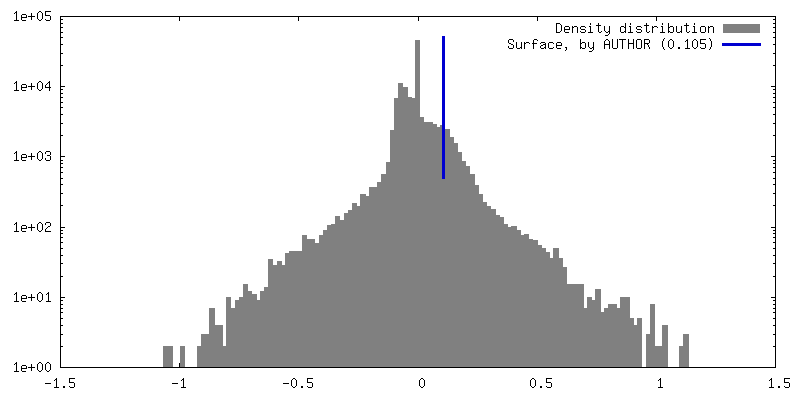


 Sample components
 Processing
 Electron microscopy
 FIELD EMISSION GUN

