[English] 日本語
Yorodumi
- EMDB-75527: DNA Ligase IIIa bound to nucleosome containing a nick at SHL-2 (c... -

+
Open data


ID or keywords:

Loading...

-
Basic information

Entry
Database: EMDB / ID: EMD-75527
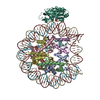
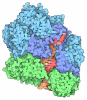
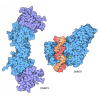
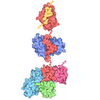
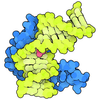
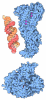
TitleDNA Ligase IIIa bound to nucleosome containing a nick at SHL-2 (composite)
Map data
Sample
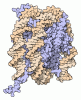
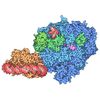
  • Complex: DNA Ligase IIIa bound to a nucleosome containing a nick at SHL-2
    • Protein or peptide: Histone H3.2
    • Protein or peptide: Histone H4
    • Protein or peptide: Histone H2A type 1-H
    • Protein or peptide: Histone H2B type 2-F
    • DNA: 601 I strand (non-damaged strand)
    • DNA: 601 J strand (damaged strand 1)
    • DNA: 601 K strand (damaged strand 2)
  • Protein or peptide: DNA ligase 3
  • Ligand: ADENOSINE MONOPHOSPHATE
KeywordsNucleosome / DNA Ligase IIIa / DNA Repair / DNA BINDING PROTEIN / DNA BINDING PROTEIN-DNA complex
Function / homology
Function and homology information


DNA ligase III-XRCC1 complex / negative regulation of mitochondrial DNA replication / DNA ligase activity / DNA ligase (ATP) / DNA ligase (ATP) activity / Strand-asynchronous mitochondrial DNA replication / double-strand break repair via alternative nonhomologous end joining / lagging strand elongation / HDR through MMEJ (alt-NHEJ) / Resolution of AP sites via the single-nucleotide replacement pathway ...DNA ligase III-XRCC1 complex / negative regulation of mitochondrial DNA replication / DNA ligase activity / DNA ligase (ATP) / DNA ligase (ATP) activity / Strand-asynchronous mitochondrial DNA replication / double-strand break repair via alternative nonhomologous end joining / lagging strand elongation / HDR through MMEJ (alt-NHEJ) / Resolution of AP sites via the single-nucleotide replacement pathway / mitochondrial DNA repair / DNA biosynthetic process / APEX1-Independent Resolution of AP Sites via the Single Nucleotide Replacement Pathway / negative regulation of megakaryocyte differentiation / protein localization to CENP-A containing chromatin / base-excision repair, gap-filling / Chromatin modifying enzymes / Replacement of protamines by nucleosomes in the male pronucleus / CENP-A containing nucleosome / Packaging Of Telomere Ends / Recognition and association of DNA glycosylase with site containing an affected purine / Cleavage of the damaged purine / Deposition of new CENPA-containing nucleosomes at the centromere / telomere organization / Recognition and association of DNA glycosylase with site containing an affected pyrimidine / Cleavage of the damaged pyrimidine / Interleukin-7 signaling / RNA Polymerase I Promoter Opening / Inhibition of DNA recombination at telomere / Assembly of the ORC complex at the origin of replication / Meiotic synapsis / SUMOylation of chromatin organization proteins / Regulation of endogenous retroelements by the Human Silencing Hub (HUSH) complex / DNA methylation / Condensation of Prophase Chromosomes / Chromatin modifications during the maternal to zygotic transition (MZT) / SIRT1 negatively regulates rRNA expression / HCMV Late Events / Gap-filling DNA repair synthesis and ligation in GG-NER / ERCC6 (CSB) and EHMT2 (G9a) positively regulate rRNA expression / PRC2 methylates histones and DNA / Regulation of endogenous retroelements by KRAB-ZFP proteins / Defective pyroptosis / HDACs deacetylate histones / Regulation of endogenous retroelements by Piwi-interacting RNAs (piRNAs) / mitochondrion organization / Nonhomologous End-Joining (NHEJ) / RNA Polymerase I Promoter Escape / Transcriptional regulation by small RNAs / Formation of the beta-catenin:TCF transactivating complex / Activated PKN1 stimulates transcription of AR (androgen receptor) regulated genes KLK2 and KLK3 / HDMs demethylate histones / RUNX1 regulates genes involved in megakaryocyte differentiation and platelet function / G2/M DNA damage checkpoint / base-excision repair / Negative Regulation of CDH1 Gene Transcription / NoRC negatively regulates rRNA expression / double-strand break repair via homologous recombination / B-WICH complex positively regulates rRNA expression / PKMTs methylate histone lysines / DNA Damage/Telomere Stress Induced Senescence / Pre-NOTCH Transcription and Translation / Meiotic recombination / Activation of anterior HOX genes in hindbrain development during early embryogenesis / Metalloprotease DUBs / Transcriptional regulation of granulopoiesis / RMTs methylate histone arginines / HCMV Early Events / Gap-filling DNA repair synthesis and ligation in TC-NER / structural constituent of chromatin / UCH proteinases / nucleosome / double-strand break repair / heterochromatin formation / nucleosome assembly / Recruitment and ATM-mediated phosphorylation of repair and signaling proteins at DNA double strand breaks / HATs acetylate histones / Factors involved in megakaryocyte development and platelet production / RUNX1 regulates transcription of genes involved in differentiation of HSCs / MLL4 and MLL3 complexes regulate expression of PPARG target genes in adipogenesis and hepatic steatosis / chromatin organization / Processing of DNA double-strand break ends / Senescence-Associated Secretory Phenotype (SASP) / Oxidative Stress Induced Senescence / Estrogen-dependent gene expression / gene expression / chromosome, telomeric region / Ub-specific processing proteases / mitochondrial matrix / Amyloid fiber formation / protein heterodimerization activity / cell division / chromatin binding / negative regulation of transcription by RNA polymerase II / protein-containing complex / mitochondrion / DNA binding / RNA binding / extracellular exosome / extracellular region
Similarity search - Function
DNA ligase 3, BRCT domain / DNA ligase 3 BRCT domain / : / DNA ligase, ATP-dependent / DNA ligase, ATP-dependent, N-terminal / DNA ligase, ATP-dependent, N-terminal domain superfamily / DNA ligase N terminus / ATP-dependent DNA ligase AMP-binding site. / ATP-dependent DNA ligase signature 2. / DNA ligase, ATP-dependent, C-terminal ...DNA ligase 3, BRCT domain / DNA ligase 3 BRCT domain / : / DNA ligase, ATP-dependent / DNA ligase, ATP-dependent, N-terminal / DNA ligase, ATP-dependent, N-terminal domain superfamily / DNA ligase N terminus / ATP-dependent DNA ligase AMP-binding site. / ATP-dependent DNA ligase signature 2. / DNA ligase, ATP-dependent, C-terminal / ATP dependent DNA ligase C terminal region / Zinc finger poly(ADP-ribose) polymerase (PARP)-type signature. / Zinc finger, PARP-type superfamily / Poly(ADP-ribose) polymerase and DNA-Ligase Zn-finger region / Zinc finger poly(ADP-ribose) polymerase (PARP)-type profile. / Poly(ADP-ribose) polymerase and DNA-Ligase Zn-finger region / DNA ligase, ATP-dependent, conserved site / Zinc finger, PARP-type / ATP-dependent DNA ligase family profile. / DNA ligase, ATP-dependent, central / ATP dependent DNA ligase domain / breast cancer carboxy-terminal domain / BRCT domain profile. / BRCT domain / BRCT domain superfamily / : / Histone H2A conserved site / Histone H2A signature. / Histone H2B signature. / Histone H2B / Histone H2B / Histone H2A, C-terminal domain / C-terminus of histone H2A / Histone 2A / Histone H2A / TATA box binding protein associated factor / TATA box binding protein associated factor (TAF), histone-like fold domain / Histone H4, conserved site / Histone H4 signature. / Histone H4 / Histone H4 / CENP-T/Histone H4, histone fold / Centromere kinetochore component CENP-T histone fold / Histone H3 signature 1. / Histone H3 signature 2. / Histone H3 / Histone H3/CENP-A / Histone H2A/H2B/H3 / Core histone H2A/H2B/H3/H4 domain / Histone-fold / Nucleic acid-binding, OB-fold
Similarity search - Domain/homology
DNA ligase 3 / Histone H4 / Histone H2B type 2-F / Histone H3.2 / Histone H2A type 1-H
Similarity search - Component
Biological speciesHomo sapiens (human) / synthetic construct (others)
Methodsingle particle reconstruction / cryo EM / Resolution: 3.0 Å
AuthorsBoesch DJ / Weaver TM
Funding support1 items
OrganizationGrant numberCountry
Not funded
CitationJournal: To Be Published
Title: DNA Ligase IIIa bound to nucleosome containing a nick at SHL-2
Authors: Boesch DJ / Weaver TM
History
DepositionFeb 12, 2026-
Header (metadata) releaseMar 18, 2026-
Map releaseMar 18, 2026-
UpdateMar 18, 2026-
Current statusMar 18, 2026Processing site: RCSB / Status: Released

-
Structure visualization

Supplemental images

Downloads & links

-
Map

FileDownload / File: emd_75527.map.gz / Format: CCP4 / Size: 244.1 MB / Type: IMAGE STORED AS FLOATING POINT NUMBER (4 BYTES)
Projections & slices

Image control

Size
Brightness
Contrast
Others
AxesX (Sec.)Y (Row.)Z (Col.)
0.65 Å/pix.
x 400 pix.
= 260.8 Å
0.65 Å/pix.
x 400 pix.
= 260.8 Å
0.65 Å/pix.
x 400 pix.
= 260.8 Å

Surface

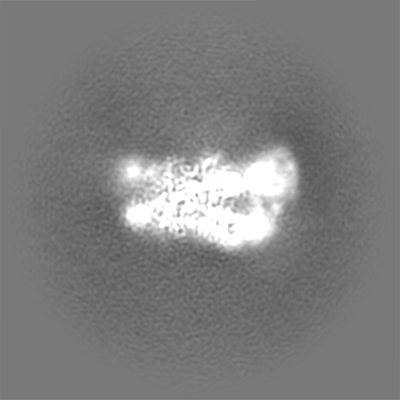
Projections

Slices (1/3)

Slices (1/2)

Slices (2/3)

Images are generated by Spider.

Voxel sizeX=Y=Z: 0.652 Å
Density
Contour LevelBy AUTHOR: 5.5
Minimum - Maximum-14.297381 - 33.351306999999998
Average (Standard dev.)0.0034274906 (±1.0198855)
SymmetrySpace group: 1
Details

EMDB XML:

Map geometry
Axis orderZYX
Origin000
Dimensions400400400
Spacing400400400
CellA=B=C: 260.80002 Å
α=β=γ: 90.0 °

-
Supplemental data

-
Sample components

+
Entire : DNA Ligase IIIa bound to a nucleosome containing a nick at SHL-2

EntireName: DNA Ligase IIIa bound to a nucleosome containing a nick at SHL-2
Components
  • Complex: DNA Ligase IIIa bound to a nucleosome containing a nick at SHL-2
    • Protein or peptide: Histone H3.2
    • Protein or peptide: Histone H4
    • Protein or peptide: Histone H2A type 1-H
    • Protein or peptide: Histone H2B type 2-F
    • DNA: 601 I strand (non-damaged strand)
    • DNA: 601 J strand (damaged strand 1)
    • DNA: 601 K strand (damaged strand 2)
  • Protein or peptide: DNA ligase 3
  • Ligand: ADENOSINE MONOPHOSPHATE

+
Supramolecule #1: DNA Ligase IIIa bound to a nucleosome containing a nick at SHL-2

SupramoleculeName: DNA Ligase IIIa bound to a nucleosome containing a nick at SHL-2
type: complex / ID: 1 / Parent: 0 / Macromolecule list: #1-#7
Source (natural)Organism: Homo sapiens (human)

+
Macromolecule #1: Histone H3.2

MacromoleculeName: Histone H3.2 / type: protein_or_peptide / ID: 1 / Number of copies: 2 / Enantiomer: LEVO
Source (natural)Organism: Homo sapiens (human)
Molecular weightTheoretical: 11.228073 KDa
Recombinant expressionOrganism: Escherichia coli (E. coli)
SequenceString:
PHRYRPGTVA LREIRRYQKS TELLIRKLPF QRLVREIAQD FKTDLRFQSS AVMALQEASE AYLVGLFEDT NLAAIHAKRV TIMPKDIQL ARRIRGE

UniProtKB: Histone H3.2

+
Macromolecule #2: Histone H4

MacromoleculeName: Histone H4 / type: protein_or_peptide / ID: 2 / Number of copies: 2 / Enantiomer: LEVO
Source (natural)Organism: Homo sapiens (human)
Molecular weightTheoretical: 9.123692 KDa
Recombinant expressionOrganism: Escherichia coli (E. coli)
SequenceString:
LRDNIQGITK PAIRRLARRG GVKRISGLIY EETRGVLKVF LENVIRDAVT YTEHAKRKTV TAMDVVYALK RQGRTLYGFG

UniProtKB: Histone H4

+
Macromolecule #3: Histone H2A type 1-H

MacromoleculeName: Histone H2A type 1-H / type: protein_or_peptide / ID: 3 / Number of copies: 2 / Enantiomer: LEVO
Source (natural)Organism: Homo sapiens (human)
Molecular weightTheoretical: 11.692677 KDa
Recombinant expressionOrganism: Escherichia coli (E. coli)
SequenceString:
RAKAKTRSSR AGLQFPVGRV HRLLRKGNYA ERVGAGAPVY LAAVLEYLTA EILELAGNAA RDNKKTRIIP RHLQLAIRND EELNKLLGK VTIAQGGVLP NIQAVLLP

UniProtKB: Histone H2A type 1-H

+
Macromolecule #4: Histone H2B type 2-F

MacromoleculeName: Histone H2B type 2-F / type: protein_or_peptide / ID: 4 / Number of copies: 2 / Enantiomer: LEVO
Source (natural)Organism: Homo sapiens (human)
Molecular weightTheoretical: 10.249723 KDa
Recombinant expressionOrganism: Escherichia coli (E. coli)
SequenceString:
RKESYSVYVY KVLKQVHPDT GISSKAMGIM NSFVNDIFER IAGEASRLAH YNKRSTITSR EIQTAVRLLL PGELAKHAVS EGTKAVTKY TSS

UniProtKB: Histone H2B type 2-F

+
Macromolecule #8: DNA ligase 3

MacromoleculeName: DNA ligase 3 / type: protein_or_peptide / ID: 8 / Number of copies: 1 / Enantiomer: LEVO / EC number: DNA ligase (ATP)
Source (natural)Organism: Homo sapiens (human)
Molecular weightTheoretical: 23.847949 KDa
Recombinant expressionOrganism: Escherichia coli (E. coli)
SequenceString: QASLMTPVQP MLAEACKSVE YAMKKCPNGM FSEIKYDGER VQVHKNGDHF SYFSRSLKPV LPHKVAHFKD YIPQAFPGGH SMILDSEVL LIDNKTGKPL PFGTLGVHKK AAFQDANVCL FVFDCIYFND VSLMDRPLCE RRKFLHDNMV EIPNRIMFSE M KRVTKALD ...String:
QASLMTPVQP MLAEACKSVE YAMKKCPNGM FSEIKYDGER VQVHKNGDHF SYFSRSLKPV LPHKVAHFKD YIPQAFPGGH SMILDSEVL LIDNKTGKPL PFGTLGVHKK AAFQDANVCL FVFDCIYFND VSLMDRPLCE RRKFLHDNMV EIPNRIMFSE M KRVTKALD LADMITRVIQ EGLEGLVLKD VKGTYEPGKR HWLKVKKDYL

UniProtKB: DNA ligase 3

+
Macromolecule #5: 601 I strand (non-damaged strand)

MacromoleculeName: 601 I strand (non-damaged strand) / type: dna / ID: 5 / Number of copies: 1 / Classification: DNA
Source (natural)Organism: synthetic construct (others)
Molecular weightTheoretical: 45.13877 KDa
SequenceString: (DA)(DT)(DC)(DG)(DA)(DG)(DA)(DA)(DT)(DC) (DC)(DC)(DG)(DG)(DT)(DG)(DC)(DC)(DG)(DA) (DG)(DG)(DC)(DC)(DG)(DC)(DT)(DC)(DA) (DA)(DT)(DT)(DG)(DG)(DT)(DC)(DG)(DT)(DA) (DG) (DA)(DC)(DA)(DG)(DC)(DT) ...String:
(DA)(DT)(DC)(DG)(DA)(DG)(DA)(DA)(DT)(DC) (DC)(DC)(DG)(DG)(DT)(DG)(DC)(DC)(DG)(DA) (DG)(DG)(DC)(DC)(DG)(DC)(DT)(DC)(DA) (DA)(DT)(DT)(DG)(DG)(DT)(DC)(DG)(DT)(DA) (DG) (DA)(DC)(DA)(DG)(DC)(DT)(DC)(DT) (DA)(DG)(DC)(DA)(DC)(DC)(DG)(DC)(DT)(DT) (DA)(DA) (DA)(DC)(DG)(DC)(DA)(DC)(DG) (DT)(DA)(DC)(DG)(DC)(DG)(DC)(DT)(DG)(DT) (DC)(DC)(DC) (DC)(DC)(DG)(DC)(DG)(DT) (DT)(DT)(DT)(DA)(DA)(DC)(DC)(DG)(DC)(DC) (DA)(DA)(DG)(DG) (DG)(DG)(DA)(DT)(DT) (DA)(DC)(DT)(DC)(DC)(DC)(DT)(DA)(DG)(DT) (DC)(DT)(DC)(DC)(DA) (DG)(DG)(DC)(DA) (DC)(DG)(DT)(DG)(DT)(DC)(DA)(DG)(DA)(DT) (DA)(DT)(DA)(DT)(DA)(DC) (DA)(DT)(DC) (DC)(DG)(DA)(DT)

+
Macromolecule #6: 601 J strand (damaged strand 1)

MacromoleculeName: 601 J strand (damaged strand 1) / type: dna / ID: 6 / Number of copies: 1 / Classification: DNA
Source (natural)Organism: synthetic construct (others)
Molecular weightTheoretical: 17.352105 KDa
SequenceString: (DA)(DT)(DC)(DG)(DG)(DA)(DT)(DG)(DT)(DA) (DT)(DA)(DT)(DA)(DT)(DC)(DT)(DG)(DA)(DC) (DA)(DC)(DG)(DT)(DG)(DC)(DC)(DT)(DG) (DG)(DA)(DG)(DA)(DC)(DT)(DA)(DG)(DG)(DG) (DA) (DG)(DT)(DA)(DA)(DT)(DC) ...String:
(DA)(DT)(DC)(DG)(DG)(DA)(DT)(DG)(DT)(DA) (DT)(DA)(DT)(DA)(DT)(DC)(DT)(DG)(DA)(DC) (DA)(DC)(DG)(DT)(DG)(DC)(DC)(DT)(DG) (DG)(DA)(DG)(DA)(DC)(DT)(DA)(DG)(DG)(DG) (DA) (DG)(DT)(DA)(DA)(DT)(DC)(DC)(DC) (DC)(DT)(DT)(DG)(DG)(DC)(DG)(DG)

+
Macromolecule #7: 601 K strand (damaged strand 2)

MacromoleculeName: 601 K strand (damaged strand 2) / type: dna / ID: 7 / Number of copies: 1 / Classification: DNA
Source (natural)Organism: synthetic construct (others)
Molecular weightTheoretical: 28.212986 KDa
SequenceString: (DT)(DT)(DA)(DA)(DA)(DA)(DC)(DG)(DC)(DG) (DG)(DG)(DG)(DG)(DA)(DC)(DA)(DG)(DC)(DG) (DC)(DG)(DT)(DA)(DC)(DG)(DT)(DG)(DC) (DG)(DT)(DT)(DT)(DA)(DA)(DG)(DC)(DG)(DG) (DT) (DG)(DC)(DT)(DA)(DG)(DA) ...String:
(DT)(DT)(DA)(DA)(DA)(DA)(DC)(DG)(DC)(DG) (DG)(DG)(DG)(DG)(DA)(DC)(DA)(DG)(DC)(DG) (DC)(DG)(DT)(DA)(DC)(DG)(DT)(DG)(DC) (DG)(DT)(DT)(DT)(DA)(DA)(DG)(DC)(DG)(DG) (DT) (DG)(DC)(DT)(DA)(DG)(DA)(DG)(DC) (DT)(DG)(DT)(DC)(DT)(DA)(DC)(DG)(DA)(DC) (DC)(DA) (DA)(DT)(DT)(DG)(DA)(DG)(DC) (DG)(DG)(DC)(DC)(DT)(DC)(DG)(DG)(DC)(DA) (DC)(DC)(DG) (DG)(DG)(DA)(DT)(DT)(DC) (DT)(DC)(DG)(DA)(DT)

+
Macromolecule #9: ADENOSINE MONOPHOSPHATE
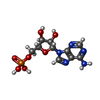
MacromoleculeName: ADENOSINE MONOPHOSPHATE / type: ligand / ID: 9 / Number of copies: 1 / Formula: AMP
Molecular weightTheoretical: 347.221 Da
Chemical component information

ChemComp-AMP:
ADENOSINE MONOPHOSPHATE / AMP*YM

-
Experimental details

-
Structure determination

Methodcryo EM
Processingsingle particle reconstruction
Aggregation stateparticle

-
Sample preparation

BufferpH: 7.5
VitrificationCryogen name: ETHANE

-
Electron microscopy

MicroscopeTFS KRIOS
Image recordingFilm or detector model: GATAN K3 (6k x 4k) / Average electron dose: 50.0 e/Å2
Electron beamAcceleration voltage: 300 kV / Electron source: FIELD EMISSION GUN
Electron opticsIllumination mode: FLOOD BEAM / Imaging mode: BRIGHT FIELD / Nominal defocus max: 1.8 µm / Nominal defocus min: 1.2 µm
Experimental equipment
Model: Titan Krios / Image courtesy: FEI Company

+
Image processing #1

Image processing ID1
CTF correctionSoftware - Name: cryoSPARC / Type: PHASE FLIPPING AND AMPLITUDE CORRECTION
Startup modelType of model: PDB ENTRY
PDB model - PDB ID:
Final reconstructionResolution.type: BY AUTHOR / Resolution: 3.0 Å / Resolution method: FSC 0.143 CUT-OFF / Software - Name: cryoSPARC / Number images used: 50548
Initial angle assignmentType: MAXIMUM LIKELIHOOD
Final angle assignmentType: MAXIMUM LIKELIHOOD

+
Image processing #2

Image processing ID2
CTF correctionSoftware - Name: cryoSPARC / Type: PHASE FLIPPING AND AMPLITUDE CORRECTION
Startup modelType of model: PDB ENTRY
PDB model - PDB ID:
Final reconstructionResolution.type: BY AUTHOR / Resolution: 3.0 Å / Resolution method: FSC 0.143 CUT-OFF / Software - Name: cryoSPARC / Number images used: 50548
Initial angle assignmentType: MAXIMUM LIKELIHOOD
Final angle assignmentType: MAXIMUM LIKELIHOOD

+
Image processing #3

Image processing ID3
CTF correctionSoftware - Name: cryoSPARC / Type: PHASE FLIPPING AND AMPLITUDE CORRECTION
Startup modelType of model: PDB ENTRY
PDB model - PDB ID:
Final reconstructionResolution.type: BY AUTHOR / Resolution: 3.0 Å / Resolution method: FSC 0.143 CUT-OFF / Software - Name: cryoSPARC / Number images used: 50548
Initial angle assignmentType: MAXIMUM LIKELIHOOD
Final angle assignmentType: MAXIMUM LIKELIHOOD

+
Image processing #4

Image processing ID4
CTF correctionSoftware - Name: cryoSPARC / Type: PHASE FLIPPING AND AMPLITUDE CORRECTION
Startup modelType of model: PDB ENTRY
PDB model - PDB ID:
Final reconstructionResolution.type: BY AUTHOR / Resolution: 3.0 Å / Resolution method: FSC 0.143 CUT-OFF / Software - Name: cryoSPARC / Number images used: 50548
Initial angle assignmentType: MAXIMUM LIKELIHOOD
Final angle assignmentType: MAXIMUM LIKELIHOOD

+
About Yorodumi

-
News

-
Feb 9, 2022. New format data for meta-information of EMDB entries

New format data for meta-information of EMDB entries

  • Version 3 of the EMDB header file is now the official format.
  • The previous official version 1.9 will be removed from the archive.

Related info.:EMDB header

External links:wwPDB to switch to version 3 of the EMDB data model

-
Aug 12, 2020. Covid-19 info

Covid-19 info

URL: https://pdbj.org/emnavi/covid19.php

New page: Covid-19 featured information page in EM Navigator.

Related info.:Covid-19 info / Mar 5, 2020. Novel coronavirus structure data

+
Mar 5, 2020. Novel coronavirus structure data

Novel coronavirus structure data

Related info.:Yorodumi Speices / Aug 12, 2020. Covid-19 info

External links:COVID-19 featured content - PDBj / Molecule of the Month (242):Coronavirus Proteases

+
Jan 31, 2019. EMDB accession codes are about to change! (news from PDBe EMDB page)

EMDB accession codes are about to change! (news from PDBe EMDB page)

  • The allocation of 4 digits for EMDB accession codes will soon come to an end. Whilst these codes will remain in use, new EMDB accession codes will include an additional digit and will expand incrementally as the available range of codes is exhausted. The current 4-digit format prefixed with “EMD-” (i.e. EMD-XXXX) will advance to a 5-digit format (i.e. EMD-XXXXX), and so on. It is currently estimated that the 4-digit codes will be depleted around Spring 2019, at which point the 5-digit format will come into force.
  • The EM Navigator/Yorodumi systems omit the EMD- prefix.

Related info.:Q: What is EMD? / ID/Accession-code notation in Yorodumi/EM Navigator

External links:EMDB Accession Codes are Changing Soon! / Contact to PDBj

+
Jul 12, 2017. Major update of PDB

Major update of PDB

  • wwPDB released updated PDB data conforming to the new PDBx/mmCIF dictionary.
  • This is a major update changing the version number from 4 to 5, and with Remediation, in which all the entries are updated.
  • In this update, many items about electron microscopy experimental information are reorganized (e.g. em_software).
  • Now, EM Navigator and Yorodumi are based on the updated data.

External links:wwPDB Remediation / Enriched Model Files Conforming to OneDep Data Standards Now Available in the PDB FTP Archive

-
Yorodumi

Thousand views of thousand structures

  • Yorodumi is a browser for structure data from EMDB, PDB, SASBDB, etc.
  • This page is also the successor to EM Navigator detail page, and also detail information page/front-end page for Omokage search.
  • The word "yorodu" (or yorozu) is an old Japanese word meaning "ten thousand". "mi" (miru) is to see.

Related info.:EMDB / PDB / SASBDB / Comparison of 3 databanks / Yorodumi Search / Aug 31, 2016. New EM Navigator & Yorodumi / Yorodumi Papers / Jmol/JSmol / Function and homology information / Changes in new EM Navigator and Yorodumi

Read more