Cancer Prevention and Research Institute of Texas (CPRIT)
RR180051
United States
Welch Foundation
I-203920230405
United States
Welch Foundation
I-1532
United States
National Institutes of Health/National Heart, Lung, and Blood Institute (NIH/NHLBI)
5F30 HL167629
United States
National Institutes of Health/National Institute of General Medical Sciences (NIH/NIGMS)
1R35 GM147140
United States
National Institutes of Health/National Institute of General Medical Sciences (NIH/NIGMS)
R35 GM144137
United States
Citation
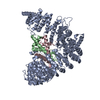
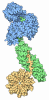
Journal: Proc Natl Acad Sci U S A / Year: 2026 Title: Importin-9 recognizes the winged-helix fold of ETS transcription factors to mediate nuclear import. Authors: Michael McConville / Kaylee Lankford / Natalia E Bernardes / Abby Walterscheid / Catherine Valadez / Ashley Niesman / Yuh Min Chook / Glen Liszczak / Abstract: Protein trafficking between the cytoplasm and the nucleus is a fundamental process in eukaryotic cell biology. While linear nuclear localization signals (NLSs) are well characterized, many nuclear ...Protein trafficking between the cytoplasm and the nucleus is a fundamental process in eukaryotic cell biology. While linear nuclear localization signals (NLSs) are well characterized, many nuclear proteins lack a predictable NLS. Here, we identify the ETS domain, a DNA-binding winged-helix fold, from ETS family transcription factors as a structure-encoded NLS. We show that ETS domains mediate nuclear import through direct nanomolar affinity recognition by IPO9. Cryo-electron microscopy analysis of the EHF:IPO9 complex reveals that the IPO9 wraps around the ETS domain and engages structural features throughout the winged-helix fold. Biochemical studies demonstrate that the ETS domain DNA-binding helix is critical for importin recognition and for NLS activity in mammalian cells. Comparison of IPO9 bound to EHF and the histone H2A:H2B dimer reveals distinct interaction hotspots, illustrating how IPO9 employs unique combinatorial binding surfaces to accommodate structurally diverse cargos. These findings define a unique class of globular NLSs and highlight the adaptability of importins in recognizing distinct protein folds.
In the structure databanks used in Yorodumi, some data are registered as the other names, "COVID-19 virus" and "2019-nCoV". Here are the details of the virus and the list of structure data.
Jan 31, 2019. EMDB accession codes are about to change! (news from PDBe EMDB page)
EMDB accession codes are about to change! (news from PDBe EMDB page)
The allocation of 4 digits for EMDB accession codes will soon come to an end. Whilst these codes will remain in use, new EMDB accession codes will include an additional digit and will expand incrementally as the available range of codes is exhausted. The current 4-digit format prefixed with “EMD-” (i.e. EMD-XXXX) will advance to a 5-digit format (i.e. EMD-XXXXX), and so on. It is currently estimated that the 4-digit codes will be depleted around Spring 2019, at which point the 5-digit format will come into force.
The EM Navigator/Yorodumi systems omit the EMD- prefix.
Related info.:Q: What is EMD? / ID/Accession-code notation in Yorodumi/EM Navigator
Yorodumi is a browser for structure data from EMDB, PDB, SASBDB, etc.
This page is also the successor to EM Navigator detail page, and also detail information page/front-end page for Omokage search.
The word "yorodu" (or yorozu) is an old Japanese word meaning "ten thousand". "mi" (miru) is to see.
Related info.:EMDB / PDB / SASBDB / Comparison of 3 databanks / Yorodumi Search / Aug 31, 2016. New EM Navigator & Yorodumi / Yorodumi Papers / Jmol/JSmol / Function and homology information / Changes in new EM Navigator and Yorodumi
 Movie
Movie Controller


 Open data
 Basic information
 Map data
 Sample
 Keywords
 Function and homology information
 Homo sapiens (human)
 Authors
 United States, 6 items
  Citation
 Structure visualization
 Downloads & links
 emd_75437.png
 https://data.pdbj.org/pub/emdb/structures/EMD-75437
 Z (Sec.)
 Y (Row.)
 X (Col.)


 Sample components
 Escherichia coli (E. coli)
 Processing
 Electron microscopy
 FIELD EMISSION GUN