 Movie
Movie Controller

[English] 日本語
 Yorodumi
- EMDB-74905: Quasibacillus thermotolerans T=3 encapsulin pore mutant variant L... -
+ Open data

- Basic information
| Entry |  | ||||||||||||
|---|---|---|---|---|---|---|---|---|---|---|---|---|---|
| Title | Quasibacillus thermotolerans T=3 encapsulin pore mutant variant Letter11 | ||||||||||||
 Map data Map data | |||||||||||||
 Sample Sample |
| ||||||||||||
 Keywords Keywords | encapsulin / protein nanocompartment / VIRUS LIKE PARTICLE | ||||||||||||
| Function / homology | Type 1 encapsulin shell protein / Encapsulating protein for peroxidase / : / encapsulin nanocompartment / Type 1 encapsulin shell protein Function and homology information Function and homology information | ||||||||||||
| Biological species |   Bacillus thermotolerans (bacteria) Bacillus thermotolerans (bacteria) | ||||||||||||
| Method | single particle reconstruction / cryo EM / Resolution: 2.42 Å | ||||||||||||
 Authors Authors | Andreas MP / Siddiquee R / Giessen TW / Lau YH | ||||||||||||
| Funding support |  Australia, Australia,  United States, 3 items United States, 3 items
| ||||||||||||
 Citation Citation | Journal: bioRxiv / Year: 2026 Title: Directed evolution of multimeric proteins is enabled by dual-compensatory gene duplication. Authors: Rezwan Siddiquee / Felicia Lie / Taylor N Szyszka / Alex Loustau / Michael P Andreas / Tobias W Giessen / Yu Heng Lau / Abstract: Gene duplication has played a critical role in the evolutionary history of proteins, enabling complex multimers to emerge from simpler precursors. Yet in protein engineering, current methods for ...Gene duplication has played a critical role in the evolutionary history of proteins, enabling complex multimers to emerge from simpler precursors. Yet in protein engineering, current methods for directed evolution do not exploit gene duplication, hampering access to the vast array of diverse variants that are only enriched in the presence of a wild-type copy. We establish a directed evolution strategy for multimeric proteins that harnesses gene duplication to compensate for metabolic burden and self-assembly fitness, allowing previously inaccessible variants to be enriched. Starting from a homomeric 240-mer capsid, gene duplication enables selection of both extreme homomeric variants and obligate heteromers. This strategy significantly expands engineering access to diverse high-performing variants, while also supporting a plausible model for evolutionary diversification of higher-order multimers in nature. | ||||||||||||
| History |
|
- Structure visualization
| Supplemental images |
|---|

- Downloads & links
-EMDB archive
| Map data | emd_74905.map.gz | 398 MB | EMDB map data format | |
|---|---|---|---|---|
| Header (meta data) | emd-74905-v30.xmlemd-74905.xml | 21.1 KB 21.1 KB | Display Display | EMDB header |
| FSC (resolution estimation) | emd_74905_fsc.xml | 15.7 KB | Display | FSC data file |
| Images |  emd_74905.png emd_74905.png | 169.8 KB | ||
| Filedesc metadata | emd-74905.cif.gz | 6.7 KB | ||
| Others | emd_74905_half_map_1.map.gzemd_74905_half_map_2.map.gz | 390.7 MB 390.7 MB | ||
| Archive directory |  https://data.pdbj.org/pub/emdb/structures/EMD-74905ftp://data.pdbj.org/pub/emdb/structures/EMD-74905 https://data.pdbj.org/pub/emdb/structures/EMD-74905ftp://data.pdbj.org/pub/emdb/structures/EMD-74905 | HTTPS FTP |
-Related structure data
| Related structure data |  9zw4MC  9zvvC  9zw3C M: atomic model generated by this map C: citing same article ( |
|---|---|
| Similar structure data |


-Links
| EMDB pages | EMDB (EBI/PDBe) / EMDataResource |
|---|---|
| Related items in Molecule of the Month |
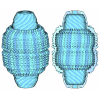
-Map
| File | Download / File: emd_74905.map.gz / Format: CCP4 / Size: 421.9 MB / Type: IMAGE STORED AS FLOATING POINT NUMBER (4 BYTES) | ||||||||||||||||||||||||||||||||||||
|---|---|---|---|---|---|---|---|---|---|---|---|---|---|---|---|---|---|---|---|---|---|---|---|---|---|---|---|---|---|---|---|---|---|---|---|---|---|
| Projections & slices | Image control
Images are generated by Spider. | ||||||||||||||||||||||||||||||||||||
| Voxel size | X=Y=Z: 1.18845 Å | ||||||||||||||||||||||||||||||||||||
| Density |
| ||||||||||||||||||||||||||||||||||||
| Symmetry | Space group: 1 | ||||||||||||||||||||||||||||||||||||
| Details | EMDB XML:
|
 Z (Sec.)
 Y (Row.)
 X (Col.)


-Supplemental data
-Half map: #1
| File | emd_74905_half_map_1.map | ||||||||||||
|---|---|---|---|---|---|---|---|---|---|---|---|---|---|
| Projections & Slices |
| ||||||||||||
| Density Histograms |


-Half map: #2
| File | emd_74905_half_map_2.map | ||||||||||||
|---|---|---|---|---|---|---|---|---|---|---|---|---|---|
| Projections & Slices |
| ||||||||||||
| Density Histograms |


- Sample components
-Entire : Quasibacillus thermotolerans T=3 encapsulin pore mutant variant L...
| Entire | Name: Quasibacillus thermotolerans T=3 encapsulin pore mutant variant Letter11 |
|---|---|
| Components |
|
-Supramolecule #1: Quasibacillus thermotolerans T=3 encapsulin pore mutant variant L...
| Supramolecule | Name: Quasibacillus thermotolerans T=3 encapsulin pore mutant variant Letter11 type: complex / ID: 1 / Parent: 0 / Macromolecule list: all |
|---|---|
| Source (natural) | Organism: Bacillus thermotolerans (bacteria) |
-Macromolecule #1: Type 1 encapsulin shell protein
| Macromolecule | Name: Type 1 encapsulin shell protein / type: protein_or_peptide / ID: 1 / Number of copies: 3 / Enantiomer: LEVO |
|---|---|
| Source (natural) | Organism: Bacillus thermotolerans (bacteria) |
| Molecular weight | Theoretical: 30.542479 KDa |
| Recombinant expression | Organism:  Escherichia coli BL21(DE3) (bacteria) Escherichia coli BL21(DE3) (bacteria) |
| Sequence | String: MNKSQLYPDS PLTDQDFNQL DQTVIEAARR QLVGRRFIEL YGPLGRGMQS VFNDIFMESH EAKMDFQGSF DTEVESSRRV NYTIPMLYK DFVLYWRDLE QSKALDIPID FSVAANAARD VAFLEDQMIF HGSKEFDIPG LMNVKGRLTH LIGNWYESGN A FQDIVEAR ...String: MNKSQLYPDS PLTDQDFNQL DQTVIEAARR QLVGRRFIEL YGPLGRGMQS VFNDIFMESH EAKMDFQGSF DTEVESSRRV NYTIPMLYK DFVLYWRDLE QSKALDIPID FSVAANAARD VAFLEDQMIF HGSKEFDIPG LMNVKGRLTH LIGNWYESGN A FQDIVEAR NKLLEMNHNG PYALVLSPEL YSLLGSGGSG LITAGVFQSP VLKGKSGVIV NTGRNNLDLA ISEDFETAYL GE EGMNHPF RVYETVVLRI KRPAAICTLI DPEE UniProtKB: Type 1 encapsulin shell protein, Type 1 encapsulin shell protein |
-Experimental details
-Structure determination
| Method | cryo EM |
|---|---|
 Processing Processing | single particle reconstruction |
| Aggregation state | particle |
-Sample preparation
| Concentration | 4.5 mg/mL | ||||||||||||
|---|---|---|---|---|---|---|---|---|---|---|---|---|---|
| Buffer | pH: 8 Component:
Details: 200 mM NaCl, 25 mM Tris pH 8.0, 1 mM TCEP | ||||||||||||
| Grid | Model: Quantifoil R2/1 / Material: COPPER / Mesh: 200 / Support film - Material: CARBON / Support film - topology: HOLEY / Pretreatment - Type: GLOW DISCHARGE / Pretreatment - Time: 60 sec. / Pretreatment - Atmosphere: AIR Details: The grid was glow discharged at 5 mA for 60 seconds under vacuum. | ||||||||||||
| Vitrification | Cryogen name: ETHANE / Chamber humidity: 100 % / Chamber temperature: 295 K / Instrument: FEI VITROBOT MARK IV |
- Electron microscopy
| Microscope | TFS KRIOS |
|---|---|
| Image recording | Film or detector model: GATAN K3 BIOQUANTUM (6k x 4k) / Number grids imaged: 1 / Number real images: 1565 / Average electron dose: 51.5 e/Å2 |
| Electron beam | Acceleration voltage: 300 kV / Electron source:  FIELD EMISSION GUN FIELD EMISSION GUN |
| Electron optics | Illumination mode: FLOOD BEAM / Imaging mode: BRIGHT FIELD / Nominal defocus max: 1.2 µm / Nominal defocus min: 0.8 µm |
| Experimental equipment |  Model: Titan Krios / Image courtesy: FEI Company |
+Image processing

-Atomic model buiding 1
| Initial model | Chain - Source name: AlphaFold / Chain - Initial model type: in silico model |
|---|---|
| Details | A starting model of a single protomer was generated using AlphaFold 3, and individual protomers were fit into the volume of an asymmetric unit using UCSF ChimeraX v 1.8. The model containing a single asymmetric unit consisting of three protomers was then manually refined using Coot v 0.9.8.1, followed by real-space refinement in PHENIX v 1.20.1-4487-000. Non-crystallographic symmetry (NCS) operators were then applied to generate a complete NCS-expanded shell, which was refined against the map using PHENIX real-space refinement. |
| Refinement | Space: REAL / Protocol: FLEXIBLE FIT / Overall B value: 71.2 / Target criteria: cross-correlation coefficient |
| Output model | PDB-9zw4: |
