 Movie
Movie Controller

[English] 日本語
 Yorodumi
- EMDB-74629: Shigella flexneri type III secretion system (T3SS) protein IpaD b... -
+ Open data

- Basic information
| Entry |  | ||||||||||||||||||
|---|---|---|---|---|---|---|---|---|---|---|---|---|---|---|---|---|---|---|---|
| Title | Shigella flexneri type III secretion system (T3SS) protein IpaD bound to hemolysis blocking Fab D02-F2 and hemolysis enhancing Fab D02-E4 | ||||||||||||||||||
 Map data Map data | |||||||||||||||||||
 Sample Sample |
| ||||||||||||||||||
 Keywords Keywords | T3SS / epitope / vaccine antigen / SipD homolog / PROTEIN TRANSPORT | ||||||||||||||||||
| Function / homology | effector-mediated activation of host programmed cell death by symbiont / Type III secretion systems tip complex components / BipD-like superfamily / Type III secretion systems tip complex components / extracellular region / Invasin IpaD Function and homology information Function and homology information | ||||||||||||||||||
| Biological species |  Shigella flexneri (bacteria) / Shigella flexneri (bacteria) /   Macaca mulatta (Rhesus monkey) Macaca mulatta (Rhesus monkey) | ||||||||||||||||||
| Method | single particle reconstruction / cryo EM / Resolution: 3.4 Å | ||||||||||||||||||
 Authors Authors | Gilman MSA / Kruse AC / Schmidt HR | ||||||||||||||||||
| Funding support |  United States, United States,  United Kingdom, 5 items United Kingdom, 5 items
| ||||||||||||||||||
 Citation Citation | Journal: Sci Transl Med / Year: 2026 Title: Multifunctional antibody responses from a primate outbreak inform vaccine design. Authors: Robert M Gallant / Paul Savarino / Sophia Pulido / Morgan S A Gilman / Ti Lu / Jennifer Hayes / Nicholas L Xerri / Torrey Williams / Mark A Ochoa / Zackary Dietz / Eric Peterson / Timothy ...Authors: Robert M Gallant / Paul Savarino / Sophia Pulido / Morgan S A Gilman / Ti Lu / Jennifer Hayes / Nicholas L Xerri / Torrey Williams / Mark A Ochoa / Zackary Dietz / Eric Peterson / Timothy Scott / Faye Hartmann / Stephen G Baker / Robert W Kaminski / Devin Sok / Andrew C Kruse / Wendy Picking / Saverio V Capuano / Hayden R Schmidt / Abstract: There is currently no approved vaccine for spp., a leading cause of diarrhea with increasing rates of antimicrobial resistance. vaccine development is complicated in part by an incomplete ...There is currently no approved vaccine for spp., a leading cause of diarrhea with increasing rates of antimicrobial resistance. vaccine development is complicated in part by an incomplete understanding of the structural and molecular determinants of immunity. To address this, we isolated monoclonal antibodies against candidate vaccine antigens using samples from a outbreak in a nonhuman primate (NHP) research facility. We found that antibodies targeting the O-antigen can undergo substantial affinity maturation (>10%) to acquire broad cross-reactivity across serotypes. We also found that the virulence-associated type III secretion system (T3SS) proteins IpaD and IpaB elicit moderate T cell and robust antibody responses. T3SS antibodies could either inhibit or enhance bacterial virulence in vitro and differed in vivo depending on their epitope specificity. Collectively, these findings provide insights into protective and deleterious immune responses against that directly inform vaccine immunogen design. | ||||||||||||||||||
| History |
|
- Structure visualization
| Supplemental images |
|---|

- Downloads & links
-EMDB archive
| Map data | emd_74629.map.gz | 204.2 MB | EMDB map data format | |
|---|---|---|---|---|
| Header (meta data) | emd-74629-v30.xmlemd-74629.xml | 23.8 KB 23.8 KB | Display Display | EMDB header |
| Images |  emd_74629.png emd_74629.png | 48.8 KB | ||
| Filedesc metadata | emd-74629.cif.gz | 6.8 KB | ||
| Others | emd_74629_half_map_1.map.gzemd_74629_half_map_2.map.gz | 200.6 MB 200.6 MB | ||
| Archive directory |  https://data.pdbj.org/pub/emdb/structures/EMD-74629ftp://data.pdbj.org/pub/emdb/structures/EMD-74629 https://data.pdbj.org/pub/emdb/structures/EMD-74629ftp://data.pdbj.org/pub/emdb/structures/EMD-74629 | HTTPS FTP |
-Related structure data
| Related structure data |  9zrsMC  9zrtC M: atomic model generated by this map C: citing same article ( |
|---|---|
| Similar structure data |

-Links
| EMDB pages | EMDB (EBI/PDBe) / EMDataResource |
|---|
-Map
| File | Download / File: emd_74629.map.gz / Format: CCP4 / Size: 216 MB / Type: IMAGE STORED AS FLOATING POINT NUMBER (4 BYTES) | ||||||||||||||||||||||||||||||||||||
|---|---|---|---|---|---|---|---|---|---|---|---|---|---|---|---|---|---|---|---|---|---|---|---|---|---|---|---|---|---|---|---|---|---|---|---|---|---|
| Projections & slices | Image control
Images are generated by Spider. | ||||||||||||||||||||||||||||||||||||
| Voxel size | X=Y=Z: 1.1 Å | ||||||||||||||||||||||||||||||||||||
| Density |
| ||||||||||||||||||||||||||||||||||||
| Symmetry | Space group: 1 | ||||||||||||||||||||||||||||||||||||
| Details | EMDB XML:
|
 Z (Sec.)
 Y (Row.)
 X (Col.)


-Supplemental data
-Half map: #1
| File | emd_74629_half_map_1.map | ||||||||||||
|---|---|---|---|---|---|---|---|---|---|---|---|---|---|
| Projections & Slices |
| ||||||||||||
| Density Histograms |


-Half map: #2
| File | emd_74629_half_map_2.map | ||||||||||||
|---|---|---|---|---|---|---|---|---|---|---|---|---|---|
| Projections & Slices |
| ||||||||||||
| Density Histograms |


- Sample components
-Entire : Shigella flexneri type III secretion system (T3SS) protein IpaD b...
| Entire | Name: Shigella flexneri type III secretion system (T3SS) protein IpaD bound to hemolysis blocking Fab D02-F2 and hemolysis enhancing Fab D02-E4, both stablized by an anti-Fab nanobody. |
|---|---|
| Components |
|
-Supramolecule #1: Shigella flexneri type III secretion system (T3SS) protein IpaD b...
| Supramolecule | Name: Shigella flexneri type III secretion system (T3SS) protein IpaD bound to hemolysis blocking Fab D02-F2 and hemolysis enhancing Fab D02-E4, both stablized by an anti-Fab nanobody. type: complex / ID: 1 / Parent: 0 / Macromolecule list: all Details: Antibody fragments were prepared by papain digest. Only the variable domains were modeled. Although two copies of an anti-Fab single-domain antibody were present in the sample, these were not modeled. |
|---|
-Supramolecule #2: Shigella flexneri type III secretion system (T3SS) protein IpaD
| Supramolecule | Name: Shigella flexneri type III secretion system (T3SS) protein IpaD type: complex / ID: 2 / Parent: 1 / Macromolecule list: #1 |
|---|---|
| Source (natural) | Organism: Shigella flexneri (bacteria) |
-Supramolecule #3: Hemolysis blocking antibody fragment D02-F2
| Supramolecule | Name: Hemolysis blocking antibody fragment D02-F2 / type: complex / ID: 3 / Parent: 1 / Macromolecule list: #2-#3 |
|---|---|
| Source (natural) | Organism: Macaca mulatta (Rhesus monkey) |
-Supramolecule #4: Hemolysis enhancing antibody fragment D02-E4
| Supramolecule | Name: Hemolysis enhancing antibody fragment D02-E4 / type: complex / ID: 4 / Parent: 1 / Macromolecule list: #4-#5 |
|---|---|
| Source (natural) | Organism: Macaca mulatta (Rhesus monkey) |
-Macromolecule #1: Invasin IpaD
| Macromolecule | Name: Invasin IpaD / type: protein_or_peptide / ID: 1 / Number of copies: 1 / Enantiomer: LEVO |
|---|---|
| Source (natural) | Organism: Shigella flexneri (bacteria) |
| Molecular weight | Theoretical: 39.605887 KDa |
| Recombinant expression | Organism:  Escherichia coli (E. coli) Escherichia coli (E. coli) |
| Sequence | String: MHHHHHHGLN DIFEAQKIEW HEGSGSNITT LTNSISTSSF SPNNTNGSST ETVNSDIKTT TSSHPVSSLT MLNDTLHNIR TTNQALKKE LSQKTLTKTS LEEIALHSSQ ISMDVNKSAQ LLDILSRNEY PINKDARELL HSAPKEAELD GDQMISHREL W AKIANSIN ...String: MHHHHHHGLN DIFEAQKIEW HEGSGSNITT LTNSISTSSF SPNNTNGSST ETVNSDIKTT TSSHPVSSLT MLNDTLHNIR TTNQALKKE LSQKTLTKTS LEEIALHSSQ ISMDVNKSAQ LLDILSRNEY PINKDARELL HSAPKEAELD GDQMISHREL W AKIANSIN DINEQYLKVY EHAVSSYTQM YQDFSAVLSS LAGWISPGGN DGNSVKLQVN SLKKALEELK EKYKDKPLYP AN NTVSQEQ ANKWLTELGG TIGKVSQKNG GYVVSINMTP IDNMLKSLDN LGGNGEVVLD NAKYQAWNAG FSAEDETMKN NLQ TLVQKY SNANSIFDNL VKVLSSTISS CTDTDKLFLH F UniProtKB: Invasin IpaD |
-Macromolecule #2: D02-F2 antibody fragment heavy chain
| Macromolecule | Name: D02-F2 antibody fragment heavy chain / type: protein_or_peptide / ID: 2 / Number of copies: 1 / Enantiomer: LEVO |
|---|---|
| Source (natural) | Organism: Macaca mulatta (Rhesus monkey) |
| Molecular weight | Theoretical: 23.364023 KDa |
| Recombinant expression | Organism:  Homo sapiens (human) Homo sapiens (human) |
| Sequence | String: QVQLQESGPG LVKPSETLSL TCAVSDGSVS SSYWTWIRQP PGKGLEWIGF IYGGNGNTGY NPSLKSRVTI STDMSKNQFS LNLDSVTAA DTAVYHCVRG HSSLDRWGQG VLVTVSSAST KGPSVFPLAP SSRSTSESTA ALGCLVKDYF PEPVTVSWNS G SLTSGVHT ...String: QVQLQESGPG LVKPSETLSL TCAVSDGSVS SSYWTWIRQP PGKGLEWIGF IYGGNGNTGY NPSLKSRVTI STDMSKNQFS LNLDSVTAA DTAVYHCVRG HSSLDRWGQG VLVTVSSAST KGPSVFPLAP SSRSTSESTA ALGCLVKDYF PEPVTVSWNS G SLTSGVHT FPAVLQSSGL YSLSSVVTVP SSSLGTQTYV CNVNHKPSNT KVDKRVEIKT CGGG |
-Macromolecule #3: D02-F2 antibody fragment light chain
| Macromolecule | Name: D02-F2 antibody fragment light chain / type: protein_or_peptide / ID: 3 / Number of copies: 1 / Enantiomer: LEVO |
|---|---|
| Source (natural) | Organism: Macaca mulatta (Rhesus monkey) |
| Molecular weight | Theoretical: 23.820412 KDa |
| Recombinant expression | Organism: Homo sapiens (human) |
| Sequence | String: DIVMTQSPLS LSVTPGQPAS ISCVSSQSLV HSNGNTYLAW YHQRPGQPPR RLIYEVSDRD SGAPDRFRGS GAGTDFTLKI SRVEAEDVG VYYCGQGTHL PFTFGPGTKV DIKRTVAAPS VFIFPPSEDQ VKSGTVSVVC LLNNFYPREA SVKWKVDGAL K TGNSQESV ...String: DIVMTQSPLS LSVTPGQPAS ISCVSSQSLV HSNGNTYLAW YHQRPGQPPR RLIYEVSDRD SGAPDRFRGS GAGTDFTLKI SRVEAEDVG VYYCGQGTHL PFTFGPGTKV DIKRTVAAPS VFIFPPSEDQ VKSGTVSVVC LLNNFYPREA SVKWKVDGAL K TGNSQESV TEQDSKDNTY SLSSTLTLSS TEYQSHKVYA CEVTHQGLSS PVTKSFNRGE C |
-Macromolecule #4: D02-E4 antibody fragment heavy chain
| Macromolecule | Name: D02-E4 antibody fragment heavy chain / type: protein_or_peptide / ID: 4 / Number of copies: 1 / Enantiomer: LEVO |
|---|---|
| Source (natural) | Organism: Macaca mulatta (Rhesus monkey) |
| Molecular weight | Theoretical: 23.783611 KDa |
| Recombinant expression | Organism: Homo sapiens (human) |
| Sequence | String: QVQLQESGPG LVKPSETLSL TCAVSGGSIS SNYWWIWIRQ PPGRGLEWIG NIGGSIDTTY YNPSLKSRVT ISKDMSKNQF SLKLNSVTT ADTAIYYCAR HSRAAAGDSW GQGVVVTVSS ASTKGPSVFP LAPSSRSTSE STAALGCLVK DYFPEPVTVS W NSGSLTSG ...String: QVQLQESGPG LVKPSETLSL TCAVSGGSIS SNYWWIWIRQ PPGRGLEWIG NIGGSIDTTY YNPSLKSRVT ISKDMSKNQF SLKLNSVTT ADTAIYYCAR HSRAAAGDSW GQGVVVTVSS ASTKGPSVFP LAPSSRSTSE STAALGCLVK DYFPEPVTVS W NSGSLTSG VHTFPAVLQS SGLYSLSSVV TVPSSSLGTQ TYVCNVNHKP SNTKVDKRVE IKTCGGG |
-Macromolecule #5: D02-E4 antibody fragment light chain
| Macromolecule | Name: D02-E4 antibody fragment light chain / type: protein_or_peptide / ID: 5 / Number of copies: 1 / Enantiomer: LEVO |
|---|---|
| Source (natural) | Organism: Macaca mulatta (Rhesus monkey) |
| Molecular weight | Theoretical: 23.318811 KDa |
| Recombinant expression | Organism: Homo sapiens (human) |
| Sequence | String: DIQMTQSPSS LFASVGDRVT ITCQASQPIS DWLAWYQQKP GKAPKRLIYA ASSLESGVPS RFSGSGSGTE FTLTISSLQP EDFATYYCQ QHDSYPLTFG GGTKVEIKRT VAAPSVFIFP PSEDQVKSGT VSVVCLLNNF YPREASVKWK VDGALKTGNS Q ESVTEQDS ...String: DIQMTQSPSS LFASVGDRVT ITCQASQPIS DWLAWYQQKP GKAPKRLIYA ASSLESGVPS RFSGSGSGTE FTLTISSLQP EDFATYYCQ QHDSYPLTFG GGTKVEIKRT VAAPSVFIFP PSEDQVKSGT VSVVCLLNNF YPREASVKWK VDGALKTGNS Q ESVTEQDS KDNTYSLSST LTLSSTEYQS HKVYACEVTH QGLSSPVTKS FNRGEC |
-Experimental details
-Structure determination
| Method | cryo EM |
|---|---|
 Processing Processing | single particle reconstruction |
| Aggregation state | particle |
-Sample preparation
| Buffer | pH: 7.5 |
|---|---|
| Vitrification | Cryogen name: ETHANE |
- Electron microscopy
| Microscope | FEI TALOS ARCTICA |
|---|---|
| Image recording | Film or detector model: GATAN K3 (6k x 4k) / Average electron dose: 51.3 e/Å2 |
| Electron beam | Acceleration voltage: 200 kV / Electron source:  FIELD EMISSION GUN FIELD EMISSION GUN |
| Electron optics | Illumination mode: FLOOD BEAM / Imaging mode: BRIGHT FIELD / Nominal defocus max: 3.0 µm / Nominal defocus min: 1.5 µm |
| Experimental equipment | 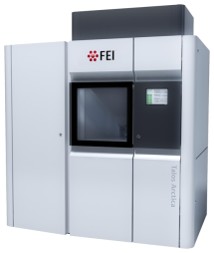 Model: Talos Arctica / Image courtesy: FEI Company |
