National Institutes of Health/National Institute of Neurological Disorders and Stroke (NIH/NINDS)
NS095892
United States
German Research Foundation (DFG)
556478029
Germany
Citation
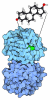
Journal: bioRxiv / Year: 2026 Title: DM: a simple solution to suppress air-water interface interactions in cryo-EM. Authors: Maria Rafiq / Jan-Hannes Schäfer / Hamidreza Rahmani / Shaochen You / Michael Bollong / Danielle Grotjahn / R Luke Wiseman / Gabriel C Lander / Abstract: The air-water interface (AWI) remains the primary barrier to routine high-resolution cryo-EM structure determination, driving protein adsorption, structural denaturation, and restricted particle ...The air-water interface (AWI) remains the primary barrier to routine high-resolution cryo-EM structure determination, driving protein adsorption, structural denaturation, and restricted particle orientations during vitrification. Here, we describe a simple and broadly applicable strategy to mitigate these effects using the mild non-ionic detergent n-decyl-β-D-maltopyranoside (DM). Addition of DM at low millimolar concentrations immediately prior to vitrification consistently suppresses AWI-driven artifacts, resulting in improved angular sampling, reduced structural damage, and enhanced reconstruction quality across diverse macromolecular systems. Using this approach, we obtained a high-resolution reconstruction of the 65 kDa Nucleophosmin 1 pentamer, a target previously limited by severe preferred orientation issues. We further show that DM promotes isotropic particle distributions for high-resolution reconstruction of hemagglutinin, transthyretin, as well as suppressing denaturation of aldolase while stabilizing its C-terminus. Our results indicate that DM effectively passivates deleterious air-water interface interactions without compromising particle integrity. These results establish DM as an effective additive for improving the robustness of single-particle cryo-EM sample preparation.
In the structure databanks used in Yorodumi, some data are registered as the other names, "COVID-19 virus" and "2019-nCoV". Here are the details of the virus and the list of structure data.
Jan 31, 2019. EMDB accession codes are about to change! (news from PDBe EMDB page)
EMDB accession codes are about to change! (news from PDBe EMDB page)
The allocation of 4 digits for EMDB accession codes will soon come to an end. Whilst these codes will remain in use, new EMDB accession codes will include an additional digit and will expand incrementally as the available range of codes is exhausted. The current 4-digit format prefixed with “EMD-” (i.e. EMD-XXXX) will advance to a 5-digit format (i.e. EMD-XXXXX), and so on. It is currently estimated that the 4-digit codes will be depleted around Spring 2019, at which point the 5-digit format will come into force.
The EM Navigator/Yorodumi systems omit the EMD- prefix.
Related info.:Q: What is EMD? / ID/Accession-code notation in Yorodumi/EM Navigator
Yorodumi is a browser for structure data from EMDB, PDB, SASBDB, etc.
This page is also the successor to EM Navigator detail page, and also detail information page/front-end page for Omokage search.
The word "yorodu" (or yorozu) is an old Japanese word meaning "ten thousand". "mi" (miru) is to see.
Related info.:EMDB / PDB / SASBDB / Comparison of 3 databanks / Yorodumi Search / Aug 31, 2016. New EM Navigator & Yorodumi / Yorodumi Papers / Jmol/JSmol / Function and homology information / Changes in new EM Navigator and Yorodumi
 Movie
Movie Controller


 Open data
 Basic information
 Map data
 Sample
 Keywords
 Function and homology information
 Homo sapiens (human)
 Authors
 United States,
  Germany, 2 items
  Citation
 Structure visualization
 Downloads & links
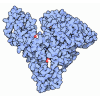
 emd_74011.png
 https://data.pdbj.org/pub/emdb/structures/EMD-74011
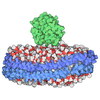
 Z (Sec.)
 Y (Row.)
 X (Col.)


 Sample components
 Escherichia coli (E. coli)
 Processing
 Electron microscopy
 FIELD EMISSION GUN
