National Institutes of Health/National Institute of Neurological Disorders and Stroke (NIH/NINDS)
NS116850
United States
National Institutes of Health/National Institute of General Medical Sciences (NIH/NIGMS)
DP2GM140920
United States
National Science Foundation (NSF, United States)
CHE-1856518
United States
Citation
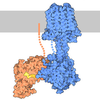
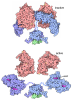
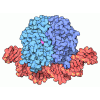
Journal: Nat Commun / Year: 2026 Title: Lipid bilayers determine allostery but not intrinsic affinity of cAMP to pacemaker channels. Authors: Vinay Idikuda / Susovan Roy Chowdhury / Audrey Chinn / Yongchang Chang / Suhaila Rahman / Qian Ren / Huan Bao / Ziao Fu / Randall H Goldsmith / Baron Chanda / Abstract: The binding of cyclic adenosine monophosphate (cAMP) to hyperpolarization-activated cyclic nucleotide-gated (HCN) ion channels regulates cardiac pacemaking but key aspects of the mechanism of ligand- ...The binding of cyclic adenosine monophosphate (cAMP) to hyperpolarization-activated cyclic nucleotide-gated (HCN) ion channels regulates cardiac pacemaking but key aspects of the mechanism of ligand-dependent regulation remain unresolved. Here, we examine the role of the lipid environment by reconstituting purified human HCN channels into lipid nanodiscs and measuring successive cAMP binding to single HCN channels using nanophotonic waveguides. Regardless of nanodisc size or lipid composition, cAMP molecules bind cooperatively to HCN channels in lipid bilayers, unlike channels solubilized in detergents. The affinity of the first ligand remains unchanged across conditions, indicating that the bilayer selectively alters higher-order ligation states. Cryo-EM structures of apo- and holo-HCN channels reveal additional lipid densities that are weak or absent in detergent-solubilized preparations. Together, these findings show that the lipid bilayer is both necessary and sufficient to induce cooperative ligand binding in HCN channels, thereby enhancing their sensitivity to gating stimuli.
In the structure databanks used in Yorodumi, some data are registered as the other names, "COVID-19 virus" and "2019-nCoV". Here are the details of the virus and the list of structure data.
Jan 31, 2019. EMDB accession codes are about to change! (news from PDBe EMDB page)
EMDB accession codes are about to change! (news from PDBe EMDB page)
The allocation of 4 digits for EMDB accession codes will soon come to an end. Whilst these codes will remain in use, new EMDB accession codes will include an additional digit and will expand incrementally as the available range of codes is exhausted. The current 4-digit format prefixed with “EMD-” (i.e. EMD-XXXX) will advance to a 5-digit format (i.e. EMD-XXXXX), and so on. It is currently estimated that the 4-digit codes will be depleted around Spring 2019, at which point the 5-digit format will come into force.
The EM Navigator/Yorodumi systems omit the EMD- prefix.
Related info.:Q: What is EMD? / ID/Accession-code notation in Yorodumi/EM Navigator
Yorodumi is a browser for structure data from EMDB, PDB, SASBDB, etc.
This page is also the successor to EM Navigator detail page, and also detail information page/front-end page for Omokage search.
The word "yorodu" (or yorozu) is an old Japanese word meaning "ten thousand". "mi" (miru) is to see.
Related info.:EMDB / PDB / SASBDB / Comparison of 3 databanks / Yorodumi Search / Aug 31, 2016. New EM Navigator & Yorodumi / Yorodumi Papers / Jmol/JSmol / Function and homology information / Changes in new EM Navigator and Yorodumi
 Movie
Movie Controller


 Open data
 Basic information
 Map data
 Sample
 Keywords
 Function and homology information
 Homo sapiens (human)
 Authors
 United States, 3 items
  Citation
 Structure visualization
 Downloads & links
 emd_73857.png
 http://ftp.pdbj.org/pub/emdb/structures/EMD-73857


 Z (Sec.)
 Y (Row.)
 X (Col.)


 Sample components
 Komagataella pastoris (fungus)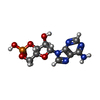
 Processing
 Electron microscopy
 FIELD EMISSION GUN

