 Movie
Movie Controller

[English] 日本語
 Yorodumi
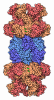
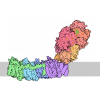
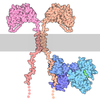
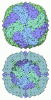
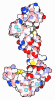
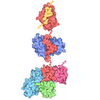
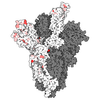
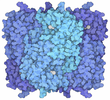
- EMDB-73536: Complex structure of human p97 bound to Faf1 and Ufd1 (NTD focused) -
+ Open data

- Basic information
| Entry |  | |||||||||
|---|---|---|---|---|---|---|---|---|---|---|
| Title | Complex structure of human p97 bound to Faf1 and Ufd1 (NTD focused) | |||||||||
 Map data Map data | ||||||||||
 Sample Sample |
| |||||||||
 Keywords Keywords | ATPase / p97 / AAA ATPase / ERAD / unfoldase / ubiquitin / segregase / VCP / HYDROLASE | |||||||||
| Function / homology |  Function and homology information Function and homology informationUFD1-NPL4 complex / Fas signaling pathway / negative regulation of RIG-I signaling pathway / CD95 death-inducing signaling complex / flavin adenine dinucleotide catabolic process / protein kinase regulator activity / VCP-NSFL1C complex / endoplasmic reticulum stress-induced pre-emptive quality control / endosome to lysosome transport via multivesicular body sorting pathway / BAT3 complex binding ...UFD1-NPL4 complex / Fas signaling pathway / negative regulation of RIG-I signaling pathway / CD95 death-inducing signaling complex / flavin adenine dinucleotide catabolic process / protein kinase regulator activity / VCP-NSFL1C complex / endoplasmic reticulum stress-induced pre-emptive quality control / endosome to lysosome transport via multivesicular body sorting pathway / BAT3 complex binding / cellular response to arsenite ion / cytoplasmic ubiquitin ligase complex / Derlin-1 retrotranslocation complex / positive regulation of protein K63-linked deubiquitination / protein-DNA covalent cross-linking repair / deubiquitinase activator activity / positive regulation of oxidative phosphorylation / cytoplasm protein quality control / regulation of protein localization to chromatin / ubiquitin-modified protein reader activity / cellular response to misfolded protein / mitotic spindle disassembly / VCP-NPL4-UFD1 AAA ATPase complex / positive regulation of mitochondrial membrane potential / regulation of protein catabolic process / vesicle-fusing ATPase / K48-linked polyubiquitin modification-dependent protein binding / NAD+ metabolic process / regulation of aerobic respiration / retrograde protein transport, ER to cytosol / stress granule disassembly / ATPase complex / negative regulation of type I interferon production / ubiquitin-specific protease binding / regulation of synapse organization / polyubiquitin modification-dependent protein binding / glutathione transferase / positive regulation of ATP biosynthetic process / ubiquitin-like protein ligase binding / glutathione transferase activity / intracellular membrane-bounded organelle / RHOH GTPase cycle / skeletal system development / autophagosome maturation / MHC class I protein binding / HSF1 activation / endoplasmic reticulum to Golgi vesicle-mediated transport / negative regulation of hippo signaling / mitophagy / NF-kappaB binding / interstrand cross-link repair / ATP metabolic process / proteasome complex / protein unfolding / endoplasmic reticulum unfolded protein response / ribosome-associated ubiquitin-dependent protein catabolic process / Attachment and Entry / ERAD pathway / heat shock protein binding / Protein methylation / translesion synthesis / negative regulation of smoothened signaling pathway / positive regulation of DNA replication / viral genome replication / negative regulation of protein localization to chromatin / macroautophagy / glutathione metabolic process / negative regulation of canonical NF-kappaB signal transduction / rescue of stalled cytosolic ribosome / lipid droplet / Josephin domain DUBs / autophagy / ubiquitin binding / establishment of protein localization / proteasomal protein catabolic process / N-glycan trimming in the ER and Calnexin/Calreticulin cycle / positive regulation of protein-containing complex assembly / positive regulation of non-canonical NF-kappaB signal transduction / ADP binding / Hh mutants are degraded by ERAD / Dengue Virus Genome Translation and Replication / Translesion Synthesis by POLH / Hedgehog ligand biogenesis / Defective CFTR causes cystic fibrosis / AMPK-induced ERAD and lysosome mediated degradation of PD-L1(CD274) / ABC-family protein mediated transport / cytoplasmic stress granule / Ribosome Quality Control (RQC) complex extracts and degrades nascent peptide / double-strand break repair / Aggrephagy / positive regulation of canonical Wnt signaling pathway / positive regulation of protein catabolic process / azurophil granule lumen / Ovarian tumor domain proteases / positive regulation of proteasomal ubiquitin-dependent protein catabolic process / nuclear envelope / KEAP1-NFE2L2 pathway / site of double-strand break / cellular response to heat / E3 ubiquitin ligases ubiquitinate target proteins Similarity search - Function | |||||||||
| Biological species |  Homo sapiens (human) Homo sapiens (human) | |||||||||
| Method | single particle reconstruction / cryo EM / Resolution: 3.27 Å | |||||||||
 Authors Authors | Liao Z / Arkinson C / Martin A | |||||||||
| Funding support |  United States, 1 items United States, 1 items
| |||||||||
 Citation Citation | Journal: Cell Rep / Year: 2026 Title: Faf1 accelerates p97-mediated protein unfolding by promoting ubiquitin engagement. Authors: Zengwei Liao / Connor Arkinson / Andreas Martin / Abstract: P97/VCP is a protein unfoldase of the AAA+ ATPase family that plays essential roles in numerous processes, including ER-associated degradation and DNA replication. For unfolding of proteins modified ...P97/VCP is a protein unfoldase of the AAA+ ATPase family that plays essential roles in numerous processes, including ER-associated degradation and DNA replication. For unfolding of proteins modified with K48-linked ubiquitin chains, p97 works with the heterodimeric cofactor Ufd1-Npl4, and the cofactor Faf1 was shown to enhance this activity during replisome disassembly by unknown mechanisms. Here, we employ an in vitro reconstituted system with human components for biochemical experiments, FRET-based assays, and cryo-EM structure determination to reveal that Faf1 generally accelerates ubiquitin-dependent substrate processing by promoting the unfolding of an initiator ubiquitin and its engagement by the ATPase. Faf1 thereby uses its p97-bound C-terminal UBX domain to anchor a long helix that braces Ufd1's UT3 domain and stabilizes Ufd1-Npl4 for ubiquitin unfolding. Our findings demonstrate how p97 works simultaneously with several cofactors to facilitate the unfolding of ubiquitinated proteins, indicating more complex regulatory mechanisms than for the simpler yeast Cdc48. | |||||||||
| History |
|
- Structure visualization
| Supplemental images |
|---|

- Downloads & links
-EMDB archive
| Map data | emd_73536.map.gz | 31.8 MB | EMDB map data format | |
|---|---|---|---|---|
| Header (meta data) | emd-73536-v30.xmlemd-73536.xml | 26.9 KB 26.9 KB | Display Display | EMDB header |
| Images |  emd_73536.png emd_73536.png | 58.9 KB | ||
| Filedesc metadata | emd-73536.cif.gz | 7.9 KB | ||
| Others | emd_73536_additional_1.map.gzemd_73536_half_map_1.map.gzemd_73536_half_map_2.map.gz | 59.7 MB 59.3 MB 59.3 MB | ||
| Archive directory |  https://data.pdbj.org/pub/emdb/structures/EMD-73536ftp://data.pdbj.org/pub/emdb/structures/EMD-73536 https://data.pdbj.org/pub/emdb/structures/EMD-73536ftp://data.pdbj.org/pub/emdb/structures/EMD-73536 | HTTPS FTP |
-Related structure data
| Related structure data |  9yw2MC M: atomic model generated by this map C: citing same article ( |
|---|---|
| Similar structure data |


-Links
| EMDB pages | EMDB (EBI/PDBe) / EMDataResource |
|---|---|
| Related items in Molecule of the Month |

-Map
| File | Download / File: emd_73536.map.gz / Format: CCP4 / Size: 64 MB / Type: IMAGE STORED AS FLOATING POINT NUMBER (4 BYTES) | ||||||||||||||||||||||||||||||||||||
|---|---|---|---|---|---|---|---|---|---|---|---|---|---|---|---|---|---|---|---|---|---|---|---|---|---|---|---|---|---|---|---|---|---|---|---|---|---|
| Projections & slices | Image control
Images are generated by Spider. | ||||||||||||||||||||||||||||||||||||
| Voxel size | X=Y=Z: 1.1609 Å | ||||||||||||||||||||||||||||||||||||
| Density |
| ||||||||||||||||||||||||||||||||||||
| Symmetry | Space group: 1 | ||||||||||||||||||||||||||||||||||||
| Details | EMDB XML:
|
 Z (Sec.)
 Y (Row.)
 X (Col.)


-Supplemental data
-Additional map: Map sharpened using DeepEMhancer
| File | emd_73536_additional_1.map | ||||||||||||
|---|---|---|---|---|---|---|---|---|---|---|---|---|---|
| Annotation | Map sharpened using DeepEMhancer | ||||||||||||
| Projections & Slices |
| ||||||||||||
| Density Histograms |


-Half map: #1
| File | emd_73536_half_map_1.map | ||||||||||||
|---|---|---|---|---|---|---|---|---|---|---|---|---|---|
| Projections & Slices |
| ||||||||||||
| Density Histograms |


-Half map: #2
| File | emd_73536_half_map_2.map | ||||||||||||
|---|---|---|---|---|---|---|---|---|---|---|---|---|---|
| Projections & Slices |
| ||||||||||||
| Density Histograms |


- Sample components
-Entire : ternary complex of human p97 bound to Faf1 and Ufd1
| Entire | Name: ternary complex of human p97 bound to Faf1 and Ufd1 |
|---|---|
| Components |
|
-Supramolecule #1: ternary complex of human p97 bound to Faf1 and Ufd1
| Supramolecule | Name: ternary complex of human p97 bound to Faf1 and Ufd1 / type: complex / ID: 1 / Parent: 0 / Macromolecule list: all |
|---|---|
| Source (natural) | Organism: Homo sapiens (human) |
-Macromolecule #1: Transitional endoplasmic reticulum ATPase
| Macromolecule | Name: Transitional endoplasmic reticulum ATPase / type: protein_or_peptide / ID: 1 / Number of copies: 1 / Enantiomer: LEVO / EC number: vesicle-fusing ATPase |
|---|---|
| Source (natural) | Organism: Homo sapiens (human) |
| Molecular weight | Theoretical: 91.177781 KDa |
| Recombinant expression | Organism:   Escherichia coli (E. coli) Escherichia coli (E. coli) |
| Sequence | String: MASGADSKGD DLSTAILKQK NRPNRLIVDE AINEDNSVVS LSQPKMDELQ LFRGDTVLLK GKKRREAVCI VLSDDTCSDE KIRMNRVVR NNLRVRLGDV ISIQPCPDVK YGKRIHVLPI DDTVEGITGN LFEVYLKPYF LEAYRPIRKG DIFLVRGGMR A VEFKVVET ...String: MASGADSKGD DLSTAILKQK NRPNRLIVDE AINEDNSVVS LSQPKMDELQ LFRGDTVLLK GKKRREAVCI VLSDDTCSDE KIRMNRVVR NNLRVRLGDV ISIQPCPDVK YGKRIHVLPI DDTVEGITGN LFEVYLKPYF LEAYRPIRKG DIFLVRGGMR A VEFKVVET DPSPYCIVAP DTVIHCEGEP IKREDEEESL NEVGYDDIGG CRKQLAQIKE MVELPLRHPA LFKAIGVKPP RG ILLYGPP GTGKTLIARA VANETGAFFF LINGPEIMSK LAGESESNLR KAFEEAEKNA PAIIFIDELD AIAPKREKTH GEV ERRIVS QLLTLMDGLK QRAHVIVMAA TNRPNSIDPA LRRFGRFDRE VDIGIPDATG RLEILQIHTK NMKLADDVDL EQVA NETHG HVGADLAALC SEAALQAIRK KMDLIDLEDE TIDAEVMNSL AVTMDDFRWA LSQSNPSALR ETVVEVPQVT WEDIG GLED VKRELQELVQ YPVEHPDKFL KFGMTPSKGV LFYGPPGCGK TLLAKAIANE CQANFISIKG PELLTMWFGE SEANVR EIF DKARQAAPCV LFFDELDSIA KARGGNIGDG GGAADRVINQ ILTEMDGMST KKNVFIIGAT NRPDIIDPAI LRPGRLD QL IYIPLPDEKS RVAILKANLR KSPVAKDVDL EFLAKMTNGF SGADLTEICQ RACKLAIRES IESEIRRERE RQTNPSAM E VEEDDPVPEI RRDHFEEAMR FARRSVSDND IRKYEMFAQT LQQSRGFGSF RFPSGNQGGA GPSQGSGGGT GGSVYTEDN DDDLYGVDKL AAALEHHHHH H UniProtKB: Transitional endoplasmic reticulum ATPase |
-Macromolecule #2: Glutathione S-transferase class-mu 26 kDa isozyme,FAS-associated ...
| Macromolecule | Name: Glutathione S-transferase class-mu 26 kDa isozyme,FAS-associated factor 1 type: protein_or_peptide / ID: 2 / Number of copies: 1 / Enantiomer: LEVO / EC number: glutathione transferase |
|---|---|
| Source (natural) | Organism: Homo sapiens (human) |
| Molecular weight | Theoretical: 100.807102 KDa |
| Recombinant expression | Organism: Escherichia coli (E. coli) |
| Sequence | String: MSPILGYWKI KGLVQPTRLL LEYLEEKYEE HLYERDEGDK WRNKKFELGL EFPNLPYYID GDVKLTQSMA IIRYIADKHN MLGGCPKER AEISMLEGAV LDIRYGVSRI AYSKDFETLK VDFLSKLPEM LKMFEDRLCH KTYLNGDHVT HPDFMLYDAL D VVLYMDPM ...String: MSPILGYWKI KGLVQPTRLL LEYLEEKYEE HLYERDEGDK WRNKKFELGL EFPNLPYYID GDVKLTQSMA IIRYIADKHN MLGGCPKER AEISMLEGAV LDIRYGVSRI AYSKDFETLK VDFLSKLPEM LKMFEDRLCH KTYLNGDHVT HPDFMLYDAL D VVLYMDPM CLDAFPKLVC FKKRIEAIPQ IDKYLKSSKY IAWPLQGWQA TFGGGDHPPK SDLEVLFQGP LGMASNMDRE MI LADFQAC TGIENIDEAI TLLEQNNWDL VAAINGVIPQ ENGILQSEYG GETIPGPAFN PASHPASAPT SSSSSAFRPV MPS RQIVER QPRMLDFRVE YRDRNVDVVL EDTCTVGEIK QILENELQIP VSKMLLKGWK TGDVEDSTVL KSLHLPKNNS LYVL TPDLP PPSSSSHAGA LQESLNQNFM LIITHREVQR EYNLNFSGSS TIQEVKRNVY DLTSIPVRHQ LWEGWPTSAT DDSMC LAES GLSYPCHRLT VGRRSSPAQT REQSEEQITD VHMVSDSDGD DFEDATEFGV DDGEVFGMAS SALRKSPMMP ENAENE GDA LLQFTAEFSS RYGDCHPVFF IGSLEAAFQE AFYVKARDRK LLAIYLHHDE SVLTNVFCSQ MLCAESIVSY LSQNFIT WA WDLTKDSNRA RFLTMCNRHF GSVVAQTIRT QKTDQFPLFL IIMGKRSSNE VLNVIQGNTT VDELMMRLMA AMEIFTAQ Q QEDIKDEDER EARENVKREQ DEAYRLSLEA DRAKREAHER EMAEQFRLEQ IRKEQEEERE AIRLSLEQAL PPEPKEENA EPVSKLRIRT PSGEFLERRF LASNKLQIVF DFVASKGFPW DEYKLLSTFP RRDVTQLDPN KSLLEVKLFP QETLFLEAKE UniProtKB: Glutathione S-transferase class-mu 26 kDa isozyme, FAS-associated factor 1 |
-Macromolecule #3: Ubiquitin recognition factor in ER-associated degradation protein 1
| Macromolecule | Name: Ubiquitin recognition factor in ER-associated degradation protein 1 type: protein_or_peptide / ID: 3 / Number of copies: 1 / Enantiomer: LEVO |
|---|---|
| Source (natural) | Organism: Homo sapiens (human) |
| Molecular weight | Theoretical: 36.658621 KDa |
| Recombinant expression | Organism: Escherichia coli BL21(DE3) (bacteria) |
| Sequence | String: MSSHHHHHHS SGLVPRGSHM FSFNMFDHPI PRVFQNRFST QYRCFSVSML AGPNDRSDVE KGGKIIMPPS ALDQLSRLNI TYPMLFKLT NKNSDRMTHC GVLEFVADEG ICYLPHWMMQ NLLLEEGGLV QVESVNLQVA TYSKFQPQSP DFLDITNPKA V LENALRNF ...String: MSSHHHHHHS SGLVPRGSHM FSFNMFDHPI PRVFQNRFST QYRCFSVSML AGPNDRSDVE KGGKIIMPPS ALDQLSRLNI TYPMLFKLT NKNSDRMTHC GVLEFVADEG ICYLPHWMMQ NLLLEEGGLV QVESVNLQVA TYSKFQPQSP DFLDITNPKA V LENALRNF ACLTTGDVIA INYNEKIYEL RVMETKPDKA VSIIECDMNV DFDAPLGYKE PERQVQHEES TEGEADHSGY AG ELGFRAF SGSGNRLDGK KKGVEPSPSP IKPGDIKRGI PNYEFKLGKI TFIRNSRPLV KKVEEDEAGG RFVAFSGEGQ SLR KKGRKP UniProtKB: Ubiquitin recognition factor in ER-associated degradation protein 1 |
-Experimental details
-Structure determination
| Method | cryo EM |
|---|---|
 Processing Processing | single particle reconstruction |
| Aggregation state | particle |
-Sample preparation
| Concentration | 4 mg/mL | |||||||||||||||
|---|---|---|---|---|---|---|---|---|---|---|---|---|---|---|---|---|
| Buffer | pH: 7.6 Component:
| |||||||||||||||
| Grid | Model: UltrAuFoil R1.2/1.3 / Material: GOLD / Mesh: 300 | |||||||||||||||
| Vitrification | Cryogen name: ETHANE / Chamber humidity: 100 % / Chamber temperature: 277 K / Instrument: FEI VITROBOT MARK IV |
- Electron microscopy
| Microscope | TFS KRIOS |
|---|---|
| Image recording | Film or detector model: FEI FALCON IV (4k x 4k) / Number grids imaged: 1 / Average electron dose: 50.0 e/Å2 |
| Electron beam | Acceleration voltage: 300 kV / Electron source:  FIELD EMISSION GUN FIELD EMISSION GUN |
| Electron optics | Illumination mode: FLOOD BEAM / Imaging mode: BRIGHT FIELD / Nominal defocus max: 1.6 µm / Nominal defocus min: 0.8 µm / Nominal magnification: 165000 |
| Sample stage | Specimen holder model: FEI TITAN KRIOS AUTOGRID HOLDER / Cooling holder cryogen: NITROGEN |
| Experimental equipment |  Model: Titan Krios / Image courtesy: FEI Company |
+Image processing
-Atomic model buiding 1
| Initial model | Chain - Source name: AlphaFold / Chain - Initial model type: in silico model |
|---|---|
| Refinement | Space: REAL |
| Output model | PDB-9yw2: |
