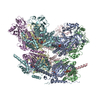
Movie
Movie Controller

[English] 日本語
 Yorodumi
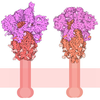
- EMDB-73365: p97Ufd1-Npl4 complex processing poly-ubiquitinated substrate in t... -
+ Open data

- Basic information
| Entry |  | |||||||||
|---|---|---|---|---|---|---|---|---|---|---|
| Title | p97Ufd1-Npl4 complex processing poly-ubiquitinated substrate in the presence of ATP | |||||||||
 Map data Map data | ||||||||||
 Sample Sample |
| |||||||||
 Keywords Keywords | p97 / VCP / AAA+ ATPase / TRANSLOCASE | |||||||||
| Function / homology |  Function and homology information Function and homology informationUFD1-NPL4 complex / negative regulation of RIG-I signaling pathway / flavin adenine dinucleotide catabolic process / VCP-NSFL1C complex / endoplasmic reticulum stress-induced pre-emptive quality control / endosome to lysosome transport via multivesicular body sorting pathway / BAT3 complex binding / cellular response to arsenite ion / cytoplasmic ubiquitin ligase complex / Derlin-1 retrotranslocation complex ...UFD1-NPL4 complex / negative regulation of RIG-I signaling pathway / flavin adenine dinucleotide catabolic process / VCP-NSFL1C complex / endoplasmic reticulum stress-induced pre-emptive quality control / endosome to lysosome transport via multivesicular body sorting pathway / BAT3 complex binding / cellular response to arsenite ion / cytoplasmic ubiquitin ligase complex / Derlin-1 retrotranslocation complex / positive regulation of protein K63-linked deubiquitination / ATPase complex / protein-DNA covalent cross-linking repair / deubiquitinase activator activity / positive regulation of oxidative phosphorylation / cytoplasm protein quality control / aggresome assembly / ubiquitin-modified protein reader activity / regulation of protein localization to chromatin / cellular response to misfolded protein / mitotic spindle disassembly / VCP-NPL4-UFD1 AAA ATPase complex / positive regulation of mitochondrial membrane potential / vesicle-fusing ATPase / K48-linked polyubiquitin modification-dependent protein binding / nuclear outer membrane-endoplasmic reticulum membrane network / ciliary transition zone / K63-linked polyubiquitin modification-dependent protein binding / regulation of aerobic respiration / NAD+ metabolic process / retrograde protein transport, ER to cytosol / ribosome-associated ubiquitin-dependent protein catabolic process / stress granule disassembly / negative regulation of type I interferon production / Golgi organization / ubiquitin-specific protease binding / regulation of synapse organization / positive regulation of ATP biosynthetic process / Dengue Virus Genome Translation and Replication / intracellular membrane-bounded organelle / ubiquitin-like protein ligase binding / RHOH GTPase cycle / MHC class I protein binding / autophagosome maturation / ribosomal large subunit export from nucleus / negative regulation of hippo signaling / endoplasmic reticulum to Golgi vesicle-mediated transport / HSF1 activation / polyubiquitin modification-dependent protein binding / interstrand cross-link repair / ATP metabolic process / Attachment and Entry / skeletal system development / endoplasmic reticulum unfolded protein response / Protein methylation / ERAD pathway / ciliary tip / translesion synthesis / Ribosome Quality Control (RQC) complex extracts and degrades nascent peptide / negative regulation of protein localization to chromatin / rescue of stalled cytosolic ribosome / lipid droplet / viral genome replication / proteasome complex / macroautophagy / negative regulation of smoothened signaling pathway / Josephin domain DUBs / establishment of protein localization / ubiquitin binding / proteasomal protein catabolic process / N-glycan trimming in the ER and Calnexin/Calreticulin cycle / positive regulation of protein-containing complex assembly / ADP binding / Hh mutants are degraded by ERAD / positive regulation of non-canonical NF-kappaB signal transduction / Translesion Synthesis by POLH / Hedgehog ligand biogenesis / Defective CFTR causes cystic fibrosis / modification-dependent protein catabolic process / ABC-family protein mediated transport / autophagy / cytoplasmic stress granule / protein tag activity / positive regulation of protein catabolic process / positive regulation of canonical Wnt signaling pathway / Aggrephagy / azurophil granule lumen / Ovarian tumor domain proteases / KEAP1-NFE2L2 pathway / double-strand break repair / positive regulation of proteasomal ubiquitin-dependent protein catabolic process / cellular response to heat / E3 ubiquitin ligases ubiquitinate target proteins / ATPase binding / site of double-strand break / Neddylation / ribosome biogenesis / ribosomal large subunit assembly / secretory granule lumen / protein phosphatase binding Similarity search - Function | |||||||||
| Biological species |  Homo sapiens (human) / Homo sapiens (human) /   Saccharomyces cerevisiae (brewer's yeast) Saccharomyces cerevisiae (brewer's yeast) | |||||||||
| Method | single particle reconstruction / cryo EM / Resolution: 2.97 Å | |||||||||
 Authors Authors | Li H / Rapoport T | |||||||||
| Funding support |  United States, 1 items United States, 1 items
| |||||||||
 Citation Citation | Journal: Sci Rep / Year: 2026 Title: The deubiquitinating enzyme Otu1 releases substrates from the conserved initiation complex of the Cdc48/p97 ATPase for proteasomal degradation. Authors: Hao Li / Haipeng Guan / Tom A Rapoport / Abstract: Many eukaryotic proteins are modified with a polyubiquitin chain and then recruited to either the Cdc48 ATPase (p97 or VCP in mammals) or the 26S proteasome by conserved cofactors. They can then ...Many eukaryotic proteins are modified with a polyubiquitin chain and then recruited to either the Cdc48 ATPase (p97 or VCP in mammals) or the 26S proteasome by conserved cofactors. They can then shuttle between the Cdc48 ATPase and the 26S proteasome before being degraded. How substrates avoid being trapped on the Cdc48 ATPase complex is incompletely understood, as they can undergo repeated cycles of translocation through the ATPase pore. Here, we show that the deubiquitinating enzyme (DUB) Otu1 (Yod1 in mammals) can break this futile cycle. Otu1 trims the ubiquitin chain of the substrate before its translocation through the Cdc48 pore is initiated, allowing transfer to the proteasome and subsequent degradation. A cryo-EM structure shows that the mammalian homolog Yod1 binds to p97 simultaneously with other Cdc48/p97 cofactors. As in the yeast system, polypeptide translocation through the ATPase pore is initiated by the unfolding of a ubiquitin molecule, suggesting that the mechanism of substrate processing is conserved in all eukaryotes. | |||||||||
| History |
|
- Structure visualization
| Supplemental images |
|---|

- Downloads & links
-EMDB archive
| Map data | emd_73365.map.gz | 116.6 MB | EMDB map data format | |
|---|---|---|---|---|
| Header (meta data) | emd-73365-v30.xmlemd-73365.xml | 18.5 KB 18.5 KB | Display Display | EMDB header |
| Images |  emd_73365.png emd_73365.png | 44.1 KB | ||
| Filedesc metadata | emd-73365.cif.gz | 7.2 KB | ||
| Archive directory |  http://ftp.pdbj.org/pub/emdb/structures/EMD-73365ftp://ftp.pdbj.org/pub/emdb/structures/EMD-73365 http://ftp.pdbj.org/pub/emdb/structures/EMD-73365ftp://ftp.pdbj.org/pub/emdb/structures/EMD-73365 | HTTPS FTP |
-Related structure data
| Related structure data |  9yrcMC C: citing same article ( M: atomic model generated by this map |
|---|---|
| Similar structure data |


-Links
| EMDB pages | EMDB (EBI/PDBe) / EMDataResource |
|---|---|
| Related items in Molecule of the Month |


-Map
| File | Download / File: emd_73365.map.gz / Format: CCP4 / Size: 244.1 MB / Type: IMAGE STORED AS FLOATING POINT NUMBER (4 BYTES) | ||||||||||||||||||||||||||||||||||||
|---|---|---|---|---|---|---|---|---|---|---|---|---|---|---|---|---|---|---|---|---|---|---|---|---|---|---|---|---|---|---|---|---|---|---|---|---|---|
| Projections & slices | Image control
Images are generated by Spider. | ||||||||||||||||||||||||||||||||||||
| Voxel size | X=Y=Z: 0.827 Å | ||||||||||||||||||||||||||||||||||||
| Density |
| ||||||||||||||||||||||||||||||||||||
| Symmetry | Space group: 1 | ||||||||||||||||||||||||||||||||||||
| Details | EMDB XML:
|
 Z (Sec.)
 Y (Row.)
 X (Col.)


-Supplemental data
- Sample components
-Entire : p97-Ufd1-Npl4 complex processing poly-ubiquitinated substrate in ...
| Entire | Name: p97-Ufd1-Npl4 complex processing poly-ubiquitinated substrate in the presence of ATP |
|---|---|
| Components |
|
-Supramolecule #1: p97-Ufd1-Npl4 complex processing poly-ubiquitinated substrate in ...
| Supramolecule | Name: p97-Ufd1-Npl4 complex processing poly-ubiquitinated substrate in the presence of ATP type: complex / ID: 1 / Parent: 0 / Macromolecule list: #1-#4 |
|---|---|
| Source (natural) | Organism: Homo sapiens (human) |
| Molecular weight | Theoretical: 800 KDa |
-Macromolecule #1: Transitional endoplasmic reticulum ATPase
| Macromolecule | Name: Transitional endoplasmic reticulum ATPase / type: protein_or_peptide / ID: 1 / Number of copies: 6 / Enantiomer: LEVO / EC number: vesicle-fusing ATPase |
|---|---|
| Source (natural) | Organism: Homo sapiens (human) |
| Molecular weight | Theoretical: 89.435828 KDa |
| Recombinant expression | Organism:   Escherichia coli (E. coli) Escherichia coli (E. coli) |
| Sequence | String: MASGADSKGD DLSTAILKQK NRPNRLIVDE AINEDNSVVS LSQPKMDELQ LFRGDTVLLK GKKRREAVCI VLSDDTCSDE KIRMNRVVR NNLRVRLGDV ISIQPCPDVK YGKRIHVLPI DDTVEGITGN LFEVYLKPYF LEAYRPIRKG DIFLVRGGMR A VEFKVVET ...String: MASGADSKGD DLSTAILKQK NRPNRLIVDE AINEDNSVVS LSQPKMDELQ LFRGDTVLLK GKKRREAVCI VLSDDTCSDE KIRMNRVVR NNLRVRLGDV ISIQPCPDVK YGKRIHVLPI DDTVEGITGN LFEVYLKPYF LEAYRPIRKG DIFLVRGGMR A VEFKVVET DPSPYCIVAP DTVIHCEGEP IKREDEEESL NEVGYDDIGG CRKQLAQIKE MVELPLRHPA LFKAIGVKPP RG ILLYGPP GTGKTLIARA VANETGAFFF LINGPEIMSK LAGESESNLR KAFEEAEKNA PAIIFIDELD AIAPKREKTH GEV ERRIVS QLLTLMDGLK QRAHVIVMAA TNRPNSIDPA LRRFGRFDRE VDIGIPDATG RLEILQIHTK NMKLADDVDL EQVA NETHG HVGADLAALC SEAALQAIRK KMDLIDLEDE TIDAEVMNSL AVTMDDFRWA LSQSNPSALR ETVVEVPQVT WEDIG GLED VKRELQELVQ YPVEHPDKFL KFGMTPSKGV LFYGPPGCGK TLLAKAIANE CQANFISIKG PELLTMWFGE SEANVR EIF DKARQAAPCV LFFDQLDSIA KARGGNIGDG GGAADRVINQ ILTEMDGMST KKNVFIIGAT NRPDIIDPAI LRPGRLD QL IYIPLPDEKS RVAILKANLR KSPVAKDVDL EFLAKMTNGF SGADLTEICQ RACKLAIRES IESEIRRERE RQTNPSAM E VEEDDPVPEI RRDHFEEAMR FARRSVSDND IRKYEMFAQT LQQSRGFGSF RFPSGNQGGA GPSQGSGGGT GGSVYTEDN DDDLYG UniProtKB: Transitional endoplasmic reticulum ATPase |
-Macromolecule #2: Nuclear protein localization protein 4 homolog
| Macromolecule | Name: Nuclear protein localization protein 4 homolog / type: protein_or_peptide / ID: 2 / Number of copies: 1 / Enantiomer: LEVO |
|---|---|
| Source (natural) | Organism: Homo sapiens (human) |
| Molecular weight | Theoretical: 68.202016 KDa |
| Recombinant expression | Organism: Escherichia coli (E. coli) |
| Sequence | String: MAESIIIRVQ SPDGVKRITA TKRETAATFL KKVAKEFGFQ NNGFSVYINR NKTGEITASS NKSLNLLKIK HGDLLFLFPS SLAGPSSEM ETSVPPGFKV FGAPNVVEDE IDQYLSKQDG KIYRSRDPQL CRHGPLGKCV HCVPLEPFDE DYLNHLEPPV K HMSFHAYI ...String: MAESIIIRVQ SPDGVKRITA TKRETAATFL KKVAKEFGFQ NNGFSVYINR NKTGEITASS NKSLNLLKIK HGDLLFLFPS SLAGPSSEM ETSVPPGFKV FGAPNVVEDE IDQYLSKQDG KIYRSRDPQL CRHGPLGKCV HCVPLEPFDE DYLNHLEPPV K HMSFHAYI RKLTGGADKG KFVALENISC KIKSGCEGHL PWPNGICTKC QPSAITLNRQ KYRHVDNIMF ENHTVADRFL DF WRKTGNQ HFGYLYGRYT EHKDIPLGIR AEVAAIYEPP QIGTQNSLEL LEDPKAEVVD EIAAKLGLRK VGWIFTDLVS EDT RKGTVR YSRNKDTYFL SSEECITAGD FQNKHPNMCR LSPDGHFGSK FVTAVATGGP DNQVHFEGYQ VSNQCMALVR DECL LPCKD APELGYAKES SSEQYVPDVF YKDVDKFGNE ITQLARPLPV EYLIIDITTT FPKDPVYTFS ISQNPFPIEN RDVLG ETQD FHSLATYLSQ NTSSVFLDTI SDFHLLLFLV TNEVMPLQDS ISLLLEAVRT RNEELAQTWK RSEQWATIEQ LCSTVG GQL PGLHEYGAVG GSTHTATAAM WACQHCTFMN QPGTGHCEMC SLPRT UniProtKB: Nuclear protein localization protein 4 homolog |
-Macromolecule #3: Ubiquitin recognition factor in ER-associated degradation protein 1
| Macromolecule | Name: Ubiquitin recognition factor in ER-associated degradation protein 1 type: protein_or_peptide / ID: 3 / Number of copies: 1 / Enantiomer: LEVO |
|---|---|
| Source (natural) | Organism: Homo sapiens (human) |
| Molecular weight | Theoretical: 34.544316 KDa |
| Recombinant expression | Organism: Escherichia coli (E. coli) |
| Sequence | String: MFSFNMFDHP IPRVFQNRFS TQYRCFSVSM LAGPNDRSDV EKGGKIIMPP SALDQLSRLN ITYPMLFKLT NKNSDRMTHC GVLEFVADE GICYLPHWMM QNLLLEEGGL VQVESVNLQV ATYSKFQPQS PDFLDITNPK AVLENALRNF ACLTTGDVIA I NYNEKIYE ...String: MFSFNMFDHP IPRVFQNRFS TQYRCFSVSM LAGPNDRSDV EKGGKIIMPP SALDQLSRLN ITYPMLFKLT NKNSDRMTHC GVLEFVADE GICYLPHWMM QNLLLEEGGL VQVESVNLQV ATYSKFQPQS PDFLDITNPK AVLENALRNF ACLTTGDVIA I NYNEKIYE LRVMETKPDK AVSIIECDMN VDFDAPLGYK EPERQVQHEE STEGEADHSG YAGELGFRAF SGSGNRLDGK KK GVEPSPS PIKPGDIKRG IPNYEFKLGK ITFIRNSRPL VKKVEEDEAG GRFVAFSGEG QSLRKKGRKP UniProtKB: Ubiquitin recognition factor in ER-associated degradation protein 1 |
-Macromolecule #4: Ubiquitin
| Macromolecule | Name: Ubiquitin / type: protein_or_peptide / ID: 4 / Number of copies: 1 / Enantiomer: LEVO |
|---|---|
| Source (natural) | Organism: Saccharomyces cerevisiae (brewer's yeast) |
| Molecular weight | Theoretical: 8.568769 KDa |
| Recombinant expression | Organism: Escherichia coli (E. coli) |
| Sequence | String: MQIFVKTLTG KTITLEVESS DTIDNVKSKI QDKEGIPPDQ QRLIFAGKQL EDGRTLSDYN IQKESTLHLV LRLRGG UniProtKB: Ubiquitin-ribosomal protein eL40A fusion protein |
-Macromolecule #5: ADENOSINE-5'-TRIPHOSPHATE
| Macromolecule | Name: ADENOSINE-5'-TRIPHOSPHATE / type: ligand / ID: 5 / Number of copies: 8 / Formula: ATP |
|---|---|
| Molecular weight | Theoretical: 507.181 Da |
| Chemical component information | 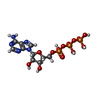 ChemComp-ATP: |
-Macromolecule #6: ADENOSINE-5'-DIPHOSPHATE
| Macromolecule | Name: ADENOSINE-5'-DIPHOSPHATE / type: ligand / ID: 6 / Number of copies: 3 / Formula: ADP |
|---|---|
| Molecular weight | Theoretical: 427.201 Da |
| Chemical component information | 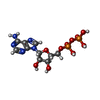 ChemComp-ADP: |
-Experimental details
-Structure determination
| Method | cryo EM |
|---|---|
 Processing Processing | single particle reconstruction |
| Aggregation state | particle |
-Sample preparation
| Concentration | 1 mg/mL |
|---|---|
| Buffer | pH: 7.4 |
| Vitrification | Cryogen name: ETHANE / Chamber humidity: 100 % / Chamber temperature: 277 K / Instrument: FEI VITROBOT MARK IV |
- Electron microscopy
| Microscope | TFS KRIOS |
|---|---|
| Image recording | Film or detector model: GATAN K3 BIOQUANTUM (6k x 4k) / Average electron dose: 50.0 e/Å2 |
| Electron beam | Acceleration voltage: 300 kV / Electron source:  FIELD EMISSION GUN FIELD EMISSION GUN |
| Electron optics | Illumination mode: FLOOD BEAM / Imaging mode: BRIGHT FIELD / Cs: 2.7 mm / Nominal defocus max: 2.0 µm / Nominal defocus min: 0.8 µm |
| Experimental equipment |  Model: Titan Krios / Image courtesy: FEI Company |