National Institutes of Health/National Cancer Institute (NIH/NCI)
P01 CA240685
United States
National Institutes of Health/National Cancer Institute (NIH/NCI)
P20 GM113131-07S1
United States
National Institutes of Health/National Cancer Institute (NIH/NCI)
R01 GM129338
United States
National Science Foundation (NSF, United States)
2321501
United States
Citation
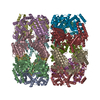
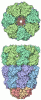
Journal: bioRxiv / Year: 2025 Title: Breaking Barriers: Transitioning from X-ray Crystallography to Cryo-EM for Structural Studies of ATAD2B. Authors: Hassan Zafar / Kiera L Malone / Ajit K Singh / Michael A Cianfrocco / Karen C Glass / Abstract: Cryo-electron microscopy (cryo-EM) has transformed structural biology by enabling near-atomic resolution of large macromolecular complexes without the need for crystallization. Here, we describe our ...Cryo-electron microscopy (cryo-EM) has transformed structural biology by enabling near-atomic resolution of large macromolecular complexes without the need for crystallization. Here, we describe our laboratory's transition from X-ray crystallography to single-particle cryo-EM to investigate the ATPase family AAA+ domain-containing protein 2B (ATAD2B), a chromatin regulator implicated in epigenetic signaling. We outline the challenges encountered during protein expression, purification, and sample preparation, including co-purification of the chaperonin GroEL, and strategies employed to overcome these obstacles. Our workflow highlights critical steps in sample optimization, grid vitrification, and data processing using CryoSPARC, cisTEM, and Topaz, as well as computational requirements for high-resolution reconstructions. We also discuss model building, refinement, and validation approaches, emphasizing best practices for new cryo-EM users. This work provides practical insights for structural biologists adopting cryo-EM, particularly for large, flexible protein complexes, and underscores the importance of integrated approaches combining biochemical, computational, and imaging strategies.
In the structure databanks used in Yorodumi, some data are registered as the other names, "COVID-19 virus" and "2019-nCoV". Here are the details of the virus and the list of structure data.
Jan 31, 2019. EMDB accession codes are about to change! (news from PDBe EMDB page)
EMDB accession codes are about to change! (news from PDBe EMDB page)
The allocation of 4 digits for EMDB accession codes will soon come to an end. Whilst these codes will remain in use, new EMDB accession codes will include an additional digit and will expand incrementally as the available range of codes is exhausted. The current 4-digit format prefixed with “EMD-” (i.e. EMD-XXXX) will advance to a 5-digit format (i.e. EMD-XXXXX), and so on. It is currently estimated that the 4-digit codes will be depleted around Spring 2019, at which point the 5-digit format will come into force.
The EM Navigator/Yorodumi systems omit the EMD- prefix.
Related info.:Q: What is EMD? / ID/Accession-code notation in Yorodumi/EM Navigator
Yorodumi is a browser for structure data from EMDB, PDB, SASBDB, etc.
This page is also the successor to EM Navigator detail page, and also detail information page/front-end page for Omokage search.
The word "yorodu" (or yorozu) is an old Japanese word meaning "ten thousand". "mi" (miru) is to see.
Related info.:EMDB / PDB / SASBDB / Comparison of 3 databanks / Yorodumi Search / Aug 31, 2016. New EM Navigator & Yorodumi / Yorodumi Papers / Jmol/JSmol / Function and homology information / Changes in new EM Navigator and Yorodumi
 Movie
Movie Controller


 Open data
 Basic information
 Map data
 Sample
 Keywords
 Function and homology information
 Escherichia coli (E. coli)
 Authors
 United States, 4 items
  Citation
 Structure visualization
 Downloads & links
 emd_73045.png
 http://ftp.pdbj.org/pub/emdb/structures/EMD-73045


 X (Sec.)
 Y (Row.)
 Z (Col.)


 Sample components
 Processing
 Electron microscopy
 FIELD EMISSION GUN