National Institutes of Health/National Cancer Institute (NIH/NCI)
United States
Citation
Journal: Cell Rep / Year: 2025 Title: Distinct immunity protein families mediate compartment-specific neutralization of a bacterial toxin. Authors: Felicity Alcock / Yaping Yang / Justin Deme / Guillermina Casabona / Chriselle Mendonca / Fatima Ulhuq / Susan Lea / Tracy Palmer / Abstract: Staphylococcus aureus utilizes a type VII secretion system (T7SS) to secrete antibacterial toxins targeting competitor bacteria. EsxX is a T7SS substrate protein harboring an N-terminal LXG domain, ...Staphylococcus aureus utilizes a type VII secretion system (T7SS) to secrete antibacterial toxins targeting competitor bacteria. EsxX is a T7SS substrate protein harboring an N-terminal LXG domain, which is secreted by ST398 strains. We demonstrate that the EsxX C terminus is a membrane-depolarizing toxin with a glycine zipper motif. EsxX is profoundly toxic to bacteria, displaying toxicity from both cytoplasmic and extracellular compartments. A pair of polytopic membrane proteins, ExiCD, protects cells from intoxication by extracellular EsxX. By contrast, a distinct soluble heterodimer, ExiAB, neutralizes cytoplasmic EsxX by sequestration of its glycine zipper motif in a binding groove on ExiB. exiA-exiB co-occur with esxX, consistent with protection from self-toxicity prior to EsxX secretion. By contrast, ExiCD is encoded by both EsxX producers and in antitoxin islands of competitor strains that do not encode EsxX, consistent with providing immunity against the secreted form of the toxin.
Resolution.type: BY AUTHOR / Resolution: 6.0 Å / Resolution method: OTHER / Software - Name: cryoSPARC Details: data are highly anisotropic - gold standard FSC gave resolution estimate of 3.7 but detail in volume suggests more reliably 6A Number images used: 105726
Initial angle assignment
Type: MAXIMUM LIKELIHOOD
Final angle assignment
Type: MAXIMUM LIKELIHOOD
+
About Yorodumi
-
News
-
Feb 9, 2022. New format data for meta-information of EMDB entries
New format data for meta-information of EMDB entries
Version 3 of the EMDB header file is now the official format.
The previous official version 1.9 will be removed from the archive.
In the structure databanks used in Yorodumi, some data are registered as the other names, "COVID-19 virus" and "2019-nCoV". Here are the details of the virus and the list of structure data.
Jan 31, 2019. EMDB accession codes are about to change! (news from PDBe EMDB page)
EMDB accession codes are about to change! (news from PDBe EMDB page)
The allocation of 4 digits for EMDB accession codes will soon come to an end. Whilst these codes will remain in use, new EMDB accession codes will include an additional digit and will expand incrementally as the available range of codes is exhausted. The current 4-digit format prefixed with “EMD-” (i.e. EMD-XXXX) will advance to a 5-digit format (i.e. EMD-XXXXX), and so on. It is currently estimated that the 4-digit codes will be depleted around Spring 2019, at which point the 5-digit format will come into force.
The EM Navigator/Yorodumi systems omit the EMD- prefix.
Related info.:Q: What is EMD? / ID/Accession-code notation in Yorodumi/EM Navigator
Yorodumi is a browser for structure data from EMDB, PDB, SASBDB, etc.
This page is also the successor to EM Navigator detail page, and also detail information page/front-end page for Omokage search.
The word "yorodu" (or yorozu) is an old Japanese word meaning "ten thousand". "mi" (miru) is to see.
Related info.:EMDB / PDB / SASBDB / Comparison of 3 databanks / Yorodumi Search / Aug 31, 2016. New EM Navigator & Yorodumi / Yorodumi Papers / Jmol/JSmol / Function and homology information / Changes in new EM Navigator and Yorodumi
 Movie
Movie Controller


 Open data
 Basic information
 Map data
 Sample
 Keywords
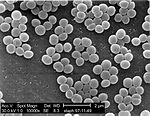 Staphylococcus aureus (bacteria)
 Authors
 United States, 1 items
  Citation
 Structure visualization
 Downloads & links
 EMDB map data format
 emd_72654.png
 https://data.pdbj.org/pub/emdb/structures/EMD-72654
 Z (Sec.)
 Y (Row.)
 X (Col.)


 Sample components
 Processing
 Electron microscopy
 FIELD EMISSION GUN
