National Institutes of Health/National Institute of Neurological Disorders and Stroke (NIH/NINDS)
RF1NS125674
United States
National Institutes of Health/Office of the Director
S10OD032467
United States
Other private
The Pew Scholars Program
Other private
ARCS (Achievement rewards for college scientists)
Other private
Collins Medical Trust
Citation
Journal: bioRxiv / Year: 2025 Title: Surface morphometrics reveals local membrane thickness variation in organellar subcompartments. Authors: Michaela Medina / Ya-Ting Chang / Hamidreza Rahmani / Daniel Fuentes / Benjamin A Barad / Danielle A Grotjahn / Abstract: Lipid bilayers form the basis of organellar architecture, structure, and compartmentalization in the cell. Decades of biophysical, biochemical, and imaging studies on purified or reconstituted ...Lipid bilayers form the basis of organellar architecture, structure, and compartmentalization in the cell. Decades of biophysical, biochemical, and imaging studies on purified or reconstituted liposomes have shown that variations in lipid composition influence the physical properties of membranes, such as thickness and curvature. However, similar studies characterizing these membrane properties within the native cellular context have remained technically challenging. Recent advancements in cellular cryo-electron tomography (cryo-ET) imaging enable high-resolution, three-dimensional views of native organellar membrane architecture preserved in near-native conditions. We previously developed a 'Surface Morphometrics' pipeline that generates surface mesh reconstructions to model and quantify cellular membrane ultrastructure from cryo-ET data. Here, we expand this pipeline to measure the distance between the phospholipid head groups (PHG) of the membrane bilayer as a readout of membrane thickness. Using this approach, we demonstrate thickness variations both within and between distinct organellar membranes. We also demonstrate that membrane thickness positively correlates with other features, such as membrane curvedness. Further, we show that subcompartments of the mitochondrial inner membrane exhibit varying membrane thicknesses that are independent of network morphology (i.e., fragmented versus elongated networks). Finally, we demonstrate that large membrane-associated macromolecular complexes exhibit distinct density profiles that correlate with local variations in membrane thickness. Overall, our updated Surface Morphometrics pipeline provides a framework for investigating how changes in membrane composition in various cellular and disease contexts affect organelle ultrastructure and function.
Applied symmetry - Point group: C1 (asymmetric) / Resolution.type: BY AUTHOR / Resolution: 12.9 Å / Resolution method: FSC 0.143 CUT-OFF / Software - Name: RELION / Software - details: M was used for post-processing / Number subtomograms used: 8993
Extraction
Number tomograms: 42 / Number images used: 8993 / Software - Name: I3 / Software - details: Manual dipole selection
CTF correction
Type: NONE
Final angle assignment
Type: MAXIMUM LIKELIHOOD / Software - Name: RELION (ver. 4.0) / Software - details: Relion + M
FSC plot (resolution estimation)
+
About Yorodumi
-
News
-
Feb 9, 2022. New format data for meta-information of EMDB entries
New format data for meta-information of EMDB entries
Version 3 of the EMDB header file is now the official format.
The previous official version 1.9 will be removed from the archive.
In the structure databanks used in Yorodumi, some data are registered as the other names, "COVID-19 virus" and "2019-nCoV". Here are the details of the virus and the list of structure data.
Jan 31, 2019. EMDB accession codes are about to change! (news from PDBe EMDB page)
EMDB accession codes are about to change! (news from PDBe EMDB page)
The allocation of 4 digits for EMDB accession codes will soon come to an end. Whilst these codes will remain in use, new EMDB accession codes will include an additional digit and will expand incrementally as the available range of codes is exhausted. The current 4-digit format prefixed with “EMD-” (i.e. EMD-XXXX) will advance to a 5-digit format (i.e. EMD-XXXXX), and so on. It is currently estimated that the 4-digit codes will be depleted around Spring 2019, at which point the 5-digit format will come into force.
The EM Navigator/Yorodumi systems omit the EMD- prefix.
Related info.:Q: What is EMD? / ID/Accession-code notation in Yorodumi/EM Navigator
Yorodumi is a browser for structure data from EMDB, PDB, SASBDB, etc.
This page is also the successor to EM Navigator detail page, and also detail information page/front-end page for Omokage search.
The word "yorodu" (or yorozu) is an old Japanese word meaning "ten thousand". "mi" (miru) is to see.
Related info.:EMDB / PDB / SASBDB / Comparison of 3 databanks / Yorodumi Search / Aug 31, 2016. New EM Navigator & Yorodumi / Yorodumi Papers / Jmol/JSmol / Function and homology information / Changes in new EM Navigator and Yorodumi
 Movie
Movie Controller

 Yorodumi
 Open data
 Basic information
 Map data
 Sample
 Keywords
 Mus musculus (house mouse)
 Authors
 United States, 6 items
  Citation
 Structure visualization
 Downloads & links
 EMDB map data format
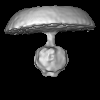
 emd_72321.png
 http://ftp.pdbj.org/pub/emdb/structures/EMD-72321
 Z (Sec.)
 Y (Row.)
 X (Col.)





 Sample components
 Processing
 Electron microscopy
 FIELD EMISSION GUN

