National Institutes of Health/National Institute Of Allergy and Infectious Diseases (NIH/NIAID)
R21AI123794
United States
National Institutes of Health/National Institute Of Allergy and Infectious Diseases (NIH/NIAID)
R01AI143714
United States
National Institutes of Health/National Institute Of Allergy and Infectious Diseases (NIH/NIAID)
R01AI177635
United States
Citation
Journal: ACS Omega / Year: 2026 Title: Structure-Activity Relationship Study of Antimalarial Asparagine-Derived Proteasome Inhibitors. Authors: Hao Zhang / Daqiang Li / Hao-Chi Hsu / Akshay Vishwanatha / Wenhu Zhan / Takafumi Yukawa / Joseph Visone / Toshihiro Imaeda / Rei Okamoto / Pavla Fajtova / Ryoma Hara / Masanori Kawasaki / ...Authors: Hao Zhang / Daqiang Li / Hao-Chi Hsu / Akshay Vishwanatha / Wenhu Zhan / Takafumi Yukawa / Joseph Visone / Toshihiro Imaeda / Rei Okamoto / Pavla Fajtova / Ryoma Hara / Masanori Kawasaki / Kenjiro Sato / Mayako Michino / Shreeya Garg / Oriana Kreutzfeld / Patrick K Tumwebaze / Stephen Orena / Martin Okitwi / Kazuyoshi Aso / Roland A Cooper / Philip J Rosenthal / Peter T Meinke / Michael Foley / Anthony J O'Donoghue / Huilin Li / Laura A Kirkman / Gang Lin / Abstract: Malaria remains a significant global health threat, affecting millions of lives each year. The causative agents, parasites, are highly resilient and have developed resistance to nearly all existing ...Malaria remains a significant global health threat, affecting millions of lives each year. The causative agents, parasites, are highly resilient and have developed resistance to nearly all existing antimalarial drugs. The 20S proteasome core (20S), a central component of the parasite's proteostasis pathway, has emerged as a promising therapeutic target. Inhibiting 20S effectively suppresses parasite growth at multiple stages of the parasite life cycle, synergizes with artemisinin-based therapies, and shows no cross-resistance with other antimalarial drug classes. Previously, we identified a novel class of proteasome inhibitors with potent activity against 20S, which we subsequently optimized for improved potency and selectivity over human proteasomes. However, these inhibitors exhibited suboptimal pharmacokinetic properties, potentially attributable to a high number of rotatable bonds and hydrogen bond donors. Here, we describe further optimization of this inhibitor class and provide structural insights into 20S-inhibitor interactions. Cryo-EM structural studies reveal a novel binding pose of the inhibitor at the 20S β5 active site, explaining the enhanced activity of an -cap sulfonamide modification compared to an -cap amide. These findings offer insights into the development of next-generation antimalarial 20S-targeting compounds with improved drug-like properties.
Name: N~4~-tert-butyl-N~2~-(4-methylbenzene-1-sulfonyl)-N~1~-[2-(1-oxo-1,3-dihydro-2H-isoindol-2-yl)ethyl]-L-aspartamide type: ligand / ID: 15 / Number of copies: 2 / Formula: A1CRS
Molecular weight
Theoretical: 500.61 Da
-
Experimental details
-
Structure determination
Method
cryo EM
Processing
single particle reconstruction
Aggregation state
particle
-
Sample preparation
Concentration
3 mg/mL
Buffer
pH: 7.5 / Details: 20 mM Tris, pH 7.5, 5 mM MgCl2, and 100 mM KCl
Grid
Model: Quantifoil R1.2/1.3 / Material: GOLD / Mesh: 300 / Support film - Material: CARBON / Support film - topology: HOLEY ARRAY / Pretreatment - Type: GLOW DISCHARGE / Pretreatment - Time: 30 sec. / Pretreatment - Atmosphere: OTHER
Vitrification
Cryogen name: ETHANE / Chamber humidity: 100 % / Chamber temperature: 279 K / Instrument: FEI VITROBOT MARK IV
-
Electron microscopy
Microscope
TFS KRIOS
Specialist optics
Energy filter - Name: GIF Bioquantum / Energy filter - Slit width: 20 eV
Image recording
Film or detector model: GATAN K3 BIOQUANTUM (6k x 4k) / Digitization - Dimensions - Width: 5760 pixel / Digitization - Dimensions - Height: 4092 pixel / Number grids imaged: 1 / Number real images: 24167 / Average exposure time: 1.2 sec. / Average electron dose: 58.0 e/Å2
Electron beam
Acceleration voltage: 300 kV / Electron source: FIELD EMISSION GUN
In the structure databanks used in Yorodumi, some data are registered as the other names, "COVID-19 virus" and "2019-nCoV". Here are the details of the virus and the list of structure data.
Jan 31, 2019. EMDB accession codes are about to change! (news from PDBe EMDB page)
EMDB accession codes are about to change! (news from PDBe EMDB page)
The allocation of 4 digits for EMDB accession codes will soon come to an end. Whilst these codes will remain in use, new EMDB accession codes will include an additional digit and will expand incrementally as the available range of codes is exhausted. The current 4-digit format prefixed with “EMD-” (i.e. EMD-XXXX) will advance to a 5-digit format (i.e. EMD-XXXXX), and so on. It is currently estimated that the 4-digit codes will be depleted around Spring 2019, at which point the 5-digit format will come into force.
The EM Navigator/Yorodumi systems omit the EMD- prefix.
Related info.:Q: What is EMD? / ID/Accession-code notation in Yorodumi/EM Navigator
Yorodumi is a browser for structure data from EMDB, PDB, SASBDB, etc.
This page is also the successor to EM Navigator detail page, and also detail information page/front-end page for Omokage search.
The word "yorodu" (or yorozu) is an old Japanese word meaning "ten thousand". "mi" (miru) is to see.
Related info.:EMDB / PDB / SASBDB / Comparison of 3 databanks / Yorodumi Search / Aug 31, 2016. New EM Navigator & Yorodumi / Yorodumi Papers / Jmol/JSmol / Function and homology information / Changes in new EM Navigator and Yorodumi
 Movie
Movie Controller

 Yorodumi
 Open data
 Basic information
 Map data
 Sample
 Keywords
 Function and homology information
 Plasmodium falciparum (malaria parasite P. falciparum)
 Authors
 United States, 3 items
  Citation
 Structure visualization
 Downloads & links
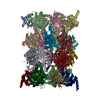
 emd_72277.png
 https://data.pdbj.org/pub/emdb/structures/EMD-72277
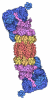

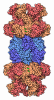
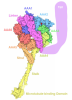
 Z (Sec.)
 Y (Row.)
 X (Col.)


 Sample components
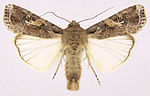 Spodoptera frugiperda (fall armyworm)
 Processing
 Electron microscopy
 FIELD EMISSION GUN