[English] 日本語
Yorodumi
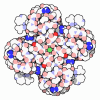
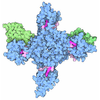
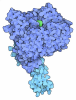
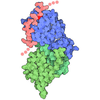
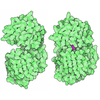
- EMDB-70519: Structure of shaker-IR-I384R -

+
Open data


ID or keywords:

Loading...

-
Basic information

Entry
Database: EMDB / ID: EMD-70519
TitleStructure of shaker-IR-I384R
Map data
Sample
  • Cell: Membrane
    • Protein or peptide: Potassium voltage-gated channel protein Shaker
  • Ligand: POTASSIUM ION
KeywordsTetrameric Ion Channel / Voltage-gated Potassium Channel / Closed State / MEMBRANE PROTEIN
Function / homology
Function and homology information


mating behavior, sex discrimination / Phase 3 - rapid repolarisation / behavioral response to ether / Voltage gated Potassium channels / proboscis extension reflex / larval locomotory behavior / regulation of synaptic activity / courtship behavior / positive regulation of membrane potential / regulation of circadian sleep/wake cycle, sleep ...mating behavior, sex discrimination / Phase 3 - rapid repolarisation / behavioral response to ether / Voltage gated Potassium channels / proboscis extension reflex / larval locomotory behavior / regulation of synaptic activity / courtship behavior / positive regulation of membrane potential / regulation of circadian sleep/wake cycle, sleep / positive regulation of circadian sleep/wake cycle, sleep / detection of visible light / delayed rectifier potassium channel activity / cellular response to dopamine / sleep / axon extension / voltage-gated monoatomic cation channel activity / action potential / voltage-gated potassium channel activity / voltage-gated potassium channel complex / potassium ion transmembrane transport / protein homooligomerization / potassium ion transport / sensory perception of taste / perikaryon / learning or memory / neuron projection / membrane raft / membrane
Similarity search - Function
Potassium channel, voltage dependent, Kv1 / Potassium channel, voltage dependent, Kv / Potassium channel tetramerisation-type BTB domain / BTB/POZ domain / Voltage-gated potassium channel / Broad-Complex, Tramtrack and Bric a brac / BTB/POZ domain / Voltage-dependent channel domain superfamily / SKP1/BTB/POZ domain superfamily / Ion transport domain / Ion transport protein
Similarity search - Domain/homology
Potassium voltage-gated channel protein Shaker
Similarity search - Component
Biological speciesDrosophila melanogaster (fruit fly)
Methodsingle particle reconstruction / cryo EM / Resolution: 3.48 Å
AuthorsLiu Y / Contreras GF
Funding support United States, 3 items
OrganizationGrant numberCountry
National Institutes of Health/National Institute of General Medical Sciences (NIH/NIGMS)R01-GM150272 United States
National Institutes of Health/National Institute of General Medical Sciences (NIH/NIGMS)R01-GM030376 United States
National Science Foundation (NSF, United States)OMA-2121044 United States
CitationJournal: Nat Commun / Year: 2025
Title: Closed state structure of the pore revealed by uncoupled Shaker K channel.
Authors: Yichen Liu / Carlos Bassetto / Gustavo F Contreras / Eduardo Perozo / Francisco Bezanilla /
Abstract: Voltage gated potassium (Kv) channels regulate processes from cellular excitability to immune response and are major pharmaceutical targets. Despite recent structural advances, the closed state ...Voltage gated potassium (Kv) channels regulate processes from cellular excitability to immune response and are major pharmaceutical targets. Despite recent structural advances, the closed state structure of the strictly coupled Kv1 family remains elusive. Here, we capture the structure of the Shaker potassium channel with a closed pore by uncoupling its voltage sensor domains from the pore domain. Structural determination of the uncoupled I384R mutant by single particle Cryo-EM reveals a fully closed pore coexisting with activated, non-relaxed voltage sensors. Comparison with the open pore structure suggests a roll-and-turn movement along the length of the pore-forming S6 helices, contrasting with canonical gating models based on limited movements of S6. These rotational-translational motions place two hydrophobic residues, one in the inner cavity and the other at the bundle crossing region, directly at the permeation pathway, limiting the pore radius to less than 1 Å. The selectivity filter is captured in a noncanonical state, partially expanded at G446, unlike previously described dilated or pinched filter conformations. Together, these findings suggest a reinterpretation of the mechanism of activation gating for strictly coupled Kv1 channels, highlighting the strictly sensor-pore coupling that underlies different functional states.
History
DepositionMay 6, 2025-
Header (metadata) releaseDec 3, 2025-
Map releaseDec 3, 2025-
UpdateDec 3, 2025-
Current statusDec 3, 2025Processing site: RCSB / Status: Released

-
Structure visualization

Supplemental images

Downloads & links

-
Map

FileDownload / File: emd_70519.map.gz / Format: CCP4 / Size: 64 MB / Type: IMAGE STORED AS FLOATING POINT NUMBER (4 BYTES)
Projections & slices

Image control

Size
Brightness
Contrast
Others
AxesZ (Sec.)Y (Row.)X (Col.)
1.06 Å/pix.
x 256 pix.
= 271.36 Å
1.06 Å/pix.
x 256 pix.
= 271.36 Å
1.06 Å/pix.
x 256 pix.
= 271.36 Å

Surface

Projections

Slices (1/3)

Slices (1/2)

Slices (2/3)

Images are generated by Spider.

Voxel sizeX=Y=Z: 1.06 Å
Density
Contour LevelBy AUTHOR: 0.044
Minimum - Maximum-0.097848915 - 0.21656527
Average (Standard dev.)0.000842195 (±0.007546856)
SymmetrySpace group: 1
Details

EMDB XML:

Map geometry
Axis orderXYZ
Origin000
Dimensions256256256
Spacing256256256
CellA=B=C: 271.36 Å
α=β=γ: 90.0 °

-
Supplemental data

-
Half map: #2

Fileemd_70519_half_map_1.map
Projections & Slices
AxesZYX

Projections

Slices (1/2)
Density Histograms

-
Half map: #1

Fileemd_70519_half_map_2.map
Projections & Slices
AxesZYX

Projections

Slices (1/2)
Density Histograms

-
Sample components

-
Entire : Membrane

EntireName: Membrane
Components
  • Cell: Membrane
    • Protein or peptide: Potassium voltage-gated channel protein Shaker
  • Ligand: POTASSIUM ION

-
Supramolecule #1: Membrane

SupramoleculeName: Membrane / type: cell / ID: 1 / Parent: 0 / Macromolecule list: #1
Source (natural)Organism: Drosophila melanogaster (fruit fly)

-
Macromolecule #1: Potassium voltage-gated channel protein Shaker

MacromoleculeName: Potassium voltage-gated channel protein Shaker / type: protein_or_peptide / ID: 1 / Number of copies: 4 / Enantiomer: LEVO
Source (natural)Organism: Drosophila melanogaster (fruit fly)
Molecular weightTheoretical: 69.361203 KDa
Recombinant expressionOrganism: Homo sapiens (human)
SequenceString: MAAVALREQQ LQRNSLDGYG SLPKLSSQDE EGGAGHGFGG GPQHFEPIPH DHDFCERVVI NVSGLRFETQ LRTLNQFPDT LLGDPARRL RYFDPLRNEY FFDRSRPSFD AILYYYQSGG RLRRPVNVPL DVFSEEIKFY ELGDQAINKF REDEGFIKEE E RPLPDNEK ...String:
MAAVALREQQ LQRNSLDGYG SLPKLSSQDE EGGAGHGFGG GPQHFEPIPH DHDFCERVVI NVSGLRFETQ LRTLNQFPDT LLGDPARRL RYFDPLRNEY FFDRSRPSFD AILYYYQSGG RLRRPVNVPL DVFSEEIKFY ELGDQAINKF REDEGFIKEE E RPLPDNEK QRKVWLLFEY PESSQAARVV AIISVFVILL SIVIFCLETL PEFKHYKVFN TTTNGTKIEE DEVPDITDPF FL IETLCII WFTFELTVRF LACPNKLNFC RDVMNVIDII AIIPYFITLA TVVAEEEDTL NLPKAPVSPQ DKSSNQAMSL AIL RVIRLV RVFRIFKLSR HSKGLQRLGR TLKASMRELG LLIFFLFIGV VLFSSAVYFA EAGSENSFFK SIPDAFWWAV VTMT TVGYG DMTPVGVWGK IVGSLCAIAG VLTIALPVPV IVSNFNYFYH RETDQEEMQS QNFNHVTSCP YLPGTLVGQH MKKSS LSES SSDMMDLDDG VESTPGLTET HPGRSAVAPF LGAQQQQQQP VASSLSMSID KQLQHPLQQL TQTQLYQQQQ QQQQQQ QNG FKQQQQQTQQ QLQQQQSHTI NASAAAATSG SGSSGLTMRH NNALAVSIET DV

UniProtKB: Potassium voltage-gated channel protein Shaker

-
Macromolecule #2: POTASSIUM ION

MacromoleculeName: POTASSIUM ION / type: ligand / ID: 2 / Number of copies: 2 / Formula: K
Molecular weightTheoretical: 39.098 Da

-
Experimental details

-
Structure determination

Methodcryo EM
Processingsingle particle reconstruction
Aggregation stateparticle

-
Sample preparation

BufferpH: 7.5
VitrificationCryogen name: ETHANE

-
Electron microscopy

MicroscopeTFS KRIOS
Image recordingFilm or detector model: FEI FALCON IV (4k x 4k) / Average electron dose: 60.0 e/Å2
Electron beamAcceleration voltage: 300 kV / Electron source: FIELD EMISSION GUN
Electron opticsIllumination mode: SPOT SCAN / Imaging mode: DIFFRACTION / Nominal defocus max: 2.0 µm / Nominal defocus min: 0.7000000000000001 µm
Experimental equipment
Model: Titan Krios / Image courtesy: FEI Company

+
Image processing

CTF correctionType: NONE
Startup modelType of model: PDB ENTRY
PDB model - PDB ID:
Final reconstructionResolution.type: BY AUTHOR / Resolution: 3.48 Å / Resolution method: FSC 0.143 CUT-OFF / Software - Name: cryoSPARC / Number images used: 80704
Initial angle assignmentType: MAXIMUM LIKELIHOOD
Final angle assignmentType: MAXIMUM LIKELIHOOD
FSC plot (resolution estimation)

+
About Yorodumi

-
News

-
Feb 9, 2022. New format data for meta-information of EMDB entries

New format data for meta-information of EMDB entries

  • Version 3 of the EMDB header file is now the official format.
  • The previous official version 1.9 will be removed from the archive.

Related info.:EMDB header

External links:wwPDB to switch to version 3 of the EMDB data model

-
Aug 12, 2020. Covid-19 info

Covid-19 info

URL: https://pdbj.org/emnavi/covid19.php

New page: Covid-19 featured information page in EM Navigator.

Related info.:Covid-19 info / Mar 5, 2020. Novel coronavirus structure data

+
Mar 5, 2020. Novel coronavirus structure data

Novel coronavirus structure data

Related info.:Yorodumi Speices / Aug 12, 2020. Covid-19 info

External links:COVID-19 featured content - PDBj / Molecule of the Month (242):Coronavirus Proteases

+
Jan 31, 2019. EMDB accession codes are about to change! (news from PDBe EMDB page)

EMDB accession codes are about to change! (news from PDBe EMDB page)

  • The allocation of 4 digits for EMDB accession codes will soon come to an end. Whilst these codes will remain in use, new EMDB accession codes will include an additional digit and will expand incrementally as the available range of codes is exhausted. The current 4-digit format prefixed with “EMD-” (i.e. EMD-XXXX) will advance to a 5-digit format (i.e. EMD-XXXXX), and so on. It is currently estimated that the 4-digit codes will be depleted around Spring 2019, at which point the 5-digit format will come into force.
  • The EM Navigator/Yorodumi systems omit the EMD- prefix.

Related info.:Q: What is EMD? / ID/Accession-code notation in Yorodumi/EM Navigator

External links:EMDB Accession Codes are Changing Soon! / Contact to PDBj

+
Jul 12, 2017. Major update of PDB

Major update of PDB

  • wwPDB released updated PDB data conforming to the new PDBx/mmCIF dictionary.
  • This is a major update changing the version number from 4 to 5, and with Remediation, in which all the entries are updated.
  • In this update, many items about electron microscopy experimental information are reorganized (e.g. em_software).
  • Now, EM Navigator and Yorodumi are based on the updated data.

External links:wwPDB Remediation / Enriched Model Files Conforming to OneDep Data Standards Now Available in the PDB FTP Archive

-
Yorodumi

Thousand views of thousand structures

  • Yorodumi is a browser for structure data from EMDB, PDB, SASBDB, etc.
  • This page is also the successor to EM Navigator detail page, and also detail information page/front-end page for Omokage search.
  • The word "yorodu" (or yorozu) is an old Japanese word meaning "ten thousand". "mi" (miru) is to see.

Related info.:EMDB / PDB / SASBDB / Comparison of 3 databanks / Yorodumi Search / Aug 31, 2016. New EM Navigator & Yorodumi / Yorodumi Papers / Jmol/JSmol / Function and homology information / Changes in new EM Navigator and Yorodumi

Read more