National Institutes of Health/National Institute of General Medical Sciences (NIH/NIGMS)
R35GM124824
United States
Citation
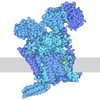
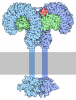
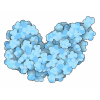
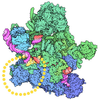
Journal: Mol Cell / Year: 2025 Title: Puromycin-sensitive aminopeptidase acts as an inhibitory auxiliary subunit of volume-regulated anion channels and regulates cGAMP transport. Authors: Wenqiang Zheng / Tatsuya Hagino / Hao Wang / Henry Yi Cheng / Nicholas Koylass / Kevin Hong Chen / Haobo Wang / Sepehr Mani / Anish Kumar Mondal / Edward C Twomey / Zhaozhu Qiu / Abstract: Volume-regulated anion channels (VRACs) are large-pore channels expressed in most vertebrate cells and are critical for cell volume regulation and autocrine/paracrine signaling. Here, we identify the ...Volume-regulated anion channels (VRACs) are large-pore channels expressed in most vertebrate cells and are critical for cell volume regulation and autocrine/paracrine signaling. Here, we identify the ubiquitously expressed puromycin-sensitive aminopeptidase (PSA) as a binding partner of the obligatory VRAC subunit SWELL1 (also known as LRRC8A) and determine the cryo-electron microscopy structure of the SWELL1-PSA complex. Three PSA molecules bind a single SWELL1 hexamer, coupling adjacent leucine-rich repeat (LRR) domains into local dimers. Functionally, PSA overexpression suppresses VRAC activation, whereas PSA deletion dramatically elevates basal channel activity. Notably, PSA's modulation of VRACs requires physical binding but not aminopeptidase activity, indicating a structural mechanism. Our findings identify PSA as an auxiliary subunit of VRACs, highlight the role of intracellular LRR domains in allosteric channel gating, and suggest a strategy to tune VRAC function in diverse physiological contexts, including 2'3'-cyclic GMP-AMP (cGAMP) transport and downstream stimulator of interferon genes (STING) signaling.
In the structure databanks used in Yorodumi, some data are registered as the other names, "COVID-19 virus" and "2019-nCoV". Here are the details of the virus and the list of structure data.
Jan 31, 2019. EMDB accession codes are about to change! (news from PDBe EMDB page)
EMDB accession codes are about to change! (news from PDBe EMDB page)
The allocation of 4 digits for EMDB accession codes will soon come to an end. Whilst these codes will remain in use, new EMDB accession codes will include an additional digit and will expand incrementally as the available range of codes is exhausted. The current 4-digit format prefixed with “EMD-” (i.e. EMD-XXXX) will advance to a 5-digit format (i.e. EMD-XXXXX), and so on. It is currently estimated that the 4-digit codes will be depleted around Spring 2019, at which point the 5-digit format will come into force.
The EM Navigator/Yorodumi systems omit the EMD- prefix.
Related info.:Q: What is EMD? / ID/Accession-code notation in Yorodumi/EM Navigator
Yorodumi is a browser for structure data from EMDB, PDB, SASBDB, etc.
This page is also the successor to EM Navigator detail page, and also detail information page/front-end page for Omokage search.
The word "yorodu" (or yorozu) is an old Japanese word meaning "ten thousand". "mi" (miru) is to see.
Related info.:EMDB / PDB / SASBDB / Comparison of 3 databanks / Yorodumi Search / Aug 31, 2016. New EM Navigator & Yorodumi / Yorodumi Papers / Jmol/JSmol / Function and homology information / Changes in new EM Navigator and Yorodumi
 Movie
Movie Controller


 Open data
 Basic information
 Map data
 Sample
 Keywords
 Function and homology information
 Homo sapiens (human)
 Authors
 United States, 1 items
  Citation
 Structure visualization
 Downloads & links
 emd_70143.png
 http://ftp.pdbj.org/pub/emdb/structures/EMD-70143
 Z (Sec.)
 Y (Row.)
 X (Col.)


 Sample components
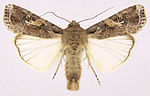 Spodoptera frugiperda (fall armyworm)
 Processing
 Electron microscopy
 FIELD EMISSION GUN
