cellular response to bleomycin / regulation of nuclear cell cycle DNA replication / DNA secondary structure binding / detection of abiotic stimulus / replication fork protection complex / replication fork arrest / cell cycle phase transition / Switching of origins to a post-replicative state / Unwinding of DNA / DNA strand elongation involved in mitotic DNA replication ...cellular response to bleomycin / regulation of nuclear cell cycle DNA replication / DNA secondary structure binding / detection of abiotic stimulus / replication fork protection complex / replication fork arrest / cell cycle phase transition / Switching of origins to a post-replicative state / Unwinding of DNA / DNA strand elongation involved in mitotic DNA replication / cellular response to hydroxyurea / GINS complex / mitotic DNA replication preinitiation complex assembly / cellular response to cisplatin / nuclear origin of replication recognition complex / anaphase-promoting complex binding / alpha DNA polymerase:primase complex / regulation of phosphorylation / morphogenesis of an epithelium / Regulation of MITF-M-dependent genes involved in DNA replication, damage repair and senescence / CMG complex / DNA replication checkpoint signaling / DNA replication preinitiation complex / mitotic DNA replication checkpoint signaling / MCM complex / mitotic DNA replication initiation / mitotic intra-S DNA damage checkpoint signaling / mitotic DNA replication / Apoptotic cleavage of cellular proteins / double-strand break repair via break-induced replication / DNA strand elongation involved in DNA replication / G1/S-Specific Transcription / mitotic G2 DNA damage checkpoint signaling / positive regulation of double-strand break repair / nuclear replication fork / cochlea development / DNA replication origin binding / Activation of the pre-replicative complex / DNA replication initiation / Activation of ATR in response to replication stress / regulation of DNA-templated DNA replication initiation / DNA damage checkpoint signaling / positive regulation of double-strand break repair via homologous recombination / cellular response to epidermal growth factor stimulus / replication fork processing / circadian rhythm / Assembly of the pre-replicative complex / DNA-templated DNA replication / regulation of circadian rhythm / enzyme activator activity / Orc1 removal from chromatin / mitotic cell cycle / histone binding / single-stranded DNA binding / site of double-strand break / ciliary basal body / Processing of DNA double-strand break ends / DNA helicase / DNA replication / apoptotic process / chromosome, telomeric region / DNA helicase activity / response to xenobiotic stimulus / Ub-specific processing proteases / DNA repair / chromosome / negative regulation of DNA-templated transcription / chromatin binding / positive regulation of cell population proliferation / DNA damage response / chromatin / perinuclear region of cytoplasm / Golgi apparatus / enzyme binding / ATP hydrolysis activity / DNA binding / nucleoplasm / ATP binding / membrane / identical protein binding / nucleus / cytosol / cytoplasm Similarity search - Function
: / Claspin / : / : / WDHD1 HMG box / WDHD1 first WD40 domain / Claspin / : / TIMELESS, tri-helical helix-turn-helix domain / Chromosome segregation in meiosis protein 3 ...: / Claspin / : / : / WDHD1 HMG box / WDHD1 first WD40 domain / Claspin / : / TIMELESS, tri-helical helix-turn-helix domain / Chromosome segregation in meiosis protein 3 / TIPIN/Csm3/Swi3 / Replication Fork Protection Component Swi3 / Timeless, C-terminal / Timeless-like, PAB domain / : / TOF1-like, helical domain / Timeless, N-terminal / Timeless / Timeless protein / : / DNA polymerase alpha-binding protein Ctf4, C-terminal domain / Minichromosome loss protein Mcl1, middle region / Minichromosome loss protein, Mcl1, middle region / : / DNA replication licensing factor MCM2-like, winged-helix domain / : / PSF2 N-terminal domain / : / : / PSF3 N-terminal domain / PSF1 C-terminal domain / DNA replication complex GINS protein Psf2 / GINS complex, subunit Psf3 / DNA replication complex GINS protein SLD5, C-terminal / GINS complex, subunit Psf3 superfamily / GINS complex protein Sld5, alpha-helical domain / DNA replication complex GINS protein SLD5 C-terminus / GINS complex subunit Sld5 / CDC45 family / GINS subunit, domain A / CDC45 / GINS complex protein helical bundle domain / GINS complex, subunit Psf1 / GINS, helical bundle-like domain superfamily / : / MCM5, C-terminal domain / DNA replication licensing factor MCM7, winged helix / : / DNA replication licensing factor Mcm5 / MCM4, winged helix domain / Mini-chromosome maintenance complex protein 4 / DNA replication licensing factor Mcm3 / : / MCM3-like, winged helix domain / DNA replication licensing factor Mcm7 / DNA replication licensing factor Mcm6 / Mcm6, C-terminal winged-helix domain / MCM6 C-terminal winged-helix domain / DNA replication licensing factor Mcm2 / Mini-chromosome maintenance protein 2 / Mini-chromosome maintenance, conserved site / MCM family signature. / MCM N-terminal domain / MCM N-terminal domain / MCM OB domain / MCM OB domain / Mini-chromosome maintenance protein / MCM, AAA-lid domain / MCM P-loop domain / MCM AAA-lid domain / MCM family C-terminal AAA(+) ATPase domain (MCM-CTD) profile. / minichromosome maintenance proteins / MCM domain / HMG boxes A and B DNA-binding domains profile. / high mobility group / High mobility group box domain / High mobility group box domain superfamily / WD40 repeat, conserved site / Trp-Asp (WD) repeats signature. / Trp-Asp (WD) repeats profile. / Trp-Asp (WD) repeats circular profile. / WD40 repeats / WD40 repeat / WD40-repeat-containing domain superfamily / WD40/YVTN repeat-like-containing domain superfamily / Nucleic acid-binding, OB-fold / ATPases associated with a variety of cellular activities / AAA+ ATPase domain / P-loop containing nucleoside triphosphate hydrolase Similarity search - Domain/homology
Cell division control protein 45 homolog / WD repeat and HMG-box DNA-binding protein 1 / DNA replication licensing factor MCM3 / DNA replication licensing factor MCM4 / DNA replication licensing factor MCM5 / DNA replication licensing factor MCM7 / DNA replication licensing factor MCM2 / DNA replication licensing factor MCM6 / DNA replication complex GINS protein PSF1 / DNA replication complex GINS protein SLD5 ...Cell division control protein 45 homolog / WD repeat and HMG-box DNA-binding protein 1 / DNA replication licensing factor MCM3 / DNA replication licensing factor MCM4 / DNA replication licensing factor MCM5 / DNA replication licensing factor MCM7 / DNA replication licensing factor MCM2 / DNA replication licensing factor MCM6 / DNA replication complex GINS protein PSF1 / DNA replication complex GINS protein SLD5 / DNA replication complex GINS protein PSF3 / TIMELESS-interacting protein / Claspin / Protein timeless homolog / DNA replication complex GINS protein PSF2 Similarity search - Component
Biological species
Homo sapiens (human) / Homo sapiens environmental sample (environmental samples) / synthetic construct (others)
Method
single particle reconstruction / cryo EM / Resolution: 2.1 Å
In the structure databanks used in Yorodumi, some data are registered as the other names, "COVID-19 virus" and "2019-nCoV". Here are the details of the virus and the list of structure data.
Jan 31, 2019. EMDB accession codes are about to change! (news from PDBe EMDB page)
EMDB accession codes are about to change! (news from PDBe EMDB page)
The allocation of 4 digits for EMDB accession codes will soon come to an end. Whilst these codes will remain in use, new EMDB accession codes will include an additional digit and will expand incrementally as the available range of codes is exhausted. The current 4-digit format prefixed with “EMD-” (i.e. EMD-XXXX) will advance to a 5-digit format (i.e. EMD-XXXXX), and so on. It is currently estimated that the 4-digit codes will be depleted around Spring 2019, at which point the 5-digit format will come into force.
The EM Navigator/Yorodumi systems omit the EMD- prefix.
Related info.:Q: What is EMD? / ID/Accession-code notation in Yorodumi/EM Navigator
Yorodumi is a browser for structure data from EMDB, PDB, SASBDB, etc.
This page is also the successor to EM Navigator detail page, and also detail information page/front-end page for Omokage search.
The word "yorodu" (or yorozu) is an old Japanese word meaning "ten thousand". "mi" (miru) is to see.
Related info.:EMDB / PDB / SASBDB / Comparison of 3 databanks / Yorodumi Search / Aug 31, 2016. New EM Navigator & Yorodumi / Yorodumi Papers / Jmol/JSmol / Function and homology information / Changes in new EM Navigator and Yorodumi
 Movie
Movie Controller


 Open data
 Basic information
 Map data
 Sample
 Keywords
 Function and homology information
 Homo sapiens (human) /
  Authors
 United States, 2 items
  Citation
 Structure visualization
 Downloads & links
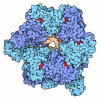
 emd_70068.png
 https://data.pdbj.org/pub/emdb/structures/EMD-70068


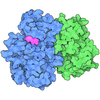
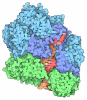
 Z (Sec.)
 Y (Row.)
 X (Col.)


 Sample components
 Trichoplusia ni (cabbage looper)
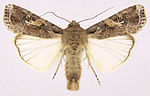 Spodoptera frugiperda (fall armyworm)
 Processing
 Electron microscopy
 FIELD EMISSION GUN
