 Movie
Movie Controller

[English] 日本語
 Yorodumi
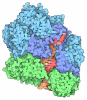
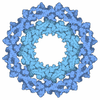
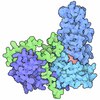
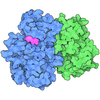
- EMDB-68919: Cryo-EM structure of human ATR-ATRIP complex with ATPgammaS and Chk1 -
+ Open data

- Basic information
| Entry |  | |||||||||
|---|---|---|---|---|---|---|---|---|---|---|
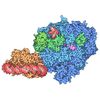
| Title | Cryo-EM structure of human ATR-ATRIP complex with ATPgammaS and Chk1 | |||||||||
 Map data Map data | local. resolution filtered map | |||||||||
 Sample Sample |
| |||||||||
 Keywords Keywords | ATR / TopBp1 / Chk1 / DNA repair / NUCLEAR PROTEIN | |||||||||
| Function / homology |  Function and homology information Function and homology informationATR-ATRIP complex / establishment of RNA localization to telomere / positive regulation of telomerase catalytic core complex assembly / nuclear membrane disassembly / establishment of protein-containing complex localization to telomere / MutSalpha complex binding / negative regulation of mitotic nuclear division / histone H2AXS139 kinase activity / negative regulation of G0 to G1 transition / histone H3T11 kinase activity ...ATR-ATRIP complex / establishment of RNA localization to telomere / positive regulation of telomerase catalytic core complex assembly / nuclear membrane disassembly / establishment of protein-containing complex localization to telomere / MutSalpha complex binding / negative regulation of mitotic nuclear division / histone H2AXS139 kinase activity / negative regulation of G0 to G1 transition / histone H3T11 kinase activity / negative regulation of DNA replication / regulation of mitotic centrosome separation / MutLalpha complex binding / response to arsenic-containing substance / mitotic G2/M transition checkpoint / regulation of double-strand break repair / nucleobase-containing compound metabolic process / protein localization to chromosome, telomeric region / positive regulation of DNA damage response, signal transduction by p53 class mediator / K63-linked polyubiquitin modification-dependent protein binding / regulation of double-strand break repair via homologous recombination / HDR through Single Strand Annealing (SSA) / peptidyl-threonine phosphorylation / negative regulation of gene expression, epigenetic / mitotic G2 DNA damage checkpoint signaling / Transcriptional Regulation by E2F6 / replicative senescence / Impaired BRCA2 binding to RAD51 / Regulation of HSF1-mediated heat shock response / response to mechanical stimulus / Presynaptic phase of homologous DNA pairing and strand exchange / Activation of ATR in response to replication stress / interstrand cross-link repair / Chk1/Chk2(Cds1) mediated inactivation of Cyclin B:Cdk1 complex / DNA damage checkpoint signaling / regulation of cellular response to heat / positive regulation of telomere maintenance via telomerase / signal transduction in response to DNA damage / positive regulation of cell cycle / replication fork / telomere maintenance / replication fork processing / regulation of signal transduction by p53 class mediator / Meiotic synapsis / condensed nuclear chromosome / site of DNA damage / TP53 Regulates Transcription of DNA Repair Genes / cellular response to gamma radiation / Fanconi Anemia Pathway / cellular response to mechanical stimulus / Signaling by SCF-KIT / PML body / G2/M DNA damage checkpoint / Ubiquitin-Mediated Degradation of Phosphorylated Cdc25A / cellular response to UV / double-strand break repair / nuclear envelope / chromosome / Processing of DNA double-strand break ends / Regulation of TP53 Activity through Phosphorylation / DNA replication / protein kinase activity / protein phosphorylation / non-specific serine/threonine protein kinase / response to xenobiotic stimulus / chromatin remodeling / protein domain specific binding / protein serine kinase activity / DNA repair / protein serine/threonine kinase activity / apoptotic process / centrosome / DNA damage response / chromatin / protein-containing complex / DNA binding / : / nucleoplasm / ATP binding / nucleus / cytosol / cytoplasm Similarity search - Function | |||||||||
| Biological species |  Homo sapiens (human) Homo sapiens (human) | |||||||||
| Method | single particle reconstruction / cryo EM / Resolution: 2.7 Å | |||||||||
 Authors Authors | Wang L / Wang M / Zhao L / Rao Q / Wu H / Ma B / Wang J / Zheng J / Li Y / Xu Y ...Wang L / Wang M / Zhao L / Rao Q / Wu H / Ma B / Wang J / Zheng J / Li Y / Xu Y / Guo J / Cheng J / Qiao S | |||||||||
| Funding support |  China, 2 items China, 2 items
| |||||||||
 Citation Citation | Journal: To Be Published Title: Cryo-EM structure of human ATR-ATRIP complex with ATPgammaS and Chk1 Authors: Wang L / Wang M / Zhao L / Rao Q / Wu H / Ma B / Wang J / Zheng J / Li Y / Xu Y / Guo J / Cheng J / Qiao S | |||||||||
| History |
|
- Structure visualization
| Supplemental images |
|---|

- Downloads & links
-EMDB archive
| Map data | emd_68919.map.gz | 10.6 MB | EMDB map data format | |
|---|---|---|---|---|
| Header (meta data) | emd-68919-v30.xmlemd-68919.xml | 30.8 KB 30.8 KB | Display Display | EMDB header |
| Images |  emd_68919.png emd_68919.png | 168.6 KB | ||
| Filedesc metadata | emd-68919.cif.gz | 8.3 KB | ||
| Others | emd_68919_additional_1.map.gzemd_68919_additional_2.map.gzemd_68919_additional_3.map.gzemd_68919_additional_4.map.gzemd_68919_half_map_1.map.gzemd_68919_half_map_2.map.gz | 9.7 MB 8.1 MB 9.6 MB 9.6 MB 285.8 MB 285.8 MB | ||
| Archive directory |  http://ftp.pdbj.org/pub/emdb/structures/EMD-68919ftp://ftp.pdbj.org/pub/emdb/structures/EMD-68919 http://ftp.pdbj.org/pub/emdb/structures/EMD-68919ftp://ftp.pdbj.org/pub/emdb/structures/EMD-68919 | HTTPS FTP |
-Related structure data
| Related structure data |  23fcMC M: atomic model generated by this map C: citing same article ( |
|---|---|
| Similar structure data |
-Links
| EMDB pages | EMDB (EBI/PDBe) / EMDataResource |
|---|---|
| Related items in Molecule of the Month |
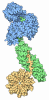
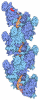

-Map
| File | Download / File: emd_68919.map.gz / Format: CCP4 / Size: 307.5 MB / Type: IMAGE STORED AS FLOATING POINT NUMBER (4 BYTES) | ||||||||||||||||||||||||||||||||||||
|---|---|---|---|---|---|---|---|---|---|---|---|---|---|---|---|---|---|---|---|---|---|---|---|---|---|---|---|---|---|---|---|---|---|---|---|---|---|
| Annotation | local. resolution filtered map | ||||||||||||||||||||||||||||||||||||
| Projections & slices | Image control
Images are generated by Spider. | ||||||||||||||||||||||||||||||||||||
| Voxel size | X=Y=Z: 0.93 Å | ||||||||||||||||||||||||||||||||||||
| Density |
| ||||||||||||||||||||||||||||||||||||
| Symmetry | Space group: 1 | ||||||||||||||||||||||||||||||||||||
| Details | EMDB XML:
|
 Z (Sec.)
 Y (Row.)
 X (Col.)


-Supplemental data
-Additional map: focusing on one ATR monomer
| File | emd_68919_additional_1.map | ||||||||||||
|---|---|---|---|---|---|---|---|---|---|---|---|---|---|
| Annotation | focusing on one ATR monomer | ||||||||||||
| Projections & Slices |
| ||||||||||||
| Density Histograms |


-Additional map: focusing on ATR tail
| File | emd_68919_additional_2.map | ||||||||||||
|---|---|---|---|---|---|---|---|---|---|---|---|---|---|
| Annotation | focusing on ATR tail | ||||||||||||
| Projections & Slices |
| ||||||||||||
| Density Histograms |


-Additional map: focusing on the second ATR monomer
| File | emd_68919_additional_3.map | ||||||||||||
|---|---|---|---|---|---|---|---|---|---|---|---|---|---|
| Annotation | focusing on the second ATR monomer | ||||||||||||
| Projections & Slices |
| ||||||||||||
| Density Histograms |


-Additional map: focusing on ATR head
| File | emd_68919_additional_4.map | ||||||||||||
|---|---|---|---|---|---|---|---|---|---|---|---|---|---|
| Annotation | focusing on ATR head | ||||||||||||
| Projections & Slices |
| ||||||||||||
| Density Histograms |


-Half map: #2
| File | emd_68919_half_map_1.map | ||||||||||||
|---|---|---|---|---|---|---|---|---|---|---|---|---|---|
| Projections & Slices |
| ||||||||||||
| Density Histograms |


-Half map: #1
| File | emd_68919_half_map_2.map | ||||||||||||
|---|---|---|---|---|---|---|---|---|---|---|---|---|---|
| Projections & Slices |
| ||||||||||||
| Density Histograms |


- Sample components
-Entire : human ATR-ATRIP complex
| Entire | Name: human ATR-ATRIP complex |
|---|---|
| Components |
|
-Supramolecule #1: human ATR-ATRIP complex
| Supramolecule | Name: human ATR-ATRIP complex / type: complex / ID: 1 / Parent: 0 / Macromolecule list: #1-#2 |
|---|---|
| Source (natural) | Organism: Homo sapiens (human) |
-Macromolecule #1: Serine/threonine-protein kinase ATR
| Macromolecule | Name: Serine/threonine-protein kinase ATR / type: protein_or_peptide / ID: 1 / Number of copies: 2 / Enantiomer: LEVO / EC number: non-specific serine/threonine protein kinase |
|---|---|
| Source (natural) | Organism: Homo sapiens (human) |
| Molecular weight | Theoretical: 301.756781 KDa |
| Recombinant expression | Organism: Homo sapiens (human) |
| Sequence | String: MGEHGLELAS MIPALRELGS ATPEEYNTVV QKPRQILCQF IDRILTDVNV VAVELVKKTD SQPTSVMLLD FIQHIMKSSP LMFVNVSGS HEAKGSCIEF SNWIITRLLR IAATPSCHLL HKKICEVICS LLFLFKSKSP AIFGVLTKEL LQLFEDLVYL H RRNVMGHA ...String: MGEHGLELAS MIPALRELGS ATPEEYNTVV QKPRQILCQF IDRILTDVNV VAVELVKKTD SQPTSVMLLD FIQHIMKSSP LMFVNVSGS HEAKGSCIEF SNWIITRLLR IAATPSCHLL HKKICEVICS LLFLFKSKSP AIFGVLTKEL LQLFEDLVYL H RRNVMGHA VEWPVVMSRF LSQLDEHMGY LQSAPLQLMS MQNLEFIEVT LLMVLTRIIA IVFFRRQELL LWQIGCVLLE YG SPKIKSL AISFLTELFQ LGGLPAQPAS TFFSSFLELL KHLVEMDTDQ LKLYEEPLSK LIKTLFPFEA EAYRNIEPVY LNM LLEKLC VMFEDGVLMR LKSDLLKAAL CHLLQYFLKF VPAGYESALQ VRKVYVRNIC KALLDVLGIE VDAEYLLGPL YAAL KMESM EIIEEIQCQT QQENLSSNSD GISPKRRRLS SSLNPSKRAP KQTEEIKHVD MNQKSILWSA LKQKAESLQI SLEYS GLKN PVIEMLEGIA VVLQLTALCT VHCSHQNMNC RTFKDCQHKS KKKPSVVITW MSLDFYTKVL KSCRSLLESV QKLDLE ATI DKVVKIYDAL IYMQVNSSFE DHILEDLCGM LSLPWIYSHS DDGCLKLTTF AANLLTLSCR ISDSYSPQAQ SRCVFLL TL FPRRIFLEWR TAVYNWALQS SHEVIRASCV SGFFILLQQQ NSCNRVPKIL IDKVKDDSDI VKKEFASILG QLVCTLHG M FYLTSSLTEP FSEHGHVDLF CRNLKATSQH ECSSSQLKAS VCKPFLFLLK KKIPSPVKLA FIDNLHHLCK HLDFREDET DVKAVLGTLL NLMEDPDKDV RVAFSGNIKH ILESLDSEDG FIKELFVLRM KEAYTHAQIS RNNELKDTLI LTTGDIGRAA KGDLVPFAL LHLLHCLLSK SASVSGAAYT EIRALVAAKS VKLQSFFSQY KKPICQFLVE SLHSSQMTAL PNTPCQNADV R KQDVAHQR EMALNTLSEI ANVFDFPDLN RFLTRTLQVL LPDLAAKASP AASALIRTLG KQLNVNRREI LINNFKYIFS HL VCSCSKD ELERALHYLK NETEIELGSL LRQDFQGLHN ELLLRIGEHY QQVFNGLSIL ASFASSDDPY QGPRDIISPE LMA DYLQPK LLGILAFFNM QLLSSSVGIE DKKMALNSLM SLMKLMGPKH VSSVRVKMMT TLRTGLRFKD DFPELCCRAW DCFV RCLDH ACLGSLLSHV IVALLPLIHI QPKETAAIFH YLIIENRDAV QDFLHEIYFL PDHPELKKIK AVLQEYRKET SESTD LQTT LQLSMKAIQH ENVDVRIHAL TSLKETLYKN QEKLIKYATD SETVEPIISQ LVTVLLKGCQ DANSQARLLC GECLGE LGA IDPGRLDFST TETQGKDFTF VTGVEDSSFA YGLLMELTRA YLAYADNSRA QDSAAYAIQE LLSIYDCREM ETNGPGH QL WRRFPEHVRE ILEPHLNTRY KSSQKSTDWS GVKKPIYLSK LGSNFAEWSA SWAGYLITKV RHDLASKIFT CCSIMMKH D FKVTIYLLPH ILVYVLLGCN QEDQQEVYAE IMAVLKHDDQ HTINTQDIAS DLCQLSTQTV FSMLDHLTQW ARHKFQALK AEKCPHSKSN RNKVDSMVST VDYEDYQSVT RFLDLIPQDT LAVASFRSKA YTRAVMHFES FITEKKQNIQ EHLGFLQKLY AAMHEPDGV AGVSAIRKAE PSLKEQILEH ESLGLLRDAT ACYDRAIQLE PDQIIHYHGV VKSMLGLGQL STVITQVNGV H ANRSEWTD ELNTYRVEAA WKLSQWDLVE NYLAADGKST TWSVRLGQLL LSAKKRDITA FYDSLKLVRA EQIVPLSAAS FE RGSYQRG YEYIVRLHML CELEHSIKPL FQHSPGDSSQ EDSLNWVARL EMTQNSYRAK EPILALRRAL LSLNKRPDYN EMV GECWLQ SARVARKAGH HQTAYNALLN AGESRLAELY VERAKWLWSK GDVHQALIVL QKGVELCFPE NETPPEGKNM LIHG RAMLL VGRFMEETAN FESNAIMKKY KDVTACLPEW EDGHFYLAKY YDKLMPMVTD NKMEKQGDLI RYIVLHFGRS LQYGN QFIY QSMPRMLTLW LDYGTKAYEW EKAGRSDRVQ MRNDLGKINK VITEHTNYLA PYQFLTAFSQ LISRICHSHD EVFVVL MEI IAKVFLAYPQ QAMWMMTAVS KSSYPMRVNR CKEILNKAIH MKKSLEKFVG DATRLTDKLL ELCNKPVDGS SSTLSMS TH FKMLKKLVEE ATFSEILIPL QSVMIPTLPS ILGTHANHAS HEPFPGHWAY IAGFDDMVEI LASLQKPKKI SLKGSDGK F YIMMCKPKDD LRKDCRLMEF NSLINKCLRK DAESRRRELH IRTYAVIPLN DECGIIEWVN NTAGLRPILT KLYKEKGVY MTGKELRQCM LPKSAALSEK LKVFREFLLP RHPPIFHEWF LRTFPDPTSW YSSRSAYCRS TAVMSMVGYI LGLGDRHGEN ILFDSLTGE CVHVDFNCLF NKGETFEVPE IVPFRLTHNM VNGMGPMGTE GLFRRACEVT MRLMRDQREP LMSVLKTFLH D PLVEWSKP VKGHSKAPLN ETGEVVNEKA KTHVLDIEQR LQGVIKTRNR VTGLPLSIEG HVHYLIQEAT DENLLCQMYL GW TPYM UniProtKB: Serine/threonine-protein kinase ATR |
-Macromolecule #2: ATR-interacting protein
| Macromolecule | Name: ATR-interacting protein / type: protein_or_peptide / ID: 2 / Number of copies: 2 / Enantiomer: LEVO |
|---|---|
| Source (natural) | Organism: Homo sapiens (human) |
| Molecular weight | Theoretical: 85.940664 KDa |
| Recombinant expression | Organism: Homo sapiens (human) |
| Sequence | String: MAGTSAPGSK RRSEPPAPRP GPPPGTGHPP SKRARGFSAA AAPDPDDPFG AHGDFTADDL EELDTLASQA LSQCPAAARD VSSDHKVHR LLDGMSKNPS GKNRETVPIK DNFELEVLQA QYKELKEKMK VMEEEVLIKN GEIKILRDSL HQTESVLEEQ R RSHFLLEQ ...String: MAGTSAPGSK RRSEPPAPRP GPPPGTGHPP SKRARGFSAA AAPDPDDPFG AHGDFTADDL EELDTLASQA LSQCPAAARD VSSDHKVHR LLDGMSKNPS GKNRETVPIK DNFELEVLQA QYKELKEKMK VMEEEVLIKN GEIKILRDSL HQTESVLEEQ R RSHFLLEQ EKTQALSDKE KEFSKKLQSL QSELQFKDAE MNELRTKLQT SERANKLAAP SVSHVSPRKN PSVVIKPEAC SP QFGKTSF PTKESFSANM SLPHPCQTES GYKPLVGRED SKPHSLRGDS IKQEEAQKSF VDSWRQRSNT QGSILINLLL KQP LIPGSS LSLCHLLSSS SESPAGTPLQ PPGFGSTLAG MSGLRTTGSY DGSFSLSALR EAQNLAFTGL NLVARNECSR DGDP AEGGR RAFPLCQLPG AVHFLPLVQF FIGLHCQALQ DLAAAKRSGA PGDSPTHSSC VSSGVETNPE DSVCILEGFS VTALS ILQH LVCHSGAVVS LLLSGVGADS AAGEGNRSLV HRLSDGDMTS ALRGVADDQG QHPLLKMLLH LLAFSSAATG HLQASV LTQ CLKVLVKLAE NTSCDFLPRF QCVFQVLPKC LSPETPLPSV LLAVELLSLL ADHDQLAPQL CSHSEGCLLL LLYMYIT SR PDRVALETQW LQLEQEVVWL LAKLGVQSPL PPVTGSNCQC NVEVVRALTV MLHRQWLTVR RAGGPPRTDQ QRRTVRCL R DTVLLLHGLS QKDKLFMMHC VEVLHQFDQV MPGVSMLIRG LPDVTDCEEA ALDDLCAAET DVEDPEVECG UniProtKB: ATR-interacting protein |
-Macromolecule #3: Serine/threonine-protein kinase Chk1
| Macromolecule | Name: Serine/threonine-protein kinase Chk1 / type: protein_or_peptide / ID: 3 / Details: VKYSSSQPEPRTGL / Number of copies: 2 / Enantiomer: LEVO / EC number: non-specific serine/threonine protein kinase |
|---|---|
| Source (natural) | Organism: Homo sapiens (human) |
| Molecular weight | Theoretical: 1.550712 KDa |
| Sequence | String: VKYSSSQPEP RTGL UniProtKB: Serine/threonine-protein kinase Chk1 |
-Macromolecule #4: PHOSPHOTHIOPHOSPHORIC ACID-ADENYLATE ESTER
| Macromolecule | Name: PHOSPHOTHIOPHOSPHORIC ACID-ADENYLATE ESTER / type: ligand / ID: 4 / Number of copies: 2 / Formula: AGS |
|---|---|
| Molecular weight | Theoretical: 523.247 Da |
| Chemical component information | 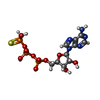 ChemComp-AGS: |
-Macromolecule #5: MAGNESIUM ION
| Macromolecule | Name: MAGNESIUM ION / type: ligand / ID: 5 / Number of copies: 4 / Formula: MG |
|---|---|
| Molecular weight | Theoretical: 24.305 Da |
-Macromolecule #6: ZINC ION
| Macromolecule | Name: ZINC ION / type: ligand / ID: 6 / Number of copies: 4 / Formula: ZN |
|---|---|
| Molecular weight | Theoretical: 65.409 Da |
-Experimental details
-Structure determination
| Method | cryo EM |
|---|---|
 Processing Processing | single particle reconstruction |
| Aggregation state | particle |
-Sample preparation
| Buffer | pH: 7.4 |
|---|---|
| Vitrification | Cryogen name: ETHANE |
- Electron microscopy
| Microscope | TFS KRIOS |
|---|---|
| Image recording | Film or detector model: FEI FALCON IV (4k x 4k) / Average electron dose: 50.0 e/Å2 |
| Electron beam | Acceleration voltage: 300 kV / Electron source:  FIELD EMISSION GUN FIELD EMISSION GUN |
| Electron optics | Illumination mode: FLOOD BEAM / Imaging mode: BRIGHT FIELD / Nominal defocus max: 2.5 µm / Nominal defocus min: 1.0 µm |
| Experimental equipment |  Model: Titan Krios / Image courtesy: FEI Company |
