- EMDB-67084: RIPK1 death domain filamentation drives TNF-induced apoptosis -
+
Open data
ID or keywords:
Loading...
-
Basic information
Entry
Database: EMDB / ID: EMD-67084
Title
RIPK1 death domain filamentation drives TNF-induced apoptosis
Map data
Sample
Complex: RIPK1 death domain filament
Protein or peptide: Receptor-interacting serine/threonine-protein kinase 1
Keywords
pro-inflammatory pathway / cell death / IMMUNE SYSTEM / APOPTOSIS
Function / homology
Function and homology information
ripoptosome assembly / positive regulation of miRNA processing / positive regulation of interleukin-6-mediated signaling pathway / death domain binding / ripoptosome assembly involved in necroptotic process / T cell apoptotic process / programmed necrotic cell death / Defective RIPK1-mediated regulated necrosis / Microbial modulation of RIPK1-mediated regulated necrosis / tumor necrosis factor receptor superfamily complex ...ripoptosome assembly / positive regulation of miRNA processing / positive regulation of interleukin-6-mediated signaling pathway / death domain binding / ripoptosome assembly involved in necroptotic process / T cell apoptotic process / programmed necrotic cell death / Defective RIPK1-mediated regulated necrosis / Microbial modulation of RIPK1-mediated regulated necrosis / tumor necrosis factor receptor superfamily complex / TRIF-mediated programmed cell death / ripoptosome / Regulation by c-FLIP / CASP8 activity is inhibited / Dimerization of procaspase-8 / TLR3-mediated TICAM1-dependent programmed cell death / activation of protein kinase activity / positive regulation of macrophage differentiation / TNF signaling / Caspase activation via Death Receptors in the presence of ligand / SARS-CoV-1-mediated effects on programmed cell death / necroptotic process / JUN kinase kinase kinase activity / necroptotic signaling pathway / negative regulation of necroptotic process / NF-kB activation through FADD/RIP-1 pathway mediated by caspase-8 and -10 / death-inducing signaling complex / RIP-mediated NFkB activation via ZBP1 / positive regulation of necroptotic process / Dengue virus modulates apoptosis / positive regulation of tumor necrosis factor-mediated signaling pathway / death receptor binding / positive regulation of programmed necrotic cell death / positive regulation of extrinsic apoptotic signaling pathway / TNFR1-induced proapoptotic signaling / positive regulation of programmed cell death / RIPK1-mediated regulated necrosis / extrinsic apoptotic signaling pathway via death domain receptors / TRP channels / protein serine/threonine phosphatase activity / response to tumor necrosis factor / negative regulation of extrinsic apoptotic signaling pathway in absence of ligand / positive regulation of execution phase of apoptosis / extrinsic apoptotic signaling pathway / tumor necrosis factor-mediated signaling pathway / signaling adaptor activity / negative regulation of extrinsic apoptotic signaling pathway / positive regulation of interleukin-8 production / negative regulation of canonical NF-kappaB signal transduction / canonical NF-kappaB signal transduction / TICAM1, RIP1-mediated IKK complex recruitment / protein serine/threonine kinase binding / cellular response to tumor necrosis factor / IKK complex recruitment mediated by RIP1 / intrinsic apoptotic signaling pathway in response to DNA damage / TNFR1-induced NF-kappa-B signaling pathway / Regulation of TNFR1 signaling / positive regulation of non-canonical NF-kappaB signal transduction / positive regulation of JNK cascade / cellular response to growth factor stimulus / Regulation of necroptotic cell death / positive regulation of reactive oxygen species metabolic process / positive regulation of neuron apoptotic process / positive regulation of inflammatory response / cellular response to hydrogen peroxide / positive regulation of tumor necrosis factor production / Ovarian tumor domain proteases / response to oxidative stress / amyloid fibril formation / Potential therapeutics for SARS / apoptotic process / inflammatory response / protein kinase activity / positive regulation of canonical NF-kappaB signal transduction / non-specific serine/threonine protein kinase / signaling receptor complex / intracellular signal transduction / Ub-specific processing proteases / endosome membrane / positive regulation of apoptotic process / protein serine kinase activity / ubiquitin protein ligase binding / protein serine/threonine kinase activity / positive regulation of gene expression / negative regulation of apoptotic process / protein-containing complex binding / positive regulation of transcription by RNA polymerase II / protein homodimerization activity / protein-containing complex / mitochondrion / ATP binding / identical protein binding / plasma membrane / cytosol / cytoplasm Similarity search - Function
RIP1, Death domain / Death domain profile. / DEATH domain, found in proteins involved in cell death (apoptosis). / Death domain / Death domain / : / Death-like domain superfamily / Protein tyrosine and serine/threonine kinase / Serine-threonine/tyrosine-protein kinase, catalytic domain / Serine/threonine-protein kinase, active site ...RIP1, Death domain / Death domain profile. / DEATH domain, found in proteins involved in cell death (apoptosis). / Death domain / Death domain / : / Death-like domain superfamily / Protein tyrosine and serine/threonine kinase / Serine-threonine/tyrosine-protein kinase, catalytic domain / Serine/threonine-protein kinase, active site / Serine/Threonine protein kinases active-site signature. / Serine/Threonine protein kinases, catalytic domain / Protein kinase domain profile. / Protein kinase domain / Protein kinase-like domain superfamily Similarity search - Domain/homology
In the structure databanks used in Yorodumi, some data are registered as the other names, "COVID-19 virus" and "2019-nCoV". Here are the details of the virus and the list of structure data.
Jan 31, 2019. EMDB accession codes are about to change! (news from PDBe EMDB page)
EMDB accession codes are about to change! (news from PDBe EMDB page)
The allocation of 4 digits for EMDB accession codes will soon come to an end. Whilst these codes will remain in use, new EMDB accession codes will include an additional digit and will expand incrementally as the available range of codes is exhausted. The current 4-digit format prefixed with “EMD-” (i.e. EMD-XXXX) will advance to a 5-digit format (i.e. EMD-XXXXX), and so on. It is currently estimated that the 4-digit codes will be depleted around Spring 2019, at which point the 5-digit format will come into force.
The EM Navigator/Yorodumi systems omit the EMD- prefix.
Related info.:Q: What is EMD? / ID/Accession-code notation in Yorodumi/EM Navigator
Yorodumi is a browser for structure data from EMDB, PDB, SASBDB, etc.
This page is also the successor to EM Navigator detail page, and also detail information page/front-end page for Omokage search.
The word "yorodu" (or yorozu) is an old Japanese word meaning "ten thousand". "mi" (miru) is to see.
Related info.:EMDB / PDB / SASBDB / Comparison of 3 databanks / Yorodumi Search / Aug 31, 2016. New EM Navigator & Yorodumi / Yorodumi Papers / Jmol/JSmol / Function and homology information / Changes in new EM Navigator and Yorodumi
 Movie
Movie Controller


 Open data
 Basic information
 Map data
 Sample
 Keywords
 Function and homology information
 Homo sapiens (human)
 Authors
 Singapore, 1 items
  Citation
 Structure visualization
 Downloads & links
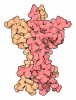
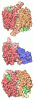
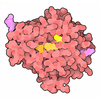
 emd_67084.png
 https://data.pdbj.org/pub/emdb/structures/EMD-67084
 Z (Sec.)
 Y (Row.)
 X (Col.)


 Sample components
 Escherichia coli BL21(DE3) (bacteria)
 Processing
 Electron microscopy
 FIELD EMISSION GUN
