National Natural Science Foundation of China (NSFC)
32570911
China
National Natural Science Foundation of China (NSFC)
32270824
China
Citation
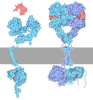
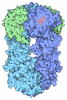
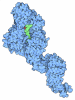
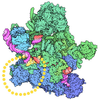
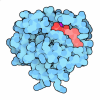
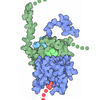
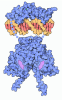
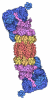
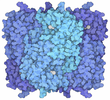
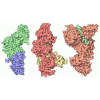
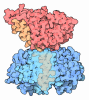
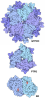
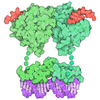
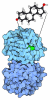
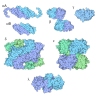
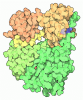
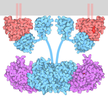
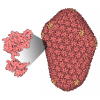
Journal: Nat Commun / Year: 2026 Title: FKBP8 connects the Hsp70-Hsp90 chaperone machinery to the folding of membrane proteins. Authors: Man-Xi Ge / Ming-Zhi Wu / Jia Ji / Zhao-Peng Li / Zhongjian Bai / Jieyan He / Josefa Chuh / Yixiao Zhang / Jing Li / Zai-Rong Zhang / Abstract: The folding of membrane protein cytoplasmic domains on the endoplasmic reticulum (ER) surface, and their coordination with transmembrane and exoplasmic regions, remains poorly understood. Through a ...The folding of membrane protein cytoplasmic domains on the endoplasmic reticulum (ER) surface, and their coordination with transmembrane and exoplasmic regions, remains poorly understood. Through a genome-wide CRISPR-Cas9 screen, we identified the ER-anchored FK506 binding protein 8 (FKBP8) as a chaperone essential for membrane protein folding and assembly. Using ABC transporters as model substrates, we show that FKBP8 cooperates with Hsp70-Hsp90 machinery to remodel nascent or misfolded cytosolic domains into their native conformations. Cryo-EM analysis reveals that FKBP8 employs a conserved hydrophobic ϕϕϕ/ϕϕ cluster to help form a large client-binding cavity within the FKBP8-Hsp90 complex that captures folding intermediates. FKBP8 deficiency, disruption of this cluster, or disease-associated mutations within FKBP8 abolish substrate maturation, leading to ER retention and degradation. Reconstitution with purified components demonstrates that FKBP8 and Hsp40-Hsp70-HOP-Hsp90 constitute a minimal machinery capable of restoring the native structure of a misfolded ABC transporter. These findings uncover a dedicated folding module at the ER-cytosol interface that bridges cytosolic chaperones with membrane protein quality control, suggesting a broad role for FKBP8 in safeguarding the biogenesis of complex membrane proteins.
In the structure databanks used in Yorodumi, some data are registered as the other names, "COVID-19 virus" and "2019-nCoV". Here are the details of the virus and the list of structure data.
Jan 31, 2019. EMDB accession codes are about to change! (news from PDBe EMDB page)
EMDB accession codes are about to change! (news from PDBe EMDB page)
The allocation of 4 digits for EMDB accession codes will soon come to an end. Whilst these codes will remain in use, new EMDB accession codes will include an additional digit and will expand incrementally as the available range of codes is exhausted. The current 4-digit format prefixed with “EMD-” (i.e. EMD-XXXX) will advance to a 5-digit format (i.e. EMD-XXXXX), and so on. It is currently estimated that the 4-digit codes will be depleted around Spring 2019, at which point the 5-digit format will come into force.
The EM Navigator/Yorodumi systems omit the EMD- prefix.
Related info.:Q: What is EMD? / ID/Accession-code notation in Yorodumi/EM Navigator
Yorodumi is a browser for structure data from EMDB, PDB, SASBDB, etc.
This page is also the successor to EM Navigator detail page, and also detail information page/front-end page for Omokage search.
The word "yorodu" (or yorozu) is an old Japanese word meaning "ten thousand". "mi" (miru) is to see.
Related info.:EMDB / PDB / SASBDB / Comparison of 3 databanks / Yorodumi Search / Aug 31, 2016. New EM Navigator & Yorodumi / Yorodumi Papers / Jmol/JSmol / Function and homology information / Changes in new EM Navigator and Yorodumi
 Movie
Movie Controller


 Open data
 Basic information
 Map data
 Sample
 Keywords
 Function and homology information
 Homo sapiens (human)
 Authors
 China, 3 items
  Citation

 Structure visualization
 Downloads & links
 emd_66931.png
 https://data.pdbj.org/pub/emdb/structures/EMD-66931


 Z (Sec.)
 Y (Row.)
 X (Col.)


 Sample components
 Processing
 Electron microscopy
 FIELD EMISSION GUN

